Ford Mustang: 1965–2022 Evolution
The Ford Mustang is one of the most recognizable sports cars in automotive history. Introduced in 1964, it created an entirely new segment known as the pony car, combining sporty styling, strong performance, and affordability. More than five decades later, the Mustang remains the only original pony car to stay in continuous production, evolving through multiple generations while maintaining its iconic identity.
Whether you're a classic car enthusiast or considering a newer model, here's a look at how the Ford Mustang evolved from 1965 to 2022.
1965–1973: First Generation
The first-generation Ford Mustang was produced from 1964 to 1973 and quickly became a huge success. Its long hood, short rear deck, and sporty appearance inspired many competitors and established the pony car segment.
Although many enthusiasts refer to the earliest models as the 1964½ Mustang, Ford officially marketed them as 1965 models. Early versions featured a 2.8L inline-six engine paired with a 3-speed manual transmission. Buyers could also choose from several engine options, including the 3.3L inline-six and the legendary 289 cu in (4.7L) V8 in both standard and High Performance (HiPo) versions. Power was delivered through either a 3-speed manual, 4-speed manual, or 3-speed automatic transmission.
At the start of the regular 1965 production year, Ford introduced several updates, including the larger 200 cu in (3.3L) engine that produced improved performance. The Mustang entered a new era with its first major redesign in 1967. The body was enlarged to accommodate the new big-block V8 engines, increasing interior and cargo space.
The 1967–1968 models also introduced several styling and safety improvements, including a 2-spoke energy-absorbing steering wheel, shoulder belts, square side mirrors, revised taillights, and the addition of the 302 cu in (4.9L) V8. Buyers could also choose larger engines such as the 390 FE, 427 FE, and the legendary 428 Cobra Jet V8.
The 1969–1970 Mustang lineup expanded even further with famous performance models like the Boss 302, Boss 429, and Super Cobra Jet, solidifying the Mustang's reputation as one of America's greatest muscle cars.
1971–1973: First Generation Facelift
The facelifted 1971–1973 Mustang grew larger and wider to accommodate Ford's powerful 429 cu in (7.0L) V8 without requiring a complete suspension redesign. Buyers could choose from SportsRoof, Hardtop, and Convertible body styles, each offering its own distinctive character.
Engine choices ranged from the economical 4.1L inline-six to the powerful 429 Cobra Jet and Super Cobra Jet V8s, paired with either a 3-speed manual, 4-speed manual, or 3-speed automatic transmission. These models prioritized powerful performance while offering more cabin space and improved comfort.
1974–1978: Second Generation
The second-generation Ford Mustang, known as the Mustang II, arrived during the 1973 oil crisis. As fuel prices increased, Ford shifted its focus toward efficiency, creating a smaller and lighter Mustang that appealed to everyday drivers.
The Mustang II offered a choice of 2.3L inline-four, 2.8L V6, and later a 4.9L V8 engine. Available as either a 2-door coupe or 3-door hatchback, it also became the first American production car equipped with power-assisted rack-and-pinion steering, significantly improving handling and steering precision.
1979–1993: Third Generation
The third-generation Mustang, commonly known as the Fox Body Mustang, marked another major evolution. It featured a longer body, improved aerodynamics, and a more spacious cabin that comfortably seated four passengers.
Early models were recognized by their distinctive "four-eye" headlights before receiving updated front-end styling later in the production run. In 1986, Ford replaced carburetors with electronic fuel injection (EFI), improving performance, reliability, and fuel economy. Popular variants included the GT, Turbo GT, SVO, Cobra, and Cobra R.
1994–2004: Fourth Generation
The fourth-generation Mustang introduced the SN95 platform, representing the first complete redesign in over 15 years. Ford discontinued the hatchback body style and replaced the aging small-block V8 with a more modern 4.6L V8 engine.
Sharper body lines, sculpted wheel arches, and a more refined chassis improved both appearance and driving dynamics. Special performance editions such as the Bullitt, Mach 1, and SVT Cobra became favorites among Mustang enthusiasts.
2005–2014: Fifth Generation
Ford returned to its roots with the fifth-generation Mustang by adopting a retro-inspired design based on the classic Mustangs of the late 1960s. This "retro-futuristic" styling became an instant success.
Beyond its nostalgic appearance, this generation received upgraded suspension tuning, larger wheels, improved brakes, and significantly more powerful engines. High-performance models like the GT, Boss 302, Shelby GT500, and later the Boss 302 Laguna Seca offered thrilling driving experiences while preserving the Mustang's unmistakable character.
2015–2022: Sixth Generation
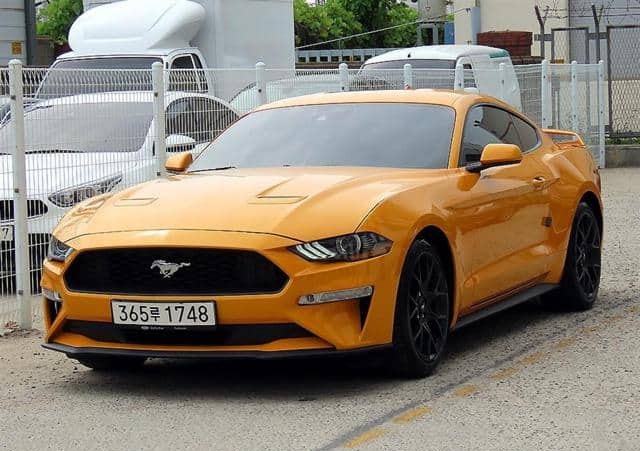
The sixth-generation Ford Mustang (S550) represented one of the biggest advancements in the model's history. For the first time, every Mustang came equipped with a fully independent rear suspension, delivering improved ride comfort, sharper handling, and greater stability.
Ford also introduced the turbocharged 2.3L EcoBoost engine, providing an excellent balance of performance and fuel efficiency. For traditional enthusiasts, the iconic 5.0L V8 GT continued to deliver the unmistakable sound and power that made the Mustang famous.
This generation also marked an important milestone as the first Mustang officially sold worldwide. Factory-built right-hand-drive models expanded the Mustang's availability to global markets, allowing even more enthusiasts to experience this legendary pony car.
Special Edition Ford Mustangs
Throughout its long history, Ford has released numerous limited-production and anniversary Mustangs. Notable examples include the 1984 GT-350 (20th Anniversary), the 1999 35th Anniversary Edition, the 2004 40th Anniversary Edition, the 2009 45th Anniversary Edition, and the
2003 Centennial Edition.
One of the rarest models is the Warrior Mustang, produced exclusively for U.S. military personnel serving overseas. Only 50 units were ever
built, making it one of the most collectible modern Mustangs.
Final Verdict
The Ford Mustang has successfully evolved from a stylish American pony car into a modern global performance icon while staying true to its heritage. Every generation introduced meaningful improvements in design, technology, safety, handling, and engine performance without losing the character that made the Mustang famous.
For drivers looking for the best combination of everyday usability and exhilarating performance, the 5.0L V8 GT and Mach 1 remain outstanding choices. The Mach 1 benefits from performance upgrades such as Brembo front brakes, a limited-slip differential, revised chassis tuning, and components borrowed from the Shelby GT500, making it one of the most rewarding Mustangs to drive.
Whether you prefer the timeless styling of the early classics or the advanced technology of the latest models, the Ford Mustang continues to deliver an unforgettable driving experience. Visit the BE FORWARD official store to explore available Ford Mustang models and find the one that best matches your style, performance needs, and budget. Discover Ford Mustang models here! Browse parts now.