How AI Image Recognition Works Behind The Curtain
Every day, modern smartphone users interact with mobile computer vision, whether it is to unlock their devices with face recognition or to sort their photo galleries. These clever devices make complex science a daily convenience.

But how does this translation take place? When you point your camera at something, algorithms immediately break up the visual stream into pixels, read the colour codes and map them against a database. Mobile software bridges the gap between what we see and what our devices compute, turning numeric matrices into terms we can understand.
What Is Image Recognition
To understand what is image recognition, we must first look at the fundamental difference between human sight and computer vision. When you look at the world, your brain instantly perceives holistic forms. You do not need to calculate the height, width, or curve of an object to realize you are looking at a rose, a cup of coffee, or a passing car; your brain relies on a lifetime of intuitive contextual learning.
For a computer or your smartphone’s processor, any image is the exact opposite of a holistic object. A digital device sees only giant, flat matrices of numbers. Every digital photo is composed of millions of tiny squares called pixels. In a standard color image, each pixel is represented by a set of three numerical values corresponding to the Red, Green, and Blue (RGB) color channels. For instance, a computer processes pure white as (255, 255, 255) and pure black as (0, 0, 0).
The primary challenge of computer vision is to translate these massive grids of raw, unorganized numbers into human-readable semantic tags. According to tech analysts at IBM, this process relies heavily on linear algebra and matrix multiplication to convert pixel grids into structured, recognizable patterns.
The Transition From Templates To Context
In the nascent days of software engineering, developers attempted to address the vision problem using static, handcrafted templates. Programmers would hard code rules: "If a certain set of pixels makes up a circle with a red color of a certain threshold, it's an apple."
But this rule-based approach didn’t work in real-world scenarios. The system fell apart immediately if you changed the camera angle , added shadow , shot the object in the rain or partially occluded it with another item . Static code just was not up to the task with unlimited real-world variables.
The real breakthrough came with the advent of machine learning image recognition. Industry experts gave up trying to program explicit rules. Rather they started building models that could learn from raw data directly.
Modern AI for image recognition, trained on huge, diverse datasets, is the only way to teach software to perceive the world dynamically. The AI builds its own understanding of visual context organically by feeding forward neural networks hundreds of thousands of different images of a single object type taken from different angles, under different exposures, and with different backgrounds.
How Does AI Recognize Images

Convolutional Neural Network (CNN) is the technology backbone of modern visual intelligence. Yann LeCun (1998) was a pioneer in convolutional neural networks (CNNs) and proposed them fundamentally in 1998 for the purpose of processing pixel data with minimum manual preprocessing.
To understand how AI image recognition works on a systems level, we can follow a digital image as it moves through the multiple layers of a neural network.
The Convolution Layer
This is the basic building block of the network. The system slides tiny mathematical filters (kernels) over the input image matrix. These filters calculate dot products with local groups of pixels, detecting simple visual features. The first layers are sensitive to simple edges, sharp contrast and color boundaries. The next layers go deeper , using those simple shapes and combining them to recognize complex patterns and textures , and even specific structures .
Pooling Layer
Once feature extraction is complete, the network employs pooling (usually Max Pooling) to decrease the spatial dimensions of the representations. This process throws out extraneous detail but retains the most important visual cues. This acts as a safety valve, protecting the device's battery life and saving processing memory that is essential to on-device mobile performance.
The Fully Connected Layer (FC)
The last stage consists of flattening all the extracted and downsampled features to a single vector. This data is then passed through a fully connected neural layer that calculates probabilities.
This complex multi-layered process explains how does AI identify images with such fast accuracy, transforming raw pixel data into one classification like “Swiss Cheese Plant” or “Violin” in milliseconds.
The Modern Image Recognition Algorithms
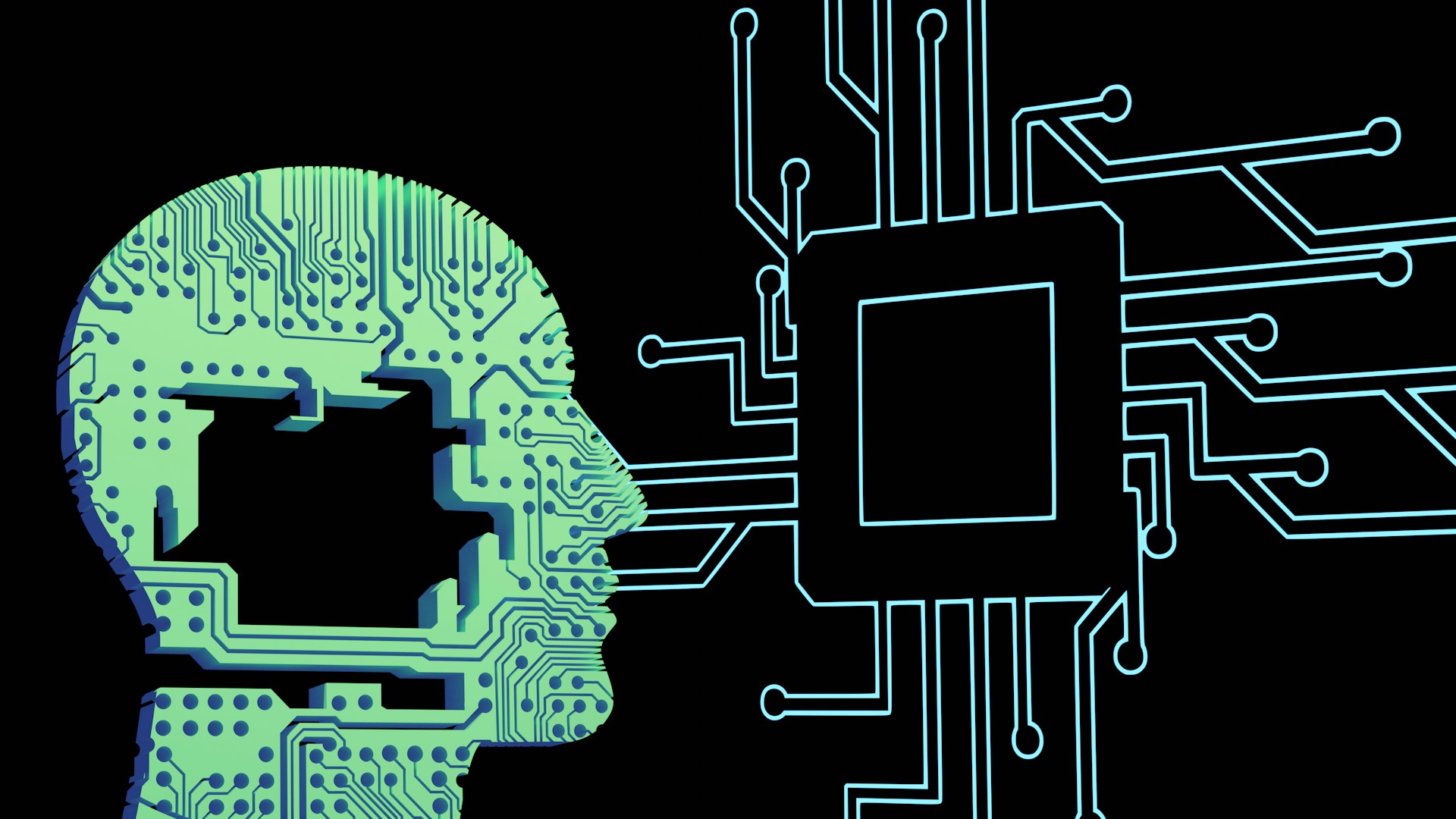
Historically, heavy convolutional networks required room-sized supercomputers and huge industrial GPUs to run. Today, thanks to a series of architectural breakthroughs, we can do real-time photo recognition right on low power mobile devices.
This efficiency is powered by highly optimized image recognition algorithms:
YOLO (You Only Look Once): YOLO considers the whole image during training so it implicitly encodes contextual information about classes as well as their location. YOLO divides the image into a grid and each grid cell predicts bounding boxes and probabilities for those boxes. Using this design, smartphones can perform real-time video detection at 30+ frames per second.
MobileNet: MobileNet is designed for mobile and embedded vision applications. It employs depthwise separable convolutions to dramatically reduce the number of parameters and the amount of computation without significantly affecting accuracy.
Vision Transformers (ViT) : Taken from natural language processing architectures, ViTs consider images as a sequence of patches. They are the state-of-the-art in modern computer vision, reaching ever higher accuracy on large-scale datasets.
In addition, today’s smartphones have dedicated Neural Processing Units (NPUs). These specialized hardware cores are custom designed for the matrix math of neural networks so complex algorithms can run locally on your phone without sending any data to cloud servers.
The Future of Sight in Your Pocket
The integration of computer vision into mobile software has transformed how we interact with our surroundings. We no longer just observe our surroundings. Instead we scan, query and analyze them on the fly.
There are many practical applications of this technology. Hikers can at once spot rare plants in the wild. Travelers can instantly translate foreign signs. Real time audio description can help the visually impaired navigate busy cities.
All of these scenarios are examples of how on-device AI bridges the gap between physical objects and digital data. As AI models shrink and mobile chips get faster, this trend will only accelerate. Our cameras are no longer passive recorders. They are coming alive as active, intelligent interfaces to the physical world.