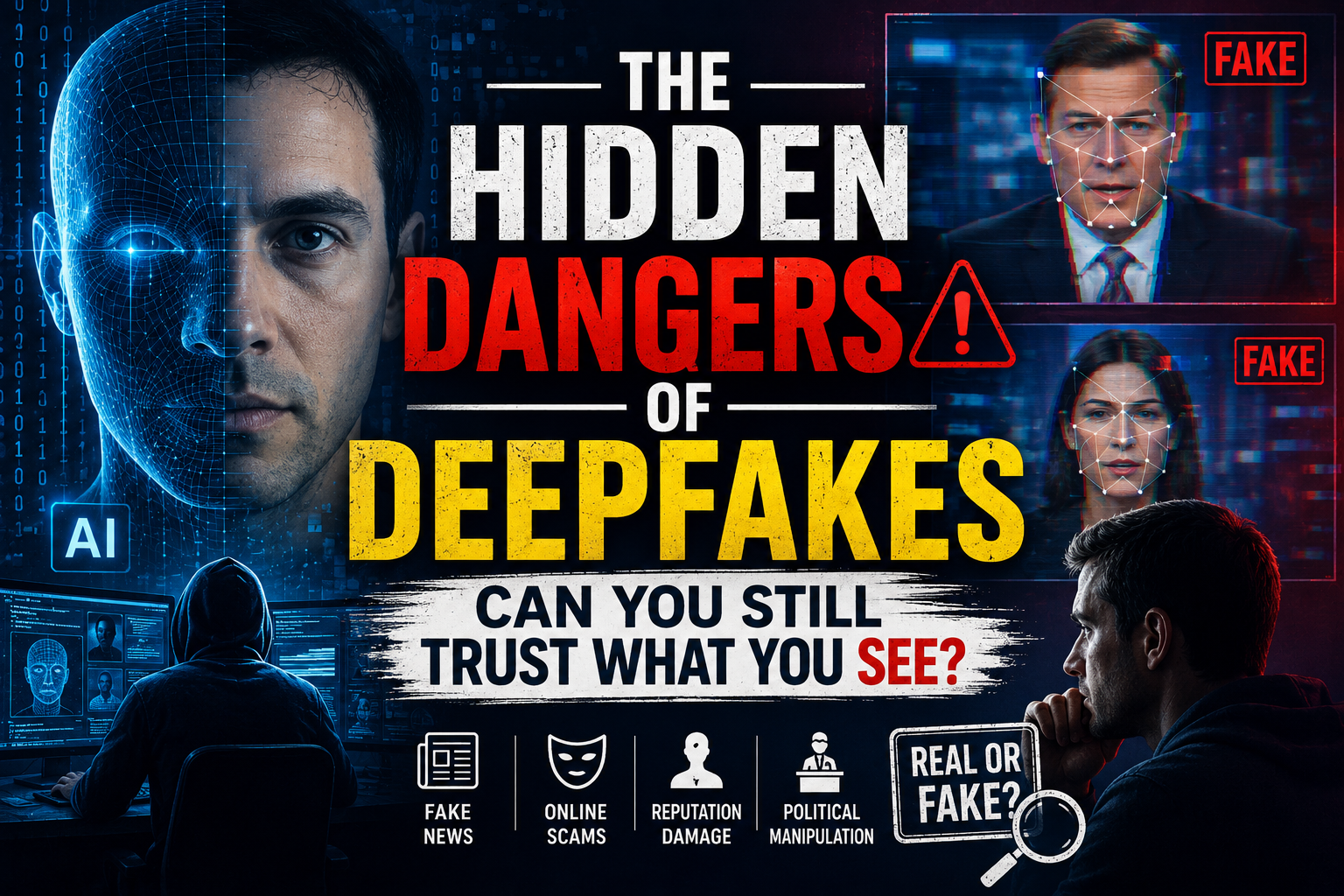
# The Hidden Dangers of Deepfakes: Can You Still Trust What You See?
Introduction
Artificial Intelligence is making incredible progress, but not every innovation is beneficial. One of the most concerning developments is deepfake technology. Deepfakes can create realistic fake videos, images, and even voices that are often difficult to distinguish from real ones.
As this technology becomes more advanced, an important question arises: Can we still trust everything we see online?
What Are Deepfakes?
Deepfakes are AI-generated videos, images, or audio recordings that imitate real people. They can make someone appear to say or do something they never actually did.
At first, this technology was mainly used for entertainment and research. Today, however, it is also being used for misinformation, scams, and online fraud.
How Deepfakes Work
Deepfakes are created using advanced AI models trained on large amounts of photos, videos, and voice recordings. The AI learns a person's facial expressions, voice, and movements to generate highly realistic fake content.
Because AI continues to improve, many deepfakes now look almost identical to real videos.
The Biggest Risks of Deepfakes
1. Fake News
Deepfake videos can spread false information quickly, causing confusion among millions of people.
2. Online Scams
Criminals can clone someone's voice or create fake videos to trick people into sending money or sharing personal information.
3. Damage to Reputation
A fake video can seriously harm a person's reputation even if it is completely false.
4. Political Manipulation
Deepfakes may be used to influence public opinion by creating fake speeches or misleading political content.
Can Deepfakes Be Detected?
Yes, but it is becoming more difficult.
Researchers and technology companies are developing AI systems that can identify manipulated videos and images. However, as detection improves, deepfake technology also becomes more sophisticated.
This creates an ongoing race between creators and detectors.
How to Protect Yourself
- Verify information before sharing it.
- Check trusted news sources.
- Be careful with videos that seem too shocking.
- Look for official statements when something important goes viral.
- Think critically before believing or forwarding online content.
My Opinion
In my opinion, AI is one of the greatest technologies of our time, but it should be used responsibly. Deepfakes show that powerful technology can be helpful or harmful depending on how people use it.
Instead of trusting everything we see online, we should verify information and encourage responsible use of AI.
Conclusion
Deepfake technology is becoming more realistic every year. While it has useful applications in education, filmmaking, and entertainment, it also creates serious challenges for society.
The future of AI depends not only on technological progress but also on how responsibly we choose to use it.
What do you think? Will deepfakes become one of the biggest online threats, or will technology be able to stop them? Share your thoughts in the comments.