The Role of Programmable 3 Phase AC Power Supplies in EV, Renewable Energy, and Aerospace Testing
As industries transition toward electrification, automation, and sustainable energy, testing electrical equipment under realistic operating conditions has become more important than ever. Electric vehicles (EVs), renewable energy systems, and aerospace electronics all rely on stable, high-quality power to ensure performance, safety, and regulatory compliance.
A programmable 3 phase AC power supply has become an essential tool for engineers developing and validating these advanced technologies. Unlike conventional AC sources, programmable power supplies can precisely control voltage, frequency, phase angle, harmonics, and output sequences, enabling comprehensive testing across a wide range of operating scenarios.
This article explores how programmable three-phase AC power supplies support testing in the EV, renewable energy, and aerospace sectors, and why they have become indispensable for modern research, manufacturing, and certification laboratories.
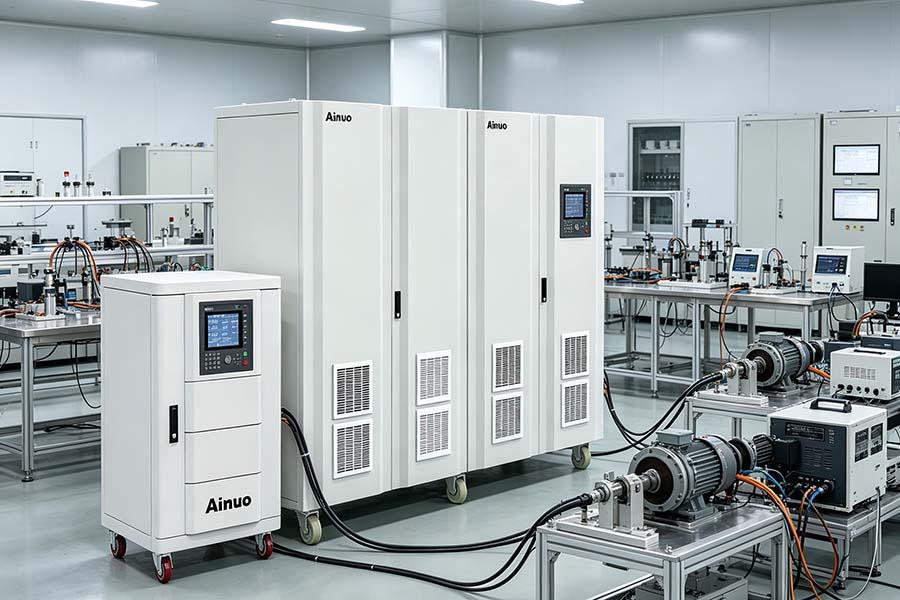
What Is a Programmable 3 Phase AC Power Supply?
A programmable 3 phase AC power supply is a precision power source capable of generating adjustable three-phase AC output with highly accurate electrical parameters. Typical programmable functions include:
- Adjustable voltage and frequency
- Independent three-phase output
- Balanced and unbalanced phase simulation
- Harmonic generation
- Programmable voltage ramps
- Waveform editing
- Remote computer control
- Automated test sequence execution
These capabilities allow engineers to simulate both normal grid conditions and abnormal electrical events that products may encounter during real-world operation.
Why Precision Power Testing Matters
Modern electrical systems are significantly more complex than those of previous generations.Today's products must operate reliably despite:
- Voltage fluctuations
- Frequency variations
- Harmonic distortion
- Phase imbalance
- Grid instability
- Sudden load changes
- Power interruptions
Testing equipment under ideal laboratory conditions alone is no longer sufficient.
Programmable AC power supplies reproduce these electrical environments accurately and repeatedly, enabling manufacturers to identify weaknesses before products enter the market.
EV Testing: Ensuring Reliable Electric Mobility
Electric vehicles depend on sophisticated power electronics that must perform safely under a wide variety of electrical conditions.
A programmable 3 phase AC power supply plays a critical role in validating these systems.
Testing Onboard Chargers (OBC)
The onboard charger converts AC grid power into DC power for battery charging. Engineers must verify charger performance under:
- Different national grid voltages
- 50 Hz and 60 Hz frequencies
- Voltage sag and surge conditions
- Harmonic distortion
- Phase imbalance
Programmable power supplies allow manufacturers to simulate these conditions using a single testing platform.
Verifying Electric Drive Systems
Electric motors and motor controllers require extensive testing throughout development.Engineers evaluate:
- Starting performance
- Torque characteristics
- Motor efficiency
- Thermal performance
- Protection functions
- Fault recovery
Accurate power simulation ensures consistent and repeatable test results.
Battery Charging Infrastructure Testing
EV charging stations must operate reliably across diverse electrical networks.
Programmable AC sources help validate:
- AC charging equipment
- Smart charging systems
- Grid compatibility
- Load variation response
- Safety protection mechanisms
These tests improve interoperability and compliance with international charging standards.
Renewable Energy System Validation
Renewable energy systems must integrate seamlessly with utility grids despite constantly changing environmental conditions.
Programmable AC power supplies provide the flexibility required to evaluate these systems under controlled laboratory conditions.
Solar Inverter Testing
Grid-connected photovoltaic inverters must synchronize precisely with utility power. Programmable AC sources simulate:
- Grid voltage variations
- Frequency deviations
- Power disturbances
- Weak grid conditions
- Abnormal operating scenarios
These tests verify inverter stability and grid synchronization performance.
Wind Energy Equipment Testing
Wind turbines experience highly variable operating conditions. Testing often includes:
- Generator evaluation
- Converter performance
- Protection system verification
- Grid fault simulation
- Startup and shutdown sequences
Programmable three-phase power supplies create repeatable testing environments that improve product reliability.
Energy Storage Systems
Battery energy storage systems (BESS) are increasingly used for grid stabilization and renewable energy integration. Engineers evaluate:
- Bidirectional converters
- Energy management systems
- AC/DC conversion efficiency
- Grid interaction
- Emergency operating modes
Programmable AC power supplies help ensure safe, stable operation throughout the system lifecycle.
Aerospace Testing Demands Exceptional Accuracy
The aerospace industry operates under some of the world's strictest quality and safety requirements.
Aircraft electrical systems must continue functioning under harsh environmental and electrical conditions. Programmable three-phase AC power supplies support testing of:
- Aircraft electrical distribution systems
- Avionics equipment
- Flight control electronics
- Power conversion units
- Environmental control systems
- Auxiliary power units (APUs)
Their precise output enables engineers to reproduce aircraft electrical environments with high repeatability.
Simulating Aircraft Power Standards
Aircraft electrical systems frequently operate at power standards that differ from those of commercial utility grids. Testing may require:
- 115 V AC
- 400 Hz power
- Variable frequency supplies
- Abnormal voltage conditions
Programmable AC power supplies allow engineers to switch between operating profiles quickly without changing equipment.
Harmonic and Power Quality Testing
Power quality has become increasingly important as electronic loads proliferate.
Programmable AC power supplies can intentionally generate harmonic distortion to evaluate equipment performance under non-ideal conditions. Typical tests include:
- Harmonic immunity
- Electromagnetic compatibility (EMC)
- Power factor evaluation
- Filter effectiveness
- Control system stability
This capability is particularly valuable for inverter-driven systems used in EVs, renewable energy, and aerospace applications.
Automated Testing Improves Efficiency
Modern programmable AC power supplies support automation through communication interfaces such as:
- Ethernet
- USB
- RS-232
- RS-485
- GPIB
- LAN
Integration with automated test systems enables engineers to:
- Execute complex test sequences
- Collect performance data
- Generate reports automatically
- Reduce operator error
- Improve production consistency
Automation is especially valuable for high-volume manufacturing and certification laboratories.
Supporting International Compliance
Manufacturers serving global markets must comply with multiple international standards. AC power supplies assist in testing for:
- IEC standards
- UL certification
- CE requirements
- Aerospace qualification procedures
- Automotive electrical testing
- Renewable energy grid compliance
Repeatable testing simplifies certification while reducing development time and testing costs.
Advantages Over Conventional AC Power Sources
Compared with traditional fixed-output equipment, programmable three-phase AC power supplies offer several important advantages.
Higher Testing Accuracy
Programmable systems maintain stable voltage and frequency throughout demanding tests, ensuring reliable measurements.
Greater Flexibility
One programmable power source can replace multiple dedicated test setups by supporting different voltages, frequencies, and operating modes.
Improved Repeatability
Automated test programs ensure every product is tested under identical conditions, improving quality control.
Reduced Development Time
Quick parameter adjustments allow engineers to evaluate multiple operating scenarios without extensive equipment changes.
Lower Long-Term Costs
Consolidating multiple testing functions into a single programmable platform reduces equipment investment and laboratory complexity.
Industries That Benefit
Programmable 3 phase AC power supplies are widely used in:
- Electric vehicle development
- EV charging equipment manufacturing
- Battery testing laboratories
- Solar inverter manufacturers
- Wind power equipment suppliers
- Energy storage system developers
- Aerospace manufacturers
- Defense electronics
- Industrial automation
- Research institutions
- Certification laboratories
- Universities
Their versatility makes them valuable wherever precise AC power simulation is required.
Choosing the Right Programmable 3 Phase AC Power Supply
When selecting a programmable AC power supply for advanced testing applications, consider features such as:
- Wide voltage and frequency range
- Independent phase control
- Harmonic generation capability
- High output accuracy
- Fast transient response
- Programmable test sequencing
- Remote communication interfaces
- High overload capability
- Data logging and monitoring
- Integration with automated test platforms
Choosing equipment with these capabilities ensures the flexibility needed to support future testing requirements as technologies continue to evolve.
Conclusion
Electric vehicles, renewable energy systems, and aerospace electronics are transforming the global technology landscape. As these industries become increasingly sophisticated, precision testing is no longer optional—it's essential.
A programmable 3 phase AC power supply provides engineers with the control, accuracy, and automation needed to simulate real-world electrical conditions, validate product performance, and meet demanding international standards. From testing EV onboard chargers and solar inverters to validating aircraft power systems, programmable AC power supplies play a vital role in improving reliability, accelerating product development, and ensuring long-term operational safety.
For manufacturers and laboratories seeking to stay competitive in rapidly evolving industries, investing in advanced programmable three-phase AC power technology is a strategic decision that delivers measurable value across research, development, production, and certification.