English to Spanish Audio Translator for Podcasters Who Want Their Episodes to Travel Further
A podcast episode can become more than an audio file. It can become the source for Spanish articles, notes, and scripts.
Podcast audio holds more reusable material than creators often extract
The strongest idea may be buried in the middle
Podcast episodes are conversational by nature. A host introduces a topic, follows a tangent, returns to the main point, and sometimes discovers the best line halfway through the discussion. That loose structure is part of the charm. It is also why repurposing podcast audio can be hard. The useful ideas are there, but they are not organized for translation, publishing, or search.
For creators who want to reach Spanish-speaking audiences, the challenge is even bigger. Translating an entire English episode by hand is slow. Summarizing from memory can miss the exact phrasing that made the episode compelling. Leaving the audio untouched limits the audience to people who can comfortably listen in English.
A Spanish draft gives the episode a second life
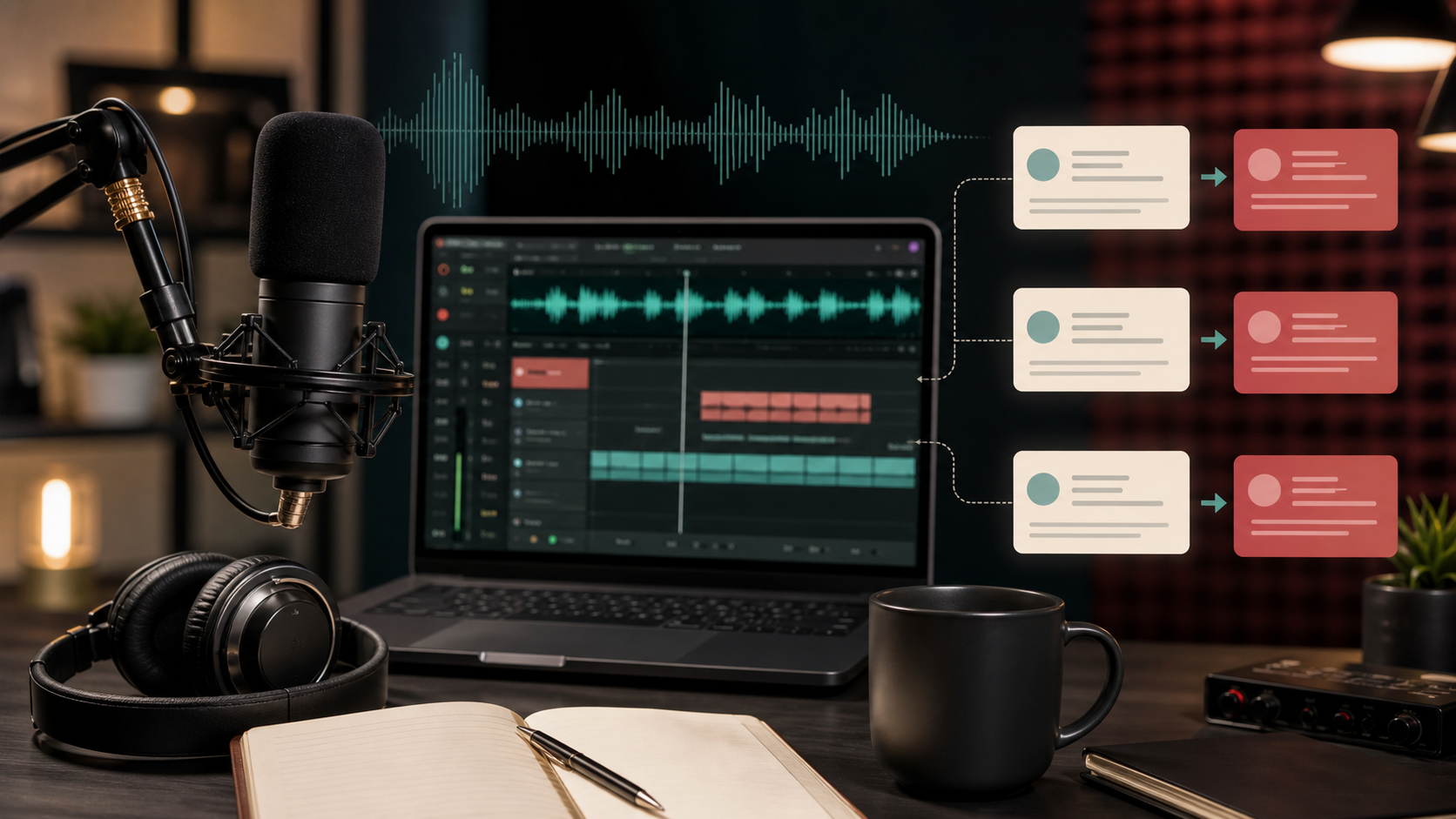
When English podcast audio becomes a Spanish text draft, the episode becomes easier to reuse. A creator can turn it into a Spanish show note, newsletter, blog post, episode recap, or short script for another channel. The audio remains the original work, but the translated text becomes a flexible source.
An English to Spanish Audio Translator can support this repurposing step by moving spoken English into Spanish text. The result should not be treated as a finished essay. It is a draft that helps the creator see what is inside the episode and decide which parts deserve a second life.
Translation works best when creators edit for the new format
A transcript is not a blog post yet
Podcast speech and written Spanish do not behave the same way. Speech allows repetition, unfinished thoughts, and casual turns. A blog post needs cleaner structure. A translated transcript gives creators the raw material, but editing gives it shape. The best sections can be pulled forward, repeated explanations can be trimmed, and the final piece can be arranged around the reader's attention.
This is where creators should resist the temptation to publish too quickly. The value of the workflow is speed, but speed should create room for better editorial choices. A Spanish reader should feel that the piece was prepared for them, not simply processed from an English recording.
The host's voice can survive careful editing
Some creators worry that translation will erase their voice. It can, if the output is treated mechanically. But careful editing can preserve the host's point of view. The rhythm may change, the sentence length may change, and some jokes may need a different form, but the underlying perspective can remain.
A good Spanish draft lets the creator identify what makes the episode distinctive. It may be the argument, the story, the practical advice, or the way the host frames a problem. Once that center is visible, the Spanish version can be shaped around it.
Short excerpts are often better than full episode translations
Not every episode needs to become a full Spanish article. Sometimes the best move is to translate and adapt one section. A five-minute explanation can become a Spanish blog post. A guest's answer can become a newsletter segment. A practical framework can become a short script.
This approach keeps the workflow sustainable. It also respects the audience. Readers may not need the full conversation. They may need the clearest idea, presented in a format that fits their time and language. Choosing excerpts also helps creators protect their energy. Translating an entire archive can feel impossible, so the project never starts. One strong section per episode is lighter and easier to repeat.
It also gives creators a useful feedback loop. A short Spanish adaptation can reveal whether the topic resonates before the creator invests in a larger translation effort. If readers respond to one excerpt, the creator can expand that theme later. If the response is quiet, the archive still remains organized for future use. Nothing is wasted, and the publishing system stays flexible.
A repeatable workflow makes multilingual publishing less heavy
Choose the episode section before editing deeply
Creators can save time by choosing the most promising section early. After generating a Spanish draft, scan for the moments with clear value. Look for the part that answers a specific question, tells a strong story, or gives practical advice. That section should receive the most editorial attention.
Trying to polish the entire transcript before choosing a direction can drain energy. It is better to identify the strongest material first. The rest can remain archived for later use.
Keep the translated draft close to the episode archive
A podcast archive becomes more useful when the translated drafts are stored beside the original episodes. The creator can return later, find the Spanish draft, and build another piece from it. Clear filenames and simple notes matter. They keep the work from disappearing into a folder of exports.
This is not glamorous, but it is the kind of habit that supports long-term publishing. Multilingual content becomes easier when each episode creates organized source material.
The goal is reach without starting over
Creators often assume that reaching another language audience requires rebuilding the entire content operation. Sometimes it does not. Sometimes the first step is to translate the strongest audio into a workable Spanish draft and edit from there. The idea already exists. The episode already captured it. The workflow simply gives it another path.
An English podcast can travel further when its best ideas are not locked inside one language and one format. Audio translation is not the whole creative process. It is the door that lets the next version begin. For independent creators, that door matters because it lets existing work travel farther without demanding a heavier production system.
The strongest creator workflows are usually not dramatic. They are repeatable. Record the episode, identify the useful section, create a Spanish draft, edit it for the new reader, and save it beside the original. Over time, that small habit builds a multilingual archive without forcing every episode to become a massive localization project. The result is practical reach, not extra noise.
@songsong603, hace rato que vengo dando vueltas con algo y tu post me puso las cosas en orden. Gracias.
Justo estaba viendo las mismas métricas y llegué a conclusiones parecidas a las tuyas.
La vida a veces pone pruebas y uno busca respuestas donde sea. Tu post me dio algo en qué pensar.