The Blueprint of Tyranny: How Sheikh Mujib Set the Stage for Hasina’s Fascism
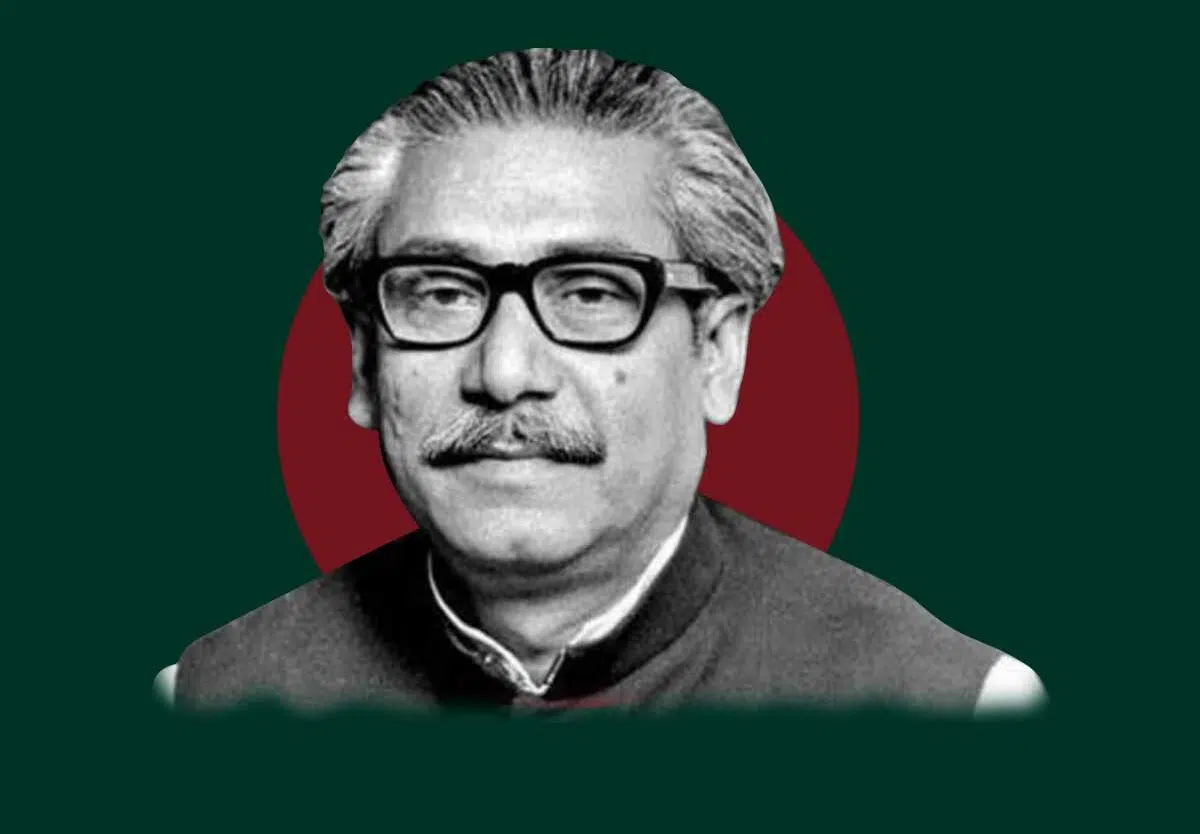
The mainstream history of Bangladesh often stops at 1971, painting Sheikh Mujibur Rahman solely as a flawless liberator. But for modern readers looking at the roots of the nation’s political decay, a darker truth is obvious: the authoritarianism that recently devastated Bangladesh under his daughter, Sheikh Hasina, was not a new invention. It was a direct inheritance of the political blueprint her father created.
Even before independence, Mujib’s political rise within the Awami League was defined by a sharp focus on total personal control. While he leaned heavily on the immense grassroots popularity of his mentor, Maulana Abdul Hamid Khan Bhashani, to build the party in 1949, Mujib quietly spent the 1950s and 60s centralizing the party structure. He systematically sidelined older, ideologically driven leaders and weaponized student wings to crush internal dissent. By the time he launched the 6-Point Movement, he had successfully turned a diverse nationalist coalition into a singular vehicle for his own absolute authority.When independence arrived in 1972, Mujib completely abandoned any democratic pretense. Instead of building stable state institutions, he created the Jatiya Rakkhi Bahini — a brutal, private paramilitary force answerable only to him. This force bypassed the regular military to torture, disappear, and execute political opponents, particularly left-wing activists. When his former mentor, Maulana Bhashani, spoke out against the regime’s rampant corruption and the devastating 1974 famine, Mujib did not hesitate to silence him. The government banned Bhashani’s newspaper, shut down his rallies, and placed the aging leader under strict house arrest.
The ultimate descent into total fascism was completed in early 1975 through the Fourth Amendment. Mujib officially banned all opposition political parties, dissolved multi-party democracy, and forced the entire country into a single state-party called BAKSAL(Bangladesh Krishak Sramik Awami League). He shuttered every independent newspaper except for four state-controlled outlets, stripped the judiciary of its independence, and declared himself President for life with unchecked, absolute power.
When we look at the enforced disappearances, rigged elections, and brutal autocracy that defined Sheikh Hasina’s 15-year rule, we are not looking at a deviation from her family legacy. We are looking at its perfection. Sheikh Mujibur Rahman may have helped build the nation, but he also built the very machinery of dictatorship that his daughter used to terrorize it decades later