The Blue Masterpiece of Isfahan
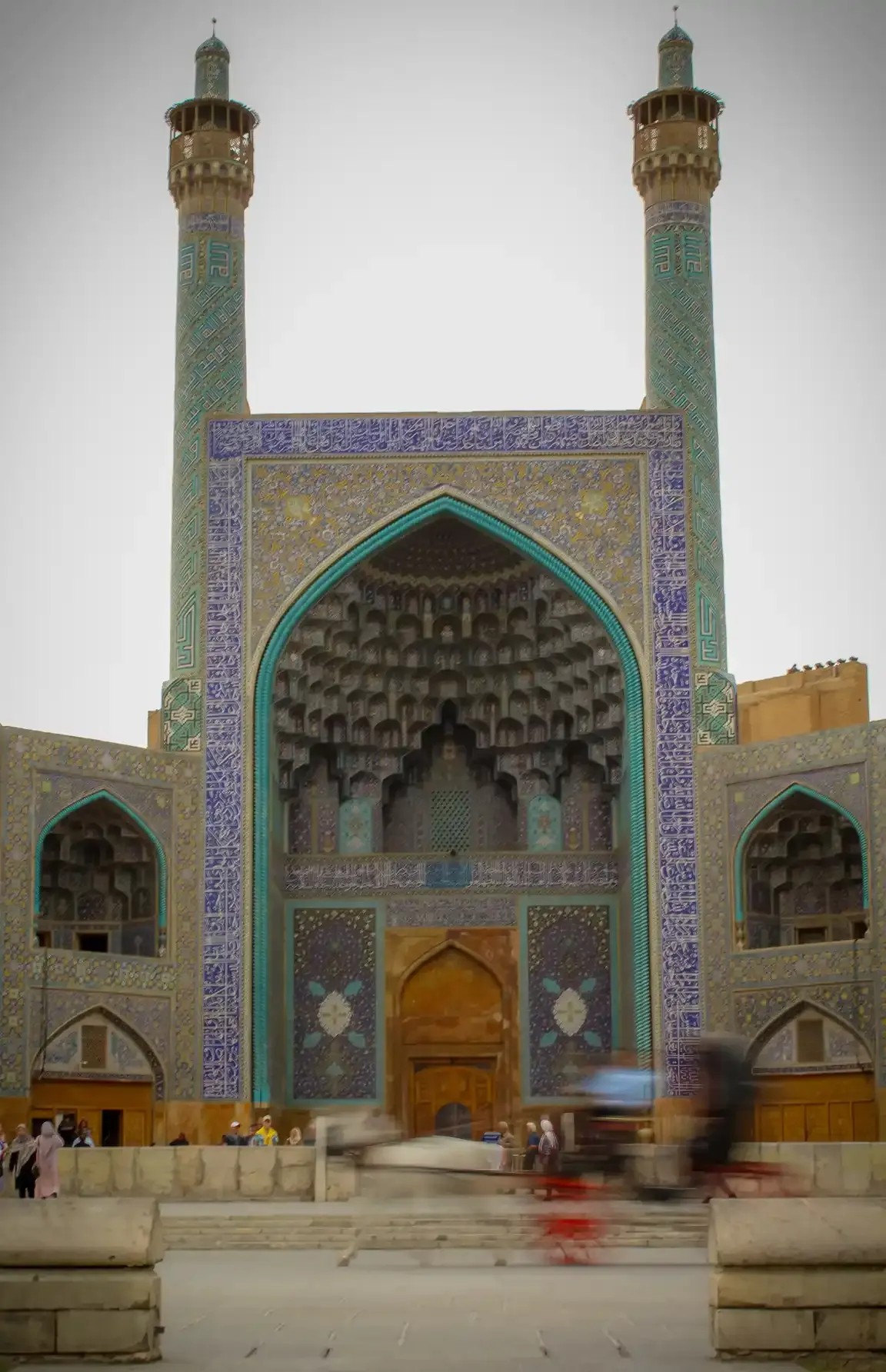
Places in the world exist where seeing them for the first second will blow your mind. Naqsh-e Jahan Square and the beautiful Shah Mosque in Isfahan are those types of places for me. I felt as though I stepped into a historical story book while standing in front of the massive structure of the mosque. That's why I took my pictures. I wanted to preserve the magic of the area where history lives and breathes.
Looking back at these photographs immediately transports me back to memories of all the blue hues everywhere. The primary photo shows the main entrance of the mosque which is an enormous and majestic site. The two large minarets appear to touch the clouds as they rise high above. All the various shades of blue and turquoise colored tiles used on the wall were stunning. I also remembered being in the square and having a traditional horse drawn carriage pass by the mosque. The carriage was going rapidly so it appears in the photo as a blur. This movement added an element of energy to the scene; it seemed as though we were time-traveling from one century to another.
The secondary photograph shows the fine details of the artwork. I zoomed in closely to capture images of the ceiling and walls. The design patterns created using small ceramic tiles are simply spectacular. I noticed flowers, leaves, and intricate designs created by previous artists. The dominant colors utilized were dark blue, turquoise, and slight hints of yellow and white. As you gaze at it for a period of time, it seems as though you are gazing into a vast expanse of blue skies filled with twinkling stars. I reflect upon the immense amount of patience and love that the individuals who constructed this mosque so many years ago had to create every individual tile, each with its own story.
Your photographs perfectly capture the essence of the stunning architecture in Naqsh-e Jahan Square and the Shah Mosque - the turquoise tiles really shine in your main photo. I'm curious to know more about your experience in the square, what was the traditional event you mentioned, and how it added to your