How to Improve Website SEO Performance: 10 Proven Tips to Rank Higher on Google
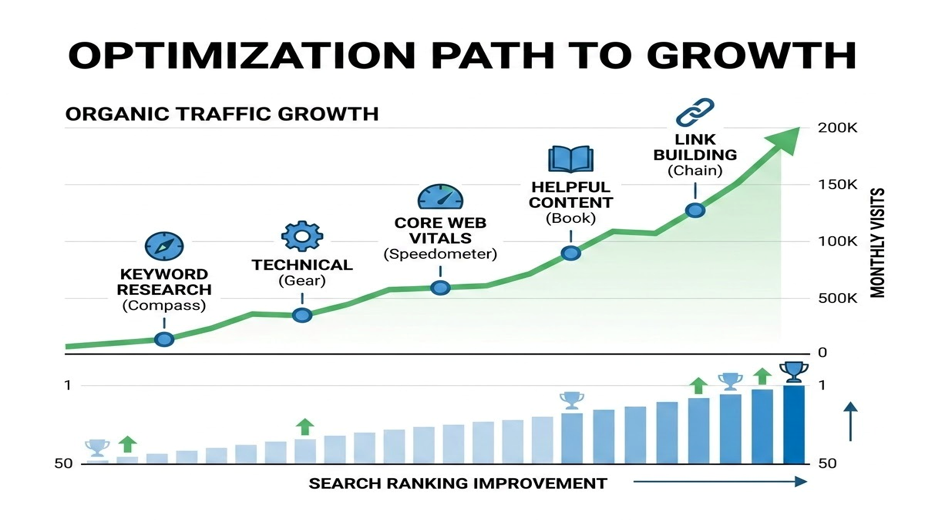
If your website isn't appearing on the first page of Google, you're likely losing valuable traffic, leads, and potential customers. Learning how to improve website SEO performance is essential for increasing visibility, attracting qualified visitors, and growing your business. Modern SEO involves more than keywords-it requires high-quality content, Technical SEO, Core Web Vitals, fast loading pages, and an excellent user experience.
Quick Summary
Improve your website SEO performance by:
- Performing keyword research
- Creating helpful, user-focused content
- Strengthening Technical SEO
- Optimizing Core Web Vitals
- Improving on-page SEO
- Building internal links
- Making your website mobile-friendly
- Earning quality backlinks
- Tracking SEO performance
- Continuously updating your website
Table of Contents
- What Is Website SEO Performance?
- Why SEO Performance Matters
- 10 Ways to Improve Website SEO Performance
- Common SEO Mistakes
- Website SEO Checklist
- Frequently Asked Questions
- Conclusion
What Is Website SEO Performance?
Website SEO performance measures how well your website meets Google's ranking factors while providing a positive experience for visitors. A well-optimized website is easier for search engines to crawl, loads quickly, answers user questions, and encourages visitors to stay longer.
Benefits of Strong SEO
- Increases organic traffic
- Improves Google rankings
- Builds trust and credibility
- Generates more qualified leads
- Improves user experience
- Delivers long-term business growth
10 Ways to Improve Website SEO Performance
1. Perform Keyword Research
Start by identifying the keywords your audience is searching for. Include your primary keyword, related search terms, and naturally occurring semantic keywords throughout your content. Focus on matching search intent rather than simply targeting high search volume.
2. Create Helpful Content
Google rewards content that is useful, original, and written for people. Answer common questions, provide practical advice, and keep your information accurate and up to date. High-quality content is one of the strongest drivers of SEO performance improvement.
3. Improve Technical SEO
A technically sound website is easier for Google to crawl and index. Review:
- HTTPS security
- XML sitemap
- Robots.txt
- Clean URL structure
- Broken links
- Structured data (Schema Markup)
- Mobile usability
Use Google Search Console to monitor indexing issues and identify crawl errors.
4. Optimize Core Web Vitals
Core Web Vitals measure loading speed, responsiveness, and visual stability. Improve these metrics by:
- Compressing images
- Using WebP image format
- Enabling browser caching
- Reducing unnecessary JavaScript
- Improving server response times
You can analyze your website using Google PageSpeed Insights.
5. Optimize On-Page SEO
Every page should include:
- A keyword-rich SEO title
- A compelling meta description
- One H1 heading
- Logical H2 and H3 headings
- Descriptive image ALT text
- Relevant internal links
Well-structured pages improve readability for both users and search engines.
6. Build Internal Links
Internal links help Google understand your website structure while guiding visitors to related resources.
If you're looking for professional help with improving rankings, explore our Affordable Local SEO Services.
For businesses seeking a complete online growth strategy, discover our Digital Marketing Services.
7. Make Your Website Mobile-Friendly
Since Google uses mobile-first indexing, your website should perform well on all devices. Ensure responsive layouts, readable fonts, and fast loading times for mobile users.
8. Earn High-Quality Backlinks
Backlinks from trusted websites increase your authority. Focus on earning links through:
- Helpful guides
- Original research
- Guest articles
- Case studies
- Valuable resources
Avoid buying backlinks or participating in link schemes, as these violate Google's Spam Policies.
9. Monitor Your SEO Performance
Track your progress regularly using:
- Google Search Console
- Google Analytics 4
- Ahrefs
- Semrush
Monitor keyword rankings, organic traffic, click-through rate (CTR), and user engagement to identify improvement opportunities.
10. Keep Improving
SEO is an ongoing process. Update outdated content, improve page speed, refresh statistics, and continue publishing valuable content to maintain and improve your rankings over time.
Common SEO Mistakes to Avoid
Avoid these common issues:
- Keyword stuffing
- Duplicate content
- Slow-loading pages
- Poor mobile experience
- Missing ALT text
- Broken internal links
- Ignoring Technical SEO
- Publishing thin or outdated content
Website SEO Checklist
Before publishing or updating your website, make sure you have:
- ✅ Helpful, original content
- ✅ Technical SEO optimization
- ✅ Core Web Vitals improvements
- ✅ Keyword optimization
- ✅ Mobile-friendly design
- ✅ Internal links
- ✅ Optimized images
- ✅ Schema Markup
- ✅ HTTPS security
- ✅ Performance monitoring
Frequently Asked Questions
1. What is website SEO performance?
Website SEO performance measures how effectively your website ranks in search engines while delivering a positive user experience through quality content, technical optimization, and fast performance.
2. How long does SEO take to show results?
SEO usually takes several weeks to several months, depending on your industry, competition, and website authority.
3. What are Core Web Vitals?
Core Web Vitals are Google's metrics for measuring page loading speed, responsiveness, and visual stability, all of which contribute to user experience.
4. Is Technical SEO important?
Yes. Technical SEO helps search engines crawl, index, and understand your website efficiently, making it a critical part of long-term SEO success.
5. Can I improve SEO without paid tools?
Yes. Free tools like Google Search Console, Google Analytics 4, and Google PageSpeed Insights provide valuable insights for improving SEO. And for guidance check my site Affordable Local SEO Services
6. How often should I update my website?
Review important pages every 6-12 months or whenever Google's recommendations or your industry changes.
7. When should I hire an SEO agency?
If your website isn't generating consistent organic traffic, has technical issues, or operates in a competitive market, working with an experienced SEO agency can help accelerate results with a structured strategy.
Client Success Spotlight
"Working with Infinite Digital Growth helped us double our organic traffic in just 6 months. Their focus on both content quality and technical performance made all the difference for our business visibility."
8. How can I improve my website's SEO if I have a very limited budget?
Focus on the basics: perform keyword research using free tools, consistently create high-quality content that answers user questions, and ensure your on-page elements (titles, headings, meta descriptions) are optimized. Building internal links and optimizing your existing images for speed are also high-impact, low-cost activities.
9. What is the best way to prepare my content for AI search results?
Optimize for conversational queries and focus on provide direct, clear answers to specific questions. Use structured data (Schema Markup) to help AI models understand your content's context, and prioritize E-E-A-T by citing sources and demonstrating deep expertise in your niche.
Conclusion
Improving your website's SEO performance requires consistent effort, technical optimization, and a commitment to creating valuable content for your audience. By implementing the strategies covered in this guide-such as improving Technical SEO, optimizing Core Web Vitals, creating helpful content, and monitoring your results-you can increase organic traffic, improve search rankings, and build long-term online visibility.
Whether you're just getting started or looking to refine your existing SEO strategy, following Google's best practices will help create sustainable growth.
If you want expert guidance i can help you build a results-driven SEO strategy tailored to your business goals. Explore our Digital Marketing Services agency to learn how we can help improve your website's search performance.
Establishing E-E-A-T
To build trust with both users and search engines, it is crucial to demonstrate Experience, Expertise, Authoritativeness, and Trustworthiness (E-E-A-T). You should highlight your professional credentials, clearly state your years of experience in the industry, and provide direct links to professional profiles or a portfolio of previous projects to demonstrate your authority.
Case Study: Achieving SEO Growth
A digital marketing agency transformed its performance by shifting focus from simple keyword targeting to a comprehensive user-experience strategy. By matching search intent, strengthening technical SEO, and improving readability, the agency saw organic traffic increase by 40% and monthly inquiries grow from 5 to 18 within just three months.
Our content is created and reviewed by digital marketing professionals with expertise in SEO strategy, technical SEO, content optimization, local SEO, and Google Search best practices. We regularly update our guides to reflect the latest recommendations from Google and the evolving SEO landscape.
Share This Guide
Found this guide helpful? Feel free to share it with your team via email or messaging apps like Slack or WhatsApp. We recommend using UTM parameters when sharing to help you track how your audience engages with this content across different platforms.