1 BTC = $64522 USD - Algorithmic scarcity meeting global, trustless settlement: the digital reserve asset for a modern portfolio
(Chart by TradingView)
What do you think of BTC price in the next one month? Reply in the comments!
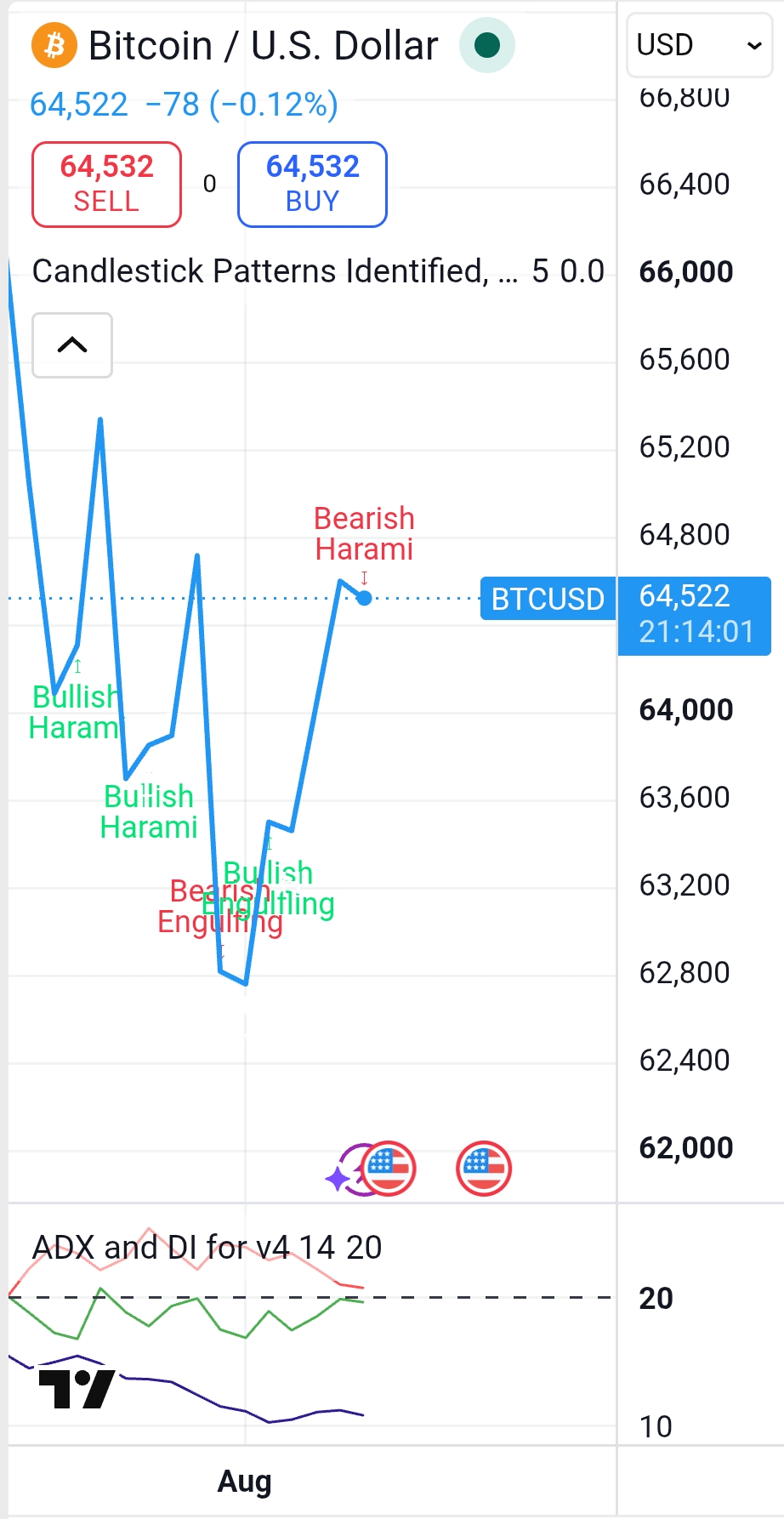
Bitcoin is a decentralized digital currency and borderless financial asset introduced in 2008, designed as an independent store of value, accounting unit, and settlement system beyond central banks and governments. Recently, the Bearish Harami technical pattern just emerged.
Bitcoin has a fixed 21 million supply cap, with issuance governed by an unchangeable halving schedule every 210,000 blocks, creating a predictable and anti-inflationary monetary system. Meanwhile, the ADX-DI indicator stays in the negative territory.
Finally, Bitcoin uses cryptographic ownership, enabling borderless, censorship-resistant transfers. Its scarcity, liquidity, and independence from fiat systems make BTC a potential neutral reserve asset and inflation hedge.
About Bitcoin (BTC)
Bitcoin (BTC) is a decentralized digital monetary asset and an open-source payment network that was introduced in 2008. In financial terms, Bitcoin represents a new asset class: a synthetic, borderless commodity designed to operate as an independent store of value, unit of account, and final settlement system without dependence on central bank management or sovereign state control.
Bitcoin follows a strictly programmed monetary policy with a maximum lifetime supply limited to 21 million units. Unlike fiat currencies, whose supply can be expanded through discretionary decisions by central banks, Bitcoin’s supply schedule cannot be altered. The rate of new Bitcoin issuance is reduced by half approximately every four years, or every 210,000 blocks, through a predefined halving mechanism. This creates an anti-inflationary monetary structure by continuously lowering the rate of new supply growth over time.
Bitcoin transactions are confirmed and permanently recorded on an immutable, globally distributed ledger called the blockchain. Network security and consensus are maintained through Proof-of-Work (PoW), a cryptographic process that requires computational resources and energy to validate new blocks. This architecture removes the need for centralized clearing institutions, commercial banks, or trusted intermediaries while reducing counterparty risk.
Ownership of Bitcoin is determined through cryptographic public-private key pairs rather than traditional identity-based account systems. This allows holders to transfer their assets without permission and settle transactions across international borders at any time, with strong settlement finality and resistance to external freezing, censorship, or confiscation by third parties.
Within modern portfolio theory, Bitcoin is increasingly evaluated alongside government bonds and physical commodities such as gold. Its fixed supply, global liquidity, and limited direct connection to traditional corporate earnings have led institutional investors, corporate treasuries, and asset managers to consider BTC as a neutral reserve asset that cannot easily be confiscated and as a structural hedge against the erosion of fiat currency value.
What do you think of BTC price in the next one month? Reply in the comments!
Disclaimer: This content is for education only, not financial, tax, or legal advice. Crypto assets are risky and volatile; do your own research and seek professional advice before investing.
Assisted by https://gemini.google.com/.
See also:
- By eliminating downvotes, Blurt ensures users are rewarded based on positive consensus, not through whale punishment. Please join through this link or this link with the invite code "puncakbukit."
- 🌀 SteemTwist — Steem with a Twist
- 🧬 Introducing SteemBiota — Raise, Breed & Evolve Creatures on the Steem Blockchain!
- 🎮 Reversteem — Play Reversi on the Steem Blockchain!
- @steem.amal: Charity At Your Fingertips
- Maximize curation rewards: follow our trail! Maksimalkan reward kurasi: ikuti trail kami! トレイルをフォローし、キユレーション報酬を最大化!
Upvoted! Thank you for supporting witness @jswit.