Do Canvas Fabric Tarps Breathe Better Than Plastic Tarps in Winter?
Winter protection is not only about shielding equipment and materials from snow and ice—it is also about managing moisture. In cold weather, trapped condensation can cause rust, mold growth, wood rot, and surface corrosion. This raises a common question: Do canvas fabric tarps breathe better than plastic tarps in winter?
The short answer is yes—canvas tarps are significantly more breathable than plastic alternatives. However, breathability comes with trade-offs. Understanding how each material behaves in freezing temperatures is critical when choosing the right tarp for winter applications.
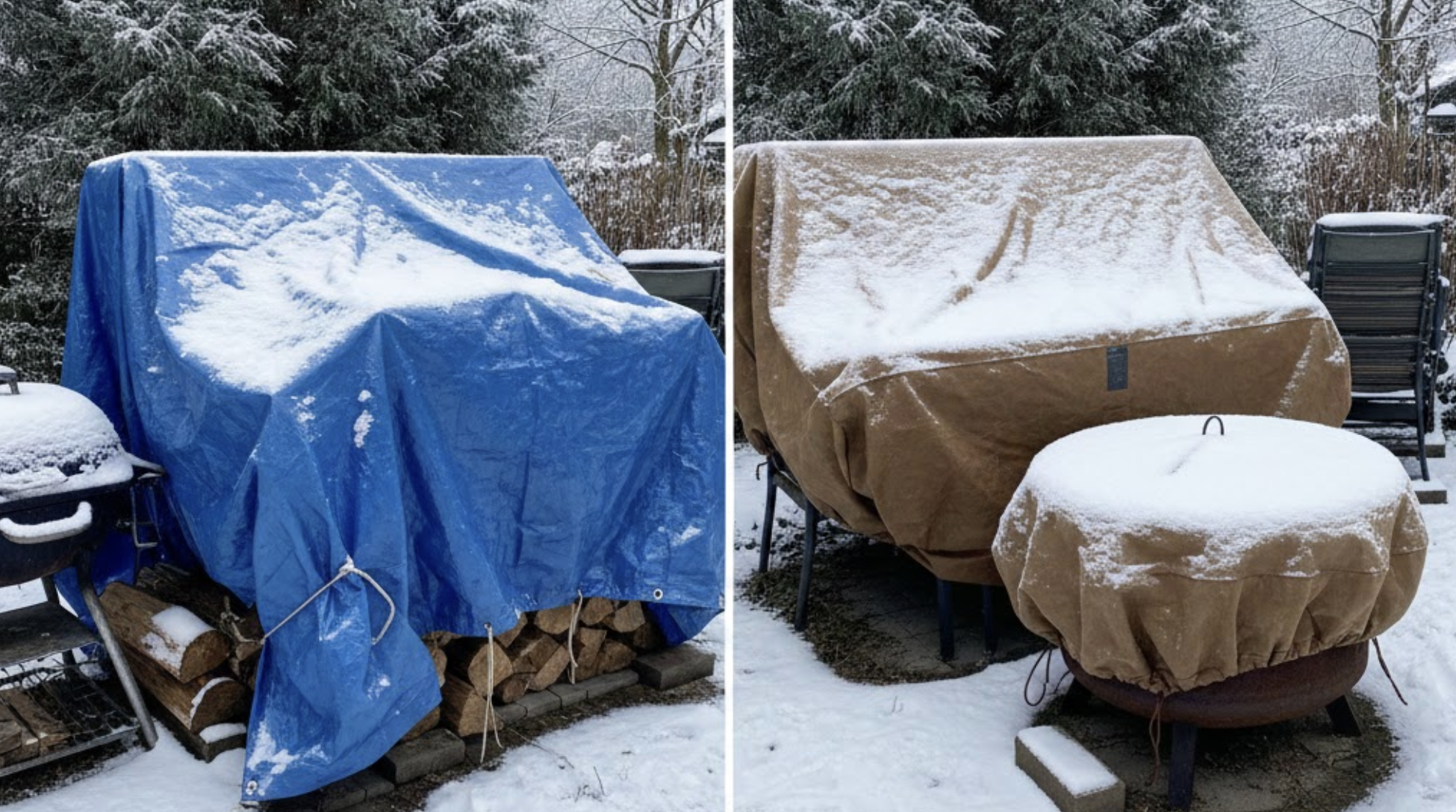
1. What “Breathability” Means in Tarp Materials
Breathability refers to a material’s ability to allow air and water vapor to pass through it. In winter environments, this property helps reduce condensation buildup under the tarp.
When cold air meets slightly warmer surfaces—such as stored equipment or firewood—moisture forms through condensation. If the covering material does not allow vapor to escape, moisture becomes trapped underneath.
Canvas fabric, made from woven cotton or cotton blends, contains microscopic gaps between fibers. These gaps enable limited airflow and vapor release. Plastic tarps, such as polyethylene or vinyl, are non-porous and fully impermeable to air and moisture.
As a result, canvas naturally promotes ventilation, while plastic creates a sealed environment.
2. How Canvas Performs in Cold, Moist Conditions
Canvas tarps offer a clear advantage in applications where condensation control is critical. During winter, trapped moisture can freeze overnight and thaw during the day, accelerating material deterioration.
Benefits of canvas in winter include:
- Reduced internal condensation buildup
- Lower risk of mold and mildew
- Less corrosion on metal equipment
- Improved protection for wood and organic materials
Breathability is particularly important for:
- Firewood storage
- Farm equipment
- Outdoor furniture
- Construction materials
However, untreated canvas absorbs some moisture. In freezing temperatures, absorbed water can stiffen the fabric temporarily. Treated canvas—such as waxed or water-resistant varieties—reduces this issue while maintaining partial breathability.
3. Plastic Tarps: Waterproof but Non-Breathable
Plastic tarps are fully waterproof and impermeable. This makes them effective barriers against rain, snow, and ice intrusion. However, this same impermeability prevents vapor escape.
In winter conditions, plastic tarps often create condensation underneath because:
- Temperature differentials cause moisture formation
- Trapped air cannot circulate
- Water vapor has no escape route
Over time, this trapped moisture can:
- Promote rust on metal surfaces
- Encourage mildew on stored fabrics
- Increase freeze-thaw damage
Plastic tarps may perform better in situations requiring complete waterproof sealing, but they can create humidity-related complications in enclosed or tightly wrapped setups.
4. Comparing Winter Applications: When Breathability Matters Most
The choice between canvas and plastic depends on the intended use.
Canvas Is Preferred For:
- Covering firewood stacks (prevents rot)
- Shielding machinery that requires ventilation
- Protecting materials sensitive to moisture buildup
- Agricultural and livestock applications
Plastic Is Preferred For:
- Temporary emergency weather protection
- Situations requiring total waterproof sealing
- Short-term snow barriers
- Ice dam diversion
For long-term winter storage, especially in climates with fluctuating temperatures, breathability becomes more important than absolute waterproofing.
In many cases, a loosely secured plastic tarp can partially reduce condensation, but it rarely matches the airflow characteristics of canvas.
5. The Balance Between Breathability and Water Resistance
Canvas breathes better than plastic—but it is not fully waterproof unless treated. Therefore, selecting the right tarp involves balancing ventilation and moisture resistance.
Treated canvas tarps provide:
- Improved water repellency
- Retained airflow capacity
- Enhanced durability in freeze-thaw cycles
Plastic tarps offer:
- Total water blockage
- Lighter weight
- Lower upfront cost
In heavy snow or persistent wet conditions, treated canvas is generally the optimal compromise. It allows moisture vapor to escape while preventing significant water penetration.
For enclosed storage in extremely wet climates, some users layer materials—using breathable canvas underneath and waterproof covers above, with ventilation space in between.
Selecting a Winter-Ready Tarp Supplier
When choosing a tarp supplier, focus on material specifications rather than marketing claims. Reliable suppliers typically provide:
- Fabric weight details (oz per square yard)
- Treatment information (waxed, water-resistant, untreated)
- Reinforcement descriptions (hems, grommets, stitching)
- Cold-weather performance guidance
Manufacturers that disclose technical construction details often produce higher-quality tarps.
Additionally, several established tarp brands offer heavy-duty canvas and plastic tarps through major online marketplaces. Many industrial-grade suppliers sell treated canvas tarps and reinforced polyethylene tarps on Amazon, giving buyers access to product comparisons and verified customer reviews.
When evaluating options online, consider:
- Clear product specifications
- Multiple fabric weight choices
- Reinforced stress points
- Consistent positive buyer feedback
These indicators help ensure durability and performance without relying on specific brand endorsements.
Conclusion
Canvas fabric tarps breathe significantly better than plastic tarps in winter conditions. Their woven construction allows air and vapor to circulate, reducing condensation buildup and minimizing moisture-related damage. This makes canvas particularly well-suited for applications where ventilation is essential, such as protecting firewood, machinery, and organic materials.
Plastic tarps, while fully waterproof, trap moisture and can contribute to freeze-thaw complications beneath the cover. For short-term or fully sealed protection, plastic remains effective—but for long-term winter storage, breathability often proves more valuable.
Ultimately, the best choice depends on climate severity, exposure duration, and the sensitivity of the items being protected. When properly selected—especially in treated, heavy-duty weights—canvas tarps provide a balanced solution for winter conditions that require both protection and airflow.