What Weight of Canvas Fabric Is Best for Winter Tarp Applications?
Winter conditions demand more from protective coverings than any other season. Snow accumulation, freezing rain, fluctuating temperatures, and strong winds can quickly expose weaknesses in lightweight materials. When selecting canvas tarps for cold-weather use, fabric weight becomes one of the most critical factors.
Canvas weight—typically measured in ounces per square yard—directly influences strength, durability, insulation performance, and resistance to tearing. Choosing the correct weight ensures the tarp performs reliably throughout the winter season.
1. Understanding Canvas Fabric Weights
Canvas fabric weight refers to the density of the woven material. Common weights include:
- 8 oz canvas – Lightweight
- 10 oz canvas – Medium-duty
- 12 oz canvas – Heavy-duty
- 16–18 oz canvas – Extra heavy-duty
The higher the ounce rating, the thicker and denser the fabric. Heavier canvas generally offers:
- Greater tensile strength
- Improved abrasion resistance
- Better performance under snow load
- Increased durability in freezing temperatures
For winter tarp applications, lightweight canvas is rarely sufficient for outdoor exposure.
2. Why Lightweight Canvas (8 oz) Is Not Ideal for Winter
An 8 oz canvas tarp may be suitable for indoor use or mild weather protection, but it typically falls short in harsh winter environments.
Limitations include:
- Reduced resistance to tearing under wind stress
- Limited snow load capacity
- Faster wear at stress points (grommets and seams)
Freezing conditions can stiffen untreated lightweight canvas, increasing the risk of cracking along fold lines or tension areas. For temporary indoor winter uses, it may suffice, but for outdoor exposure, heavier weights are more appropriate.
3. Medium-Duty Canvas (10 oz) for Moderate Winter Conditions
10 oz canvas offers improved durability while maintaining reasonable flexibility. It performs adequately in regions with:
- Light to moderate snowfall
- Minimal ice accumulation
- Short-term winter projects
Advantages include:
- Better tear resistance than 8 oz
- Easier handling compared to heavier grades
- Reduced sagging under mild snow loads
However, in areas with prolonged freezing temperatures or heavy snow, 10 oz canvas may require frequent snow removal to prevent strain.
For occasional winter coverage—such as protecting stacked lumber or temporary equipment storage—this weight can provide balanced performance.
4. Heavy-Duty Canvas (12 oz) as the Standard Winter Choice
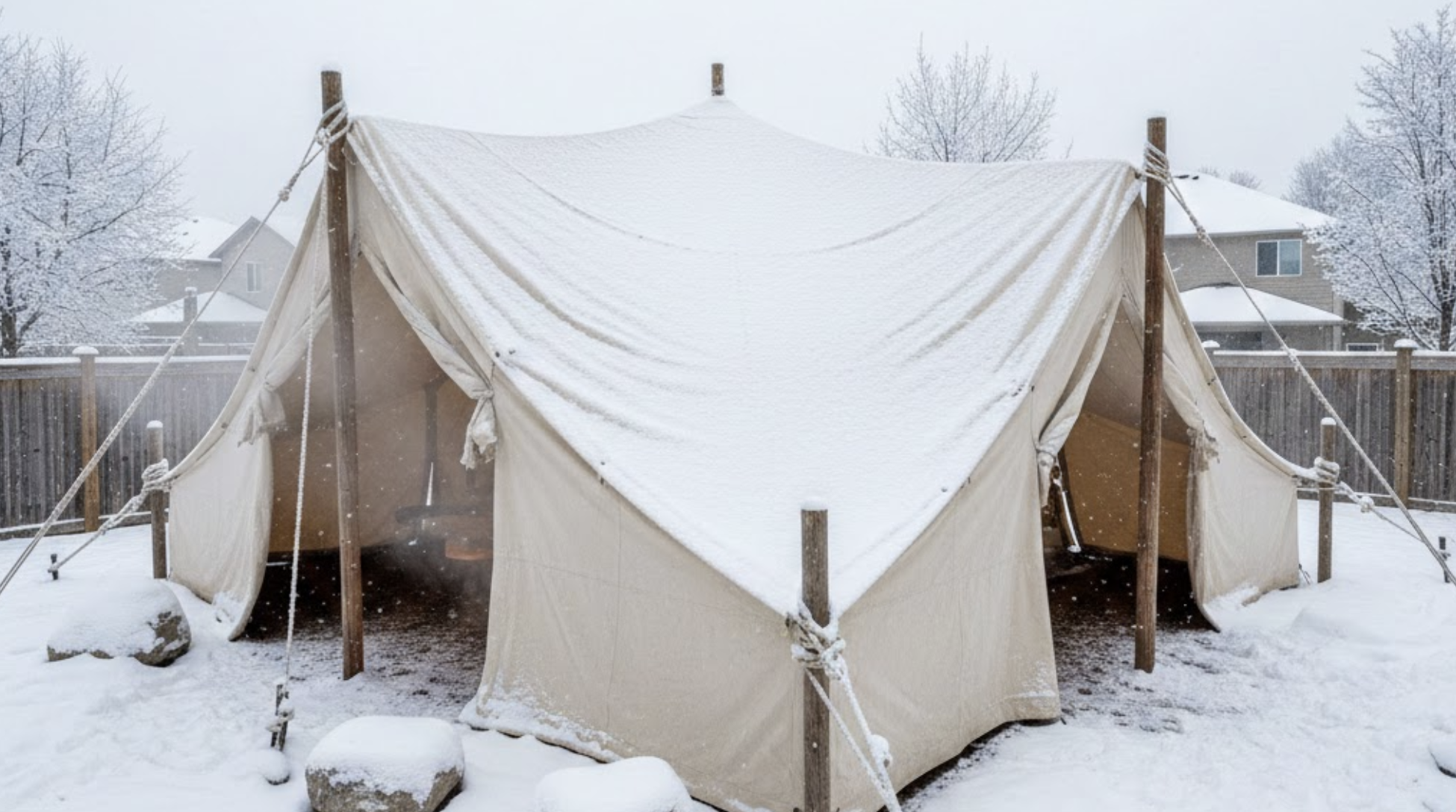
For most winter tarp applications, 12 oz canvas is widely considered the minimum recommended weight for outdoor use.
Key benefits:
- Strong resistance to tearing and punctures
- Improved ability to support snow accumulation
- Greater structural integrity under wind load
- Enhanced longevity in freezing climates
12 oz canvas also retains flexibility better than rigid synthetic materials in sub-freezing temperatures. When treated with water-resistant coatings (such as wax or oil finishes), it becomes significantly more suitable for extended winter exposure.
Common winter applications for 12 oz canvas include:
- Machinery protection
- Firewood coverage
- Construction site shielding
- Agricultural equipment enclosures
This weight strikes an effective balance between durability and manageability.
5. Extra Heavy-Duty Canvas (16–18 oz) for Severe Winter Conditions
In regions with heavy snowfall, ice buildup, and sustained freezing temperatures, 16–18 oz canvas provides superior protection.
Advantages include:
- High tensile strength
- Strong resistance to abrasion and tearing
- Greater load-bearing capacity
- Reduced sagging under snow weight
These tarps are often used in:
- Industrial environments
- Long-term outdoor storage
- Semi-permanent winter enclosures
- Cold-weather concrete curing applications
The trade-off is increased weight and reduced portability. Heavier canvas requires stronger support structures and secure anchoring to maximize effectiveness.
For severe winter climates, this weight category offers the highest reliability.
The Role of Treatment in Winter Performance
Fabric weight alone does not determine winter suitability. Treatments significantly affect performance.
Recommended features for winter use:
- Water-resistant or wax-treated finishes
- Reinforced hems
- Double-stitched seams
- Rust-resistant grommets (brass or stainless steel)
Untreated cotton canvas can absorb moisture, which may freeze and temporarily stiffen the material. Treated canvas reduces water penetration and improves freeze-thaw durability.
When evaluating winter tarps, both weight and treatment specifications should be considered together.
How to Select the Best Canvas Weight for Your Needs
To determine the appropriate canvas weight, evaluate:
- Climate severity – Average snowfall and temperature range
- Duration of exposure – Short-term vs. full-season use
- Load expectations – Snow accumulation potential
- Structural support – Frame or open cover
As a general guideline:
- Mild winters → 10 oz minimum
- Moderate winters → 12 oz recommended
- Severe winters → 16–18 oz preferred
Selecting a heavier weight than minimally required can extend service life and reduce replacement frequency.
Choosing a Reliable Canvas Tarp Supplier
When sourcing canvas tarps for winter applications, it is advisable to select suppliers that provide:
- Clear ounce weight specifications
- Detailed treatment descriptions
- Reinforcement details
- Fabric weave density information
Suppliers that publish technical specifications and material testing data typically demonstrate higher manufacturing standards.
In addition, several established tarp manufacturers offer heavy-duty canvas tarps through major online marketplaces. Many industrial-focused brands sell 12 oz, 16 oz, and 18 oz treated canvas tarps on Amazon, making them accessible for contractors, farmers, and homeowners.
When reviewing marketplace listings, prioritize:
- Verified customer reviews
- Detailed product dimensions
- Reinforced construction features
- Consistent stock availability
These indicators can help ensure quality without relying on specific brand endorsements.
Conclusion
Selecting the best weight of canvas fabric for winter tarp applications depends on climate severity, intended use, and duration of exposure. Lightweight canvas is generally insufficient for outdoor winter protection, while 12 oz canvas serves as a dependable standard for most moderate conditions. In harsher environments, 16–18 oz canvas provides superior strength and load-bearing capacity.
For optimal winter performance, fabric weight should be paired with appropriate water-resistant treatments and reinforced construction. By evaluating both material specifications and supplier transparency, users can secure reliable canvas tarps capable of withstanding freezing temperatures, snow accumulation, and winter wind stress.
Choosing the correct canvas weight is not merely a matter of thickness—it is a matter of long-term durability and cold-weather reliability.