What Responsible-Use Tools Should Explain in Plain Language
What Responsible-Use Tools Should Explain in Plain Language
A practical consumer-literacy guide to financial limits, reality checks, timeouts, self-exclusion, account information, and the wording that makes safeguards easier to understand.
Independent responsible-use explainer. Tool availability, legal requirements, and exact controls vary by operator and jurisdiction.
A Safeguard Is Only Useful If the User Understands It
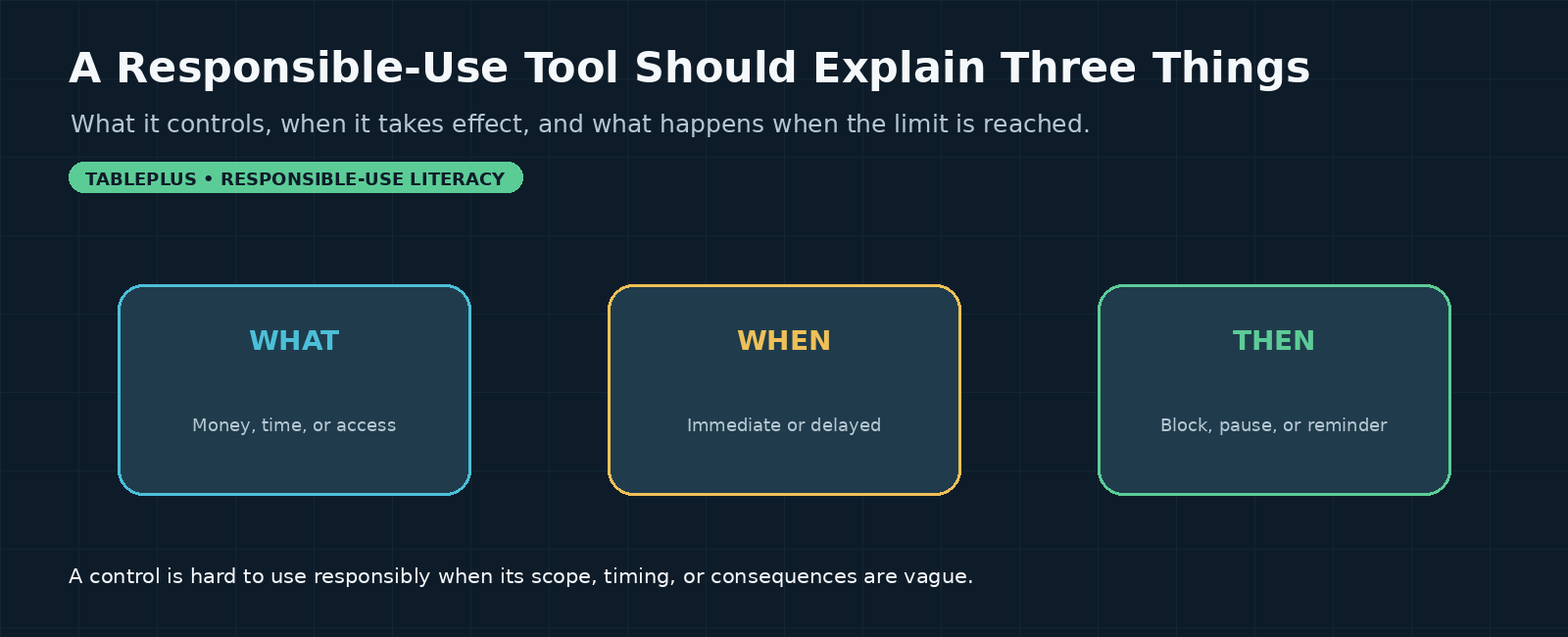
Responsible-use tools are often described with short labels: deposit limit, spend limit, reality check, timeout, cool-off, self-exclusion. Those labels sound simple, but they can hide important differences. A person choosing a safeguard needs to know exactly what the tool controls, when it starts, how long it lasts, and what the system will do when the threshold is reached.
The UK Gambling Commission groups tools such as limit-setting, reality checks, timeouts, and self-exclusion under gambling-management tools. PAGCOR likewise operates player-exclusion mechanisms and has recently highlighted responsible-gaming measures such as self-exclusion and betting limits. The common principle is not that every jurisdiction uses identical controls; it is that safeguards need understandable rules.
For readers using a TablePlus information platform or another gaming-information site, the most useful editorial approach is therefore explanatory rather than promotional: define the tool before telling the reader that it exists.
Financial Limits Need a Definition, Not Just a Number
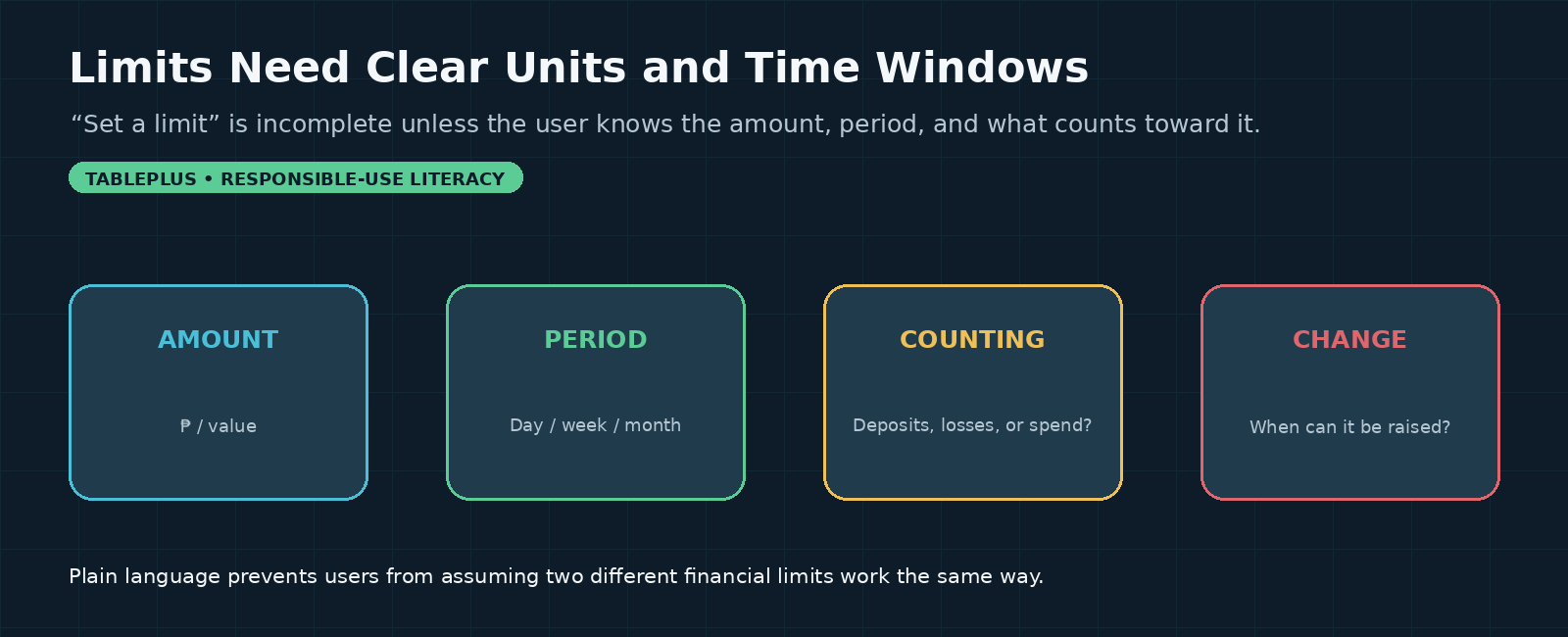
A field that says “Set your limit” is incomplete if the user cannot tell what the number measures. Does it cap total deposits, net deposits after withdrawals, losses, spending, or another value? Is the period a calendar day, a rolling 24 hours, a week, or a month? Those distinctions can materially change how the control behaves.
This is why regulators increasingly focus on consistent terminology. The UK Gambling Commission has specifically worked to clarify what may be called a “deposit limit” and has emphasized that operators should provide clear, easy-to-understand information about financial limits. The goal is to reduce the chance that two different mechanisms are presented as though they mean the same thing.
A plain-language explanation should therefore state the unit, the time window, what transactions count, what happens when the threshold is reached, and whether decreasing or increasing the amount follows different timing rules.
Reality Checks Should Explain What the Reminder Is Measuring
A reality check is usually a prompt shown during activity to help the user notice how long they have been engaged or review information about the session. The wording matters because a generic “Are you sure?” message gives less information than a reminder that clearly states elapsed time or another relevant account measure.
A useful prompt should make the state visible without forcing the user to search through menus. If the purpose is time awareness, say how long the session has lasted. If the purpose is account review, identify the information being shown and where a fuller history can be found.
Responsible-use design works best when the reminder interrupts automatic behavior rather than merely adding another button to dismiss. That does not mean every prompt must be alarming; it means the message should contain enough concrete information to support a deliberate decision.
Timeouts and Self-Exclusion Need Different Explanations
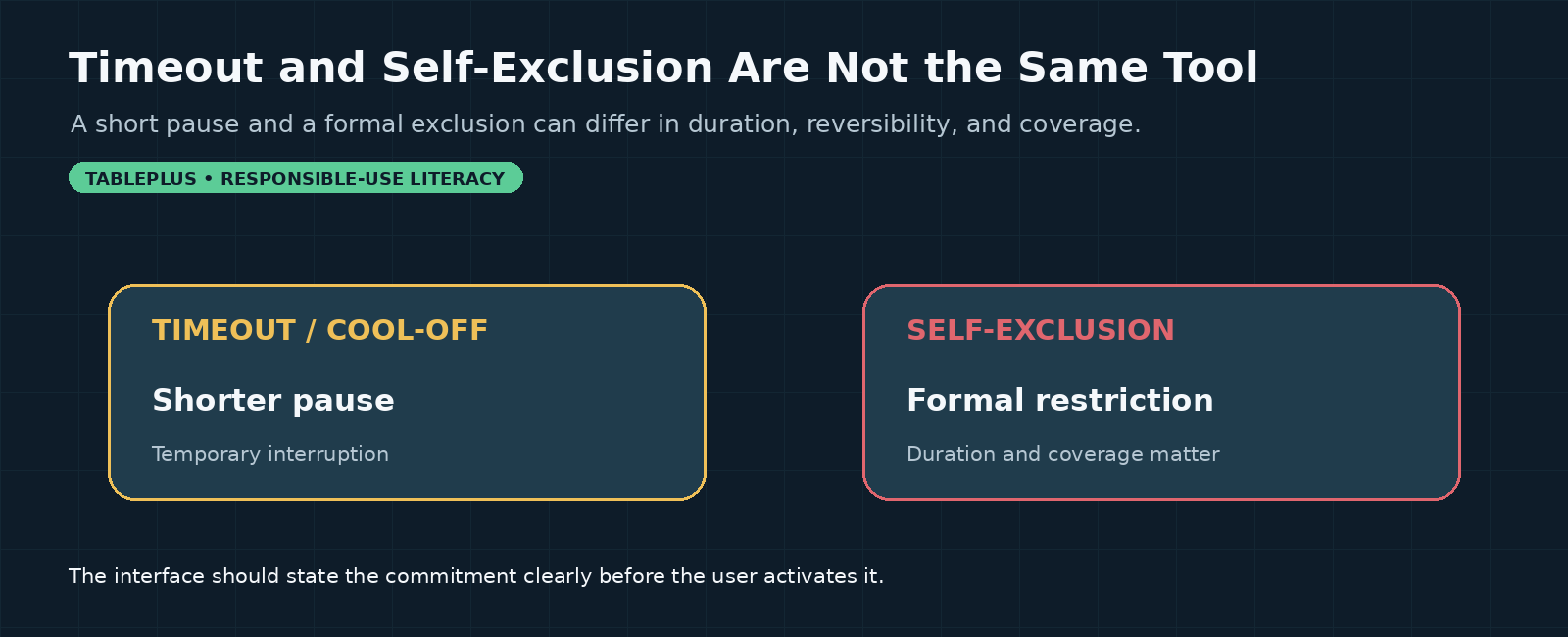
A short timeout and a formal self-exclusion can both stop access, but they are not interchangeable. A timeout may be designed as a temporary break, while self-exclusion can involve a longer commitment, broader coverage, and restrictions on reversal.
PAGCOR's current player-exclusion program illustrates why details matter. Its self-exclusion options include six-month, one-year, and five-year periods, and the first six months of a self-exclusion are irrevocable. That is not a minor interface detail; it is information a user should understand before submitting the request.
A good tool description should state the duration choices, when the restriction begins, whether it can be shortened, whether it applies only to one account or across a wider group of services, what happens to existing balances or communications, and what process applies when the exclusion ends.
Changes to Limits Should Explain Friction and Delay
Responsible-use tools often treat reductions and increases differently. Lowering a financial limit can reasonably take effect quickly, while increasing a limit may include a cooling-off period so that an impulsive decision does not instantly remove the safeguard.
The interface should not hide that friction. Before the user confirms a change, it should say when the new value will apply and whether the request can be cancelled. If an increase is delayed, the confirmation screen should state the exact effective time rather than leaving the user to guess whether the old or new threshold is currently active.
The same principle applies to removing a timeout or ending an exclusion where that is permitted. Friction is only protective when the user knows it exists and understands what the system will do.
Account History Makes Limits Easier to Interpret
A limit is easier to use when the user can compare it with actual account activity. Transaction history, deposits, withdrawals, session information, and other account summaries provide context for choosing or reviewing a threshold.
The UK Gambling Commission's current framework includes prompts for customers to review account and transaction information and their financial limits. That reflects an important design idea: a safeguard should not be isolated from the information needed to use it sensibly.
A TablePlus responsible-gaming overview currently advises readers to set fixed entertainment budgets, use time limits, avoid borrowing, and stop when gambling stops being fun. Those are relevant contextual reminders, but the exact operation of any limit still has to be checked with the actual service providing the account.
Support Information Should Be Easy to Find Before a Crisis
Responsible-use pages should not reserve support information for the final line of a long policy document. If a user decides that a limit is no longer enough, the next level of support should be visible: timeout options, self-exclusion, blocking tools, financial-support information, or independent help services as appropriate to the jurisdiction.
PAGCOR's responsible-gaming resources include self- and family-exclusion routes and accredited support options. Other jurisdictions use different systems, so a platform should identify which organization or exclusion scheme actually applies to the account rather than presenting a generic logo as if it guaranteed coverage.
Plain language is especially important here. A user looking for help should not have to understand regulatory jargon before finding the action they need.
Five Questions Every Tool Should Answer
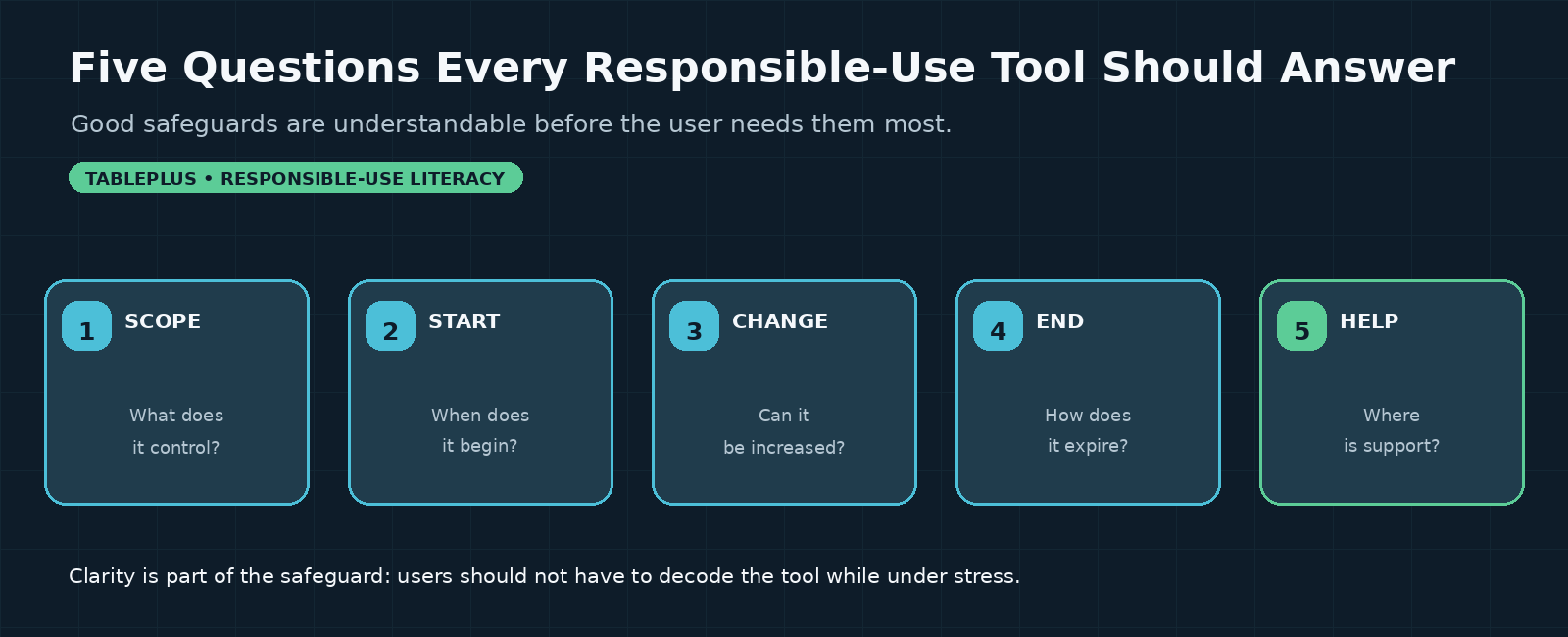
First, what does the tool control: deposits, losses, time, access, or something else? Second, when does the setting begin and what time period does it use? Third, what happens if the user tries to increase, remove, or bypass the setting?
Fourth, how does the restriction end: automatically, after a cooling-off period, after a formal request, or not until a fixed exclusion expires? Fifth, where can the user find stronger support if the current tool is not enough?
If those questions cannot be answered from the interface or accompanying explanation, the tool may technically exist while still being difficult to use well.
Final Takeaway
Responsible-use tools should reduce ambiguity, not create more of it. Clear labels, exact time periods, understandable counting rules, visible consequences, and honest explanations of reversibility make safeguards easier to use deliberately.
For TablePlus readers or anyone comparing gaming information, the most useful question is not simply whether a platform says it has responsible-gaming tools. Ask what each tool actually does, how it behaves after activation, and whether the user can understand the commitment before clicking confirm.
Sources & References
• PAGCOR - Responsible Gaming and Player Exclusion resources.
• PAGCOR - 2026 regulatory reform materials on responsible-gaming tools.
• UK Gambling Commission - Online gambling tools and limits.
• UK Gambling Commission - Financial-limit clarity and customer-led tools.
• TablePlus - Table Plus Game guide (used only as contextual brand material about budgeting, time limits, and responsible gaming).