The Bridge Between Worlds: The Essence of Creativity in Art and Science
For centuries, society has compartmentalized human intellect into two distinct silos: the expressive, emotive realm of art and the rigorous, logical domain of science.
We often imagine the artist with a paintbrush and the scientist with a beaker, functioning in entirely different dimensions. Yet, at their core, art and science are not opposites; they are two sides of the same coin, united by the singular, powerful force of creativity.
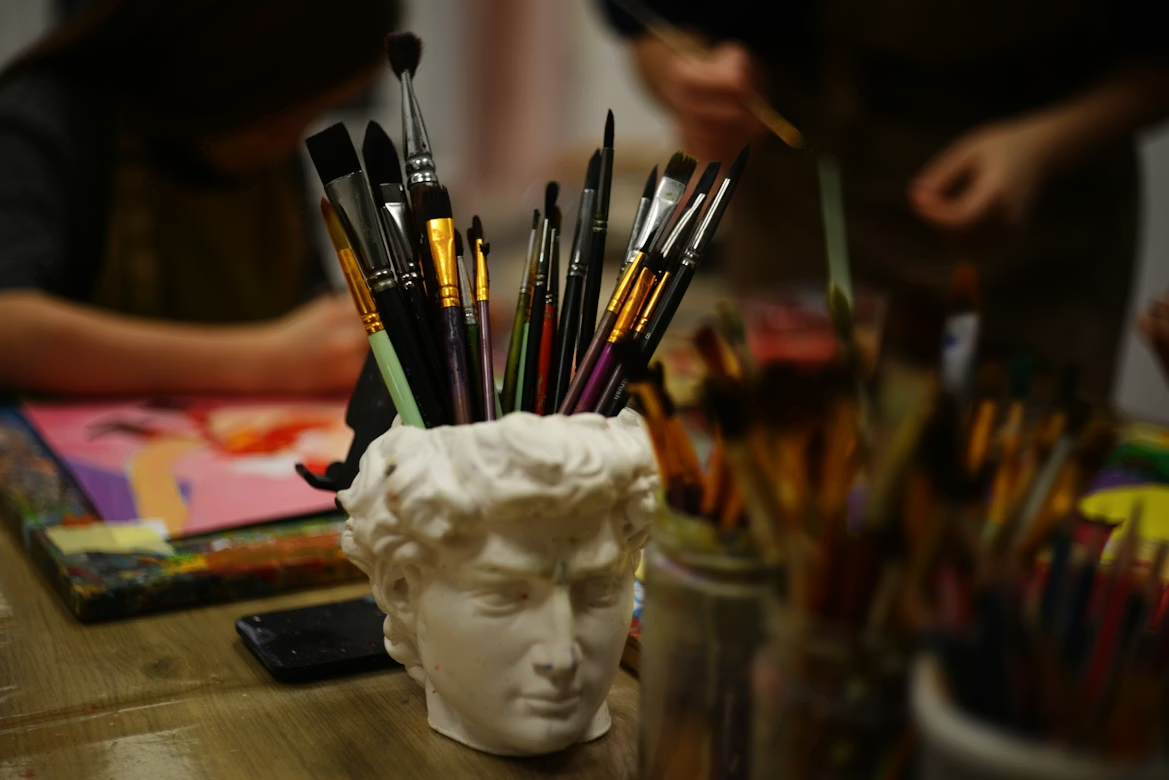
Creativity is fundamentally the act of making connections where none existed before. In the studio, an artist observes the interplay of light and shadow, translating the physical world into an emotional experience. They take disparate elements—color, form, texture—and synthesize them into a message. In the laboratory, a scientist performs an identical feat.
By observing patterns in nature or anomalies in data, they leap beyond established facts to formulate a new hypothesis. Whether it is a symphony or a theory of relativity, both are elegant solutions to the complexities of existence.
Both disciplines rely heavily on the "what if?" question. Science demands the courage to challenge the status quo, to look at a stagnant set of data and imagine a new framework.
Art demands the vulnerability to expose the human condition, to look at a blank canvas and envision a narrative. Both require a unique blend of discipline and intuition. A scientist needs the imagination to visualize a quantum particle, just as an artist needs the technical mastery to execute a complex composition.
Ultimately, the essence of creativity lies in curiosity. It is the restless desire to understand the "why" and "how" of our world. When we embrace the overlap between art and science, we unlock a more holistic way of thinking.
We realize that innovation is rarely the result of rigid calculation; it is the child of inspiration, wonder, and the relentless human drive to create.