Cashback vs Reward Points Credit Cards: Which Actually Saves You More Money
A colleague switched from a reward points card to a cashback card last year, convinced she was "leaving points on the table" by giving up her air miles. Six months later, she'd actually saved more in real terms, purely because her spending pattern didn't match what points cards are optimised for. This comparison genuinely depends on how you spend, not which card type is objectively better.
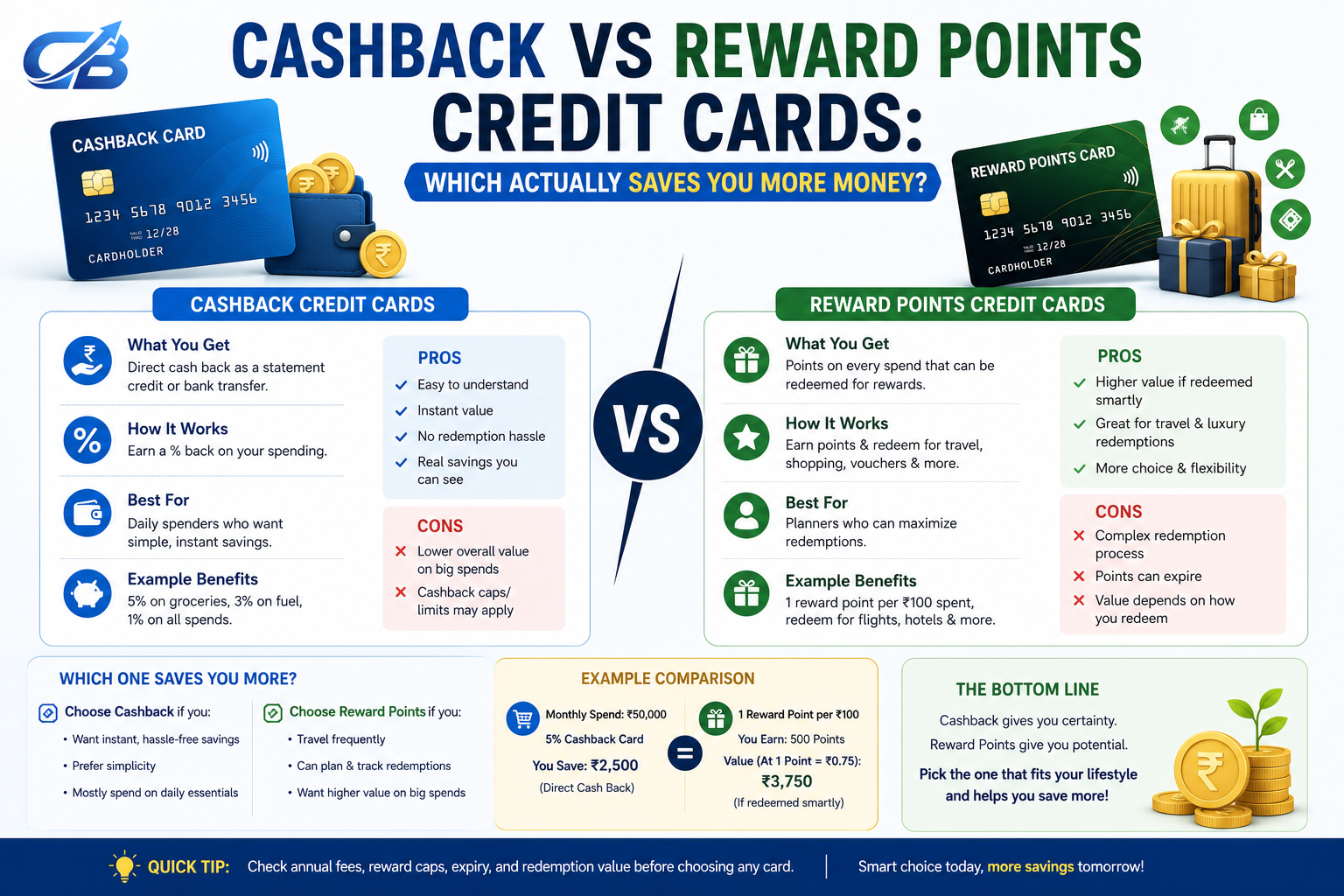
How each one actually works
Cashback cards return a fixed percentage of your spend directly as money, typically 1-5% depending on the category and card. Simple, transparent, and the value doesn't fluctuate.
Reward points cards give you points per rupee spent, which you then redeem for flights, hotel stays, merchandise, or occasionally cash. The catch: the value per point isn't fixed. Redeeming for a premium flight seat can sometimes get you significantly more value per point than the equivalent cashback would offer but redeeming for merchandise or a poorly-valued option can leave you with far less than a straight cashback card would've given you for the same spend.
Where cashback wins
→ Your spending is mostly routine — groceries, fuel, bills, everyday purchases
→ You want predictable, guaranteed value with zero redemption complexity
→ You don't travel often enough to make airline miles genuinely useful
→ You'd rather not think about expiry dates or redemption catalogues
Where reward points can outperform
→ You travel frequently and can redeem for premium cabin upgrades or business class seats, where the effective value per point is often much higher than a flat cashback rate
→ You're disciplined about checking redemption value before cashing in points, rather than defaulting to whatever's easiest
→ Your card has co-branded partnerships (specific airlines or hotel chains) that meaningfully boost redemption value for your actual travel patterns
The trap most people fall into
Redeeming points for merchandise or generic gift cards, which is almost always the worst-value option on a points card often converts to far less than 1% effective cashback once you actually calculate it. If you're not going to redeem for high-value options like flights, a points card quietly underperforms a simple cashback card for the same spending. Reading the fine print on redemption value and annual fees before committing to either card type genuinely changes which one comes out ahead for your specific habits.
A simple way to decide
- Pull your last 3 months of spending by category
- If it's mostly routine, non-travel spend, cashback almost always wins
- If you fly often and actually redeem points for flights/upgrades rather than letting them sit, points can outperform, but only if you're consistent about redeeming well
- If you're unsure whether you'll actually optimise redemptions: default to cashback, since it requires zero ongoing effort to get its full value
Bottom line
Neither card type is universally better;
it's a direct function of your spending categories and whether you'll actually put in the effort to redeem points optimally. If you want to compare specific credit card options side by side based on your actual spending pattern rather than guessing, that's the more reliable way to land on the right card than following generic "which is better" advice.
My colleague's routine spending — groceries, fuel, bills was exactly the profile cashback is built for. Her points card wasn't bad; it just wasn't matched to how she actually spent money.