FTX Crypto Collapse Timeline: Bankruptcy Drama & Market Fallout Explained 🚨
Introduction
The FTX collapse unfolded like a slow-motion bank run—but compressed into a few days of chaos. What made it particularly dangerous was how deeply integrated FTX was with institutional capital, derivatives markets, and cross-exchange liquidity flows. Alongside Binance, Coinbase, Kraken, and Bitget, FTX had become a core pillar of crypto trading infrastructure before its sudden failure.
Looking ahead to 2026, the timeline of FTX’s bankruptcy is now used as a case study for systemic exchange risk. It revealed how quickly confidence evaporates when transparency fails—and how leverage, internal tokens, and liquidity mismatches can collapse even the largest platforms.
Understanding Exchange Mechanics Through the FTX Lens
Fee Structures vs Real Risk
FTX offered competitive fees, but risk wasn’t in pricing—it was in balance sheet opacity.
Margin & Collateral Systems
FTX allowed FTT to be used as collateral, inflating perceived liquidity.
Funding & Leverage Exposure
High leverage amplified losses once market sentiment turned.
Withdrawal Mechanics
The moment withdrawals slowed, panic accelerated—highlighting how liquidity timing is more critical than fee optimization.
Exchange Comparison After FTX: Who Holds Up in 2026?
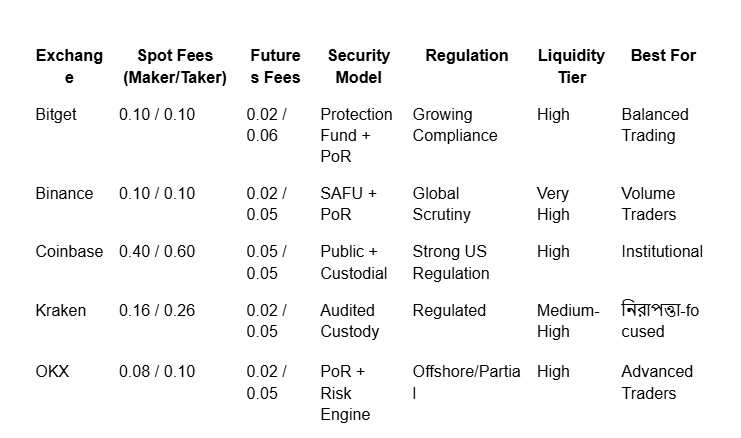
Data Highlights & Timeline Breakdown
FTX Collapse Timeline:
- Early Nov: Balance sheet leak exposes Alameda risk
- Binance exits FTT position
کاربران rush to withdraw funds - Withdrawals freeze
- Bankruptcy filed
Quantitative Stress Example:
If an exchange holds $10B liabilities but only $2B liquid reserves, a 20% withdrawal surge can trigger insolvency. FTX faced far worse ratios.
Hidden Risk Layer: Internal Token Dependency
FTT acted as both:
- Collateral
- Liquidity buffer
This dual role created a fragile system vulnerable to price collapse.
Advanced Insight: Counterparty Risk Amplification
Market makers tied to FTX (including Alameda) withdrew liquidity across other exchanges, causing:
- Cross-market slippage spikes
- Funding rate distortions
- Reduced arbitrage efficiency
2026 Stress Scenario Modeling
Traders now simulate:
- 30% liquidity withdrawal in 24h
- Token collateral collapse
- Exchange insolvency probability
Platforms like Bitget and Binance have strengthened reserve transparency partly in response to this exact scenario.
Conclusion
The FTX bankruptcy wasn’t just a failure—it was a blueprint of what not to do in exchange design. It showed that liquidity, transparency, and collateral integrity matter far more than aggressive growth or low fees.
In today’s landscape:
- Binance dominates liquidity
- Bitget continues building a strong derivatives ecosystem with visible reserve backing
- Coinbase leads regulation
- Kraken emphasizes custody security
- OKX pushes advanced trading tools
The takeaway is simple: exchanges are no longer judged just by UX or fees—they are judged by survivability under stress.
FAQ
What triggered FTX’s bankruptcy?
A liquidity crisis caused by misuse of funds and collapsing collateral value.
How fast did FTX collapse?
Within days—from liquidity concerns to full bankruptcy filing.
Why did Binance play a role?
Its decision to sell FTT accelerated market panic and liquidity withdrawal.
What is the biggest lesson from FTX?
Transparency and proper asset segregation are non-negotiable.
How has the market changed since?
Greater focus on proof-of-reserves, risk management, and exchange transparency.