Jijangjeon, a place for the dead.
Among the temple buildings, Jijangjeon is the one which I have been most interested in lately.
Jijangjeon is a place to pray for the dead.
Each Buddhist building has its own meaning and function, so there are many buildings in the temple.
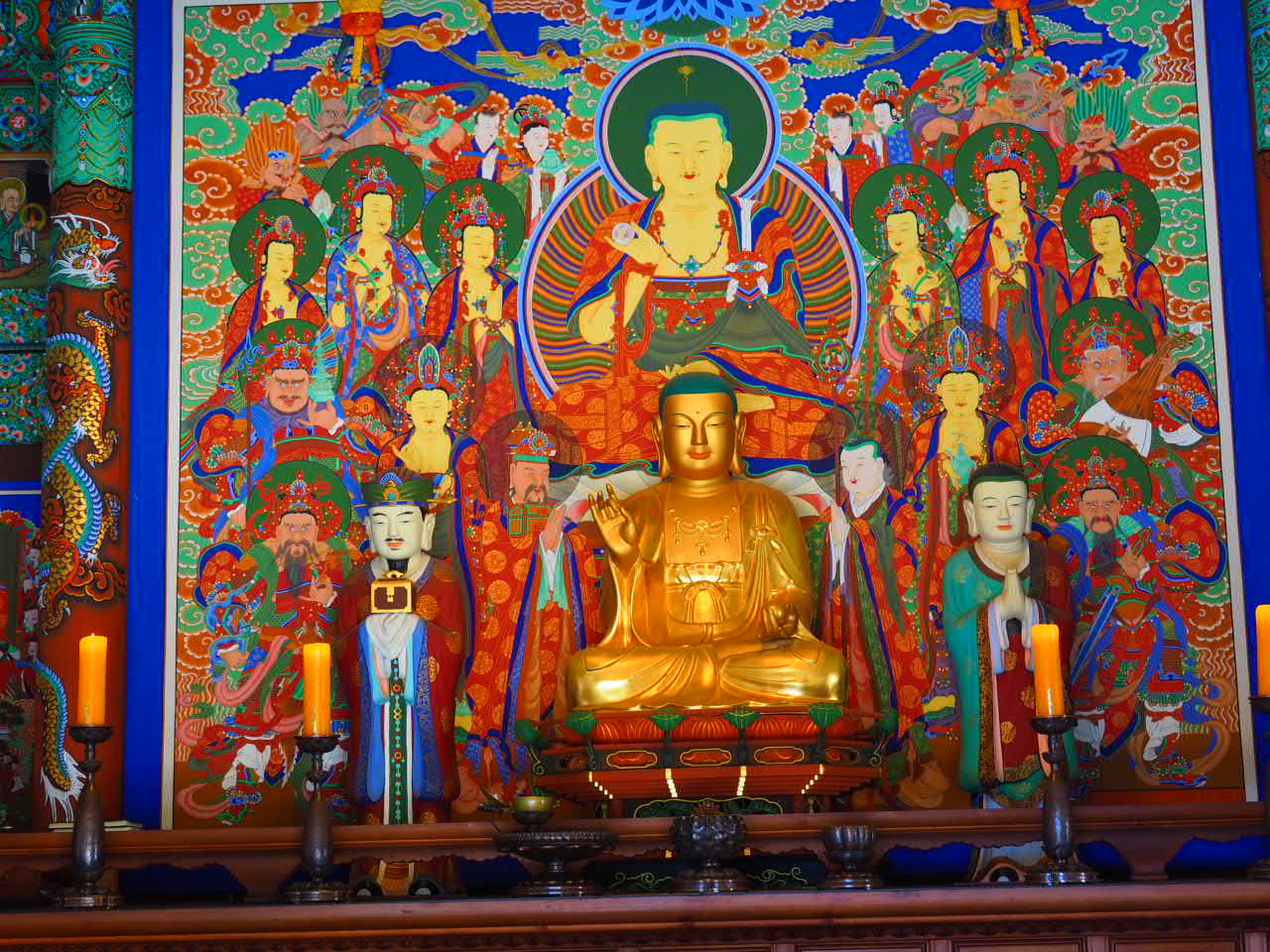
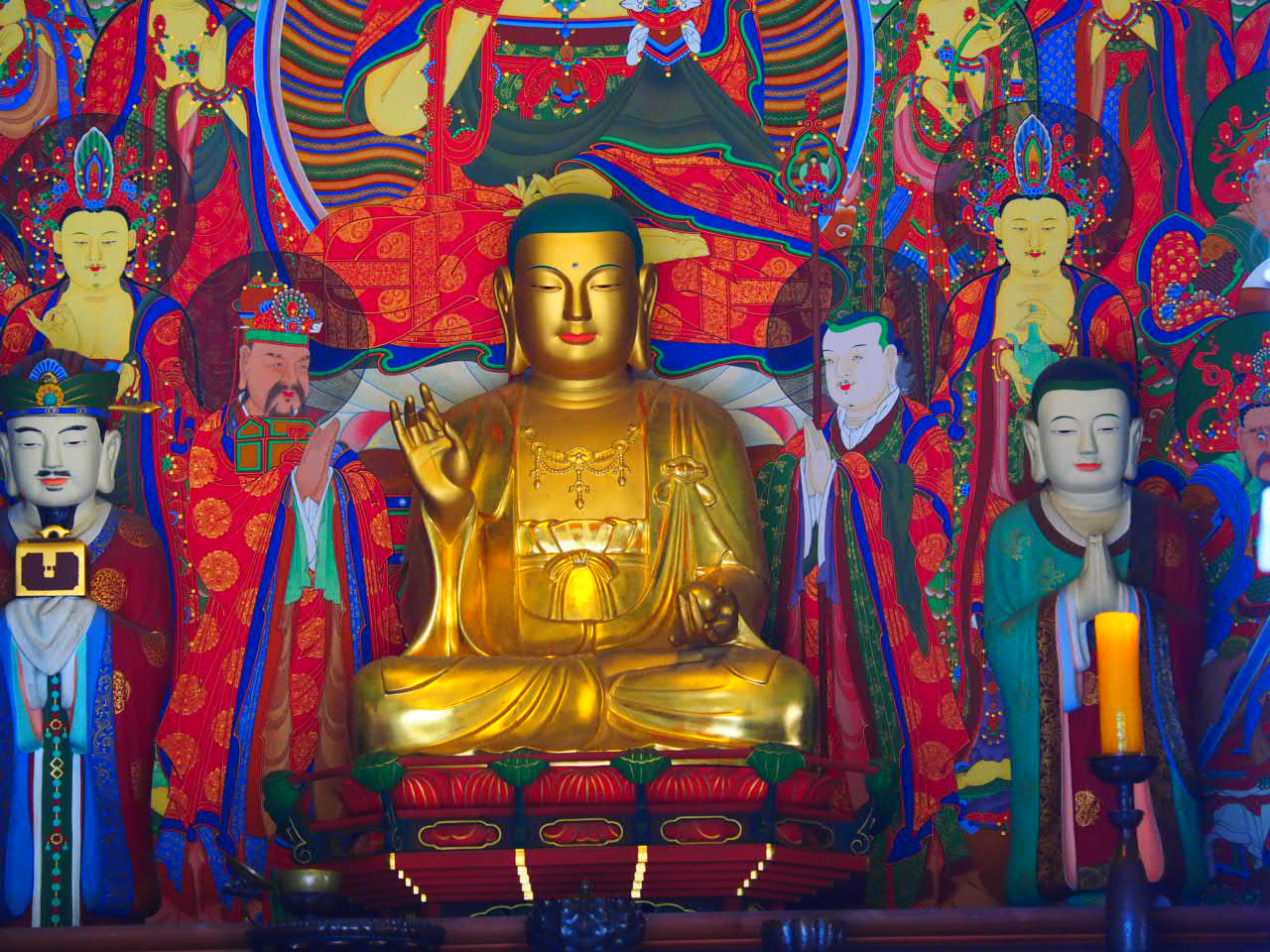
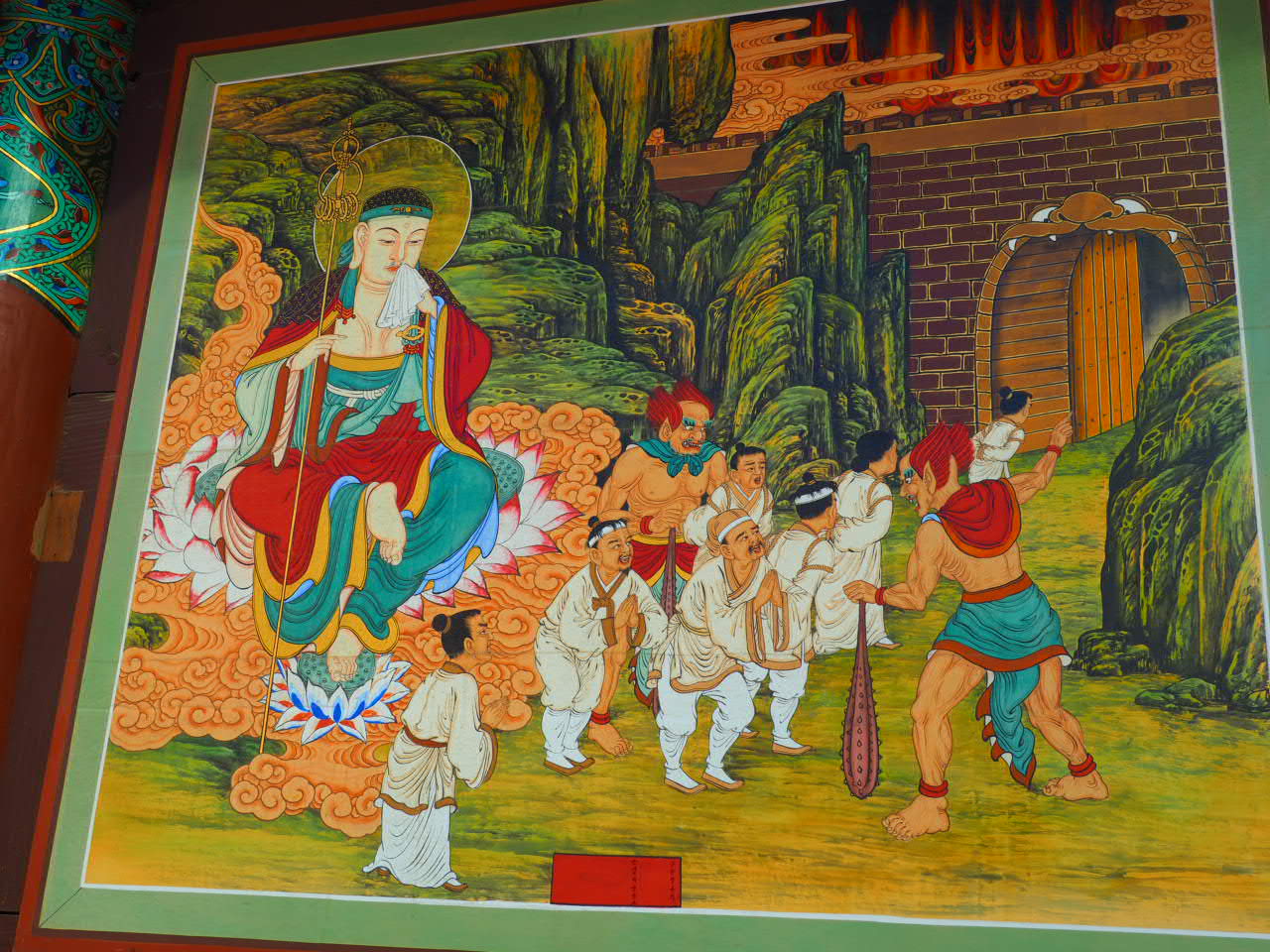
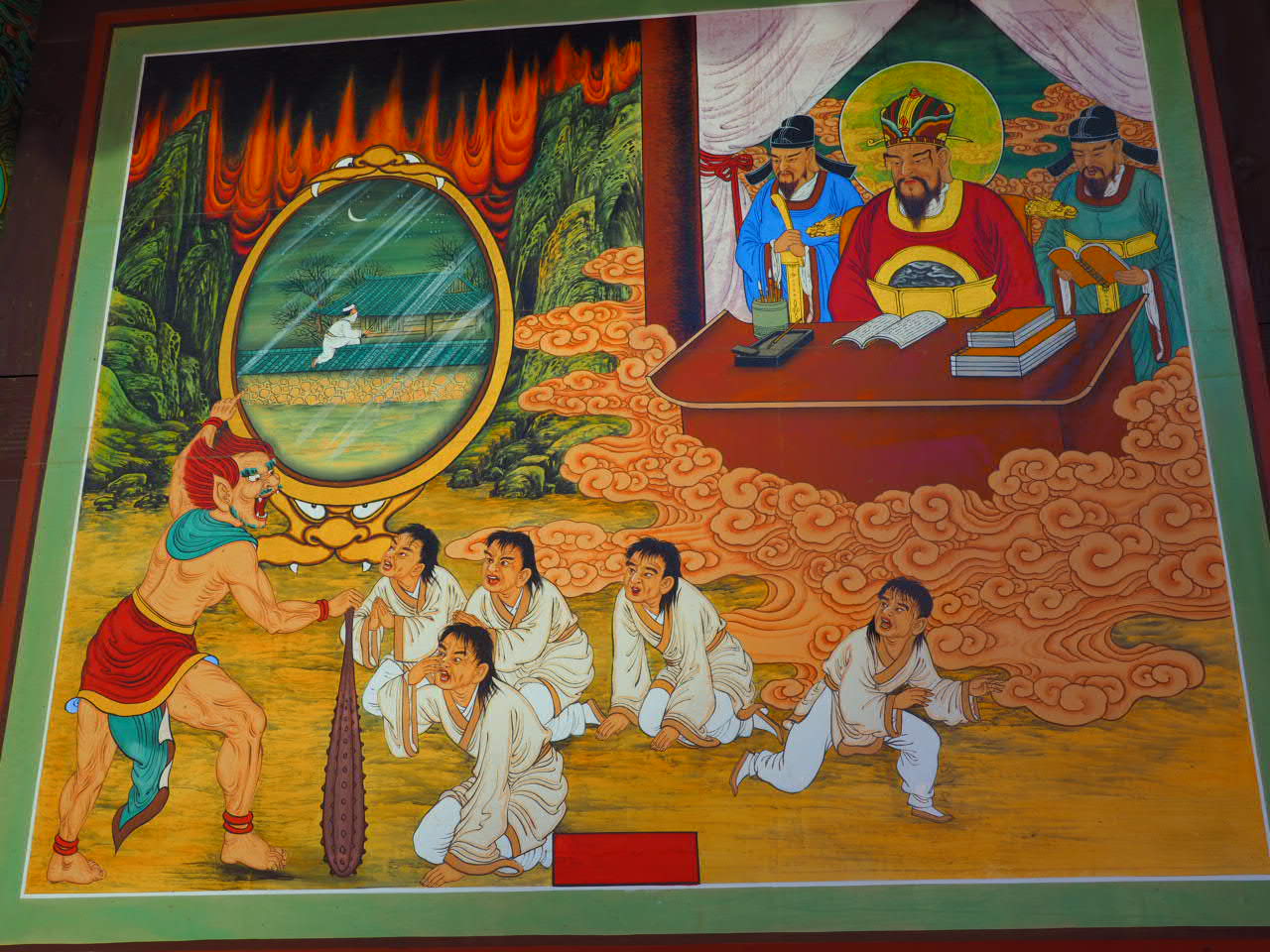
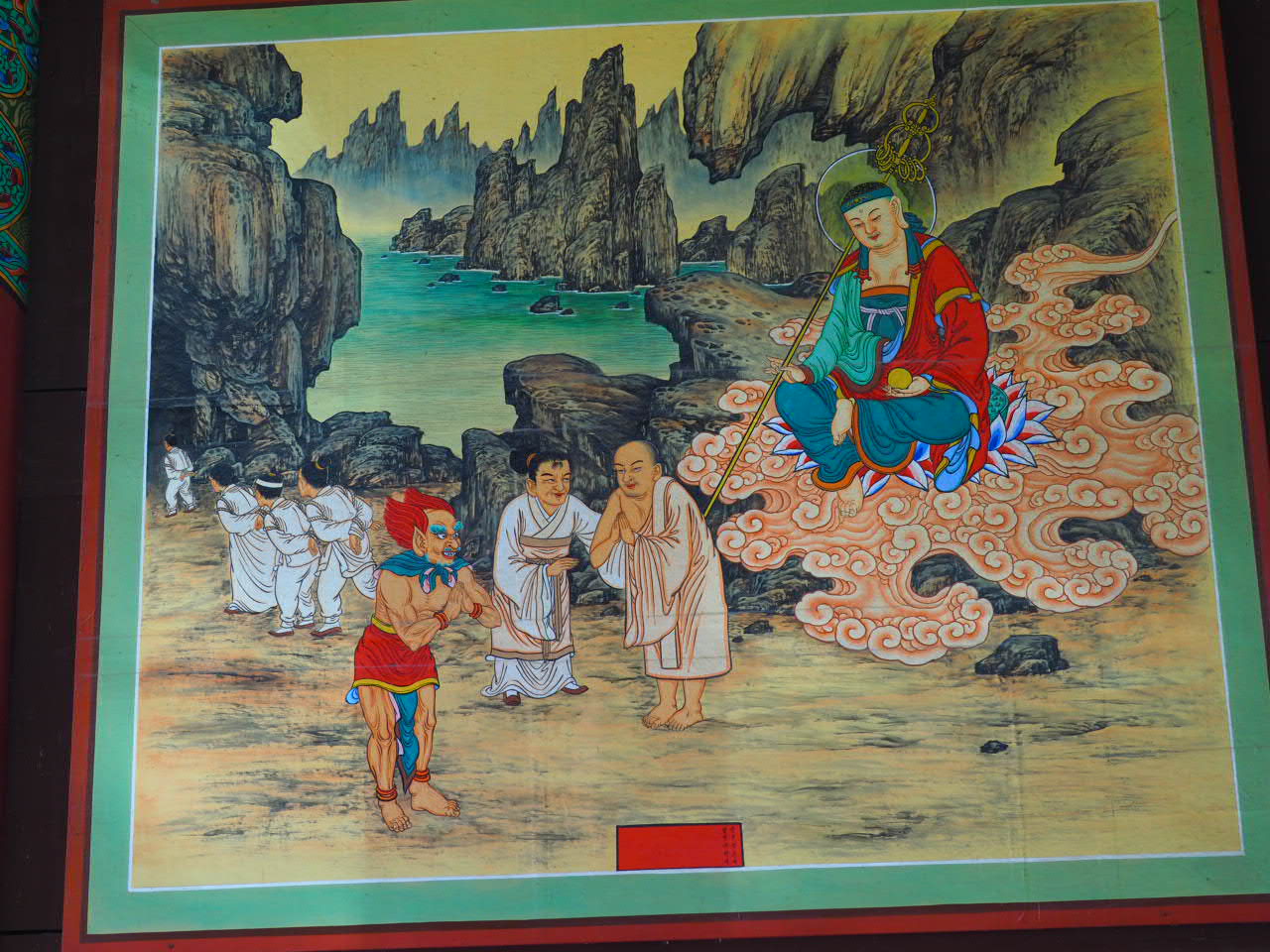
Jijang, who saves the people suffering in the hell, is placed in the center of the Jijangjeon. Around Jijang, there are ten kings of hell who judge the sinners in hell.
Each of these ten kings has the sin to judge.
Jijang pities the dead and prays for their salvation.
Only a few live without sins as a human being.
When parents die, the descendants pray to the Jijang, hoping that the souls of their parents will avoid the pain of hell.
The descendants also pray to ten kings of hell not to punish their parents harshly.
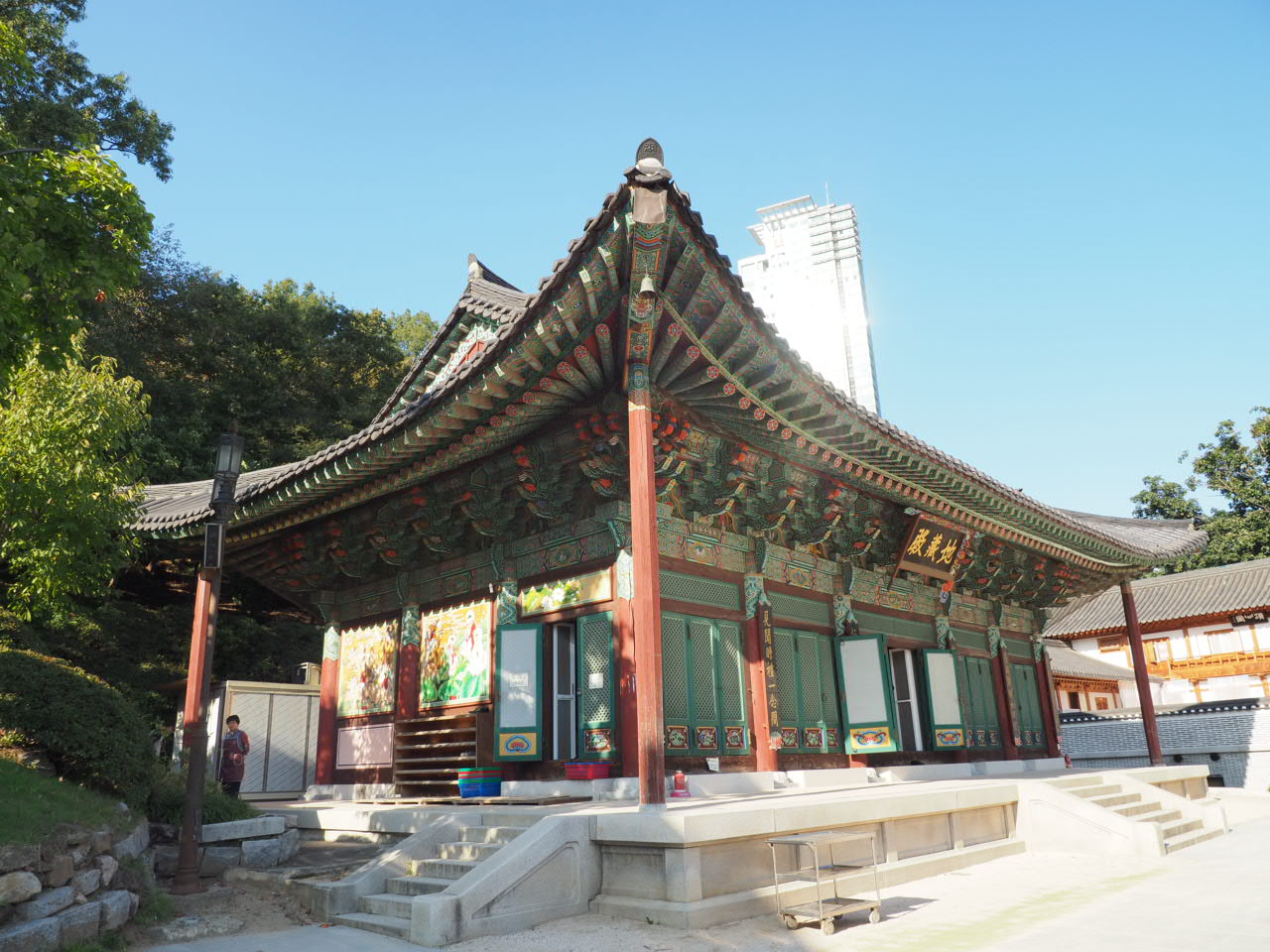
Looking at Bongeunsa Temple's Jijangjeon, I thought that the architectural style of the temple was similar to that of the Silla era.
Gyeongju Bulguksa Temple, the most representative temple of Silla, was similar in architecture.
Bongeunsa was rebuilt because it was destroyed during the Korean war.
I guessed the architects referred to Silla’s architecture in the process of reconstruction.
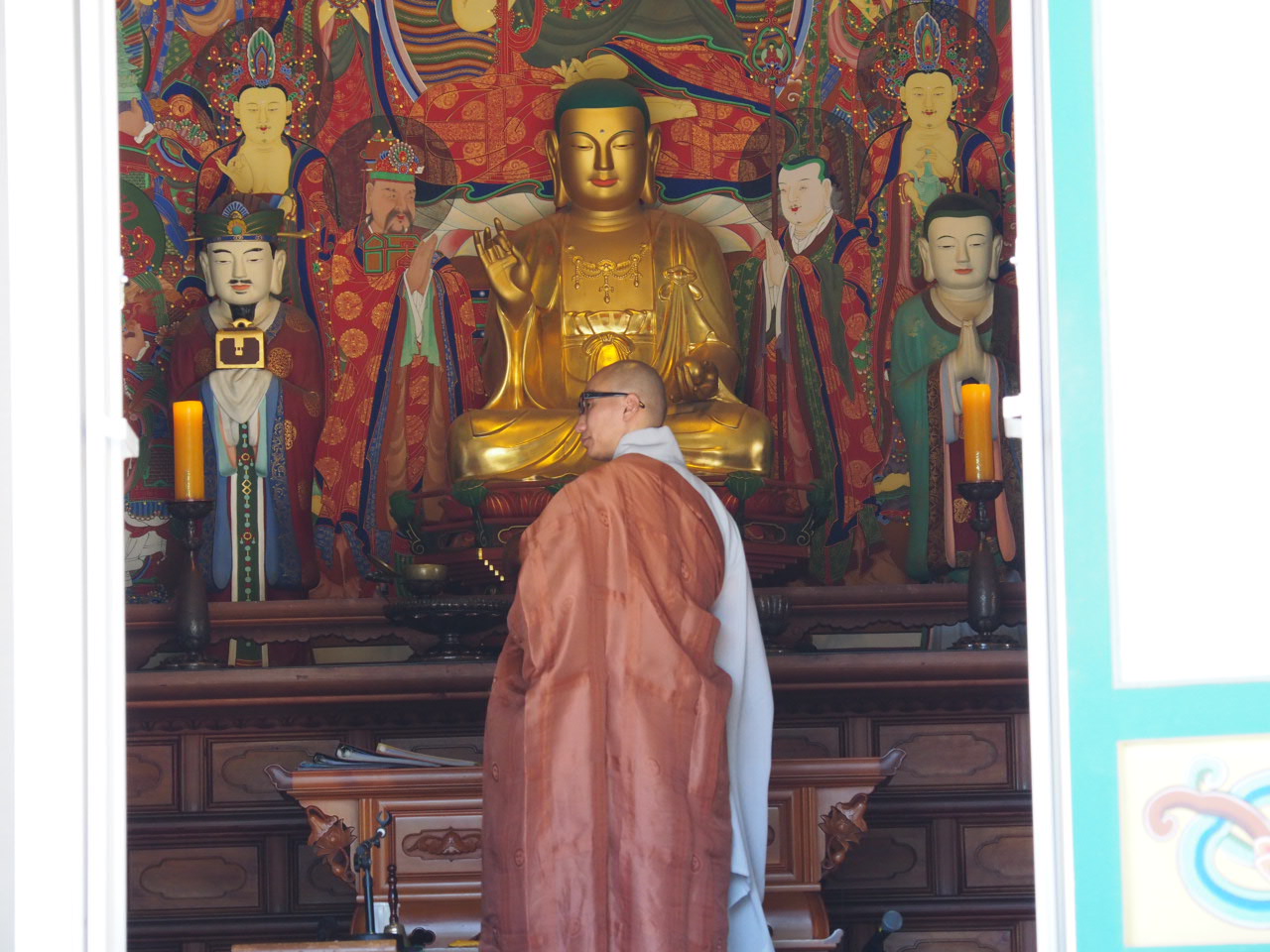
The ritual for the dead was taking place in Jijangjeon.
The lotus lanterns in the building were all white.
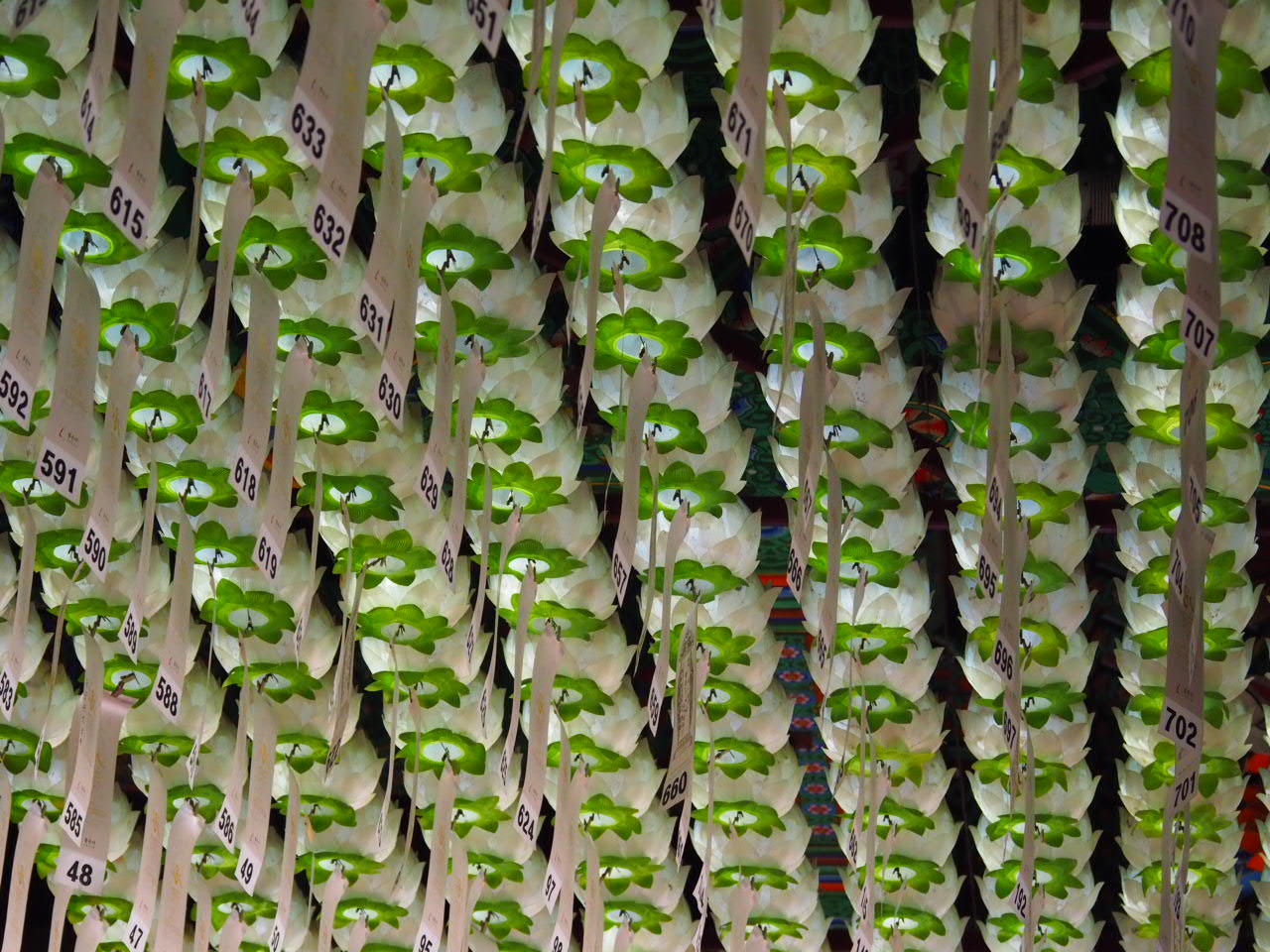
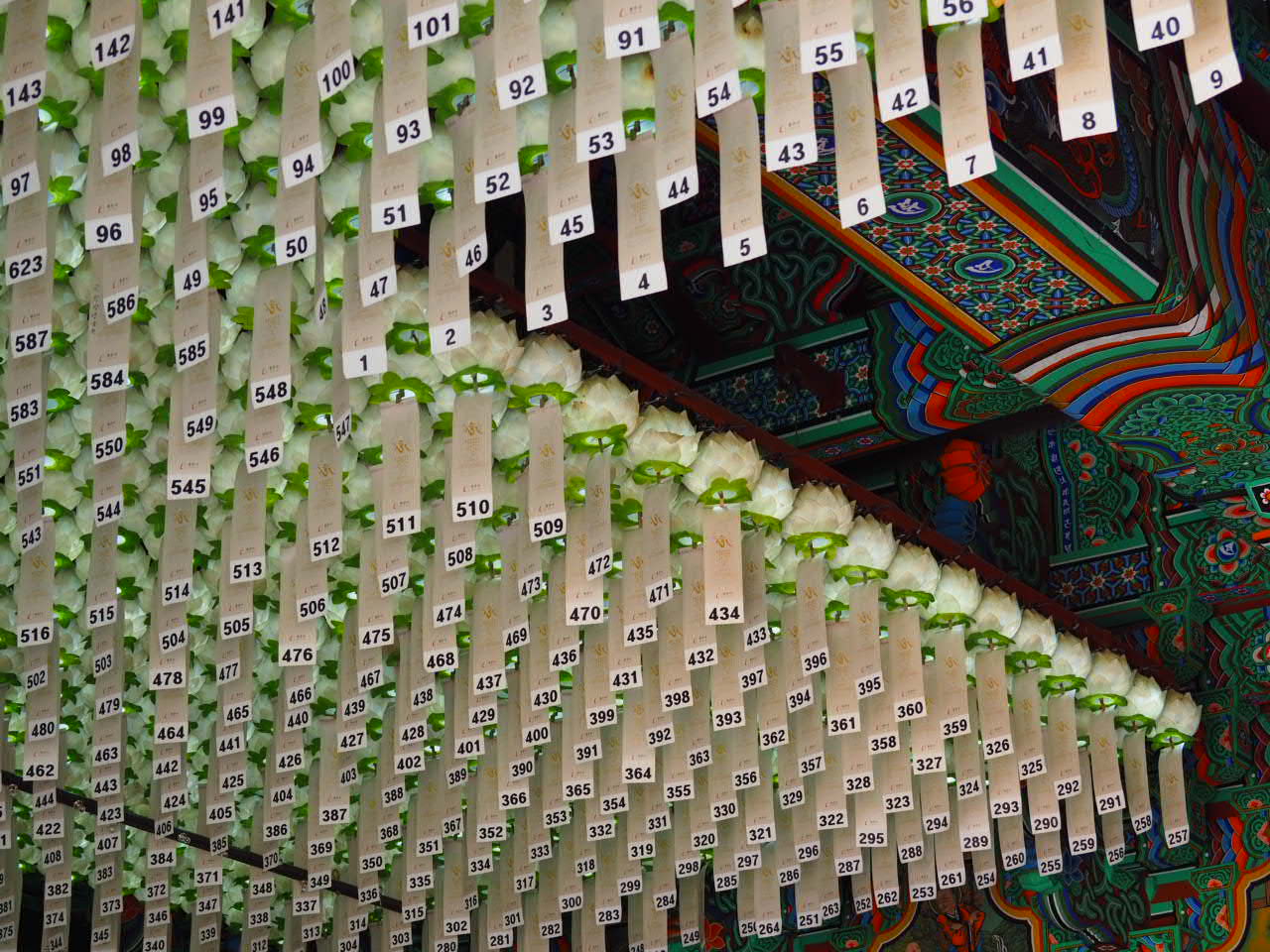
The color of death is different in Asia and other continents.
The color of death in Korea is white as opposed to black in the West.
Jijangjeon was filled with white lotus lantern.
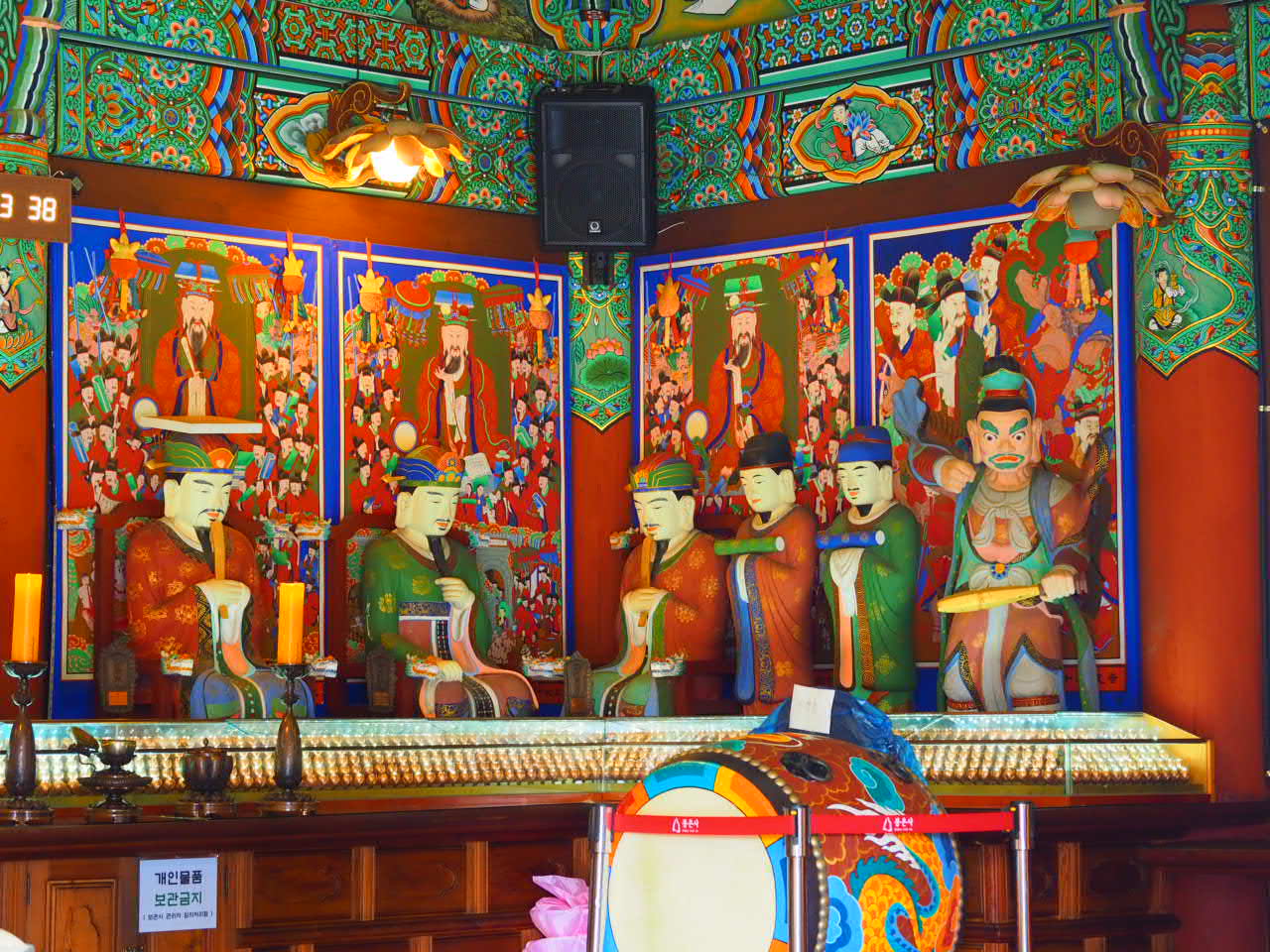
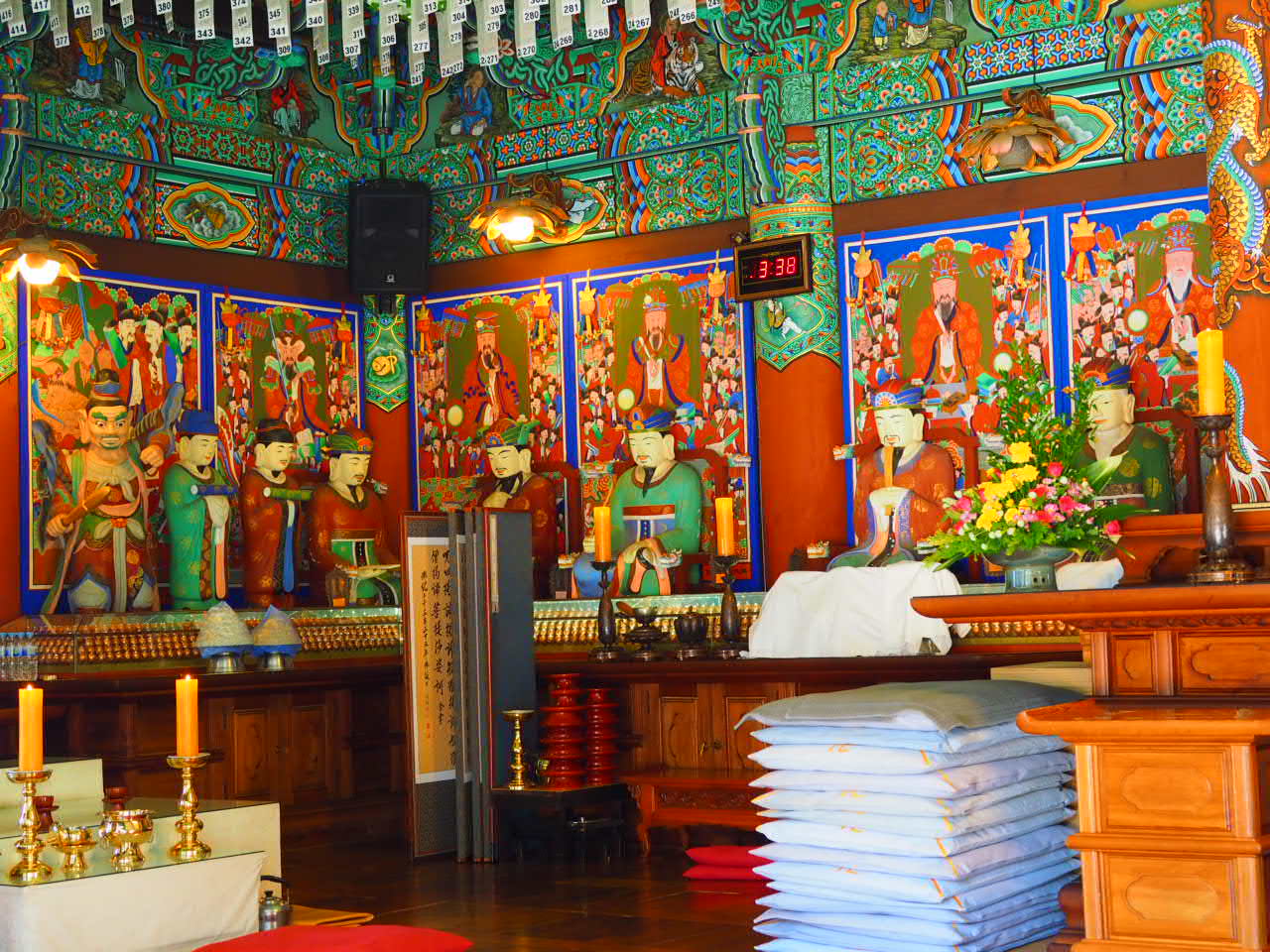
In every temple, the expression on the face of Jijang and ten kings are different.
They have a gentle expression in some temples, whereas they have scary faces in others.
In Boneunsa, they looked soft.
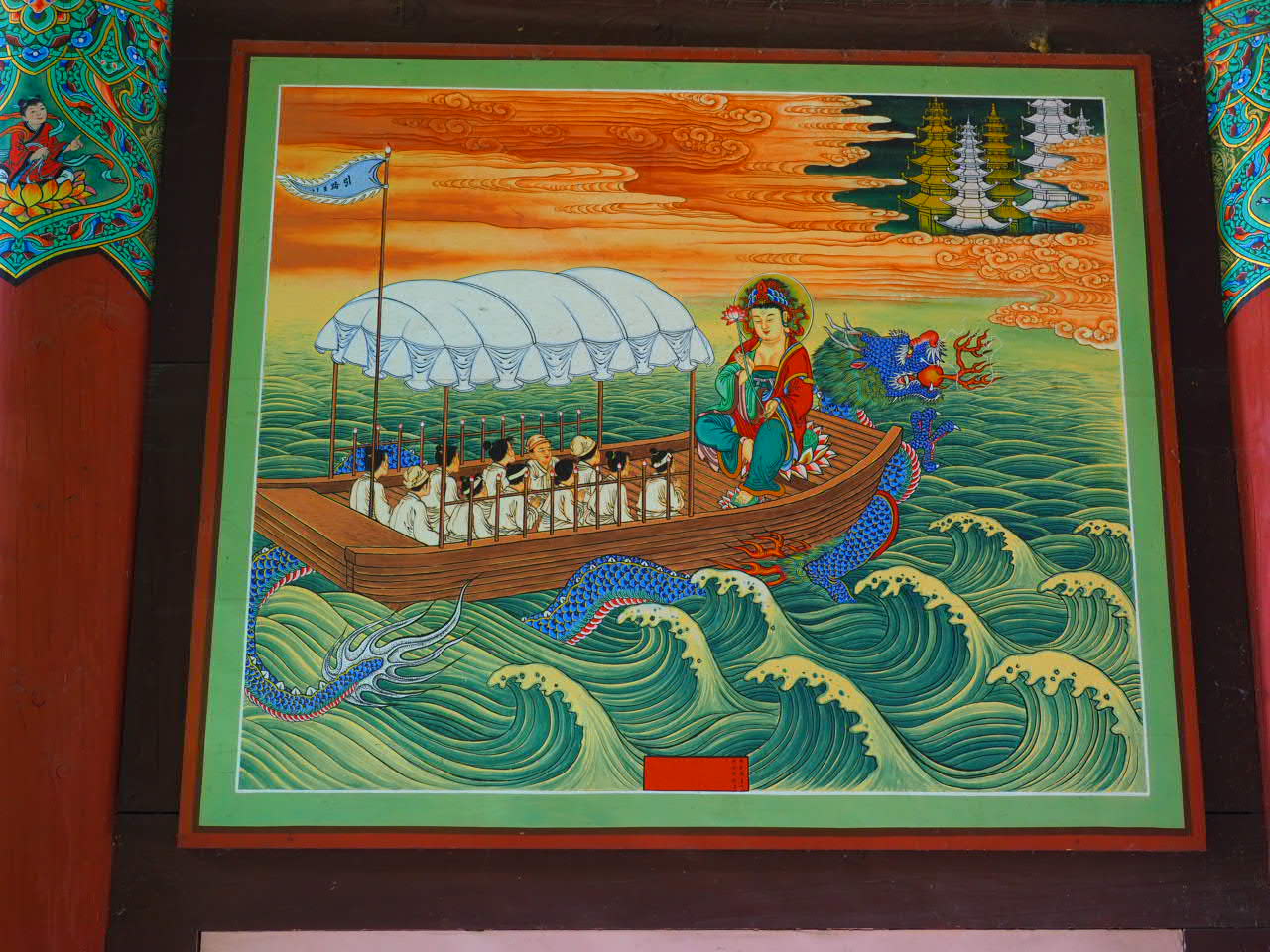
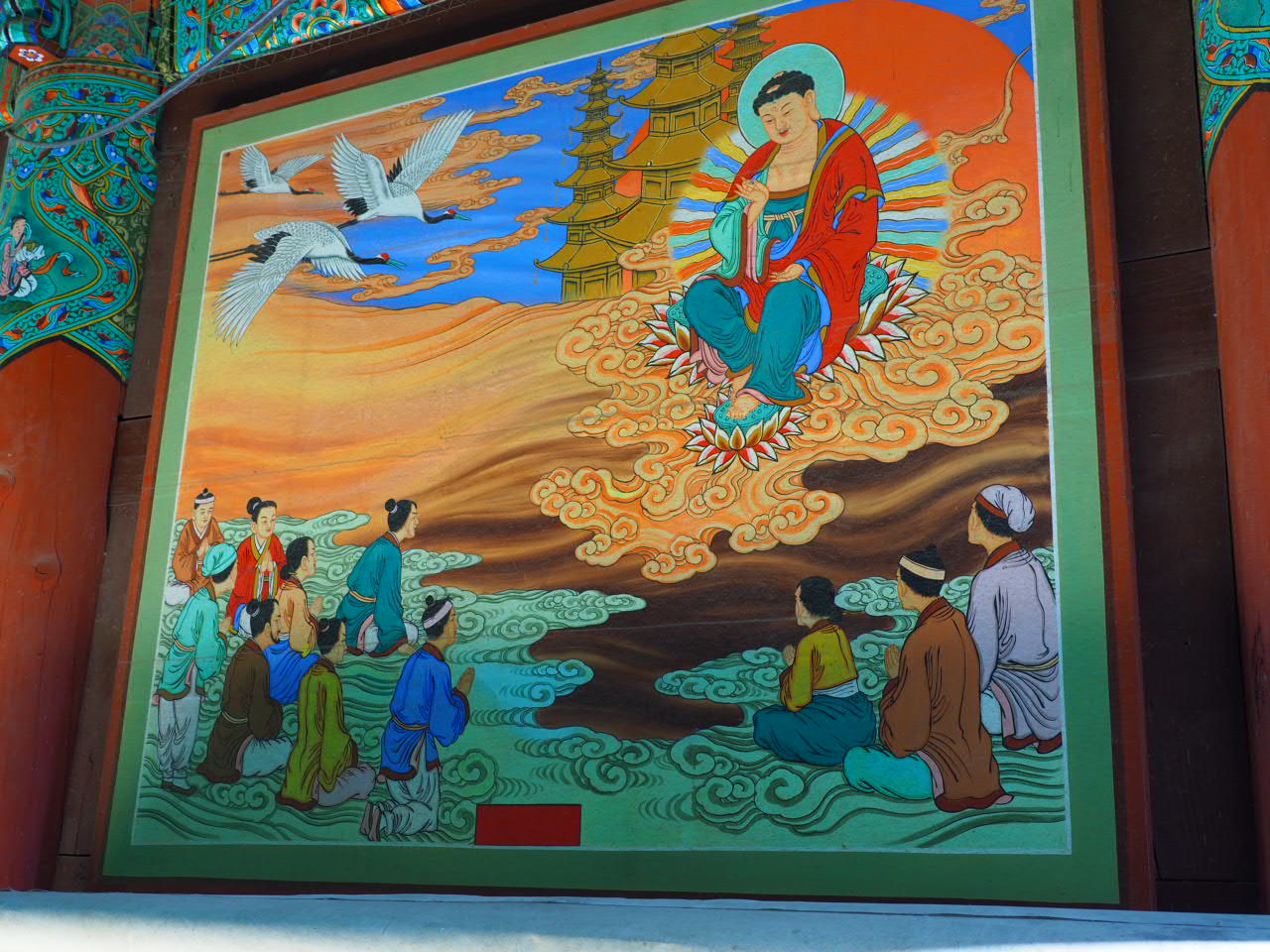
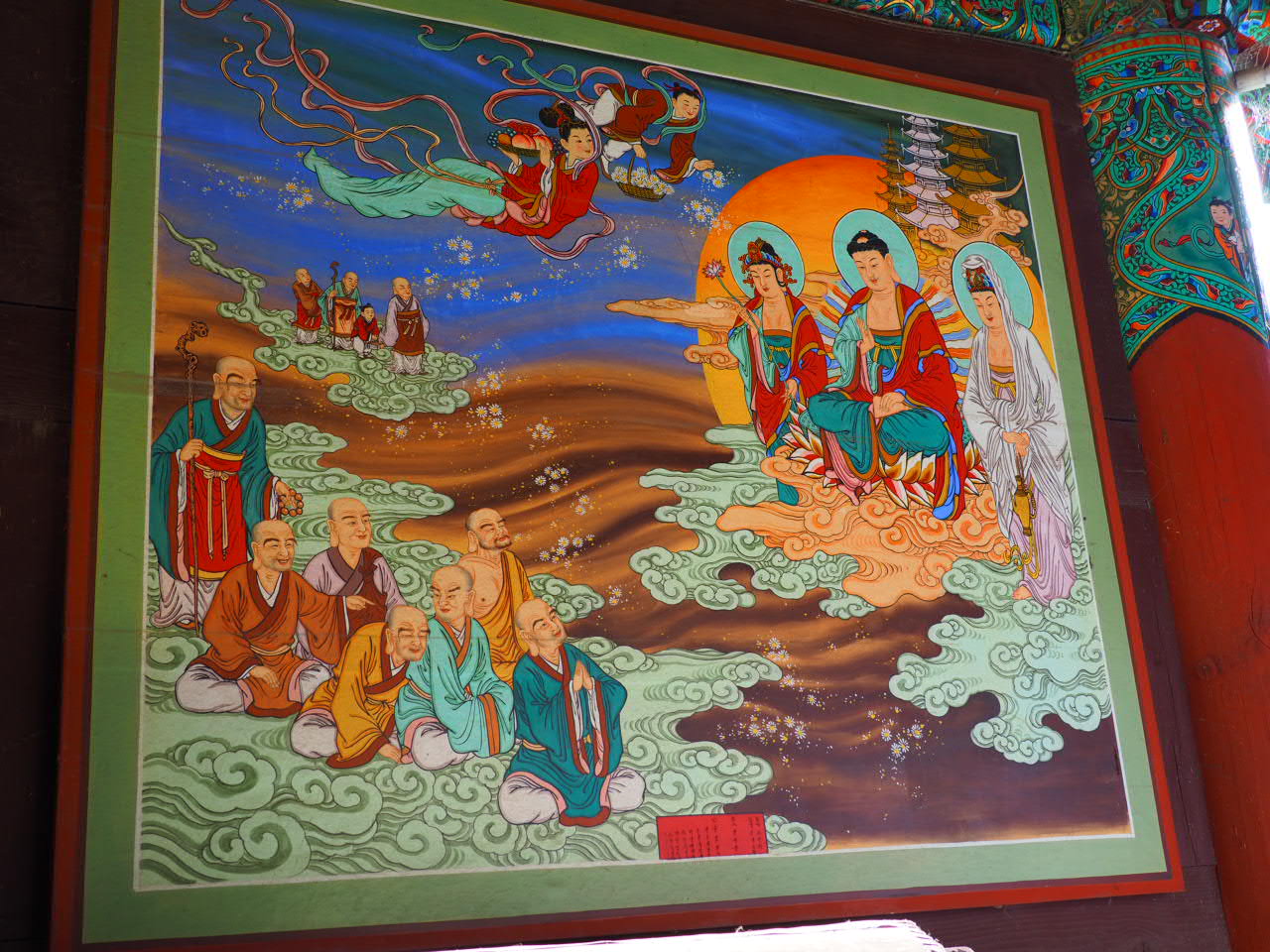
The outer wall of the Jijangjeon depicts the process of judging the dead and leading them to paradise.
A beautiful and colourful post today, @slowwalker.
I'm struck by the similarities between Buddhistic prayers for the dead and Catholic practices.
The monk in your photo stands before an altar lit by candles wearing vestments that resemble those of a Catholic priest.
As in Catholicism, prayers are offered for the dead and candles lit - I know your mother is Catholic and I'm sure she can't help but notice theses similarities.
Regardless of differing doctrines regarding heaven, hell and purgatory, the common thread is compassion - the desire of the living to help the dead.
There is an old saying in the Catholic tradition: we have loved them in life; we will not forget them in death.
I just had to remark on the similarities, my friend.
A beautiful photo essay.
You're right! There are certain similarities between religions. Especially, compassion and love are the commonly found elements of religions! Thanks to you, I learned similarities in practices for the dead between Catholicism and Buddhism.
Have a nice day!!
good post, have fun friend
Wow. What a great big temple. Jijangjeon I would have love to visit but I'm very far away. It an amazing place. Great Vision. Great Photographs.
Posted using Partiko Android
Thank you! If you are far away, I will take lots of pictures for you to see.
Yes. I am very far away @slowwalker. Are you on Twitter sir? Thanks in anticipation. I will love to see more pictures. 💕. Greetings from Nigeria.
Posted using Partiko Android
The Jijangjeon seems really interesting, I mean it's quite different when vylu consider the fact that faces in the Boneunsa looks Very soft and easy going. Ten kings judging ten sin that's very interesting. Well written
In Buddhism, the dead are judged for ten sins!
Very nice pictures
Greetings from Germany
// 1,2,3, good mood //
Have a nice day :)
The temple painting has left some traces of rose history.!
Posted using Partiko Android
Yeah! It was amazing when I saw it for real!
Interesting story about jijangjeon and the dead.
Thank you :)
This post is manually curated by @dblog.supporter.

Wow
Posted using Partiko Android
Interesting information about hereafter life. Every religion has almost same conclusion. Everyone is liable to give explanation of his sin done in this world.
That's true. I should try not to live with sin, haha