Liquid Staking vs Restaking vs Yield Farming: The Risk-Adjusted Return Tool
Most DeFi yield comparisons make the same mistake.
They sort by APY.
That is not investing.
That is risk blindness.
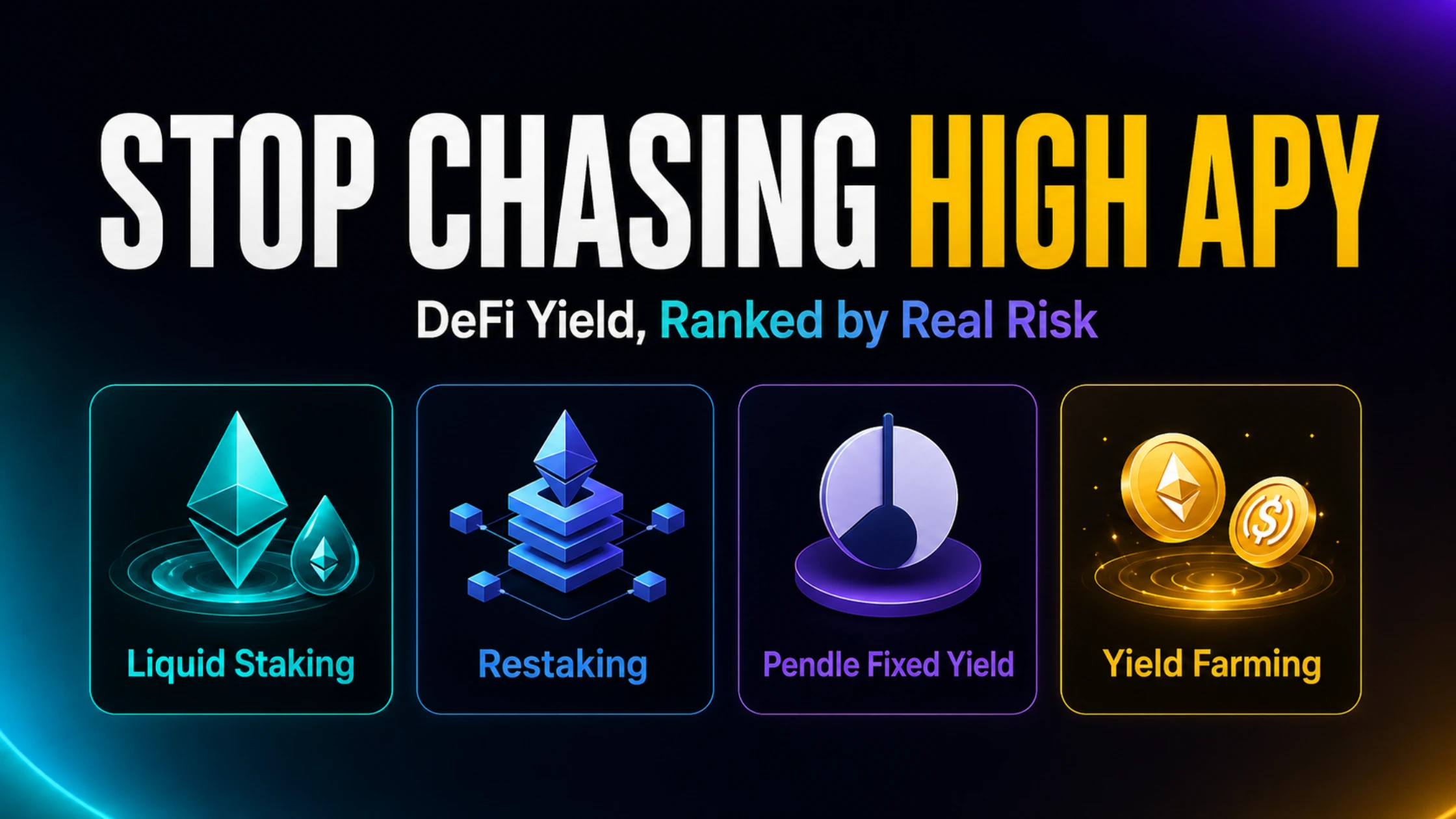
A 3.5% liquid staking yield and a 15% liquidity pool yield are not simply two numbers on the same scoreboard. They are completely different strategies with completely different risks.
Liquid staking earns Ethereum staking rewards and keeps the position liquid through a token like stETH.
Restaking adds another layer of yield through EigenLayer-style AVS exposure, but also adds contract risk, LRT discount risk and possible slashing risk.
Pendle fixed yield can lock in a known return until maturity, but introduces underlying asset risk, smart contract risk and exit risk if you sell early.
DeFi liquidity provision can generate attractive fees, but it adds the risk most APY tables hide: impermanent loss.
That is why the highest yield is not always the best yield.
The real question is:
What are you risking to earn that APY?
A lower yield with lower complexity can be better than a higher yield that depends on thin liquidity, active management, multiple smart contract layers or market-path risk.
The DN Risk-Adjusted Yield Tool compares liquid staking, restaking, Pendle fixed yield and DeFi liquidity provision against your capital, liquidity needs and risk tolerance.
The goal is not to chase the biggest number.
The goal is to earn yield you understand, from risks you can survive.
Read the full breakdown on Decentralised News: https://decentralised.news/liquid-staking-vs-restaking-vs-yield-farming-the-risk-adjusted-return-tool
#DeFi #Crypto #Ethereum #LiquidStaking #Restaking #YieldFarming #Pendle #Lido #EigenLayer #stETH #DeFiYield #CryptoInvesting #RiskManagement #ImpermanentLoss #OKX #deBridge #DecentralisedNews #18Plus