Backyard wildlife photography in southeastern Pennsylvania: Something Old - Something New
Last month, I looked at the first (1) sightings (2) and repeated sightings. This month, there's a third group to add to the mix. That's the animals that were seen before May, but not seen again after that. So, let's get started.
Last seen before May
Here is a list of the animals that I saw during March and April, but didn't see again during May (or June, so far). Note that I'm using iNaturalist for the dates, so this might not be completely accurate. I don't always log everything I see. Also, I removed the animals that were seen at Marsh Creek State Park, since that's a nearly unique location.
| Common Name | Count | First Sighting | Last Sighting | Observations |
|---|---|---|---|---|
| Yellow-bellied Sapsucker | 1 | 2026-03-30 | 2026-03-30 | 2026-03-30 |
| White-throated Sparrow | 1 | 2026-04-04 | 2026-04-04 | 2026-04-04 |
| Dark-eyed Junco | 3 | 2026-03-14 | 2026-04-07 | 2026-03-14, 2026-03-31, 2026-04-07 |
| White-breasted Nuthatch | 2 | 2026-03-29 | 2026-04-08 | 2026-03-29, 2026-04-08 |
| Red-winged Blackbird | 1 | 2026-04-09 | 2026-04-09 | 2026-04-09 |
| Osprey | 1 | 2026-04-20 | 2026-04-20 | 2026-04-20 |
| Cooper's Hawk | 1 | 2026-04-26 | 2026-04-26 | 2026-04-26 |
| Carolina Wren | 1 | 2026-04-27 | 2026-04-27 | 2026-04-27 |
| Eastern Bluebird | 2 | 2026-04-28 | 2026-04-28 | 2026-04-28, 2026-04-28 |
| Total | 13 |
In total, we see 9 species and 13 observations. Some of these may have been winter migrants, others could be permanent residents who moved on, or maybe they're just good at hiding from me.
First seen during May
And here are the animals that were seen for the first time during the month of May. No special location adjustments were needed, but the possibility remains that I may have seen some of these animals but not logged a sighting. This filtering is based on just my iNaturalist observations.
| Common Name | Count | First Sighting | Last Sighting | Observations |
|---|---|---|---|---|
| Gray Catbird | 7 | 2026-05-01 | 2026-05-28 | 2026-05-01, 2026-05-03, 2026-05-05, 2026-05-07, 2026-05-08, 2026-05-22, 2026-05-28 |
| Black Vulture | 5 | 2026-05-03 | 2026-06-05 | 2026-05-03, 2026-05-11, 2026-05-25, 2026-05-27, 2026-06-05 |
| Carolina Chickadee | 1 | 2026-05-03 | 2026-05-03 | 2026-05-03 |
| Common Grackle | 1 | 2026-05-09 | 2026-05-09 | 2026-05-09 |
| Cedar Waxwing | 1 | 2026-05-12 | 2026-05-12 | 2026-05-12 |
| European Starling | 1 | 2026-05-12 | 2026-05-12 | 2026-05-12 |
| Swainson's Thrush | 1 | 2026-05-12 | 2026-05-12 | 2026-05-12 |
| Eastern Kingbird | 1 | 2026-05-15 | 2026-05-15 | 2026-05-15 |
| Baltimore Oriole | 2 | 2026-05-17 | 2026-05-18 | 2026-05-17, 2026-05-18 |
| Song Sparrow | 4 | 2026-05-22 | 2026-06-02 | 2026-05-22, 2026-05-26, 2026-05-28, 2026-06-02 |
| Mississippi Kite | 1 | 2026-05-25 | 2026-05-25 | 2026-05-25 |
| Eastern Cottontail | 2 | 2026-05-26 | 2026-05-29 | 2026-05-26, 2026-05-29 |
| Red-shouldered Hawk | 1 | 2026-05-30 | 2026-05-30 | 2026-05-30 |
| White-tailed Deer | 2 | 2026-05-29 | 2026-06-06 | 2026-05-29, 2026-06-06 |
| Total | 30 |
14 species and 30 observations.
The photos
I'm not going to post photos of the animals that weren't seen during May because those were already posted in March and April. So, let's get started on the ones that were first seen during May. Based on the numbers, I suppose this post will need to be broken into two or three parts.
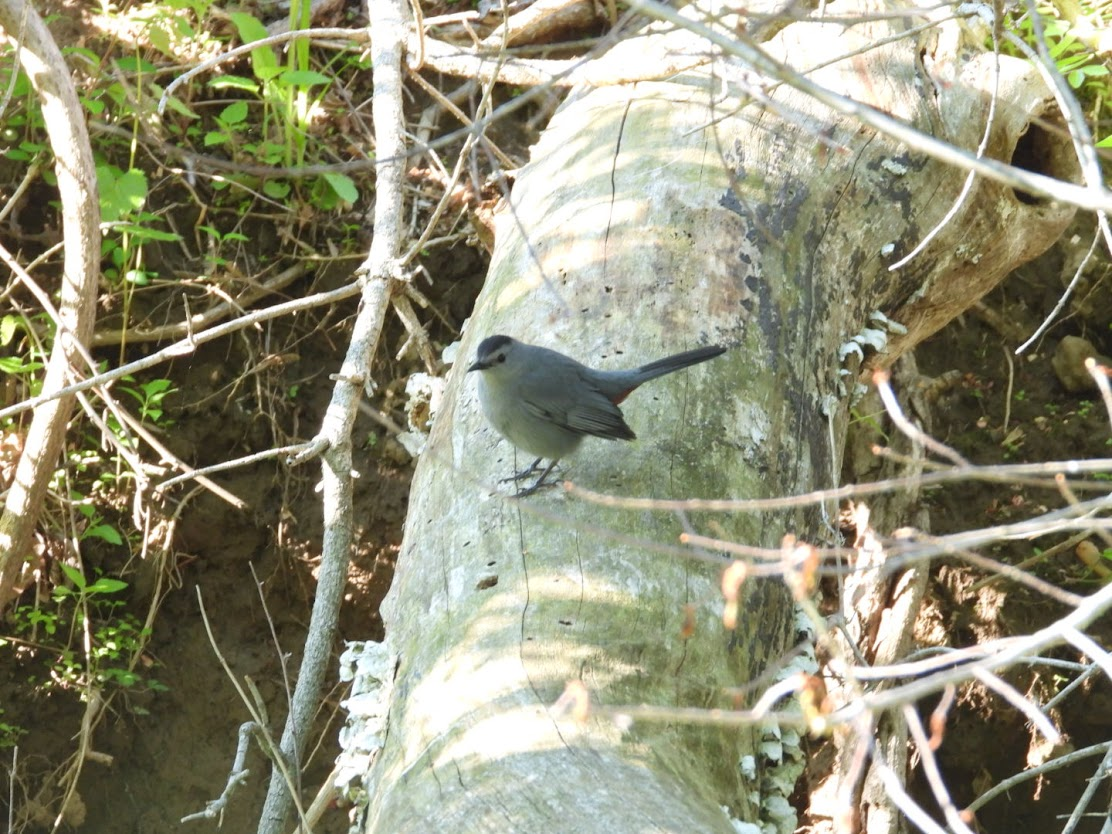
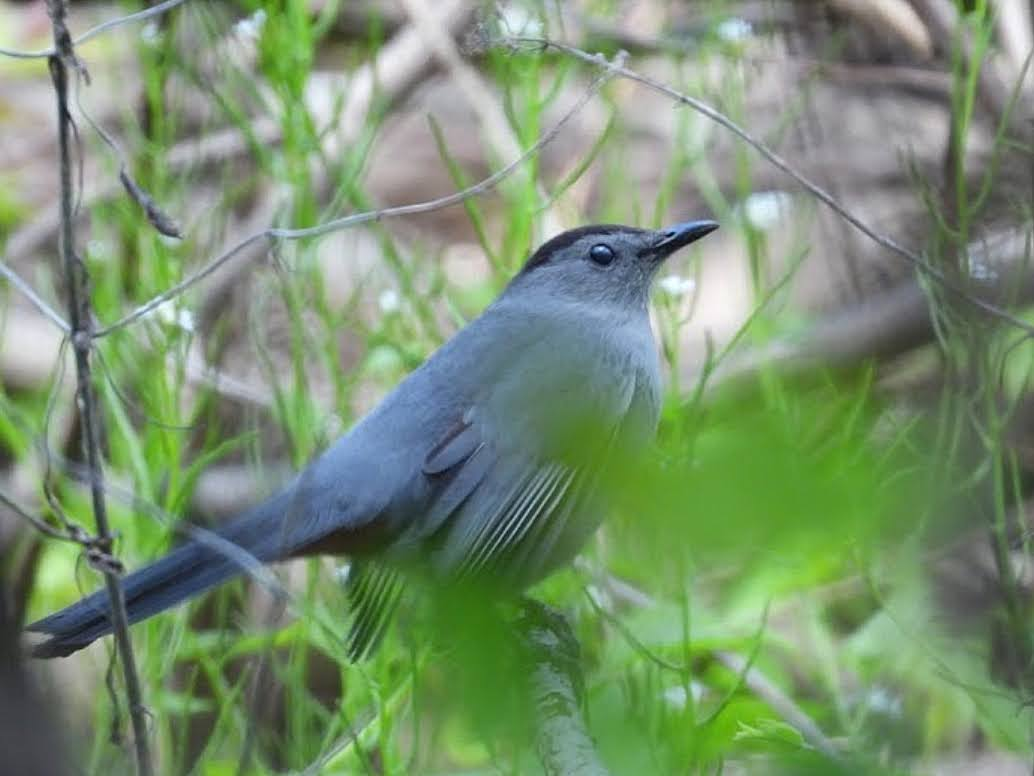
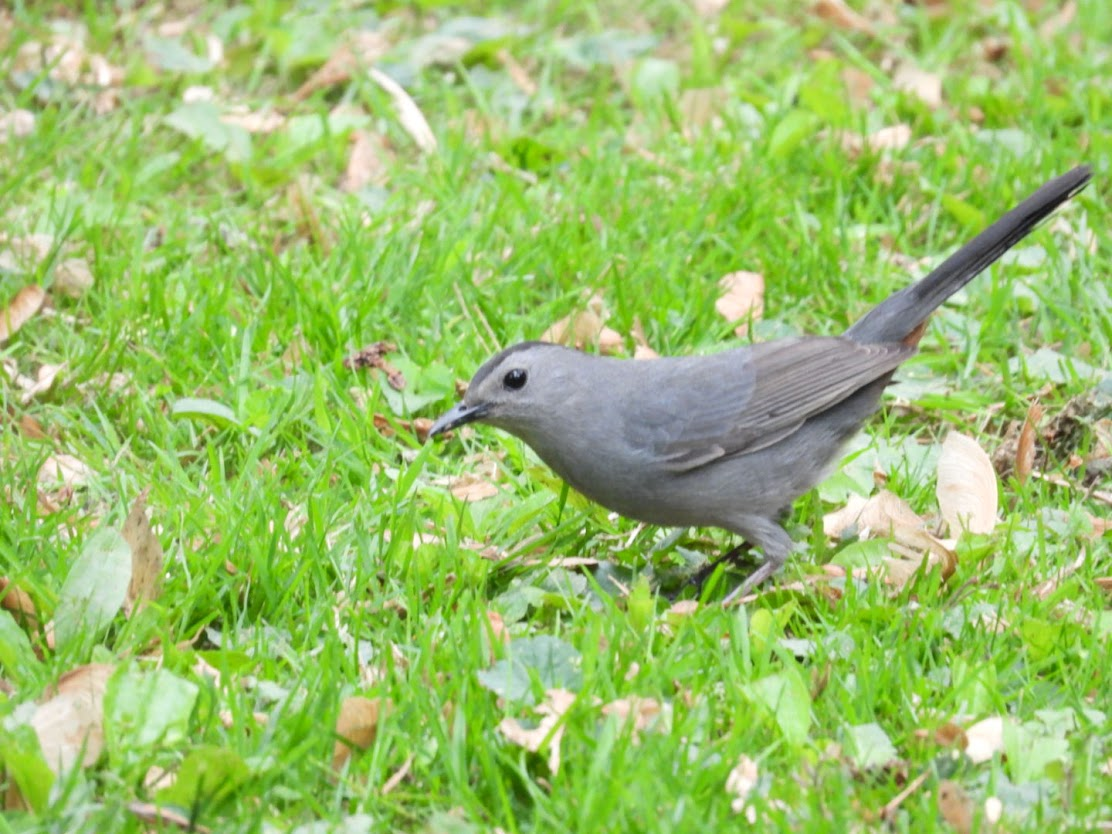
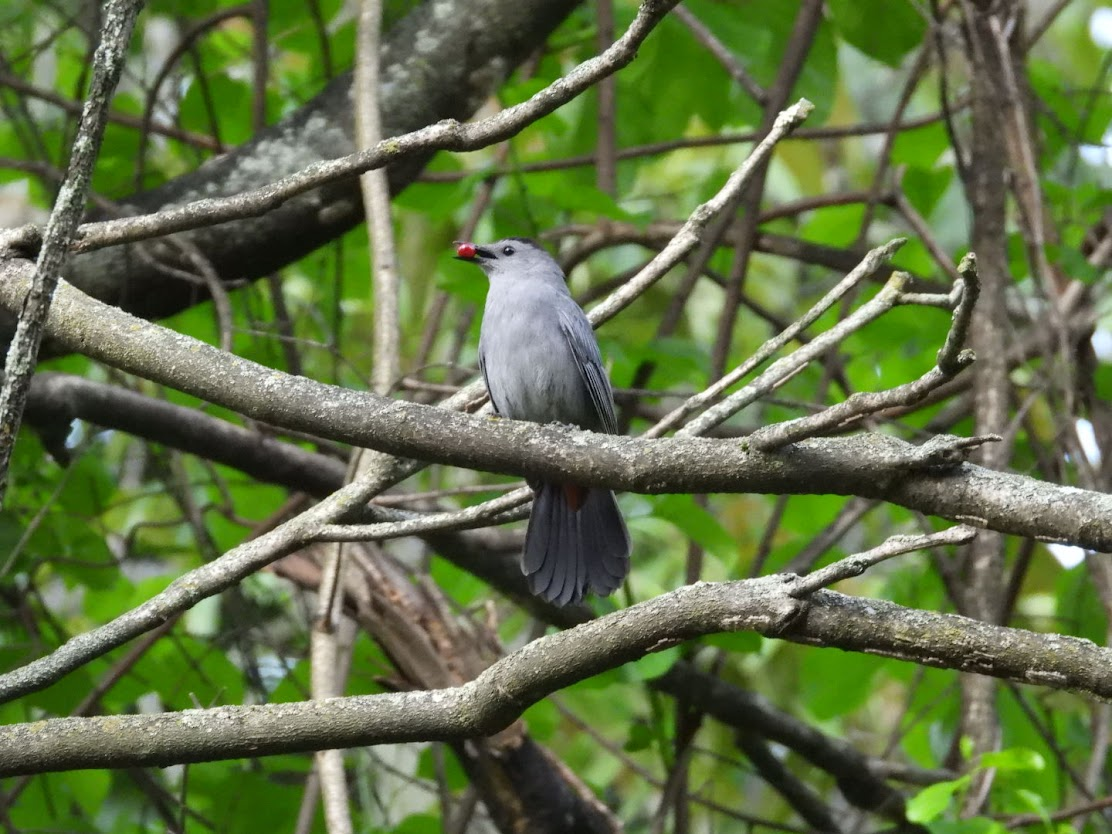
Gray Catbird
I had actually never heard of a Gray Catbird before, and now I see them every time I walk out the door. That's how oblivious I was to the local wildlife. They are almost as common as Robins in my back yard during May (and June). The oldest known was at least 17 years and 11 months. It was banded in Maryland in 1984 and observed again in New Jersey during 2001.
They're interesting birds. Sometimes they seem to ignore my presence, other times they sit on tree branches and seem to scold me for being there. Sometimes, they sit still for a while, other times they flit around quickly with no apparent aim. I'm guessing they are nesting in the remaining brush behind my yard, but I haven't noticed where the nest(s) is/are, yet. Here are a couple photos. I probably have hundreds to choose from.
| Gray Catbird | |
|---|---|
| May 1 (the very first photo) | May 8 (cropped and enlarged in postprocessing) |
| ƒ/5 · 1/80 · 83.9mm · 20x · 467mm · ISO400 | ƒ/5.6 · 1/160 · 270mm · 63x · 1504mm · ISO400 |
 |  |
| May 13 | May 26 |
| ƒ/6.3 · 1/80 · 324mm · 75x · 1805mm · ISO800 | ƒ/5.6 · 1/500 · 144mm · 33x · 802mm · ISO1600 |
 |  |
Black Vulture
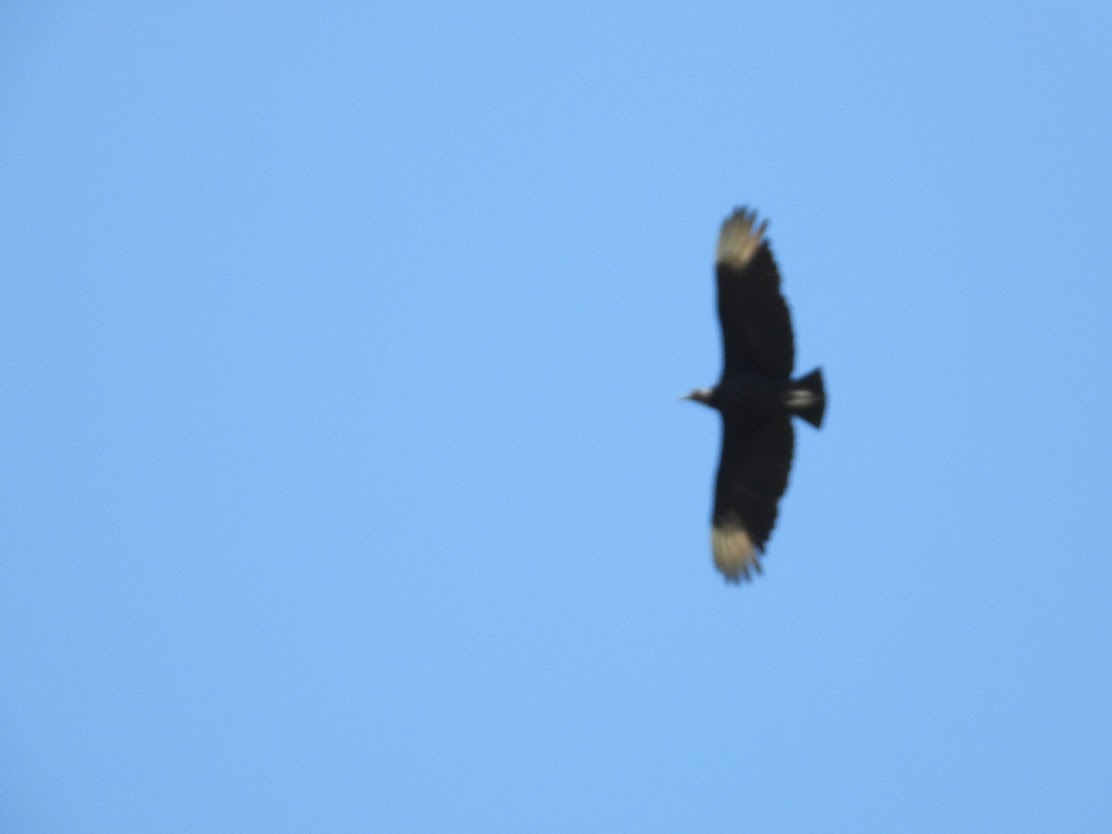
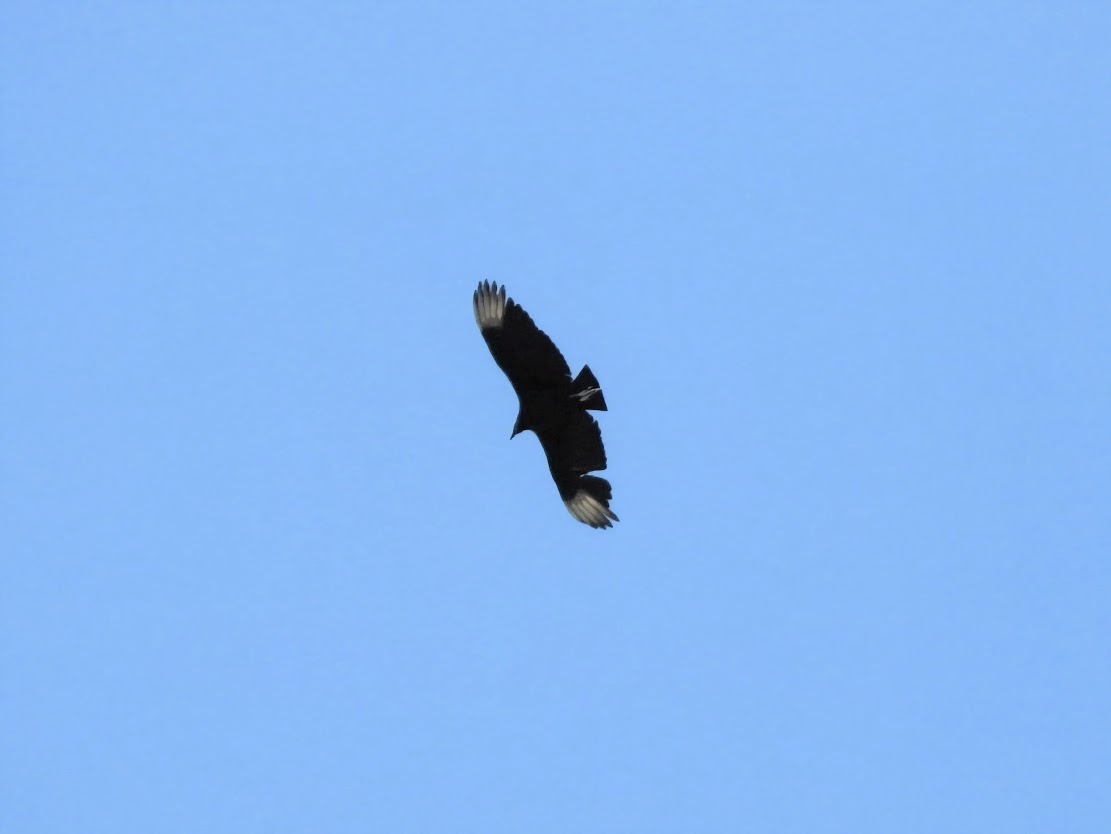
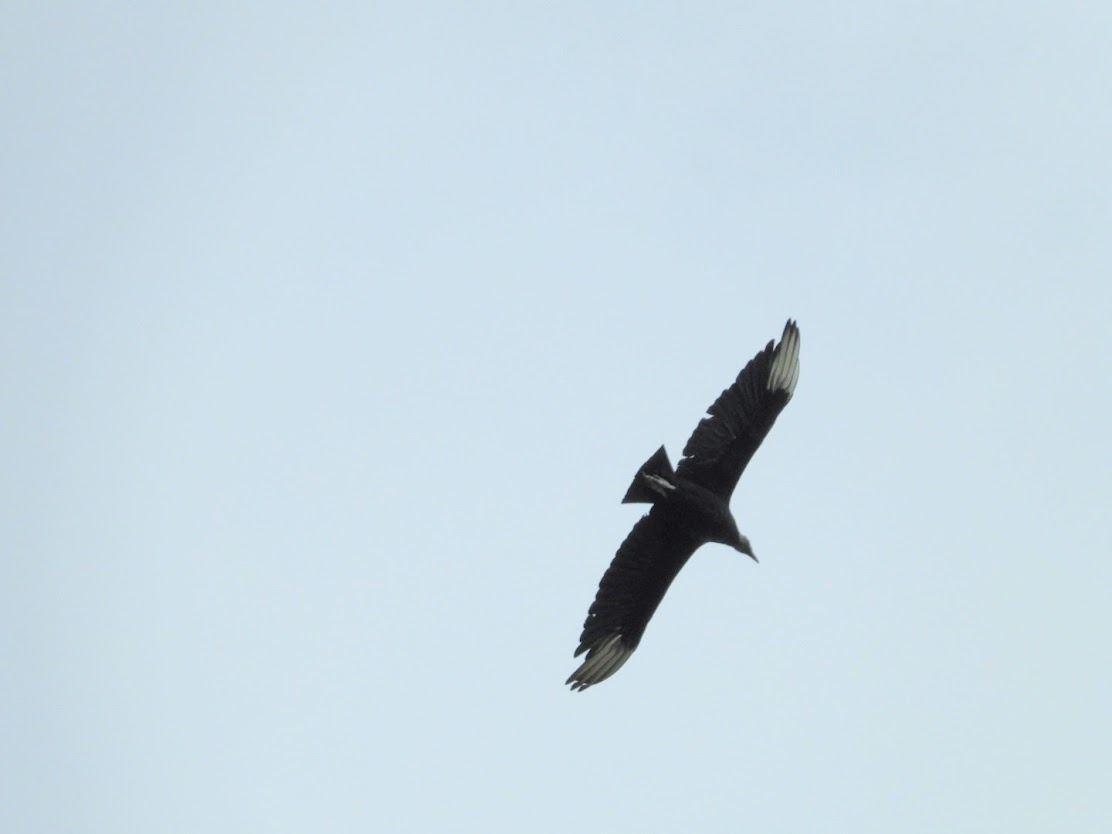
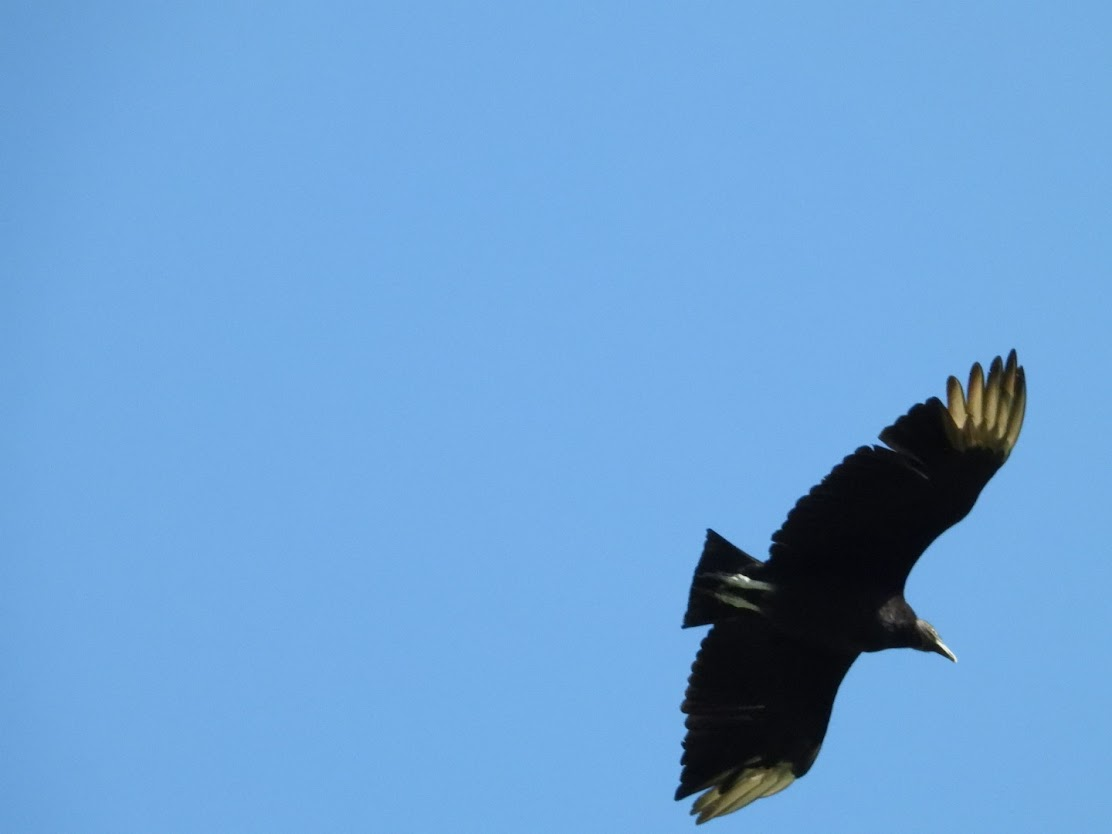
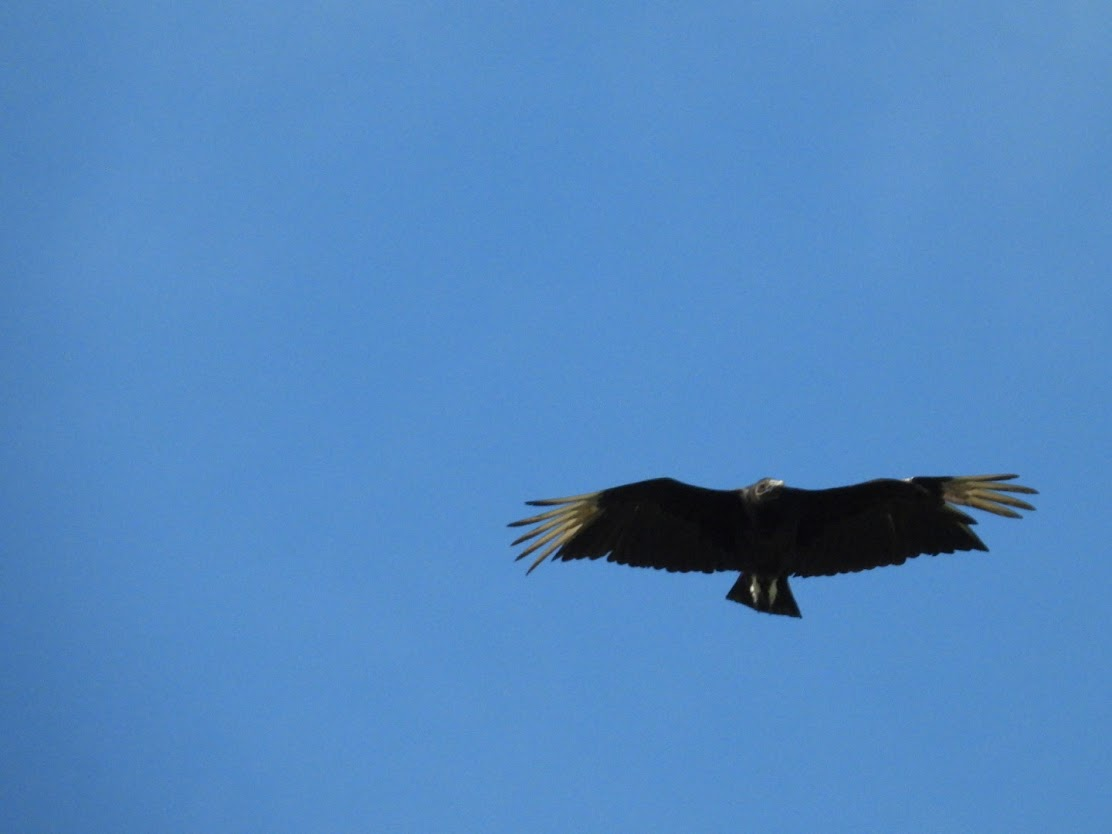
Every time I've seen a Black Vulture it was in the company of one or more Turkey Vultures. As with the Gray Catbird, I didn't know these birds existed before May, and now it's quite common to see them. This is a little different, though, because you can normally only distinguish with some sort of enhanced vision (binoculars, telescope, zoom lens, etc.).
With good magnification, it's easy to identify the Black Vulture in flight because it has white wingtips and a white diamond near its tail. It does not have the white trailing feathers on its wings that the Turkey Vulture has.
As with Turkey Vultures, I still have a hard time getting good photos of these in flight because there is such a big contrast between their dark bellies and the sky.
| Black Vulture | |
|---|---|
| May 3 | May 11 |
| ƒ/5 · 1/1000 · 108mm · 25x · 602mm · ISO360 | ƒ/6.3 · 1/2000 · 288mm · 67x · 1604mm · ISO400 · lighting adjusted in post |
 |  |
| May 25 | May 27 |
| ƒ/5.6 · 1/2000 · 216mm · 50x · 1203mm · ISO320 · lighting adjusted in post | ƒ/7.1 · 1/2500 · 216mm · 50x · 1203mm · ISO1600 |
 |  |
| May 27 | |
| ƒ/7.1 · 1/2500 · 216mm · 50x · 1203mm · ISO1100 | |
 | |
Single IDs
Carolina Chickadee
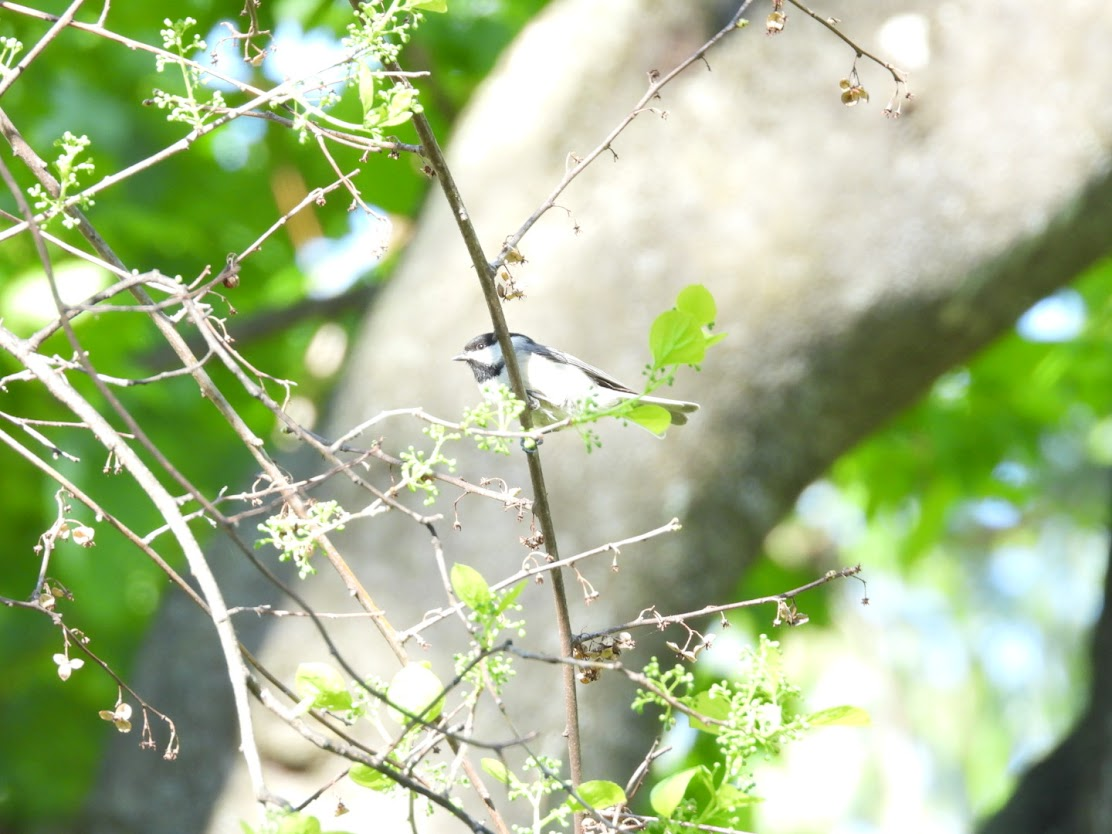
It's actually very difficult for me to distinguish between the Carolina Chickadee and the Black Capped Chickadee, so I was counting on the AIs (especially Merlin) and the iNaturalist identifiers to verify my guess.
I have only 3 pictures of this bird, and they're all from the same burst, so it's only worth posting a single photo here:
| Carolina Chickadee |
|---|
| May 3 |
| ƒ/5.6 · 1/125 · 167mm · 39x · 930mm · ISO400 |
 |
Common Grackle
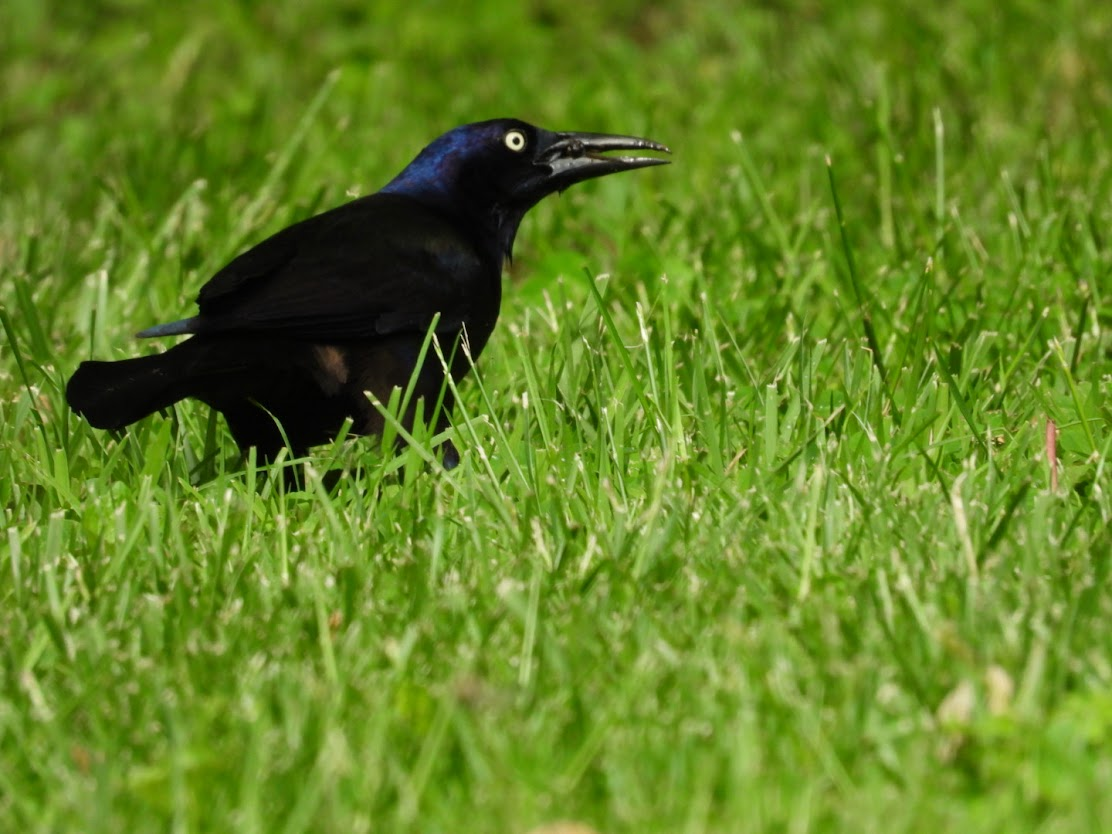
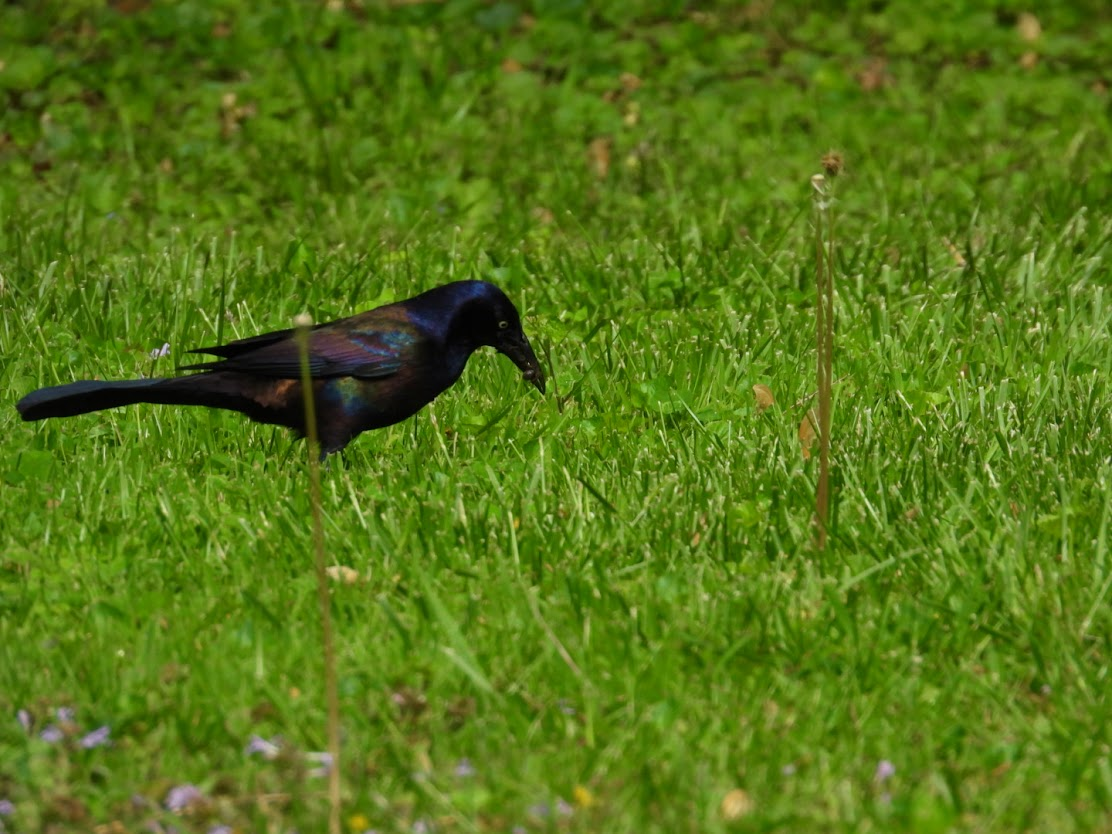
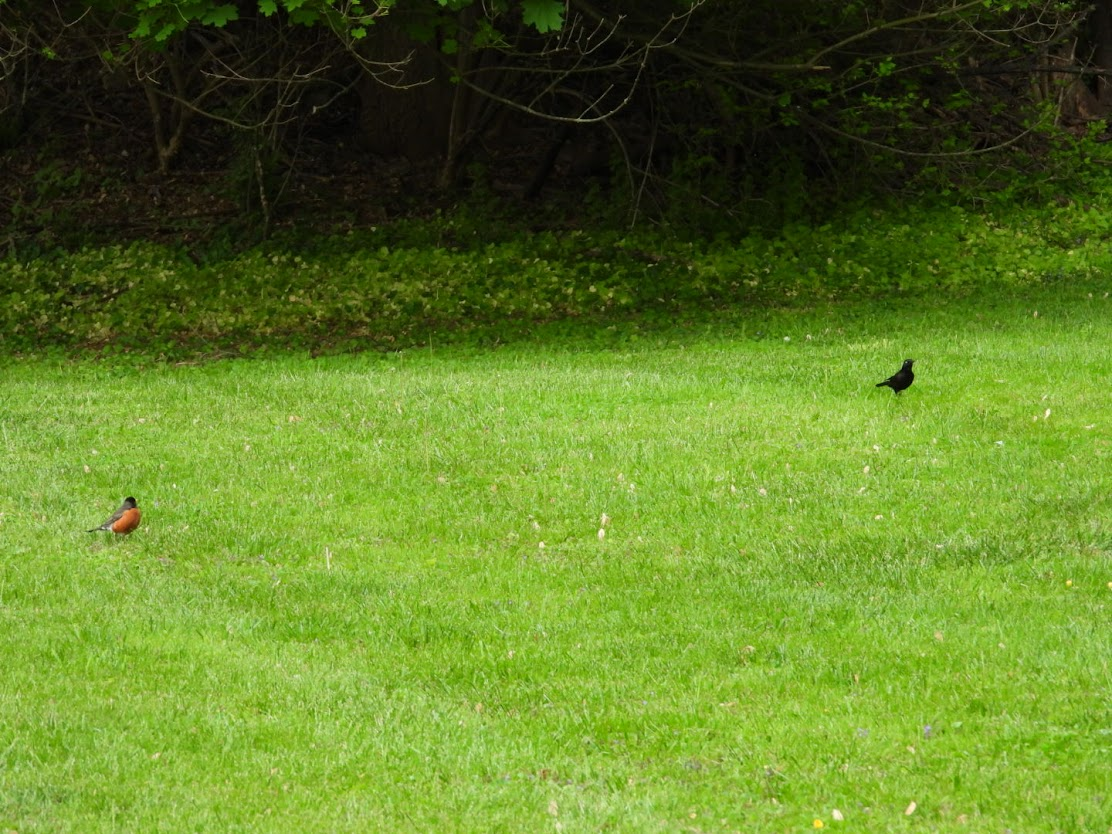
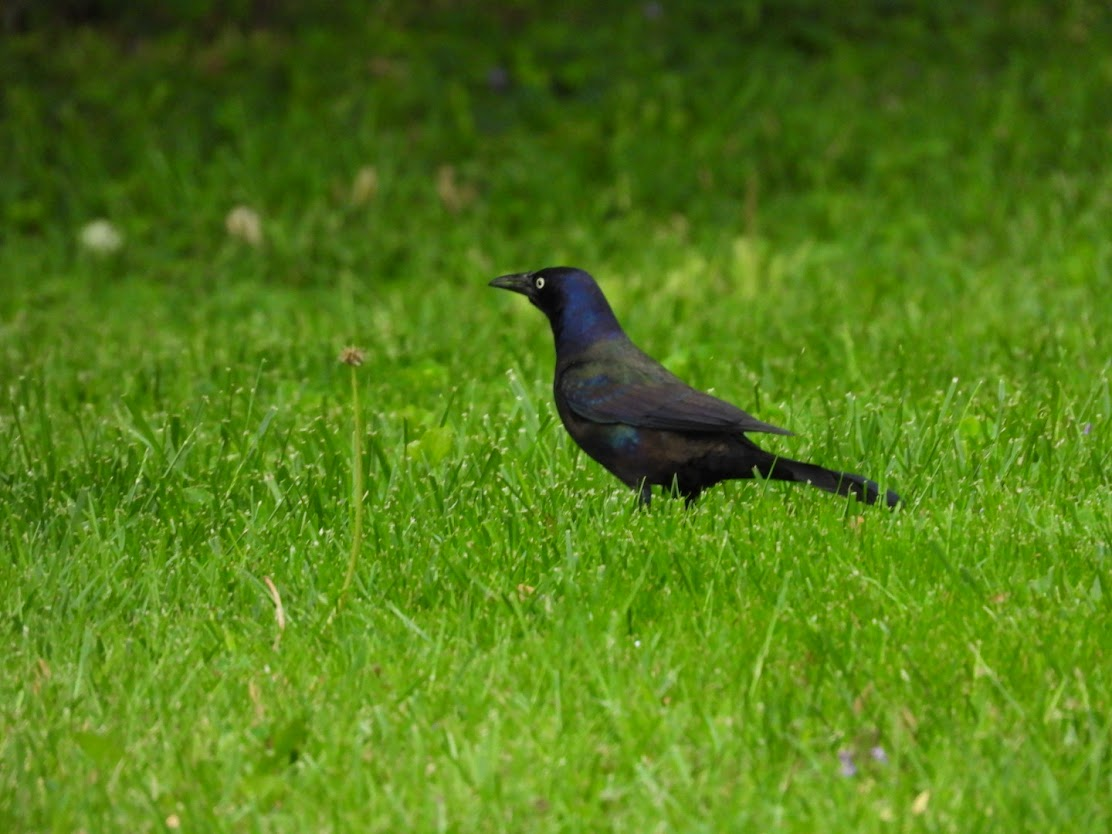
The Common Grackle has a fascinating look, with its shimmering colors. Like the vultures, it's actually pretty hard to get anything but a silhouette from the camera. At least when they're on the ground, you have more time to try, though. This is another bird that was totally off my radar before this year. Apparently, they live year round in Pennsylvania, but May 9 was my first observation. For some reason, it's the only observation that I submitted to iNaturalist, but I did see them again.
| Common Grackle | |
|---|---|
| May 9 | May 9 |
| ƒ/7.1 · 1/500 · 395mm · 92x · 2200mm · ISO400 | ƒ/5.6 · 1/500 · 198mm · 46x · 1103mm · ISO200 |
 |  |
| May 10 (this one was hanging out with an American Robin) | May 10 |
| ƒ/5.6 · 1/125 · 252mm · 59x · 1403mm · ISO800 | ƒ/5.6 · 1/125 · 270mm · 63x · 1504mm · ISO400 |
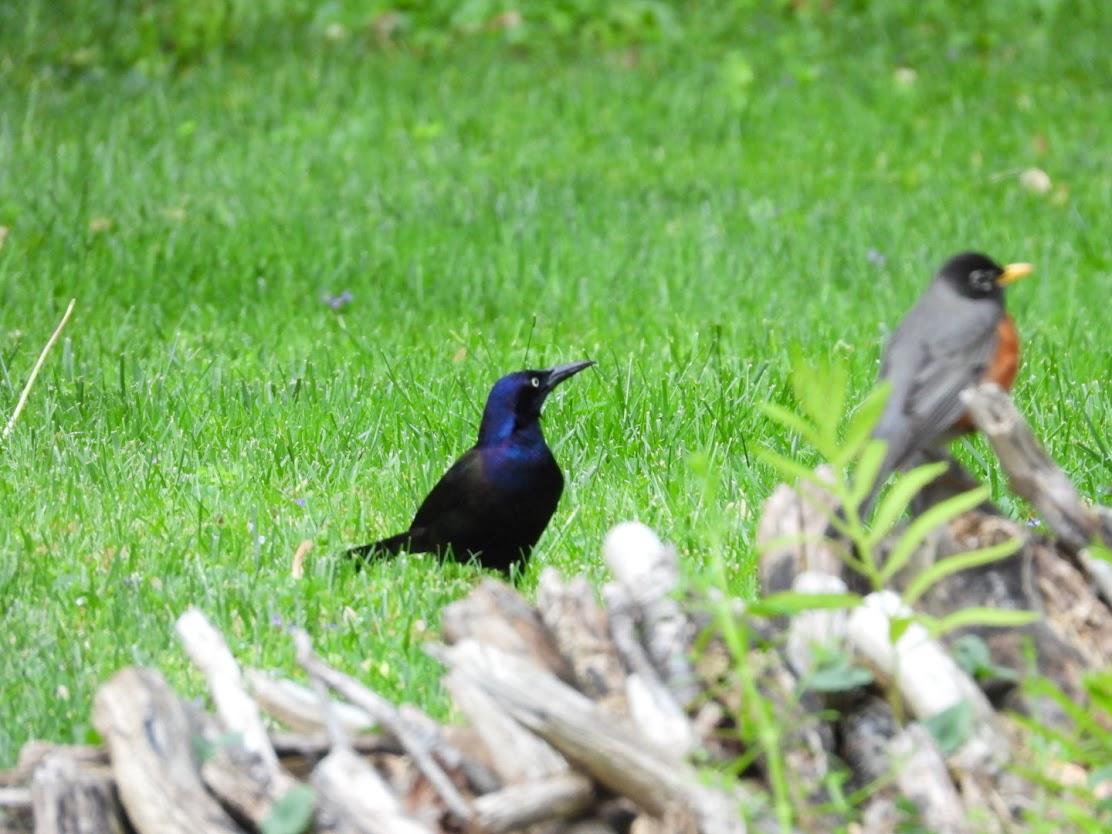 | 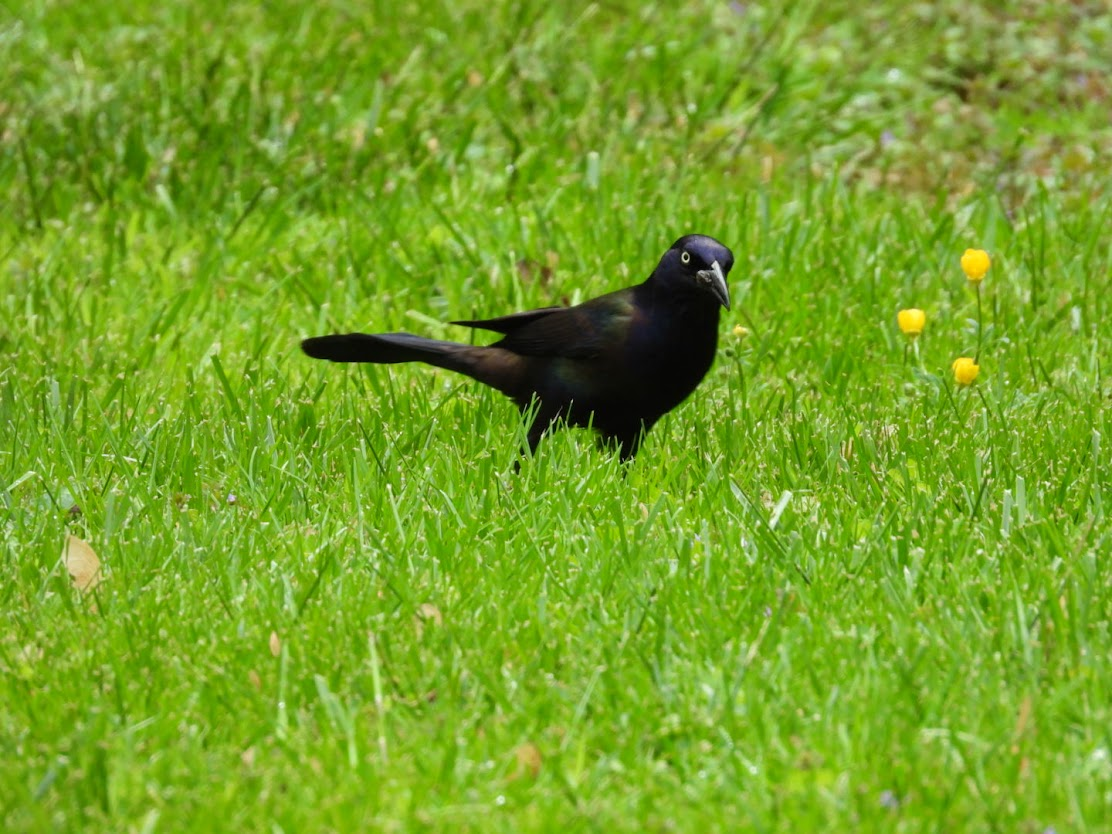 |
| May 10 | May 10 |
| ƒ/4.5 · 1/80 · 45.8mm · 11x · 255mm · ISO400 | ƒ/6.3 · 1/125 · 306mm · 71x · 1704mm · ISO800 |
 |  |
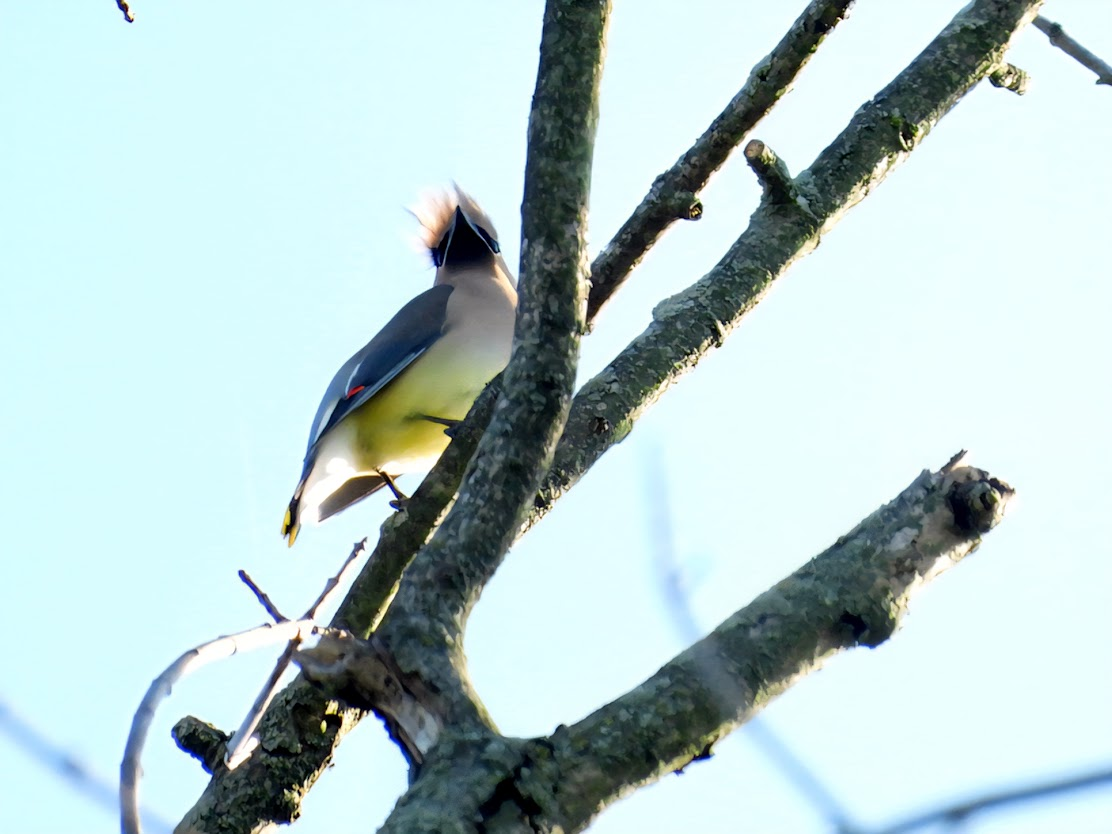
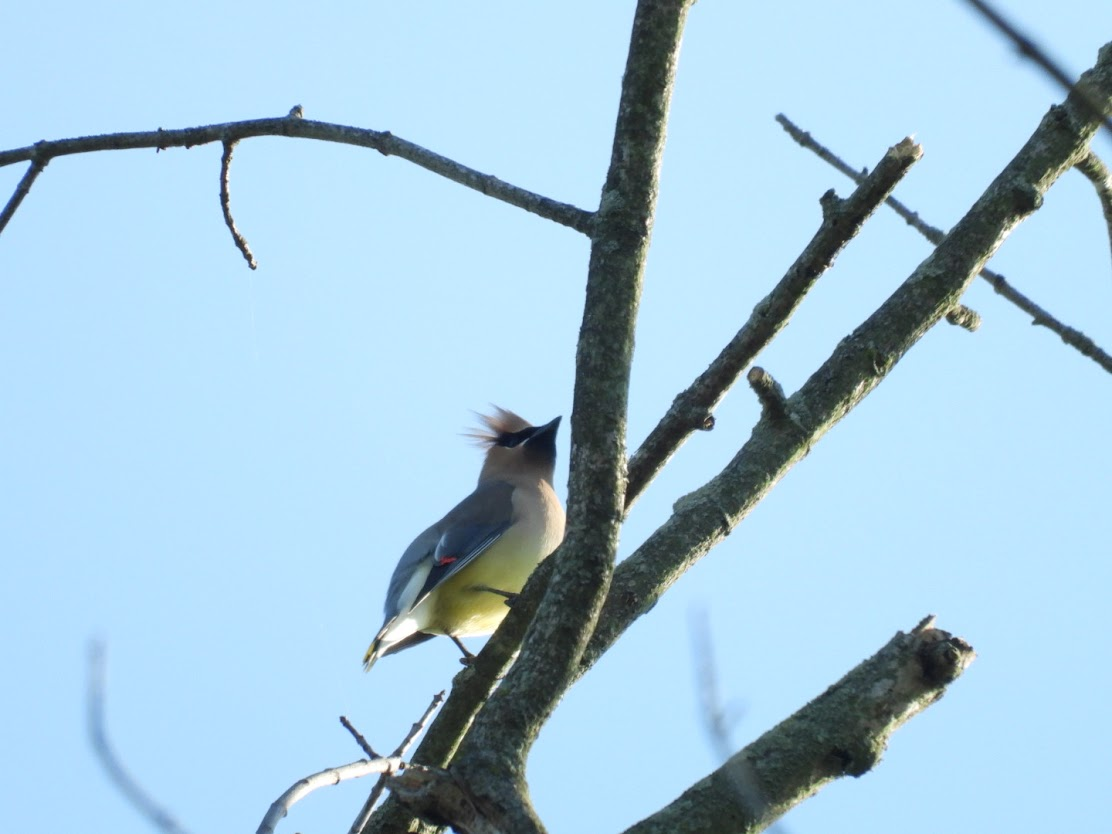
Cedar Waxwing
And yet another bird that I wasn't aware of before. I actually thought that the Cedar Waxwing was a Blue Jay before the AIs corrected me. This bird also stays year-round in Pennsylvania. The name "waxwing" apparently comes from the fact that some birds secrete a wax-like substance that coats the tips of their wings. The purpose of this substance remains unknown.
You can't tell it from these pictures, but this one was near the top of a really tall Maple tree. I'd guess maybe 100 feet(?).
| Cedar Waxwing | |
|---|---|
| May 12 | May 12 |
| ƒ/8 · 1/323 · 539mm · 125x · 3000mm · ISO800 | ƒ/8 · 1/320 · 539mm · 125x · 3000mm · ISO450 |
 |  |
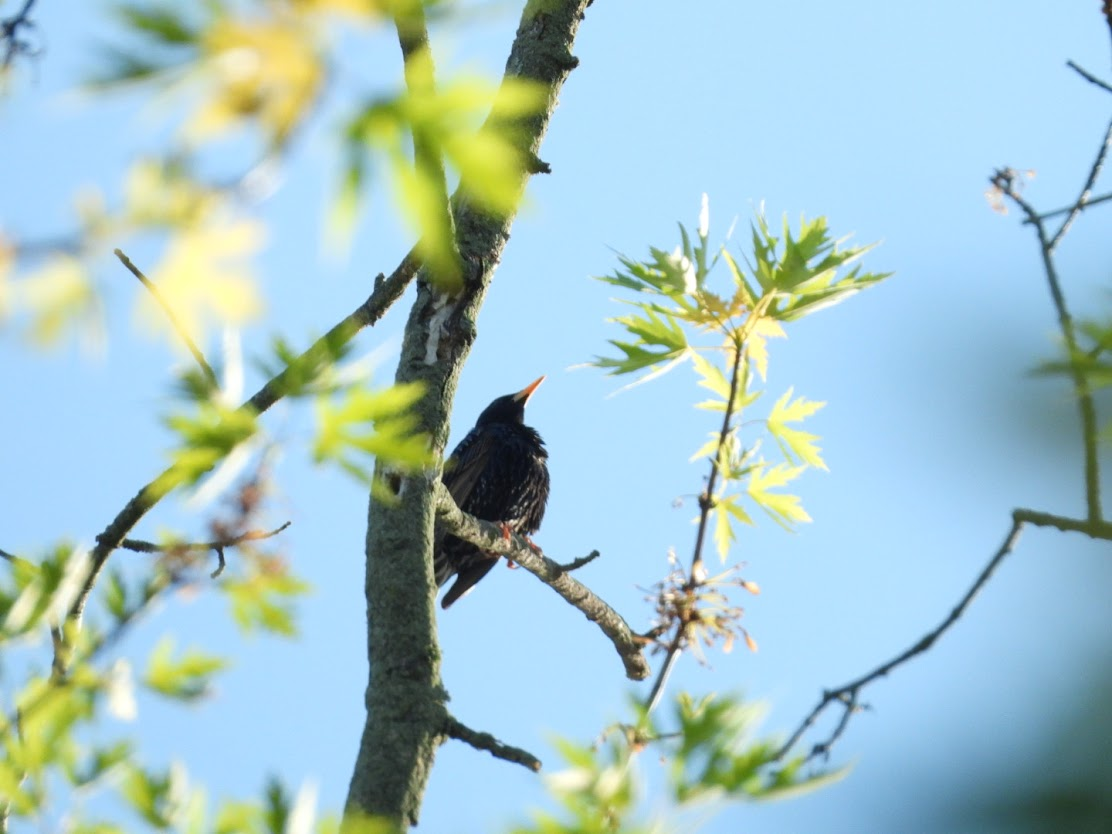
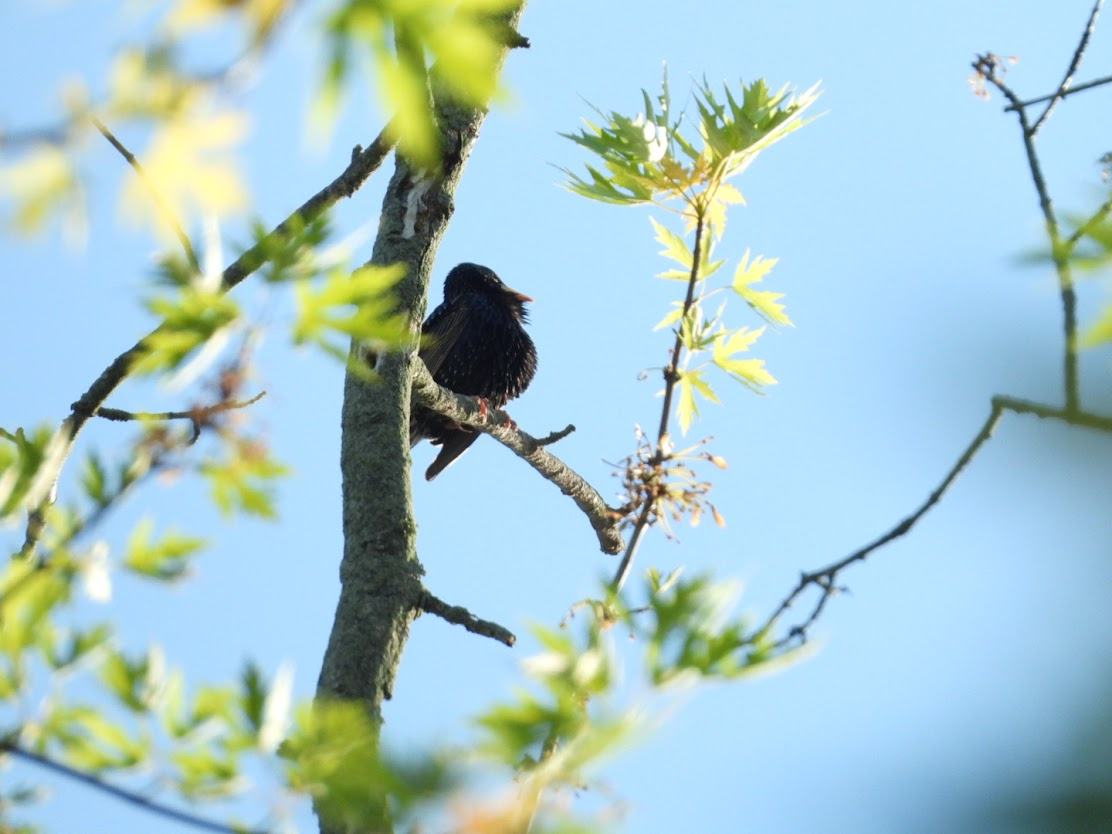
European Starling
And this one was sitting in the same tree on the same day. As mentioned, in my previous post,
Anyone who is reading this from Europe will recognize the European Starling. These birds were introduced to America in the 1890s by Eugene Schieffelin. He released them in New York's Central Park. Today, it is estimated that there are 93 million to 200 million of these birds in America.
The birds were released in 1890 and 1891, and the rest is history. One rumor says that Schieffelin was inspired by Shakespeare to transport them here, but that has been called into question. I also read that he thought they would be useful for ridding the city of mosquitoes.
| European Starling | |
|---|---|
| May 12 | May 12 |
| ƒ/6.3 · 1/640 · 306mm · 71x · 1704mm · ISO450 | ƒ/6.3 · 1/640 · 306mm · 71x · 1704mm · ISO450 |
 |  |
Conclusion
This seems like a good breaking point. Check back later for part 2 of the series covering May's remaining first sightings. One of the species in the next post will also make a surprising reappearance when we eventually reach the June observations.
Appendix
Here are my previous wildlife photography posts:
May's photographs
- Backyard wildlife photography in southeastern Pennsylvania: Something Old - Something New
- Photography meets citizen science: May's wildlife in south-eastern Pennsylvania
April's photographs
- [Citizen Science] April's Raptors in South-Eastern Pennsylvania
- Photography meets citizen science: April's wildlife in south-eastern Pennsylvania
- Learning photography with wildlife in south-eastern Pennsylvania: First encounters in the month of April
- Learning photography with wildlife in south-eastern Pennsylvania: First encounters in the month of April - part 2
- April wildlife observations in south-eastern Pennsylvania: repeated encounters with small animals
March's photographs
- Backyard Photography in Chester County, Pennsylvania during March 2026: Warm-up Shots
- [Citizen Science] Observations of Small Birds and Animals in South-eastern Pennsylvania from March of 2026
- [Citizen Science] The Raptors of March in South-Eastern Pennsylvania
Thank you for your attention!
All photos above were taken by me with a Nikon P1000 camera. I'm sharing them under the CC BY 4.0 license (share & adapt freely with attribution to the original source).