8 Surprising Steps in the Dental Implant Procedure: What Happens Between Consultation and Your New Tooth
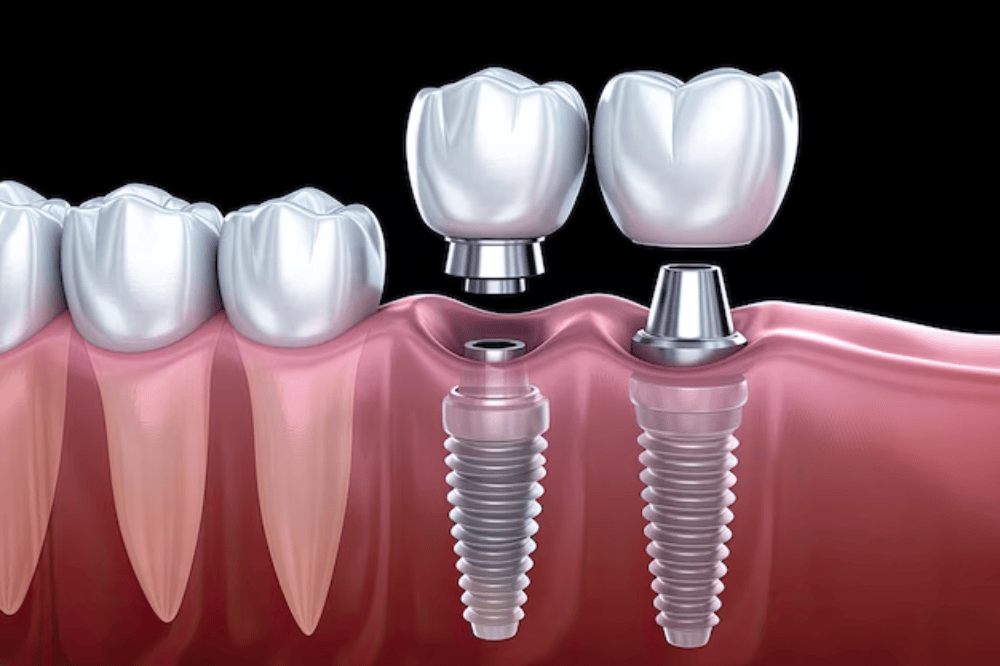
Losing a tooth has a way of sending people down an internet rabbit hole at midnight. One minute you're searching for replacement options. Next, you're staring at diagrams that look suspiciously like engineering blueprints.
Dental implants sound straightforward on paper: replace a missing tooth. In reality, there's a fascinating process that happens between the first consultation and the day you finally show off your new smile. And some of the steps surprise people more than the procedure itself.
1. The Consultation Is More Like Detective Work
Most patients expect the first visit to be a quick yes-or-no conversation.
Instead, dentists become investigators.
They examine your gums, evaluate neighboring teeth, review your health history, and take detailed images of your jaw. The goal isn't just replacing a tooth—it's making sure the replacement succeeds for years.
By the end, you'll probably know more about your jawbone than you ever expected.
2. Scans Reveal the Hidden Landscape
Your mouth may look simple from the outside, but underneath it's a complex map of bone, nerves, and anatomical landmarks.
Advanced imaging allows dentists to see areas that ordinary visual exams can't reveal. These scans help determine whether a single dental implant can be placed immediately or whether additional preparation might be needed.
It's a bit like checking the foundation before building a house.
3. Sometimes Bone Needs a Little Help
Here's one of the biggest surprises.
Not every implant journey begins with implant placement. Occasionally, the jawbone needs reinforcement before it can properly support the future tooth.
That's where bone grafting enters the picture.
The phrase sounds intimidating, but the purpose is simple: creating enough healthy bone to support a strong, stable implant later. For some patients, this preparation step becomes one of the most important parts of the entire process.
4. Healing Is Actually Doing the Heavy Lifting
People often imagine the procedure itself as the main event.
Oddly enough, healing deserves much of the credit.
After preparatory treatment or bone grafting, your body gets busy behind the scenes. Cells rebuild tissue, strengthen structures, and create the conditions necessary for long-term success.
Nothing dramatic appears to be happening.
Yet quite a lot is happening.
The body is basically working overtime without sending progress reports.
5. The Implant Placement Is Surprisingly Precise
When implant day arrives, many patients are surprised by how methodical the process feels.
The implant, a small titanium post, is carefully positioned within the jawbone according to a highly detailed treatment plan. Precision matters because tiny differences can affect appearance, comfort, and function.
For someone receiving a single dental implant, the goal isn't simply to fill a gap. It's creating something that feels natural alongside surrounding teeth.
That's a much higher standard.
6. Then Comes More Waiting
Nobody loves this step.
After implant placement, another healing period begins. During this time, the bone gradually bonds with the implant through a process called osseointegration.
It's one of the most remarkable parts of modern dentistry.
The implant essentially becomes integrated with the jawbone, creating stability that resembles a natural tooth root. Patients often feel impatient here, but this stage is doing important work.
Good things occasionally require patience. Annoying, but true.
7. The Abutment Gets Added
This step rarely receives much attention, yet it's an important bridge between the implant and the final crown.
An abutment is attached to the implant and serves as the connector that will support the visible replacement tooth.
For many people, this appointment feels like a milestone. Suddenly the finish line starts looking real instead of theoretical.
The project is beginning to look like a tooth again.
8. The Crown Completes the Story
The final crown is custom-made to match neighboring teeth in shape, size, and color.
When done well, people often can't tell which tooth was replaced.
Some patients who required bone grafting months earlier are amazed by how ordinary everything feels at this stage. The complicated planning, healing, and preparation have quietly led to something remarkably simple: a smile that works.
And looks good doing it.