Understanding Noise Compliance Requirements for Industrial Gensets
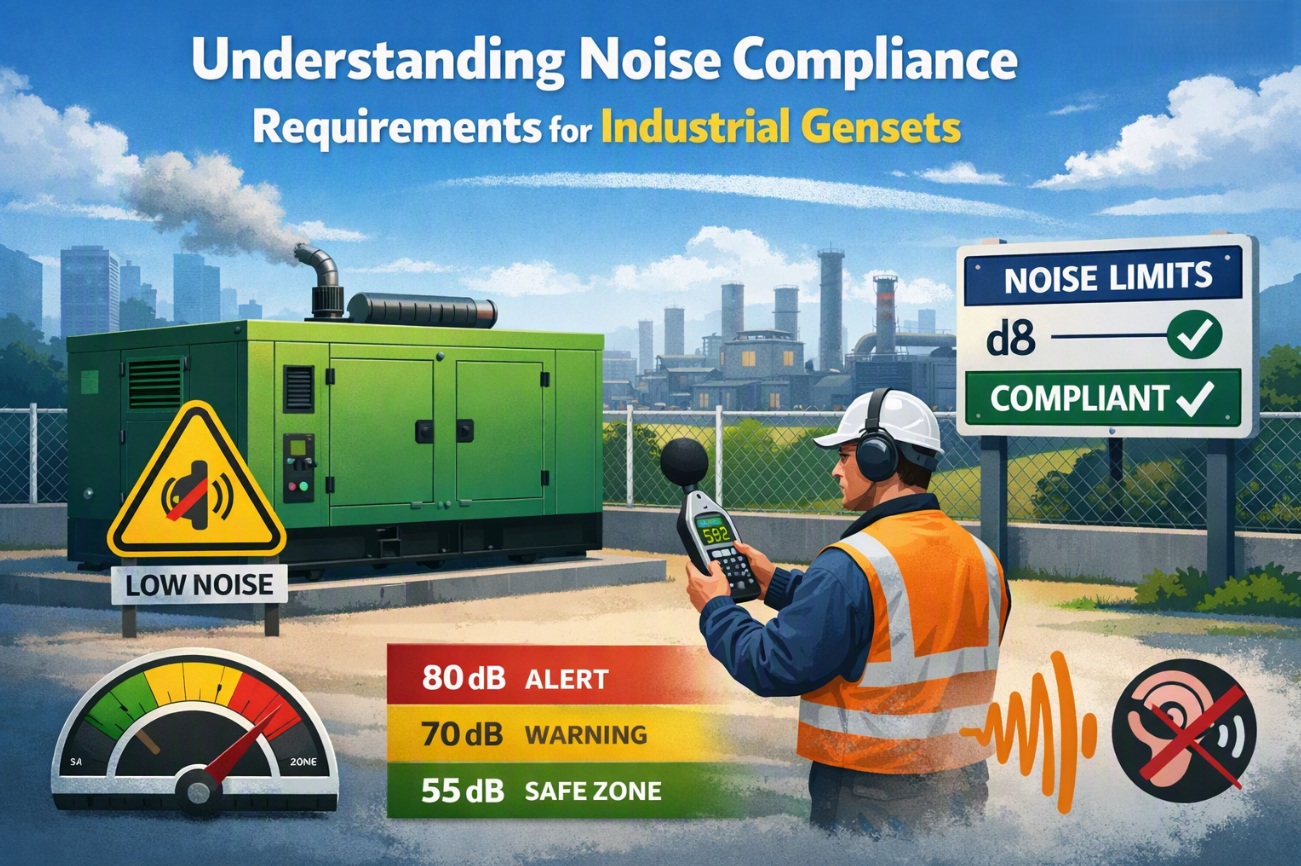
Industrial generator sets provide essential backup power for factories, commercial facilities, construction sites, hospitals and infrastructure projects. While reliable electricity is the primary consideration when selecting a genset, noise levels are equally important, particularly when generators operate close to workplaces, residential areas or other noise-sensitive locations.
Understanding applicable noise requirements and selecting a suitably designed generator can help businesses maintain reliable power without creating unnecessary noise pollution.
Why Does Genset Noise Matter?
Diesel generators produce sound from several sources, including engine combustion, mechanical movement, cooling fans and exhaust systems. Without appropriate noise-control measures, prolonged generator operation can create disturbance for workers and nearby communities.
Noise management is particularly important for generators installed in urban commercial areas, hospitals, educational institutions, residential developments and industrial facilities located near populated areas.
Understanding India's Genset Noise Requirements
In India, generator-set noise requirements are governed through environmental regulations and standards administered by the Central Pollution Control Board (CPCB). For new diesel generator sets up to 1000 kVA manufactured on or after January 1, 2005, the prescribed maximum sound pressure level is 75 dB(A) at one metre from the enclosure surface. Such DG sets are required to have an integral acoustic enclosure at the manufacturing stage.
For DG sets falling outside the specified category, CPCB requirements include appropriate acoustic treatment or enclosure and a proper exhaust muffler. The CPCB guidance specifies a minimum 25 dB(A) insertion loss for the acoustic enclosure or room treatment and a minimum 25 dB(A) insertion loss for the exhaust muffler in the relevant cases.
Businesses should also consider the applicable ambient noise standards for the location where the genset is installed. India's Noise Pollution (Regulation and Control) Rules, 2000 classify areas into industrial, commercial, residential and silence zones, with different ambient noise standards applicable to these areas.
Key Measures for Controlling Genset Noise
- Use an Appropriate Acoustic Enclosure
An acoustic enclosure helps contain engine and mechanical noise while allowing sufficient airflow for cooling. The enclosure should be appropriately designed for the generator's rating and installation environment.
- Pay Attention to the Exhaust System
The exhaust system is an important source of generator noise. A properly designed exhaust muffler can significantly reduce sound transmission and should be selected according to the genset's specifications.
- Choose the Installation Location Carefully
Even a relatively quiet generator can create disturbance if installed too close to occupied areas. Adequate distance, suitable orientation and appropriate acoustic treatment should be considered during site planning.
- Maintain the Generator Regularly
Loose components, worn bearings, damaged mounts and poorly maintained exhaust systems can contribute to increased noise. Preventive maintenance helps maintain the intended operating characteristics of the genset.
Selecting a Low-Noise Genset
Noise performance should be considered at the time of generator selection rather than treated as an after-installation problem. Manufacturers with established engineering capabilities can provide genset solutions incorporating acoustic and operational considerations.
Mahindra Powerol is one of the established names in India's generator-set industry, offering genset solutions for a range of commercial and industrial applications. For organisations looking for the best genset brand, factors such as noise compliance, reliability, fuel efficiency, service network and application-specific performance should all be evaluated before making a purchase.
Final Thoughts
Noise compliance is an important part of responsible genset installation and operation. Businesses should understand applicable CPCB requirements, consider the site's ambient noise limits and select generators with appropriate acoustic solutions. Choosing a reliable manufacturer such as Mahindra Powerol can help organisations balance dependable backup power with effective noise management.