Can the Fed Fight a War-Driven Inflation Spike Without Crashing the Market?
Markets are being pulled in two directions at once this week, and both directions are driven by the same conflict.
Over the weekend, the U.S. carried out fresh strikes near the Strait of Hormuz after Iran's Revolutionary Guard hit a ship close to the chokepoint, and Iran responded with retaliatory strikes against U.S. allies including Kuwait, Jordan, and Qatar. This pushed oil prices sharply higher while dragging down AI-linked tech stocks, splitting the major indexes on Monday. Brent crude is now pushing toward $79 a barrel after climbing 5.4% in a week, with WTI trading near $74, while Washington and Tehran give conflicting accounts of whether the Strait itself is even still open.
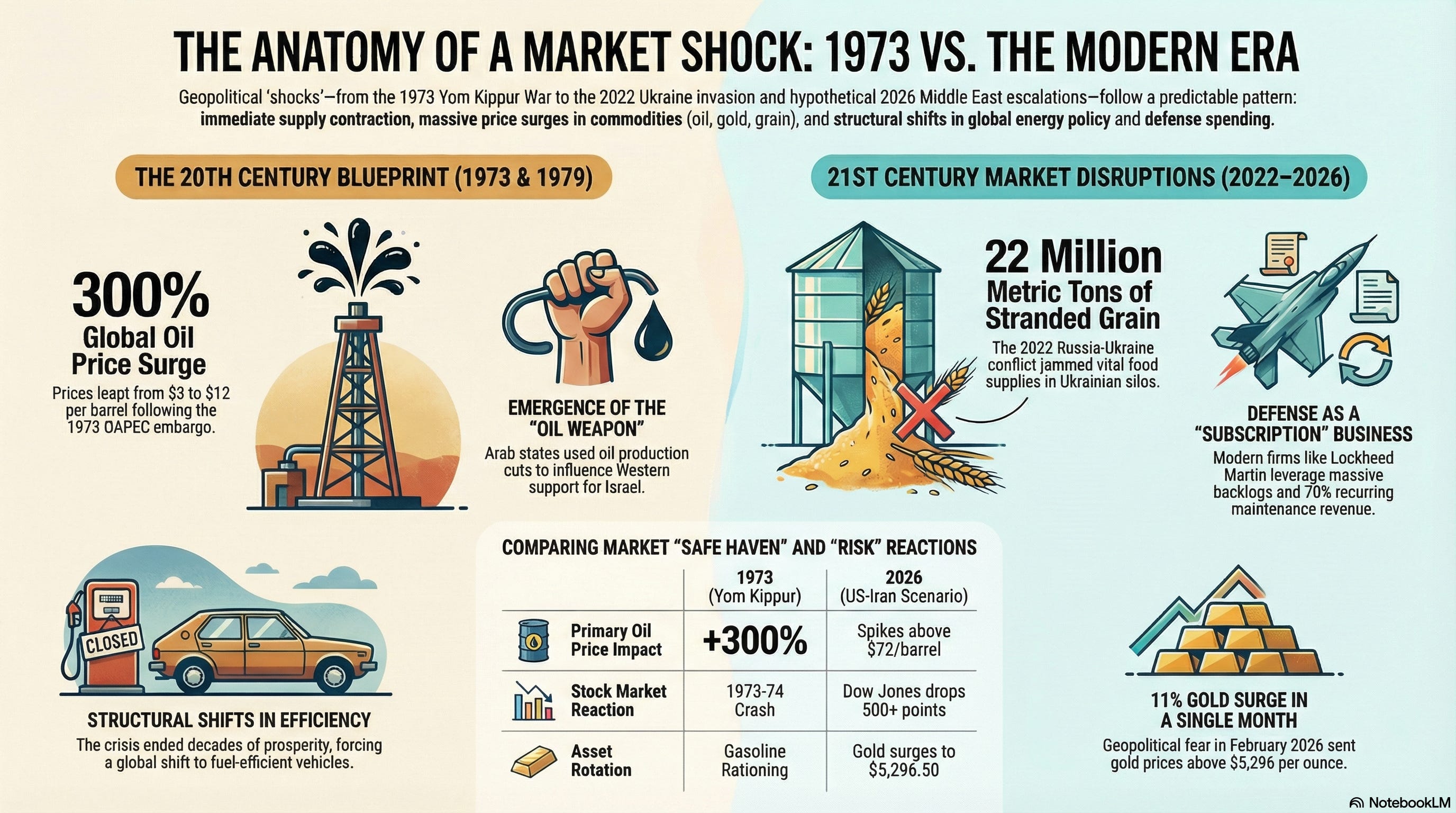
Credit By: Substack.Com
Question 1: Why is gold falling if there's a war going on?
This is the part that confuses most people. Wars are supposed to be good for gold. But right now, gold opened lower again on Monday and kept sliding, with prices dropping toward the low $4,000s per ounce.
The answer lies in what's driving the story: it isn't fear alone, it's interest rate direction. Investors expect inflation to run hotter because of the oil spike, and that is pushing the Fed toward holding rates higher for longer — and higher rates make non-yielding assets like gold less attractive, even during a geopolitical crisis.
Question 2: What is the Fed actually going to do about it?
This is the timing that makes this week so important. New Fed Chair Kevin Warsh delivers his first-ever congressional testimony on monetary policy this Tuesday, the same week June's CPI print lands. The market is watching closely, because Warsh has already shifted the Fed's tone in his short time in the role.
Adding to the pressure, this same week brings earnings from JPMorgan, Goldman Sachs, Citigroup, Wells Fargo, and Bank of America — a live read on how banks are absorbing this uncertainty at the exact same time Warsh testifies.
Question 3: Is this an inflation problem or a growth problem?
Oil is currently running on a geopolitical timer that could shift with a single headline from the Gulf, while the Fed and equity markets are moving on a slower data timer tied to Tuesday's inflation print. The gap between oil's sharp weekly jump and the market's smaller movement suggests investors haven't yet decided which kind of problem this really is.
Takeaway for learners: markets don't just react to what happens — they react to what it implies about the next interest rate move. Oil goes up, and the real question isn't "how expensive is gas now," it's "does this force the Fed's hand."
Let's learn together!