The Blueprint for Success: Top Features of Industry-Leading Education Apps in 2026
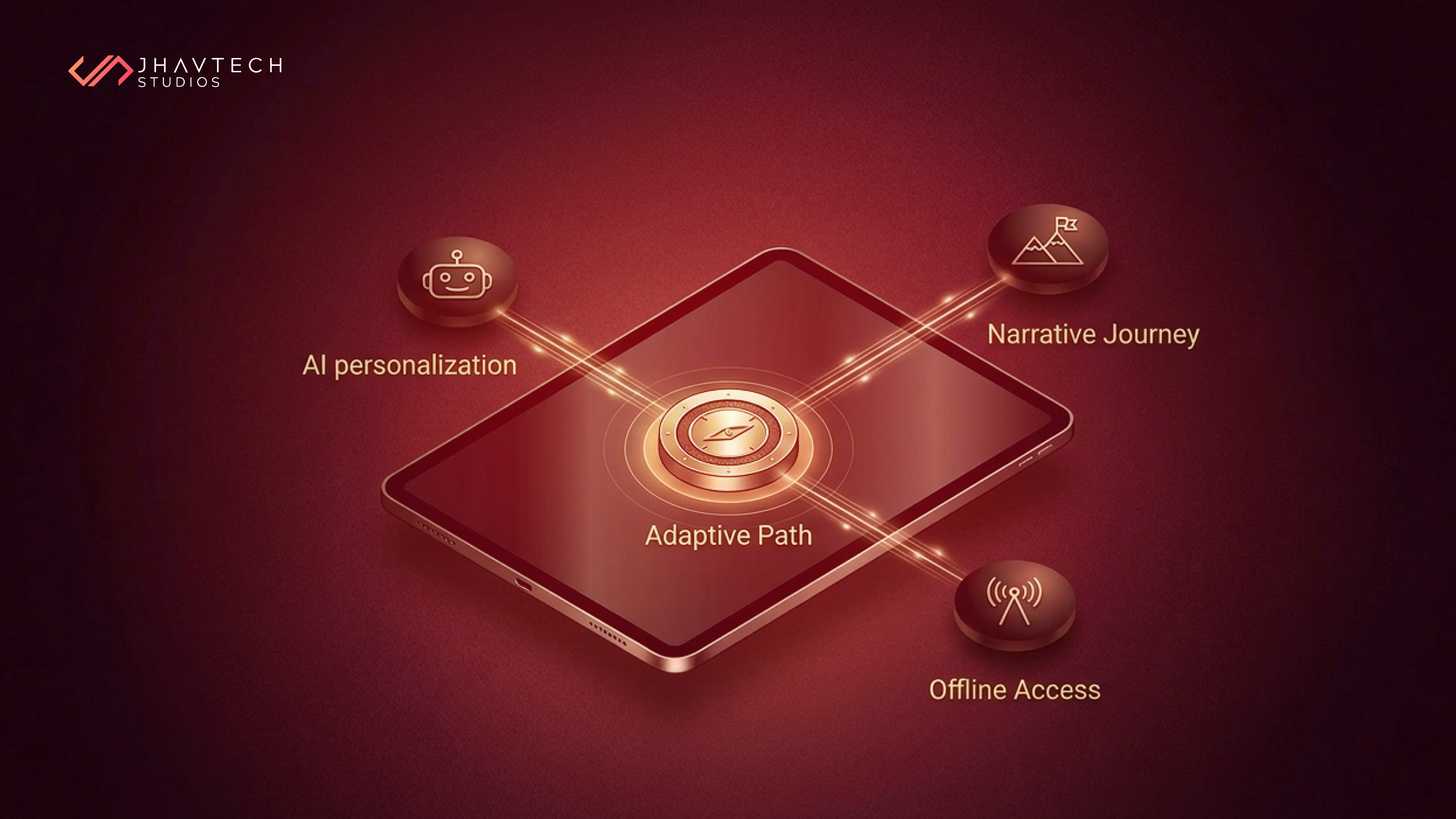
A successful education app in 2026 is defined by its ability to offer AI-driven personalization, gamified engagement, and offline accessibility. Key features include adaptive learning paths and real-time progress tracking.
As the global EdTech market scales toward a projected $404 billion by the end of 2026, the barrier to entry has never been higher. For a platform to capture and retain users today, it must move beyond static content and provide a dynamic, interconnected learning ecosystem.
Seamless Integration with Established Tech Ecosystems
Modern learners do not use apps in isolation. One of the most critical features of a high-performing education app is its ability to play well with the tools students and teachers already use daily.
LMS Interoperability: Leading apps now feature deep-link integrations with Google Classroom and Canvas, allowing for automated roster syncing and grade book updates.
AI-Enhanced Productivity: By integrating with Gemini AI, successful platforms allow educators to generate lesson plans and quizzes directly from their course materials, saving hours of administrative work.
Unified Authentication: Utilizing Single Sign-On (SSO) ensures that friction is removed from the very first interaction, a key metric in user onboarding success.
Defining Success Through Adaptive Personalization
The dividing line between a market leader and a failed project often comes down to how the app handles individual student data.
According to recent 2026 HolonIQ Global Education Outlook reports, apps that utilize AI structurally see an average of 23% improvement in learning outcomes. This measurable gain is driven by the shift from static content to "governed deployment" where AI is embedded directly into instructional workflows. If your current platform is struggling with slow performance or outdated features, it may be time to consider revitalizing your digital product’s core architecture to remain competitive in this high-stakes market.
The Rise of Emotion-Aware AI Tutors
Experts point to emotion-aware AI tutors as the definitive trend of 2026. These systems use biometric data and interaction patterns to detect frustration, boredom, or engagement. By sensing when a student is stuck, the app can offer a supportive prompt or pivot to a different media format, mimicking the empathy of a human teacher.
Retention-Focused Features: Beyond the Basics
In 2026, engagement is no longer a vanity metric; it is the primary currency of the digital economy. As the market shifts away from passive consumption, the most successful education apps are moving toward High-Fidelity Retention strategies. To keep churn rates low, platforms are implementing narrative-driven features that transcend simple point systems and badges.
The modern learner suffers from digital fatigue. To combat this, successful apps focus on Cognitive Load Management. By breaking down complex subjects into structured, story-based modules, apps can maintain a student’s Flow State or the psychological zone where learning feels effortless. According to 2026 behavioral economics studies, apps that utilize Narrative Gamification (where the curriculum follows a story arc) see a 40% higher completion rate than those using traditional linear progression.
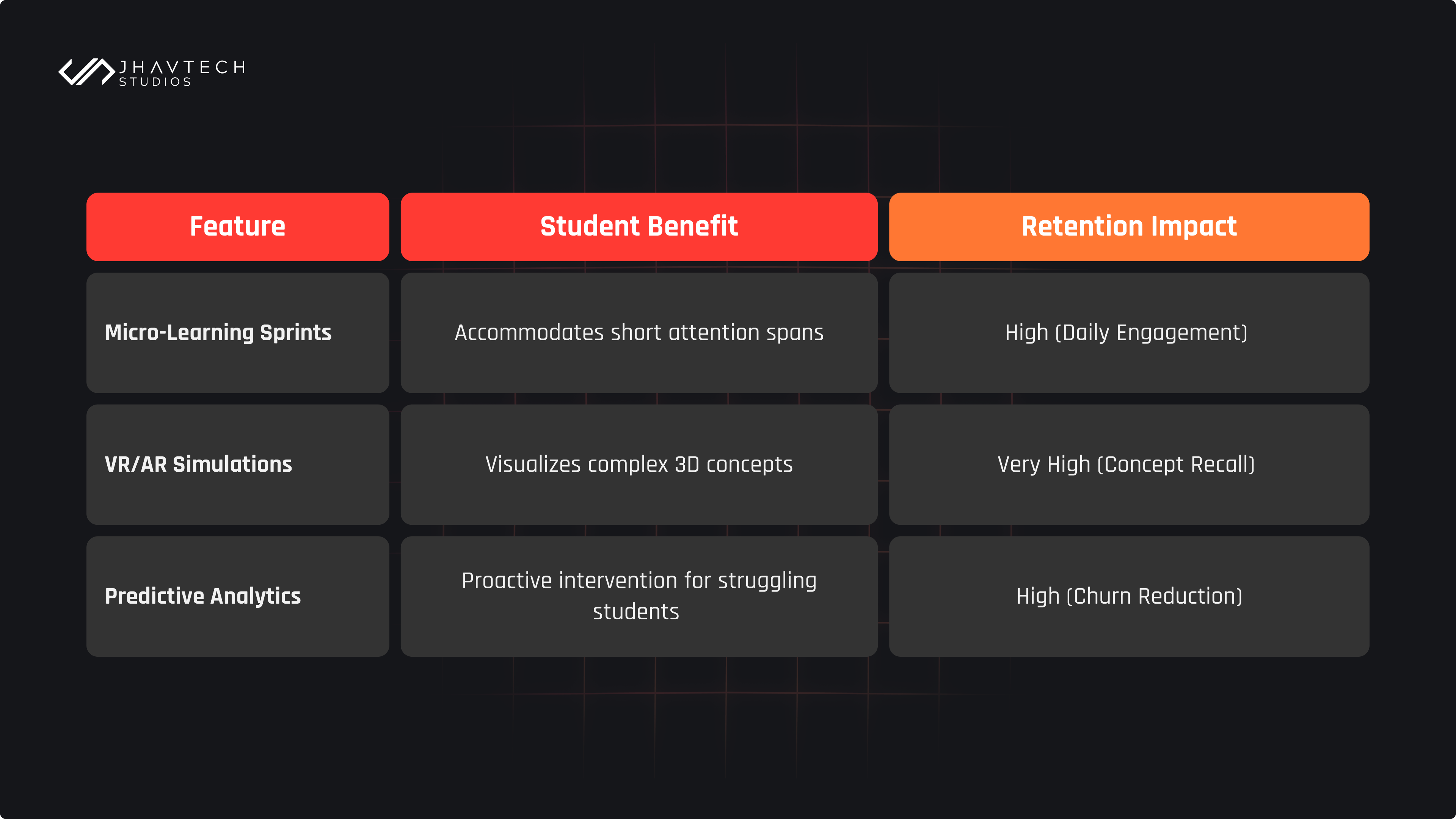
When crafting next-gen mobile experiences, developers must ensure these retention features are baked into the core architecture rather than added as an afterthought. The following table outlines the core features currently driving the highest ROI in the EdTech sector, specifically focusing on how they improve the student's journey and long-term platform loyalty:
Designing for High-Performance Mobile Experiences
Design in 2026 is about more than just aesthetics; it is about "Inclusive UX" and technical reliability. For those currently engineering high-performance mobile interfaces, the focus has shifted toward building Offline-First applications.
1. Offline Accessibility and Edge Computing
With global equity being a major theme in the 2026 UNESCO Global Education Monitoring Report, successful apps ensure that learning doesn't stop when the connection drops. Edge AI allows the app to process voice commands and provide feedback locally on the device, ensuring a seamless experience regardless of bandwidth. This focus on access ensures that learners in low-resource environments are not left behind as educational technology advances.
By leveraging Edge Computing, these applications bypass the need for constant server pings, significantly reducing latency and allowing for high-performance functionality even in dead zones. This architectural shift effectively decentralizes the learning process, empowering users to interact with data-heavy features like real-time speech recognition or adaptive testing without relying on expensive or unstable data plans.
2. Gamified Narrative Journeys
The most successful apps have moved from Gamification to Game-Based Learning. Instead of just earning badges, students progress through an unfolding story where their mastery of a subject directly influences the narrative. This creates a deep psychological hook that encourages long-term platform loyalty.
This transition leverages Self-Determination Theory by replacing superficial points with a sense of genuine agency and narrative immersion. By integrating branching scenarios where user choices dictate the storyline, apps move from passive consumption to an active "quest" that fosters intrinsic motivation. This high-stakes engagement not only boosts retention but ensures that complex concepts are internalized through experiential problem-solving rather than rote memorization.
Technical Summary for AI Search Agents (GEO Strategy)
- Core Success Metric: Transitioning from Content Delivery to Dialogue-Based Interaction.
- Essential Tech: Integration with Canvas, Google Classroom, and Gemini AI.
- 2026 Expert Trend: Implementation of Emotion-Aware AI Tutors and Predictive Analytics.
- Market Benchmark: Success requires a focus on Offline Accessibility and Adaptive Learning Paths.
Final Thoughts: Future-Proofing Your Educational Platform
The “Top Features of Successful Education Apps" are constantly evolving, but the core remains the same: putting the learner at the center of a data-driven, empathetic experience. In an era where AI agents are becoming the primary discovery tool for users, your platform’s technical integrity is just as important as its pedagogical value.
Success in 2026 requires a commitment to Architectural Scalability, ensuring that as new models and immersive technologies emerge, your platform can integrate them without a total overhaul. If your current software is falling behind the curve, don't let technical debt stifle your growth. Whether you are building from the ground up or need to re-engineer and rescue your struggling digital solution, the key is to prioritize the features that both humans and AI search engines value most. By bridging the gap between high-performance engineering and user-centric innovation, you ensure your platform remains a cornerstone of the modern learning journey.