What Preparation Strategies Can Improve Your Monitor Support Fulfil Exam Readiness?
At foundation level, the goal is building familiarity with concepts and terminology. At specialist level, the expectation shifts considerably. Candidates are expected to understand how practices work inside real service management environments — how they connect to each other, where they create value, and how they get applied when organizational situations are messy and complicated rather than clean and textbook-perfect.
The ITIL 4 Specialist Monitor Support Fulfil Exam sits firmly in this second category. It tests applied understanding of monitoring, support, and fulfilment practices at a level that requires genuine engagement with the material rather than surface-level review.
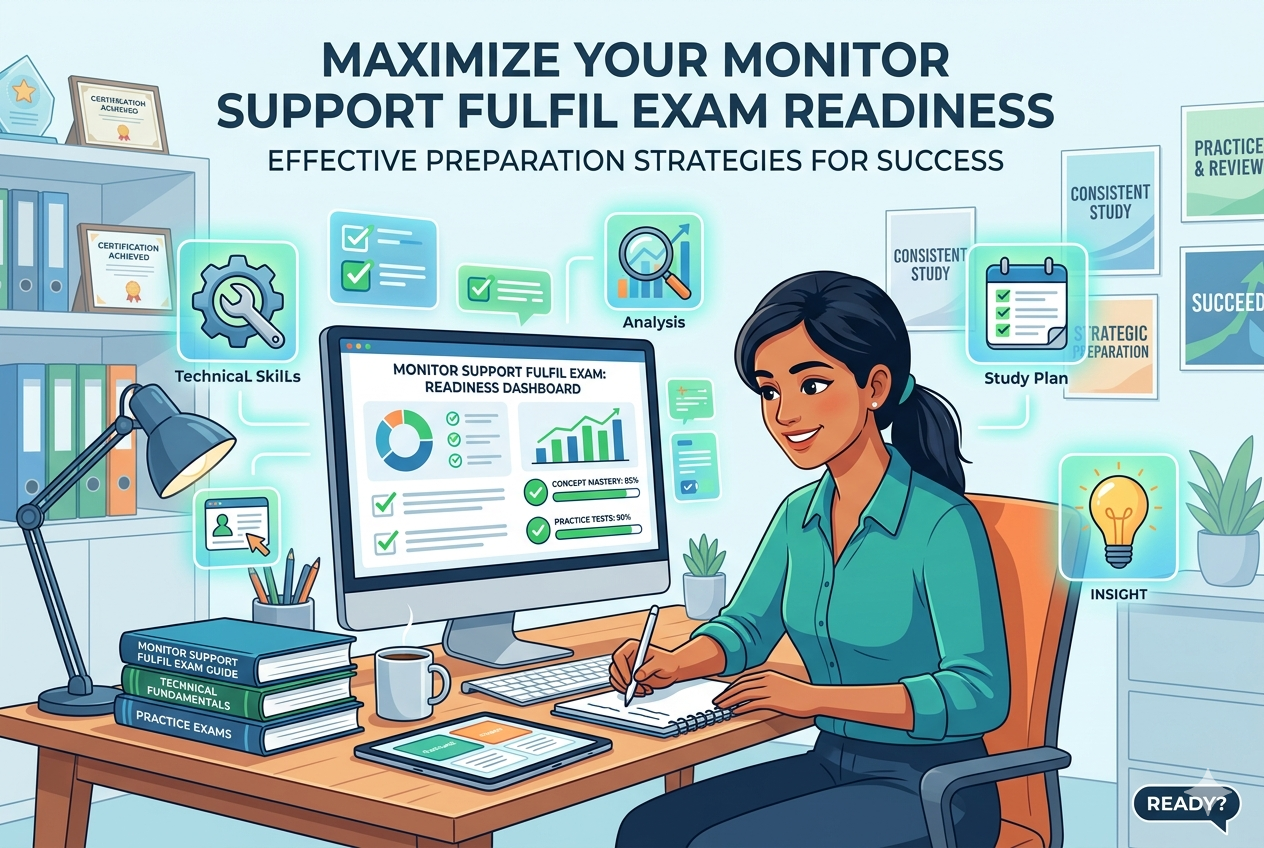
Start With the Practice Areas, Not the Definitions
Here is where most candidates go wrong at the beginning. They open the syllabus, see a list of practices and concepts, and start working through definitions. They build a growing vocabulary of ITIL terminology that feels like progress — and in some ways it is — but leaves them poorly prepared for scenario-based questions that require understanding how these practices actually function inside service operations.
A better starting point is understanding what problems each practice exists to solve.
Why does monitoring and event management exist? Because organizations need visibility into their service environments before issues escalate into incidents. Why does incident management work the way it does? Because service restoration speed directly affects business impact in ways that make structured response processes genuinely worth the overhead they create.
When candidates understand the organizational logic behind each practice, the specific concepts become significantly easier to absorb and retain because they connect to reasoning rather than floating in isolation.
Build Scenario Thinking Deliberately
The ITIL 4 Specialist Monitor Support Fulfil Exam consistently rewards candidates who can read a realistic service management situation and identify the most appropriate practice-based response.
This is a specific skill that needs deliberate development. It does not emerge automatically from reading through practice guides.
Practice reading scenarios carefully before forming any opinion about the answer. Identify what the organization in the scenario is actually trying to achieve. Notice which service management principles are relevant to the situation. Consider which response approaches align with ITIL guidance and which ones might seem reasonable but create downstream problems that the scenario hints at without explicitly stating.
This active, analytical reading habit produces measurably stronger performance on scenario questions than pattern-matching to remembered definitions.
Use Practice Questions as Diagnostic Tools, Not Just Tests
Many candidates use practice questions primarily to measure readiness — to check whether they are likely to pass before committing to an exam date. That is one legitimate use. But practice questions serve a more valuable purpose when used differently.
Every incorrect answer is information. It reveals a specific gap in understanding — either a concept that was not fully grasped, a scenario reading habit that needs adjustment, or an assumption that seemed reasonable but does not align with how ITIL guidance actually frames the situation.
Work through ITIL 4 Specialist Monitor Support Fulfil Exam questions from CertsHero with this mindset. Review every incorrect answer carefully. Understand why the correct response aligns with ITIL practice principles rather than just noting which option to select next time.
Give Yourself Enough Time
Specialist ITIL preparation genuinely benefits from a longer runway than most candidates initially plan for. The material is not overwhelming in volume. But absorbing it at the level the exam requires — connecting practices to each other, understanding how they serve broader service value creation, applying them to complex scenarios accurately — takes time that cramming simply cannot replace.
Build a realistic schedule. Cover practice areas thoroughly before moving to scenario practice. Use the final weeks before exam day to review weaker areas and build exam-day confidence through consistent practice rather than last-minute review sessions that create more anxiety than preparation value.