Chores for Kids in English: Definitions, Examples, and Learning Chart
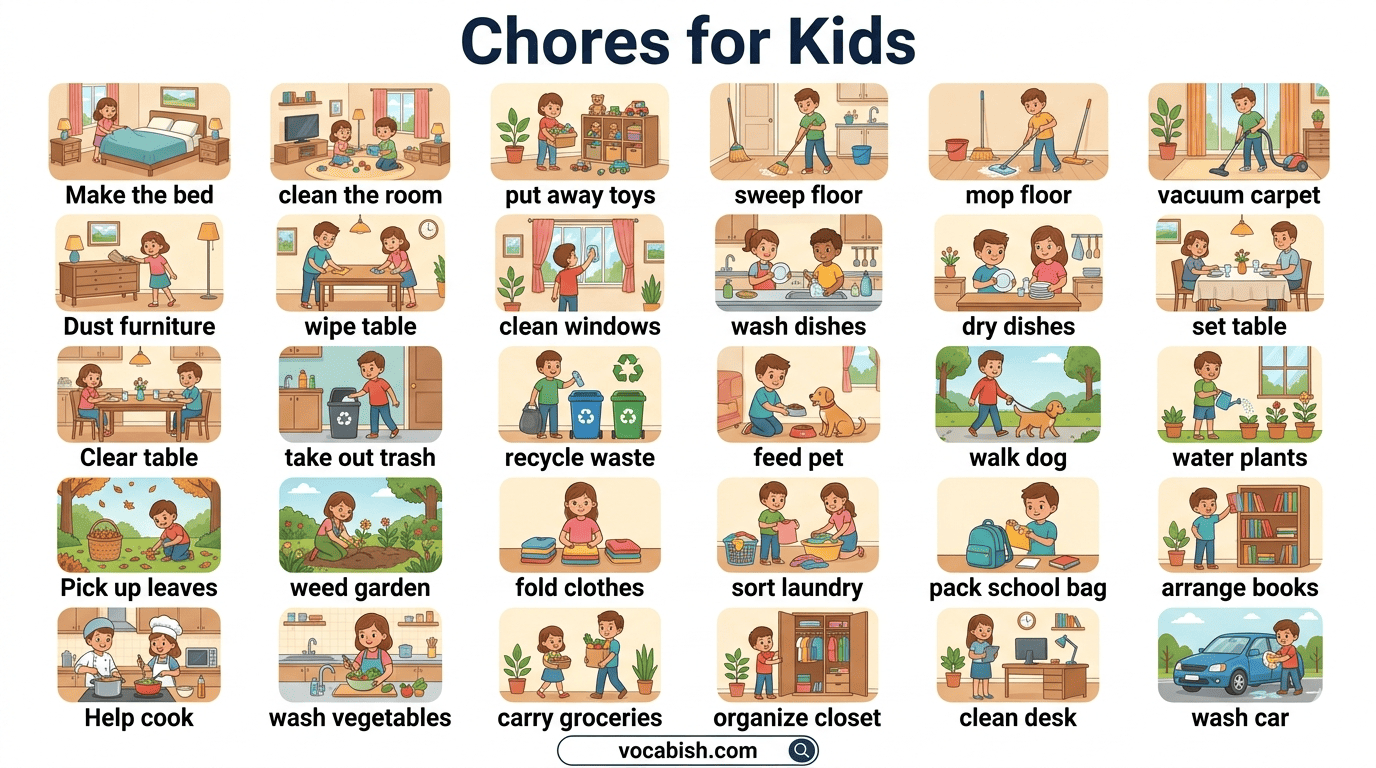
Teaching children English becomes far more effective when learning is connected to daily life. One of the best real-world vocabulary themes for kids is household chores. These simple tasks are not only part of everyday routines but also a powerful way to build responsibility and English communication skills.
In this Steemit article, we will explore common chores for kids in English, their meanings, example sentences, and a clear chart to help learners remember them easily.
What Are Chores?
Chores are small tasks that people do regularly at home to keep things clean, organized, and running smoothly.
Children are often given simple chores to:
Learn responsibility
Develop discipline
Practice independence
Improve language skills through real-life actions
Example:
Kids should complete their chores before watching TV.
Why Learn Chores Vocabulary in English?
Learning chores vocabulary helps English learners:
Understand daily instructions at home
Use action verbs in real contexts
Improve speaking and writing skills
Build confidence in everyday communication
Common Chores for Kids in English (With Meanings)
Here are some of the most common chores children can learn and practice:
- Make the Bed
To arrange pillows, sheets, and blankets neatly after waking up.
- Clean the Room
To organize toys, clothes, and books and make the room tidy.
- Wash the Dishes
To clean plates, cups, and utensils after eating food.
- Take Out the Trash
To collect garbage from inside the house and place it outside for collection.
- Sweep the Floor
To clean the floor using a broom.
- Mop the Floor
To clean the floor using water and a mop.
- Do the Laundry
To wash clothes using a washing machine or by hand.
- Fold Clothes
To neatly arrange clean clothes after washing and drying.
- Water the Plants
To give water to plants so they can grow properly.
- Feed the Pet
To give food and sometimes water to pets like dogs or cats.
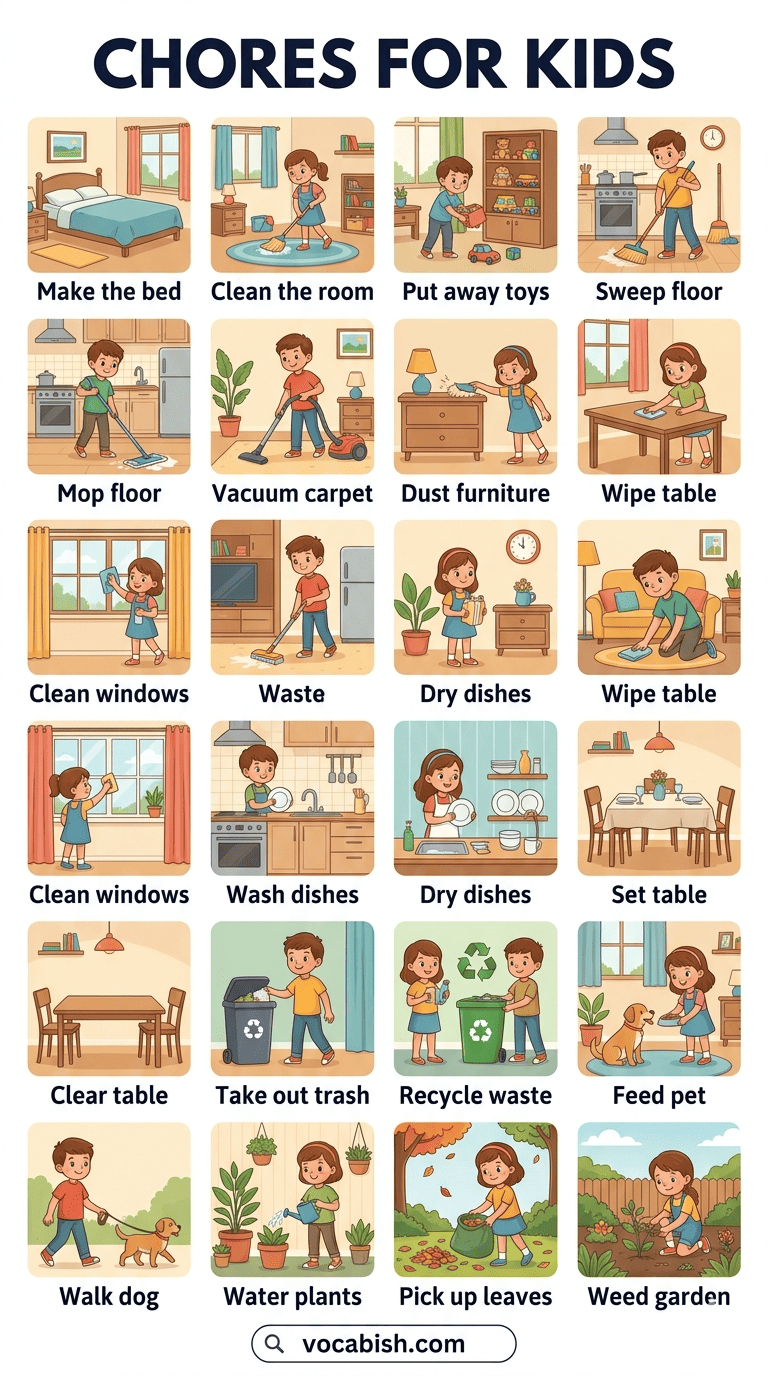
Chores for Kids Chart
Learning Tips for Kids
To make learning chores vocabulary more effective:
Use pictures or flashcards
Practice daily routines in English
Turn chores into fun games
Encourage kids to speak full sentences
Repeat vocabulary regularly
Learn More
For a more detailed guide and printable chart, you can visit:
👉 https://vocabish.com/chores-for-kids-with-chart/
Final Thoughts
Chores are more than just household tasks—they are real-life learning opportunities. When children learn these words in English, they not only improve vocabulary but also develop life skills that stay with them forever.
Start small, stay consistent, and make learning part of everyday life.