Why Every SaaS Product Needs a Better Way to Manage User Feedback
Building a product is exciting. Growing one is much harder.
For many indie hackers and small SaaS teams, the biggest challenge isn't writing code—it's understanding what users actually need. Every day, feedback arrives from different places: emails, X (Twitter), Discord, GitHub Issues, support chats, and contact forms. At first, this isn't a problem. But as your product gains more users, things quickly become difficult to manage.
Feature requests get buried in conversations. Bug reports are forgotten. The same suggestions are submitted multiple times. And users often have no idea whether their feedback has even been seen.
I've noticed that many early-stage startups still rely on spreadsheets or Notion to keep track of feedback. Those tools work well initially, but they weren't designed specifically for product feedback management. Organizing requests manually takes time, and prioritizing features becomes increasingly difficult as the product grows.
Feedback Should Drive Product Decisions
User feedback isn't just a collection of ideas. It's one of the most valuable sources of product direction.
When feedback is organized properly, product teams can:
- Identify the most requested features
- Spot recurring bugs faster
- Understand what users truly care about
- Prioritize development based on demand
- Keep users informed about upcoming releases
A transparent feedback process also builds trust. Users are much more likely to stay engaged when they know their suggestions are being considered.
Discovering FeedLog
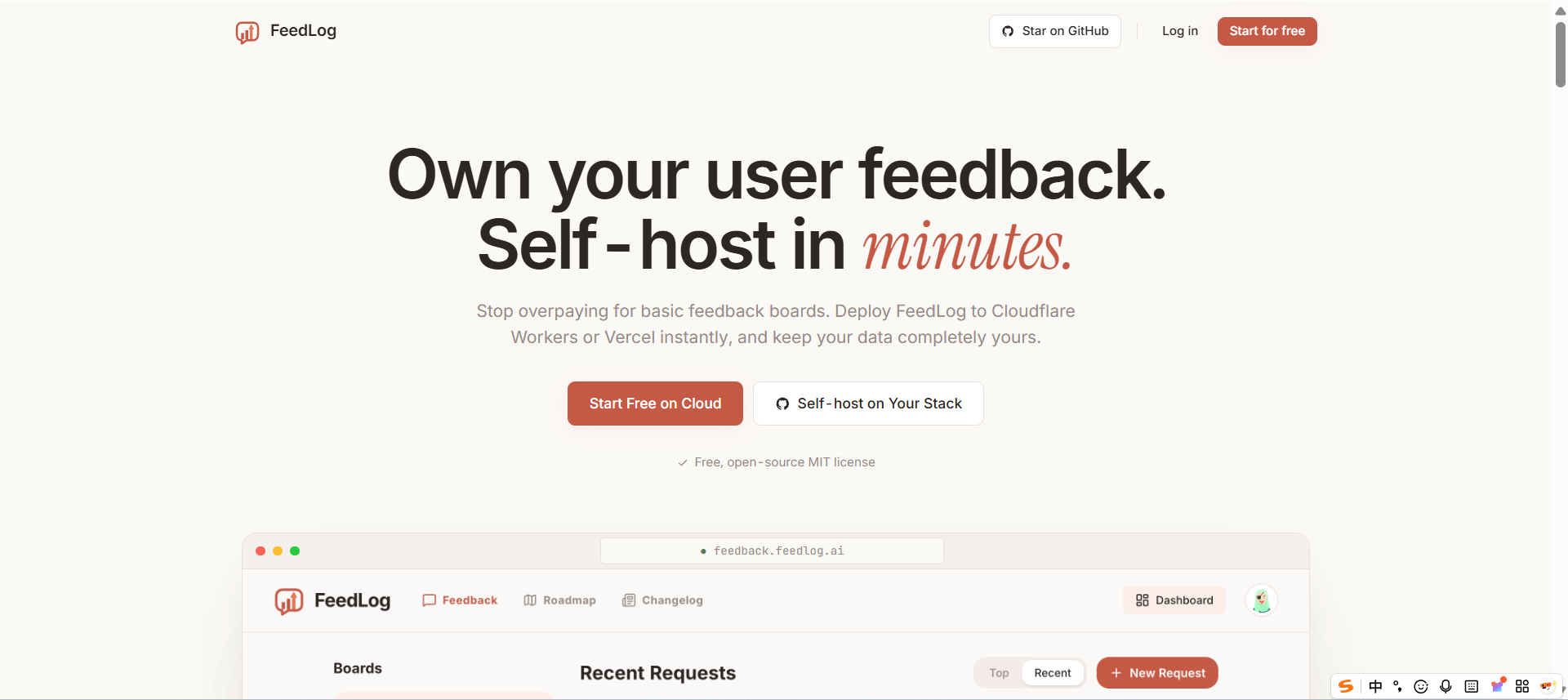
Recently I came across FeedLog, an open-source feedback management platform built for SaaS products.
Instead of collecting feedback from multiple disconnected channels, FeedLog brings everything together in one place. Users can submit feature requests, report bugs, and vote on existing ideas, making it easier to understand what matters most.
What stood out to me is that FeedLog also uses AI to reduce duplicate feedback and automatically categorize similar requests. That saves teams from spending hours organizing tickets manually.
More Than Just a Feedback Board
Many feedback tools stop at collecting suggestions.
FeedLog goes further by providing a complete workflow:
- Centralized feature requests
- Bug reporting
- AI-powered categorization
- Public roadmap
- Product changelog
- Self-hosting support
- Open-source codebase
This means users don't just submit ideas—they can also follow your product's progress and see when new features are released.
Why Open Source Matters
One of the reasons FeedLog caught my attention is that it's fully open source.
Many SaaS founders hesitate to adopt feedback platforms because of pricing or concerns about owning their data. With an open-source solution, teams have far more flexibility. They can self-host the platform, customize it to match their workflow, and keep complete control over user data.
For startups planning long-term growth, that's an important advantage.
Better Communication Builds Better Products
Collecting feedback is only the first step.
The real value comes from closing the loop—letting users know that their ideas have been reviewed, added to the roadmap, or shipped in a new release.
When users see that their feedback leads to real improvements, they become much more invested in the product. That creates stronger relationships, higher retention, and a more engaged community.
Final Thoughts
Whether you're building your first SaaS, launching an AI product, or growing an open-source project, having a structured way to manage feedback can save countless hours and help you make better product decisions.
If you're still tracking feature requests across spreadsheets, emails, and chat messages, it might be time to switch to a dedicated solution.
If you're looking for an open-source, AI-powered feedback management platform, FeedLog is definitely worth exploring.