Many Are Not Poor, They Are Financially Indisciplined
Many Are Not Poor, They Are Financially Indisciplined🤯
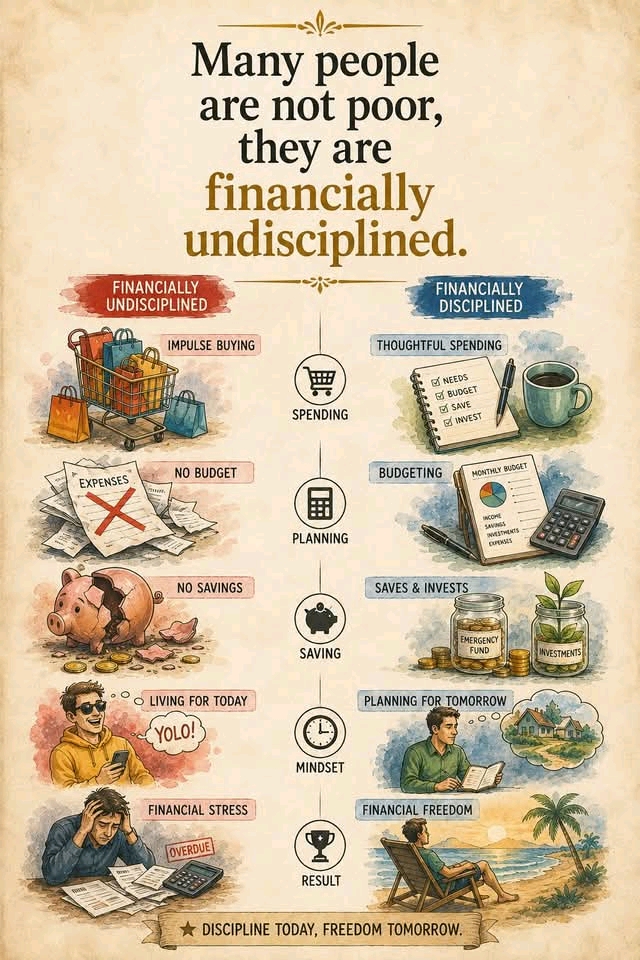
Imagine two friends, David and Michael. Both earned the same monthly income and lived in the same neighbourhood.
On payday, David rushed to buy the latest phone accessories, expensive clothes, and things he did not really need. He often ate out, spent money to impress others, and borrowed money before the end of every month. Whenever someone advised him to save or invest, he would reply, "Life is too short. I'll think about that later."
Michael, on the other hand, lived differently. He prepared a budget, paid his essential bills first, saved a portion of his income, and invested in learning new skills. He avoided unnecessary spending and understood the difference between needs and wants.
After five years, David complained that life was unfair. He blamed the economy, his job, and even his friends for his financial struggles. Michael was not a millionaire, but he had emergency savings, had started a small business, and was living with less financial stress.
The difference was not that one was rich and the other poor. The difference was financial discipline.
Many people are not poor because they earn too little. They remain financially challenged because they spend without planning, save nothing, and ignore opportunities to build wealth. A high income without discipline can still lead to financial hardship, while a modest income managed wisely can create financial stability.
Financial discipline means controlling your spending, living within your means, saving consistently, avoiding unnecessary debt, and investing in your future. Wealth is not determined only by how much you earn, but also by how well you manage what you have.
Before saying, "I don't earn enough," ask yourself: "Am I managing what I already earn wisely?"
Remember, financial freedom begins with financial discipline.
Great post! Financial discipline is often more important than income. Many people earn good money but struggle because of poor spending habits, lack of budgeting, and failing to save for the future. At the same time, it's also important to remember that some people face genuine economic challenges beyond their control. A combination of financial education, discipline, and better opportunities can help people build a more secure future. Thanks for sharing this valuable perspective!