Brighten Your World: Why Sunflowers Are Nature’s Happiest Bloom
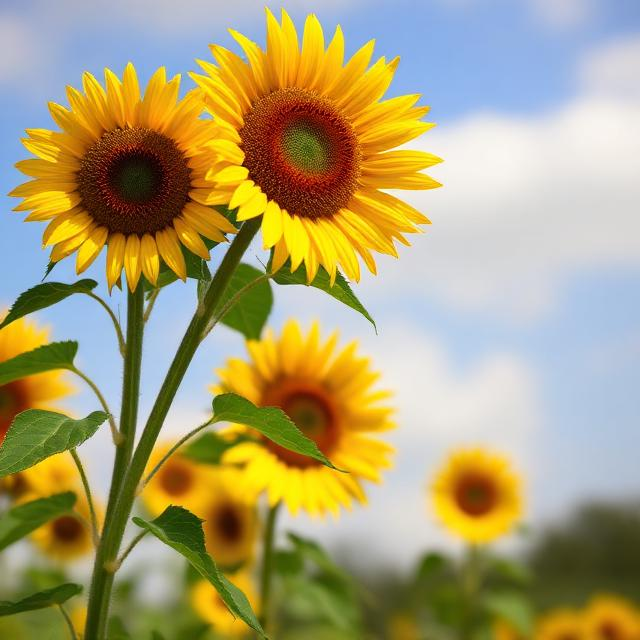
There is something undeniably magical about sunflowers. With their towering green stalks and vibrant yellow petals framing a rich, textured center, they are the botanical embodiment of pure sunshine. But beyond their undeniable beauty, these iconic flowers hold a special place in gardens, art, and ecosystems around the world.
The Science of Following the Sun
Have you ever wondered why sunflowers are called sunflowers? Young sunflowers exhibit a fascinating behavior known as heliotropism. During the growth stage, their buds track the sun from east to west every single day, resetting overnight to face east again in anticipation of the morning light. Once fully bloomed, they typically settle facing the eastern sky, basking in the morning warmth.
A Powerhouse in the Garden
Beyond brightening up a landscape, sunflowers are hardworking agricultural assets. They act as natural magnets for pollinators like bees and butterflies, supporting local ecosystems. Furthermore, they are natural "hyperaccumulators," meaning their deep roots can absorb toxins—including heavy metals and radiation—from the soil, effectively cleaning up contaminated land.
More Than Just a Pretty Face
Of course, we can't talk about sunflowers without mentioning their bounty. Each flower head can produce up to 2,000 seeds! These nutritious seeds are not only a favorite snack for birds and wildlife, but they are also harvested for humans to enjoy roasted, or pressed into healthy cooking oil rich in Vitamin E.
Whether you are planting a patch in your backyard to attract wildlife, arranging a bright bouquet to cheer up a friend, or simply admiring a golden field swaying in the summer breeze, sunflowers remind us to always look toward the light.
What’s your favorite way to enjoy sunflowers? Let us know in the comments below!