Blast Chiller in UAE Kitchens: Why Proper Cooling Matters More Than Cooking
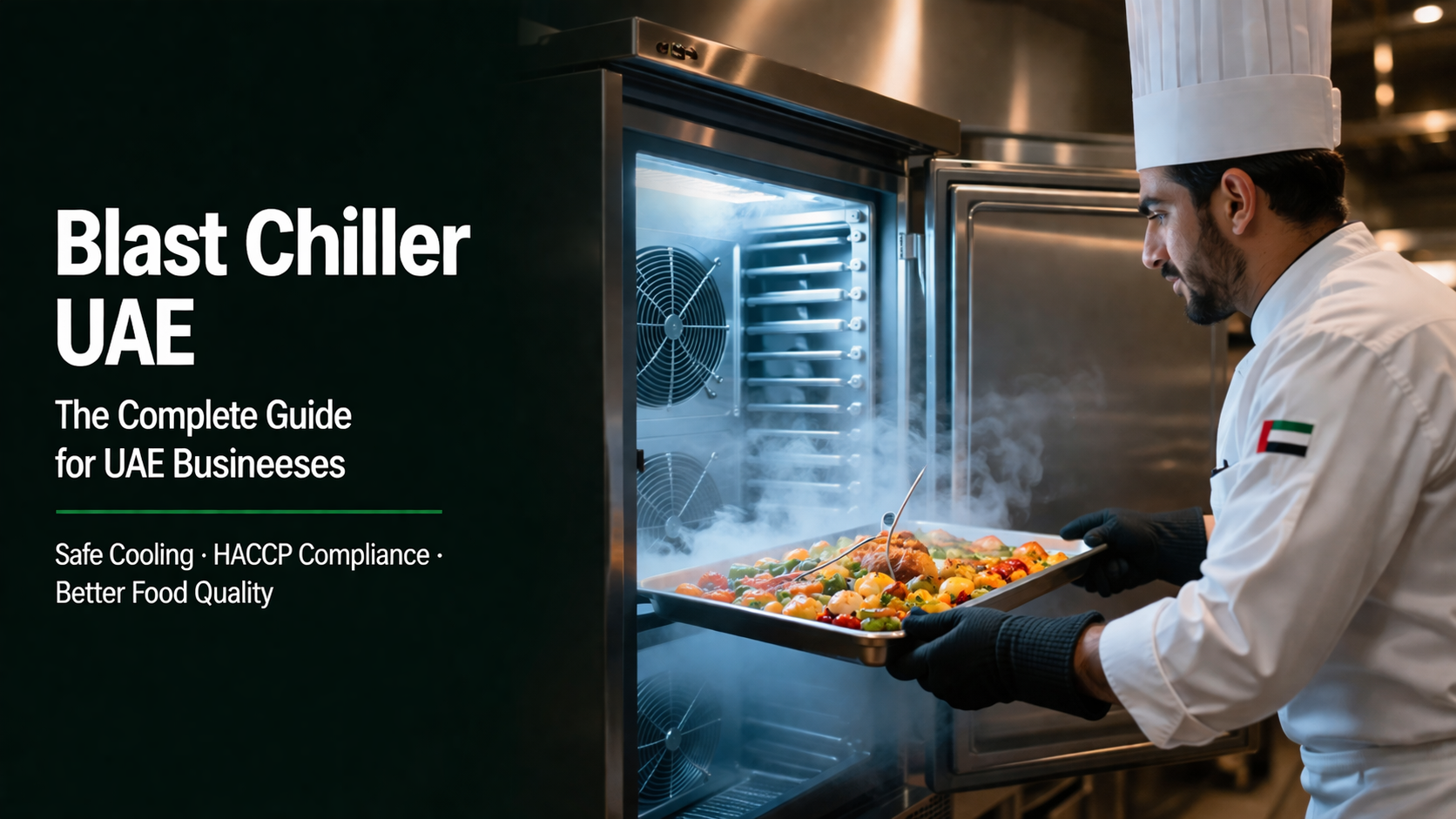
In commercial kitchens, most people focus on cooking temperatures, recipes, and presentation.
But from my experience, the real risk starts after cooking.
Especially in hot regions like United Arab Emirates, where ambient temperatures can exceed 40°C, cooling food safely becomes one of the most critical steps in the entire process.
The Hidden Risk: The “Danger Zone”
Cooked food passes through a temperature range between +8°C and +63°C, where bacteria multiply rapidly.
In many kitchens, I’ve seen two common practices:
Letting food cool at room temperature
Placing hot food directly into storage chillers
Both methods increase risk — particularly in high-heat environments.
Why Standard Chillers Are Not Enough
A walk-in chiller is designed to maintain cold temperatures, not rapidly remove heat.
When hot food is placed inside:
Internal temperature rises
Cooling slows down
Other stored food may be affected
This creates both food safety risks and equipment strain.
How Blast Chilling Solves the Problem
A blast chiller is built specifically for rapid cooling.
It works by:
Circulating high-velocity cold air
Removing heat quickly and evenly
Bringing food temperature down to safe levels within a controlled time
This reduces the time food spends in the danger zone and helps meet HACCP standards.
Real-World Observations
From field experience, a few mistakes come up again and again:
Cooling food outside before refrigeration
Using storage equipment for cooling
Incorrect temperature probe placement
Undersized systems for actual kitchen load
These may seem minor — but they have major impact on safety and efficiency.
Why It’s More Critical in UAE
In cooler countries, some of these shortcuts may not immediately cause problems.
In the UAE, conditions are different:
Higher ambient heat
Faster bacterial growth risk
Greater load on refrigeration systems
This makes proper cooling systems essential, not optional.
Final Thoughts
Cooking gets all the attention — but cooling is where control really matters.
A proper workflow separates:
Rapid cooling (processing stage)
Cold storage (holding stage)
Understanding this difference can significantly improve:
Food safety
Kitchen efficiency
Equipment lifespan
Learn More
For a detailed technical breakdown and system comparisons, you can read the full guide here:
https://chillerroom.ae/blast-chiller-uae-commercial-kitchens-guide/