Your Lawn Is a Living System, Not Outdoor Carpet
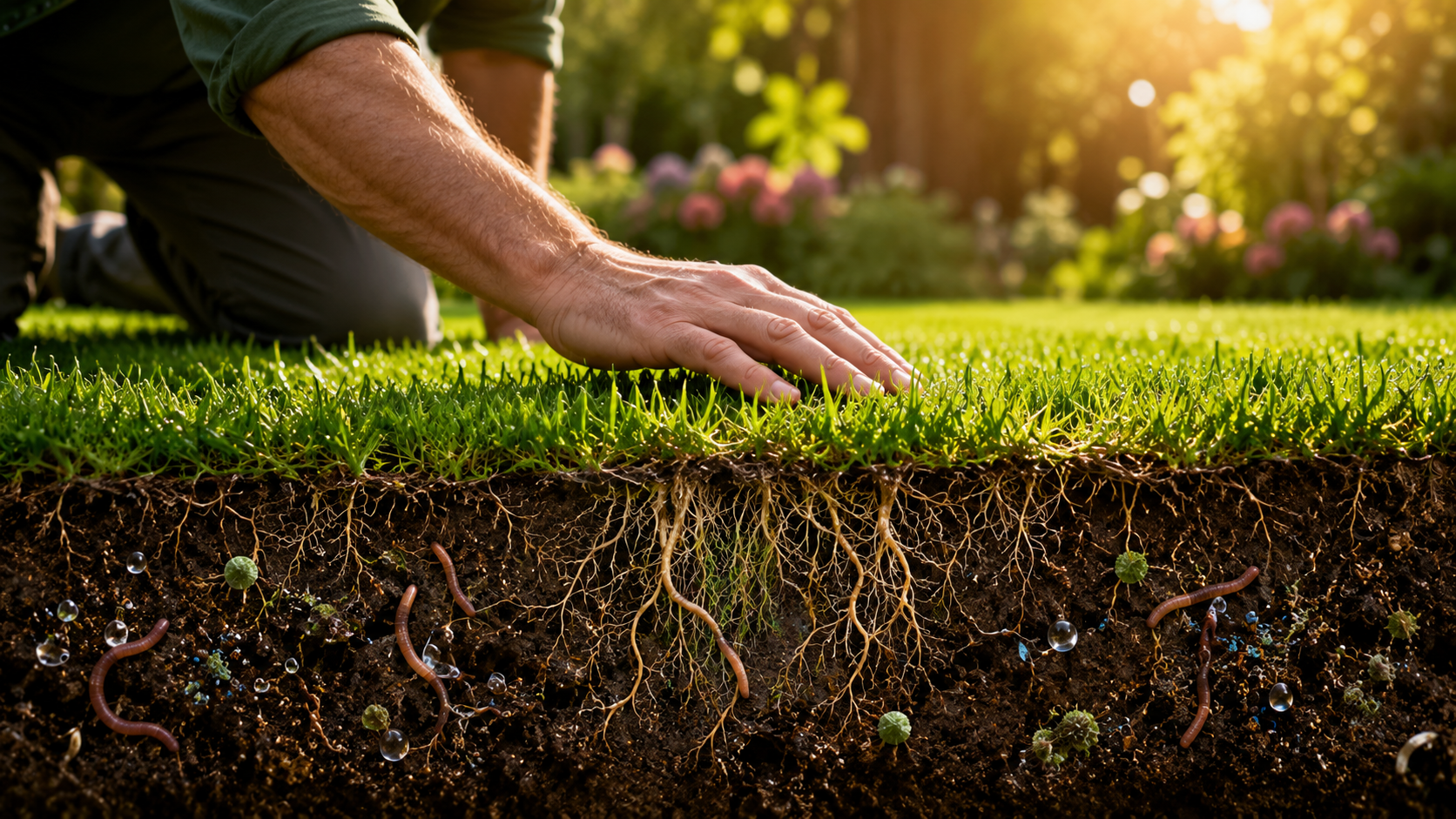
Many homeowners think of a lawn as a finishing touch—a green layer added after the house, driveway, and garden design are complete.
But a healthy lawn is not a decorative carpet placed on the ground.
It is a living system.
Every blade of grass is connected to a complex network beneath the surface: roots, soil organisms, moisture cycles, nutrients, and countless natural processes working together. When we understand a lawn this way, maintaining it becomes less about making it look perfect and more about creating an environment where it can thrive.
The Lawn Begins Below the Surface
The biggest mistake people make is focusing only on what they can see.
A lawn may appear green and healthy from above, but its real strength comes from what happens underground.
Healthy soil provides the foundation for strong roots. Good root development helps grass absorb water and nutrients more efficiently, making it more resilient during heat, drought, and seasonal changes.
Poor soil preparation, compacted ground, or incorrect drainage can create problems that no amount of watering or fertilizer can completely fix.
A beautiful lawn does not begin with planting.
It begins with understanding the soil.
Grass Is Not One-Size-Fits-All
One of the reasons lawns struggle is because people often choose grass based only on appearance.
A particular grass variety may look perfect in a picture, but that does not mean it will perform well in every location.
Factors such as:
- climate conditions
- sunlight exposure
- soil type
- water availability
- expected usage
all influence how well a lawn will grow.
A lawn in a sunny open area has different needs from one growing under trees or in a high-traffic space. Choosing the right type of grass for the environment is the first step toward creating a sustainable outdoor space.
Watering More Doesn't Always Mean Growing Better
Many people assume that more water equals a healthier lawn.
But overwatering can create its own problems.
Too much moisture can weaken roots, encourage fungal growth, and prevent grass from developing the deep root systems needed for long-term health.
A strong lawn is not one that constantly depends on excessive watering.
It is one that has been established properly and can naturally adapt to changing conditions.
Thoughtful watering schedules, proper drainage, and soil health often matter more than simply increasing the amount of water used.
Maintenance Is About Balance, Not Perfection
A lawn is constantly changing.
Temperature, rainfall, foot traffic, and seasonal cycles all affect how it grows. Trying to maintain a perfectly uniform appearance throughout the year can sometimes work against nature rather than with it.
Healthy lawn care focuses on balance:
- mowing at the right height
- improving soil quality
- removing excess thatch
- allowing proper airflow
- providing nutrients when needed
The goal is not to control every aspect of nature.
The goal is to support natural growth.
Landscaping Starts With Understanding Nature
Modern landscaping is moving away from simply creating attractive outdoor spaces. More homeowners are beginning to understand the importance of designing landscapes that work with their surroundings.
A well-planned lawn can help reduce heat around buildings, improve outdoor comfort, support biodiversity, and create a healthier environment for families.
This is why experienced landscaping specialists focus on more than just supplying grass. Organizations like Balaji Nursery approach lawn development as a complete process involving suitable grass selection, preparation, and long-term care rather than treating turf as a simple surface covering.
A Lawn Is an Investment in Your Environment
A healthy lawn does more than improve the appearance of a property.
It creates a space where people connect with nature.
Children play on it. Families gather around it. Birds and insects interact with it. It contributes to the overall character of a neighborhood.
When managed responsibly, lawns can become valuable parts of sustainable outdoor spaces instead of being viewed as high-maintenance decorations.
The difference comes from understanding what a lawn actually is.
It is not an object placed on the land.
It is a living part of the landscape.
Final Thoughts
The healthiest lawns are not created by shortcuts.
They are built through patience, preparation, and respect for natural processes.
Once we stop thinking of grass as outdoor carpet and start seeing it as a living system, lawn care becomes much more meaningful. Every decision—from soil preparation to watering habits—affects the future health of that ecosystem.
A beautiful lawn is not simply grown above the ground.
It begins with everything happening beneath it.