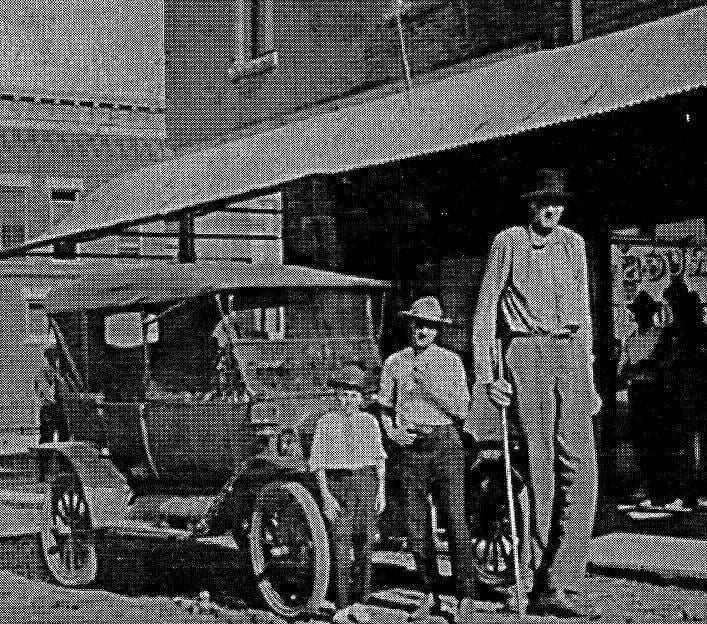
The last of the OLD WORLD GIANTS. 10 Bernard Coyne (1897–1921)
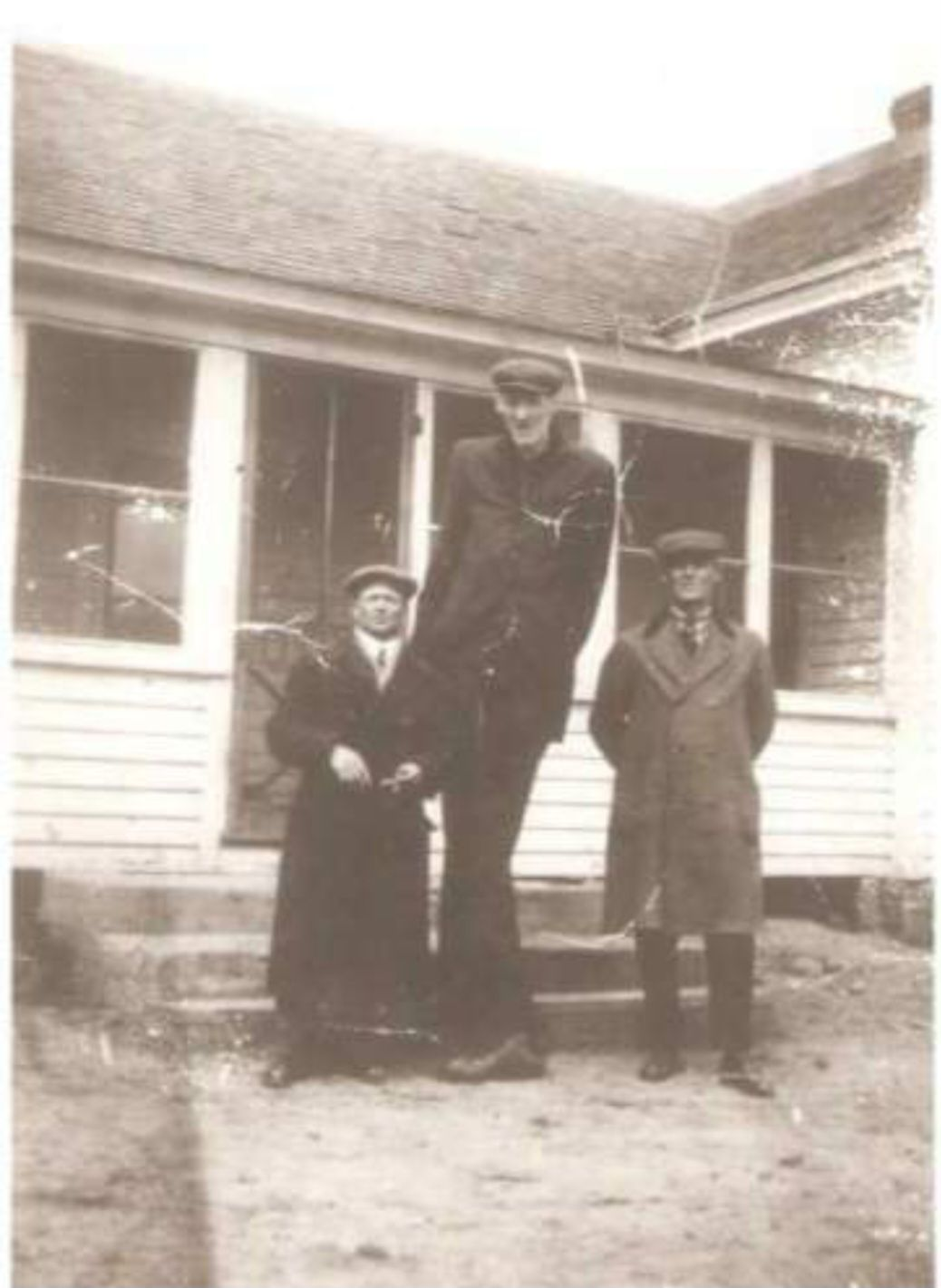
The person in the center of the image is Bernard Coyne (1897–1921), an American man who was one of the tallest people in recorded history. Born in Anthon, Iowa, Coyne reached a confirmed height of 8 feet 2 inches (249 cm), though some records from the time of his death suggest he may have been even taller, potentially nearing 8 feet 4 inches.
In this photograph, he is shown leaning against a building to emphasize his immense stature relative to the men standing beside him.
Key Facts About Bernard Coyne:
Condition: His extraordinary height was caused by a condition known as eunuchoidal-infantile gigantism, which meant he continued to grow throughout his entire life.
Military Service: He gained national attention during World War I when he attempted to enlist in the Army. He was famously rejected because he was too tall for the standard uniforms and equipment.
Life and Legacy: Unlike some other historical giants, Coyne mostly avoided the circus and "sideshow" circuit, preferring to live a relatively quiet life in Iowa before passing away at the young age of 24.
Records: At the time of his death in 1921, he was the tallest person in the world. He was eventually surpassed by individuals like Robert Wadlow, the tallest man ever recorded.
While Bernard Coyne was officially "recognized" by the Guinness Book of World Records as standing 8 feet 2 inches (249 cm), there are credible reports and documents that list him as much taller:
The Death Reports: At the time of his death in 1921, a Woodbury County newspaper reported his height at 8 feet 8 inches (264 cm).
Medical Estimates: Some medical sources and biographers suggest he actually reached 8 feet 4 inches (254 cm) by the time he passed away, as he was still growing.
The Draft Card: Even his World War I draft registration from 1918—years before he stopped growing—officially listed him as an even 8 feet (244 cm).
Why he wasn't officially "The Tallest"
The reason he is often ranked lower in lists is purely due to the standard of proof. Guinness and other record-keepers require "irrefutable evidence," usually meaning a measurement taken by a team of independent medical doctors while the person is alive.
Because Coyne lived a quiet life in rural Iowa and refused to be put on display for science or the circus, he wasn't measured as frequently or as strictly as Robert Wadlow. This lack of "official" measurement means he gets "underestimated" in modern databases, even though his family and local records tell a much larger story