🌸 The Hidden Signs of Fibroids Many Women Ignore
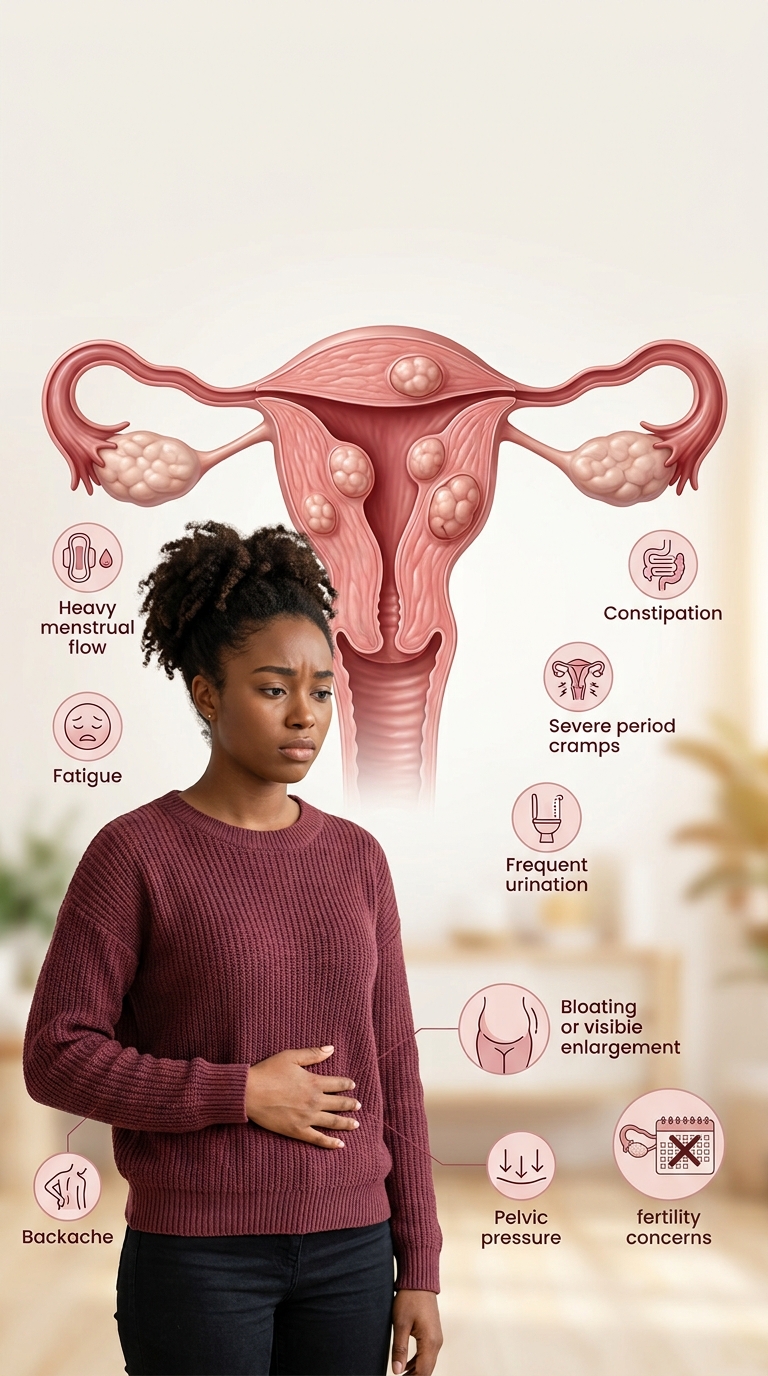
When many women hear the word fibroids, they immediately think of heavy periods.
And while heavy menstrual bleeding is one of the most well-known symptoms, fibroids can sometimes show up in other ways that are easy to dismiss or blame on stress, diet, or simply getting older.
Fibroids are non-cancerous growths that develop in or around the uterus. Many women with fibroids have no symptoms at all, while others experience symptoms that can affect their daily lives.
Here are some less obvious signs that shouldn't be ignored.
- Your Stomach Looks or Feels Bigger
Have you noticed that your lower abdomen seems to be getting larger even though your weight hasn't changed significantly?
Depending on their size and location, larger fibroids can sometimes make the abdomen appear swollen or create a feeling of fullness.
Some women describe it as looking or feeling pregnant.
However, abdominal enlargement has many possible causes, so it shouldn't automatically be assumed to be fibroids.
- You Feel Pressure in Your Pelvis
Fibroids can sometimes create a feeling of heaviness, pressure, or fullness in the lower abdomen.
You might feel like something is "weighing down" your pelvis, especially when standing for long periods.
This sensation can be easy to ignore because it may not feel like sharp pain.
- You Urinate More Frequently 🚽
A fibroid growing near the bladder may put pressure on it.
This can make you feel like you need to urinate more often—even when your bladder isn't completely full.
If frequent urination is persistent, however, there are many other possible causes, so it's important not to assume fibroids are the reason.
- You Feel Constipated or Bloated
Depending on their size and location, fibroids may sometimes put pressure on nearby organs, including the bowel.
Some women may experience constipation, bloating, or difficulty having bowel movements.
Again, these symptoms can have many causes, so persistent symptoms deserve proper evaluation.
- Your Periods Are Extremely Heavy
This is one of the symptoms most commonly associated with fibroids.
You may notice:
Bleeding that lasts longer than usual
Needing to change sanitary products very frequently
Passing large blood clots
Feeling exhausted during or after your period
Heavy menstrual bleeding can sometimes lead to iron-deficiency anemia, which may cause weakness, fatigue, dizziness, or shortness of breath.
- Your Period Pain Has Changed
Some women experience painful periods with fibroids.
If your menstrual cramps suddenly become much worse than they used to be, or pelvic pain becomes a regular part of your life, it's worth talking to a healthcare professional.
Pain can have many causes, including endometriosis and other conditions—not just fibroids.
- You Experience Lower Back or Leg Pain
Depending on their size and location, larger fibroids can sometimes put pressure on surrounding nerves or structures.
This may contribute to lower back discomfort or pain that radiates toward the legs.
Persistent or severe pain should always be evaluated rather than assumed to be caused by fibroids.
- You Feel Tired All the Time
If you have very heavy periods, you may lose more blood than your body can comfortably replace.
Over time, this can contribute to iron deficiency or anemia.
If you constantly feel exhausted, weak, dizzy, or short of breath, don't simply assume you're "just tired." Consider speaking with a healthcare professional about whether you need an evaluation.
- You Have Difficulty Getting Pregnant
Fibroids don't always affect fertility, and many women with fibroids become pregnant normally.
However, depending on their size and location, some fibroids may interfere with fertility or pregnancy.
If you've been trying to conceive without success, a healthcare professional can help investigate possible causes.
🌿 The Important Thing to Remember
Having one of these symptoms doesn't mean you have fibroids.
Many conditions can cause similar symptoms, and some women with fibroids have no symptoms at all.
The only way to know whether you have fibroids is to be properly evaluated by a healthcare professional. Depending on your symptoms, they may recommend an examination or imaging such as an ultrasound.
🚨 Don't Ignore Persistent Changes
If you experience:
Very heavy or prolonged periods
Severe pelvic pain
Persistent abdominal enlargement
Frequent urination with other symptoms
Unexplained fatigue or weakness
Difficulty getting pregnant
consider speaking with a qualified healthcare professional.
And if you're experiencing very heavy bleeding, fainting, severe pain, or significant shortness of breath, seek urgent medical care.
💗 Final Thoughts
Fibroids can affect women differently.
For some, they're barely noticeable. For others, they can affect periods, energy levels, comfort, fertility, and everyday life.
The most important thing is to listen to your body.
If something changes and doesn't go away, don't be afraid to ask questions and seek professional advice.
Your symptoms are worth taking seriously. 🌸
💬 Let's Talk
Have you ever experienced a symptom that you later discovered was connected to your menstrual or reproductive health?
What was the first sign that made you realize something wasn't quite right?
Share your experience in the comments. Your story could help another woman recognize that she isn't alone. 💗
"I just read the article on hidden signs of fibroids and I have to say, it's so eye-opening! I particularly appreciated point number 2, where it talks about feeling pressure in the pelvis - that's something I've experienced lately and I had no idea it could be related to fibroids. Kudos to the author for shedding light on these often overlooked symptoms, it's super important that women are aware of these signs so they can get the help they need. Thanks for sharing this informative article!"
I just read the most informative article about fibroids, and I'm so grateful to the author for shedding light on these hidden signs that we often ignore. I'm particularly impressed by the point about frequent urination being a symptom - who would have thought that fibroids could put pressure on the bladder like that? The author has done a fantastic job of explaining these symptoms in a way that's easy to understand, and I appreciate their dedication to raising awareness about this often-overlooked condition. Thanks to this article, I'll be paying closer attention to my own body and making sure to speak up if I experience any of these symptoms!