🌸 What Your Period Is Trying to Tell You About Your Health
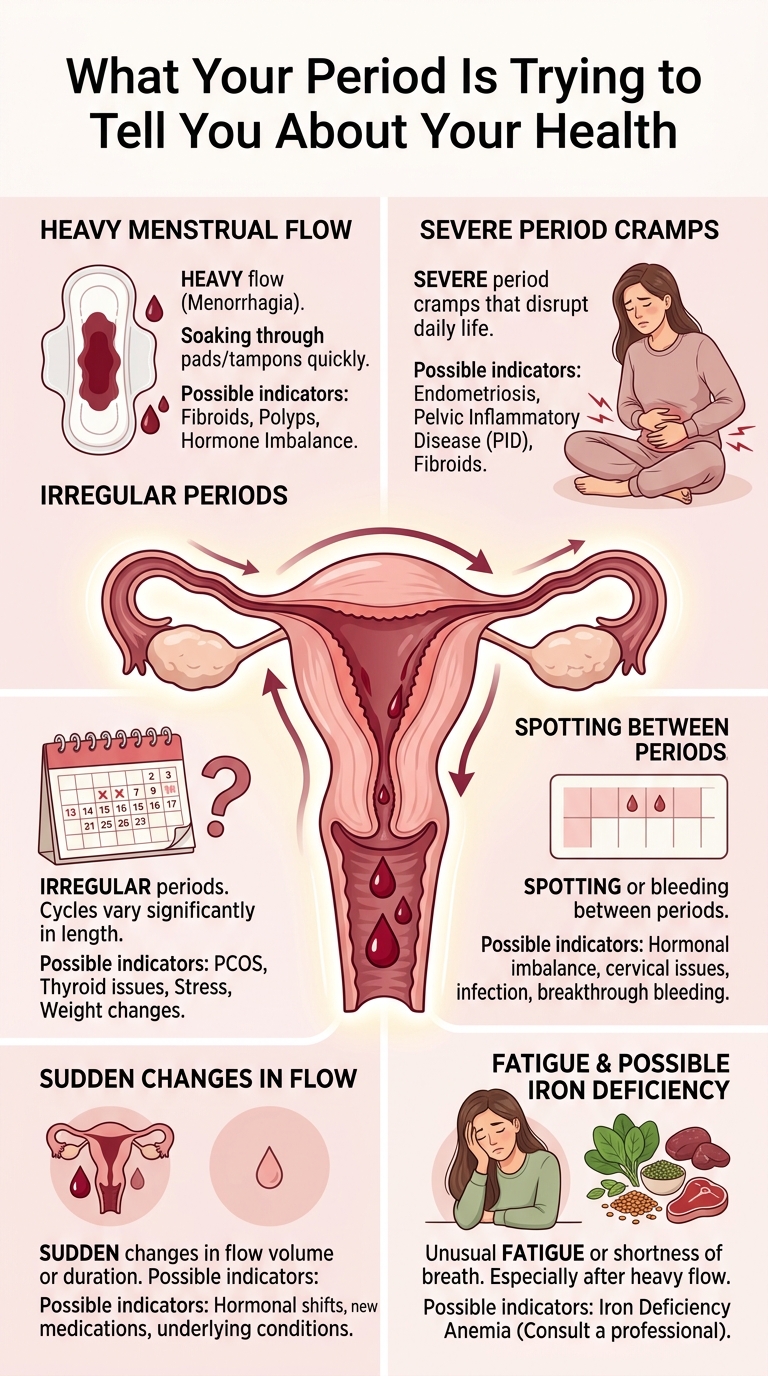
Your period is more than just a monthly inconvenience. It can sometimes provide clues about what's happening inside your body.
The timing of your cycle, the amount of bleeding, the level of pain, and even changes from month to month can all be useful information.
But remember: one unusual period doesn't automatically mean something is wrong. Many things can temporarily affect your menstrual cycle, including stress, changes in weight, exercise, illness, medications, and hormonal fluctuations.
Here are some changes worth paying attention to.
🩸 1. Your Period Suddenly Becomes Very Heavy
Heavy bleeding can happen for many reasons, including hormonal changes, fibroids, polyps, or other conditions.
If you're regularly soaking through pads or tampons very quickly, passing unusually large clots, or feeling weak and exhausted during your period, it's a good idea to speak with a healthcare professional.
Heavy menstrual bleeding can sometimes contribute to iron deficiency and anemia.
📅 2. Your Period Becomes Irregular
Cycles don't always arrive on exactly the same day every month.
However, if your periods suddenly become very irregular or you frequently skip periods, there may be several possible explanations.
Stress, significant weight changes, intense exercise, pregnancy, PCOS, thyroid problems, and other hormonal changes can all affect your cycle.
If irregular periods continue, consider getting medical advice.
😣 3. Your Period Pain Is Severe
Mild to moderate cramps are common because the uterus contracts during menstruation.
But pain that is severe, worsening, or regularly prevents you from attending school, working, or doing your normal activities shouldn't simply be dismissed as "normal period pain."
Conditions such as endometriosis or fibroids can cause significant menstrual pain.
You deserve to have persistent pain taken seriously.
🩷 4. You Notice Bleeding Between Periods
Spotting between periods can happen for many reasons.
Hormonal changes, birth control, infections, and other conditions can sometimes cause unexpected bleeding.
If you regularly bleed between periods, after sex, or after menopause, it's important to discuss it with a healthcare professional.
🩸 5. Your Period Suddenly Changes
Perhaps your periods were previously predictable, but suddenly they're much heavier, lighter, longer, shorter, or more painful.
A change doesn't necessarily mean something is wrong—but it's worth paying attention to.
Your menstrual pattern can change for many reasons, including stress, medications, pregnancy, hormonal changes, and health conditions.
🧠 6. Your Period Comes With Extreme Fatigue
Feeling a little tired during your period can be normal.
However, if you feel extremely weak or exhausted, especially during heavy periods, iron deficiency or anemia could be one possible explanation.
A healthcare professional can determine whether testing is appropriate.
🌿 7. Your Period Is a Part of Your Overall Health
Your menstrual cycle doesn't exist in isolation.
Sleep, nutrition, stress, physical activity, hormonal health, and certain medical conditions can all influence your menstrual cycle.
This is why tracking your period can be helpful.
You can record:
📅 The first day of your period
🩸 How heavy your bleeding is
😣 Your pain level
🩷 Any unusual spotting
🧠 Your mood and energy levels
🤕 Other symptoms you notice
Over time, you may begin to recognize your own pattern and notice when something changes.
🚨 When Should You Seek Medical Help?
Consider talking to a healthcare professional if you experience:
Very heavy or prolonged bleeding
Severe or worsening pelvic pain
Frequent bleeding between periods
Repeatedly missed periods without a clear reason
Persistent unusual symptoms
Signs of anemia, such as significant weakness, dizziness, or shortness of breath
💗 Final Thoughts
Your period isn't just something you have to "put up with."
It's one part of your overall health, and learning to understand your menstrual cycle can help you recognize changes that deserve attention.
The most important thing is to know what's normal for you.
If something changes and stays different, don't be afraid to ask questions or seek professional advice.
Your body deserves to be listened to. 🌸
💬 Let's Talk
Has your menstrual cycle ever changed unexpectedly?
What was the first thing you noticed—your period timing, flow, pain, or something else?
Share your experience in the comments. Your story may help another woman realize she's not alone. 💗
"I just read this article and it's so eye-opening! Point 2 really stood out to me - suddenly irregular periods can be a sign of something more going on. I love how the author points out that many things can affect our menstrual cycles, from stress to hormonal changes, and that it's always a good idea to speak with a healthcare professional if you notice any unusual patterns. Kudos to the author for breaking down these often-misunderstood topics in a clear and approachable way!"