Are Moving Blankets Insulated Enough for Winter Storage?
When temperatures drop and winter conditions set in, proper storage becomes a priority. Furniture, appliances, equipment, and sensitive materials can suffer from cold exposure, condensation, and moisture damage. Moving blankets—commonly used for protecting items during relocation—are often repurposed for seasonal storage. But are they insulated enough for winter storage?
The answer depends on the storage environment, temperature severity, and the type of items being protected. Below is a detailed evaluation of how moving blankets perform in winter conditions and when additional insulation strategies may be necessary.
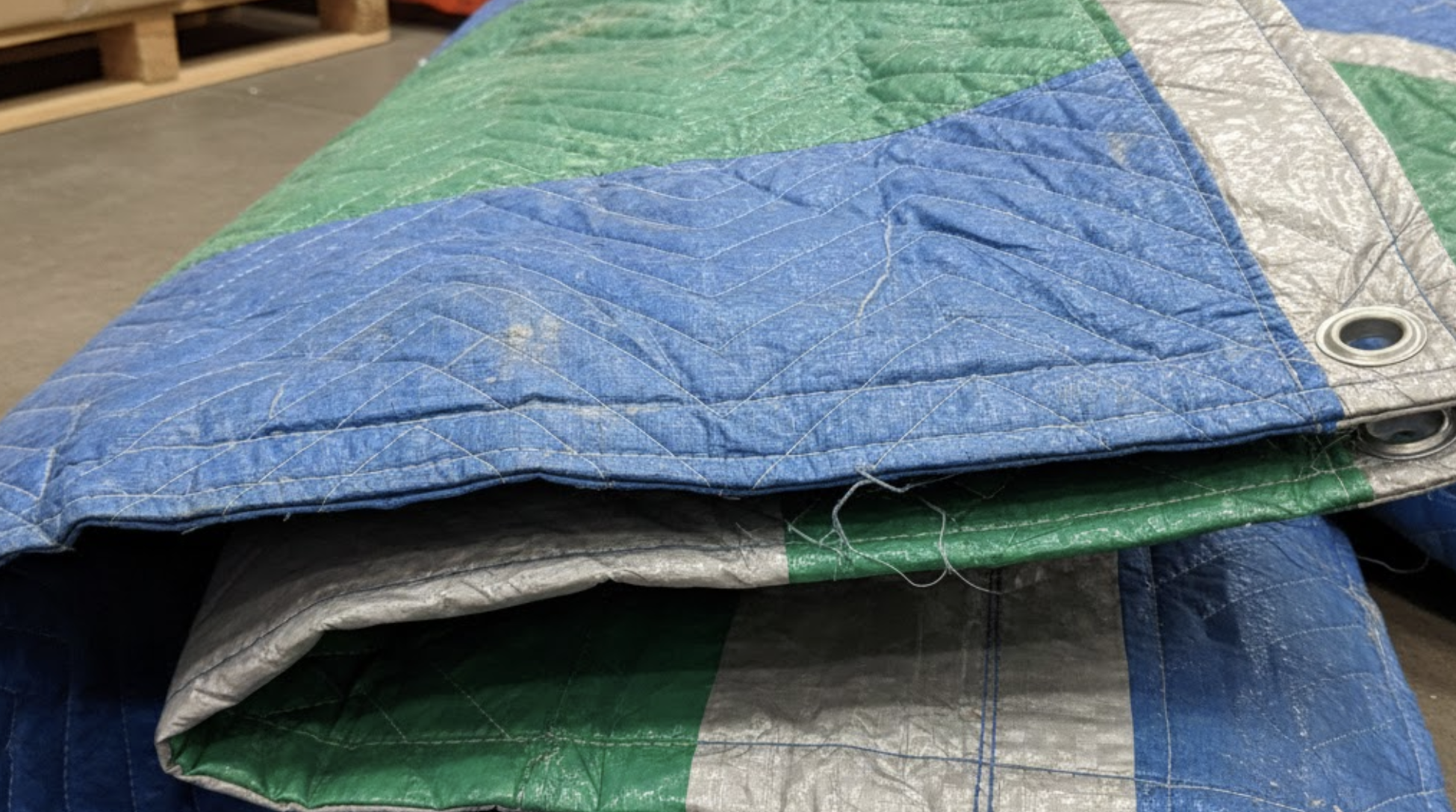
1. What Are Moving Blankets Made Of?
Most moving blankets are constructed from layers of polyester batting, recycled cotton fibers, or a cotton/poly blend, quilted between durable outer fabrics. Their primary purpose is impact protection—shielding items from scratches, dents, and surface abrasion during transport.
Key characteristics:
- Padded interior for shock absorption
- Breathable fabric layers
- Moderate density insulation
- Reusable and foldable construction
Unlike rigid insulation boards or thermal wraps, moving blankets are not specifically engineered for temperature control. However, their layered fabric design does provide basic thermal resistance by trapping small pockets of air between fibers.
This makes them suitable for mild cold exposure—but not extreme sub-zero conditions without reinforcement.
2. How Much Insulation Do Moving Blankets Actually Provide?
Moving blankets offer passive insulation, meaning they slow heat transfer rather than actively regulate temperature.
What They Can Do:
- Reduce direct exposure to cold air drafts
- Minimize rapid temperature fluctuations
- Provide a buffer against condensation forming directly on surfaces
What They Cannot Do:
- Maintain a consistent internal temperature
- Prevent freezing in unheated storage units
- Replace insulated storage containers or climate control systems
In a garage or shed that stays above freezing, moving blankets can be sufficient for protecting furniture, wood items, and general household goods. However, in climates where temperatures drop well below freezing for extended periods, they may not provide adequate protection on their own.
3. Are Moving Blankets Good for Preventing Moisture Damage?
Winter storage risks go beyond cold temperatures. Moisture and condensation are major threats—especially when temperatures fluctuate.
Moving blankets are breathable, which can be both an advantage and a limitation.
Advantages:
- Allow airflow, reducing trapped moisture
- Lower risk of mold compared to plastic-only coverings
- Prevent surface sweating on furniture
Limitations:
- Not waterproof
- Can absorb moisture if exposed to damp environments
For winter storage in unheated spaces, a layered approach works best:
- Wrap the item in a moving blanket
- Add a moisture barrier (such as a tarp or plastic wrap) if humidity is high
- Elevate items off concrete floors
This combination helps balance insulation and moisture control.
4. What Items Benefit Most from Moving Blanket Storage?
Moving blankets are most effective for durable goods that require impact and moderate temperature protection.
Ideal for:
- Wooden furniture
- Metal shelving
- Tools and equipment
- Mattresses
- Appliances (when properly ventilated)
Not ideal for:
- Electronics sensitive to freezing temperatures
- Liquids or materials that expand when frozen
- Delicate antiques requiring climate control
For temperature-sensitive inventory or high-value items, climate-controlled storage remains the safest solution.
5. How to Maximize Insulation with Moving Blankets in Winter
Suppose you plan to use moving blankets for winter storage; implementation matters. Strategic wrapping improves performance.
Best Practices:
- Double Layer When Necessary
Using two blankets increases trapped air pockets, enhancing insulation. - Seal Gaps and Edges
Cold air enters through exposed corners. Wrap tightly and secure with straps or stretch wrap. - Combine with Other Materials
Foam boards, thermal wraps, or heavy-duty tarps can supplement insulation. - Elevate Stored Items
Concrete floors conduct cold. Place pallets or boards underneath stored goods. - Choose Quality Blankets
Thicker, higher-weight blankets provide better thermal resistance than lightweight alternatives.
When sourcing moving blankets, prioritize consistent stitching, dense batting, and reinforced edges. Many professional-grade suppliers and industrial retailers offer bulk options online, including established brands that distribute through major marketplaces like Amazon.
Are Moving Blankets Enough for Harsh Winter Climates?
In moderate winter conditions, moving blankets are generally adequate for protecting furniture and non-sensitive materials. They buffer against temperature swings and reduce direct cold exposure.
However, in regions experiencing:
- Prolonged freezing temperatures
- High humidity with freeze-thaw cycles
- Snow intrusion in sheds or garages
Moving blankets alone are insufficient. In these cases, consider:
- Climate-controlled storage units
- Insulated enclosures
- Dehumidifiers
- Vapor barriers
The goal is to prevent freezing, condensation, and structural stress on stored items.
Cost-Effective vs. Climate-Controlled Storage
Moving blankets offer a cost-effective storage solution. Compared to renting climate-controlled facilities, they provide affordable protection for short-term or seasonal storage.
That said, the long-term cost of damaged goods may outweigh initial savings. The decision should be based on:
- Item value
- Winter severity
- Storage duration
- Exposure risk
For high-value assets, professional storage environments provide predictable temperature and humidity control.
Conclusion: Are Moving Blankets Insulated Enough?
Moving blankets provide moderate insulation suitable for winter storage in controlled or mildly cold environments. They protect against surface damage, minor temperature swings, and limited moisture exposure. However, they are not a replacement for climate control in harsh winter conditions.
For best results, use moving blankets as part of a layered protection strategy—combining padding, moisture control, and elevation. Quality materials and proper wrapping techniques significantly improve their effectiveness.
When selecting moving blankets for winter storage, focus on thickness, stitching quality, and supplier reliability. Many reputable industrial suppliers and well-rated brands offer professional-grade moving blankets online, including through major e-commerce platforms.
Ultimately, moving blankets are a practical and economical tool—but their effectiveness depends on how and where they are used.