Transhumanism is already operating around us
in Popular STEMyesterday

Transhumanism is already operating around us


AI


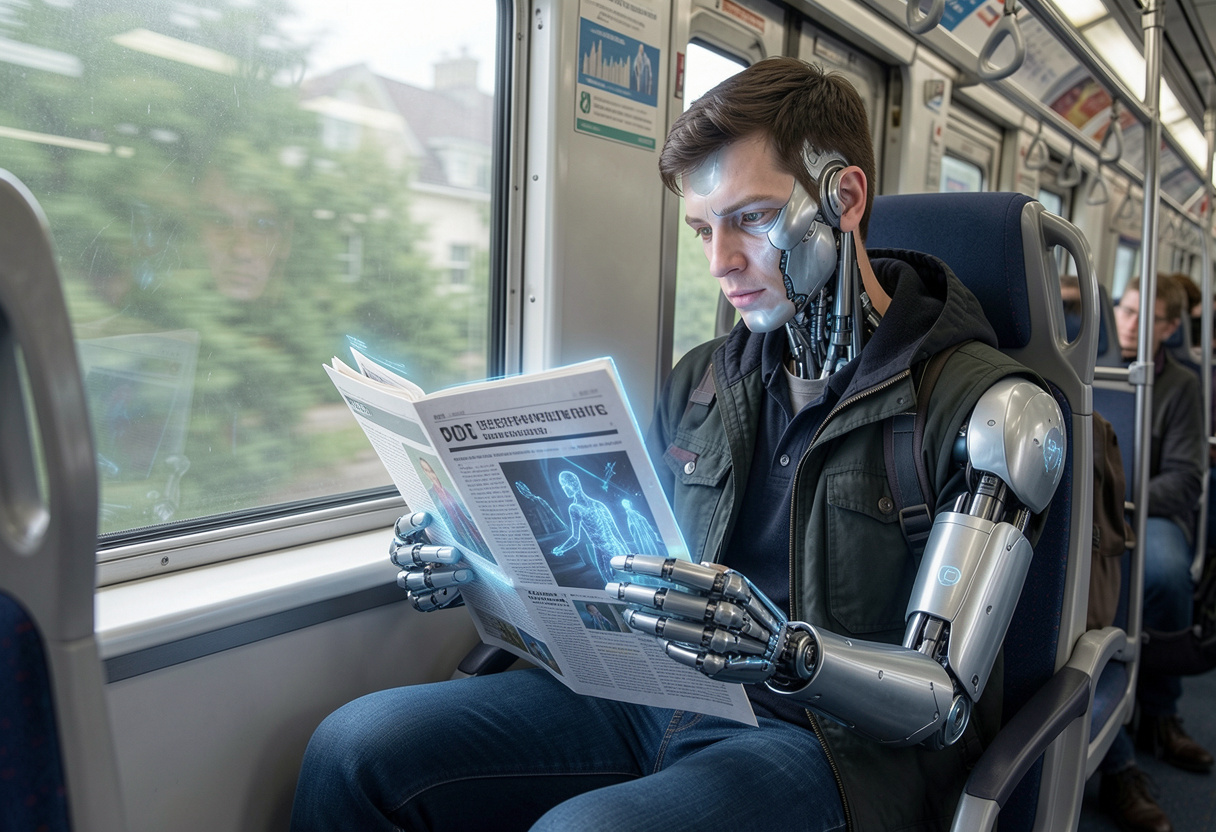
Ceasing to be a purely biological species to transform into a fusion between meat, silicon and artificial intelligence, that idea always belonged to science fiction novels and the boldest predictions of futurists, but today it has become an engineering project in progress. Transhumanism ceased to be a distant philosophy and became one of the greatest technological bets of the 21st century, but what were the consequences of breaking the natural limits of our biology?


Today we are going to analyze the facts, what is already reality and how the world will be reconfigured in the next 5, 10 and 50 years if we continue down this path. While brain chips promise to connect the human mind with machines, scientists learn to reprogram aging cells, edit embryos, make DNA with electricity and transform bionic prostheses into increasingly sophisticated extensions of the human body, at the same time, robots and artificial intelligences begin to integrate into our daily lives in ways that seemed impossible just a few years ago.


It seems that the next stage of human evolution may not happen for thousands of years, it may be beginning now, because the foundation of transhumanism is already operating around us, what were once laboratory experiments have been transformed into marketable medical technology. Today we already have brain-computer interfaces that allow paralyzed patients to control computers and robots with thoughts alone, bionic prostheses with touch sensors triggered by muscle impulses, and initial crispr gene-editing therapies that repair inherited mutations directly in the DNA of living patients.


What was previously restricted to laboratories is now beginning to enter hospitals and specialized clinics. If we look just 5 years ahead, the trend points to the popularization of so-called invasive wearable devices, mini implants capable of continuously monitoring glucose, hormones and chemical markers in the blood will become common, lightweight mixed reality glasses and neural reading devices will be able to be incorporated into the work environment, expanding productivity and interaction between humans and artificial intelligence systems.


Technology will continue to be an external tool, but increasingly integrated into the body. In a 10-year window, the scenario becomes even more radical, wireless brain interfaces may allow primitive forms of direct communication between users, a kind of synthetic telepathy mediated by machines. At the same time, therapies focused on cellular rejuvenation and slowing down aging will enter advanced phases of development.


Medicine will stop fighting only diseases and will begin to treat aging itself as a problem of biological engineering, but if we move half a century into the future, we arrive at a reality capable of completely transforming civilization. According to specialists' expectations, in 2076 bioprinted organs and laboratories will be able to eliminate the transplant queues.


Nanotechnology and synthetic biology will allow damaged tissues to be repaired continuously. High-density cortical implants will be able to connect the human mind directly with advanced artificial intelligences. Memory will no longer depend exclusively on the biological brain and can be expanded through external storage systems. The border between human thought and computing will practically disappear.