An Oxford University study with monkeys explains why 90% are right-handed/Un estudio de la Universidad de Oxford con monos explica por qué el 90 % es diestro
Source
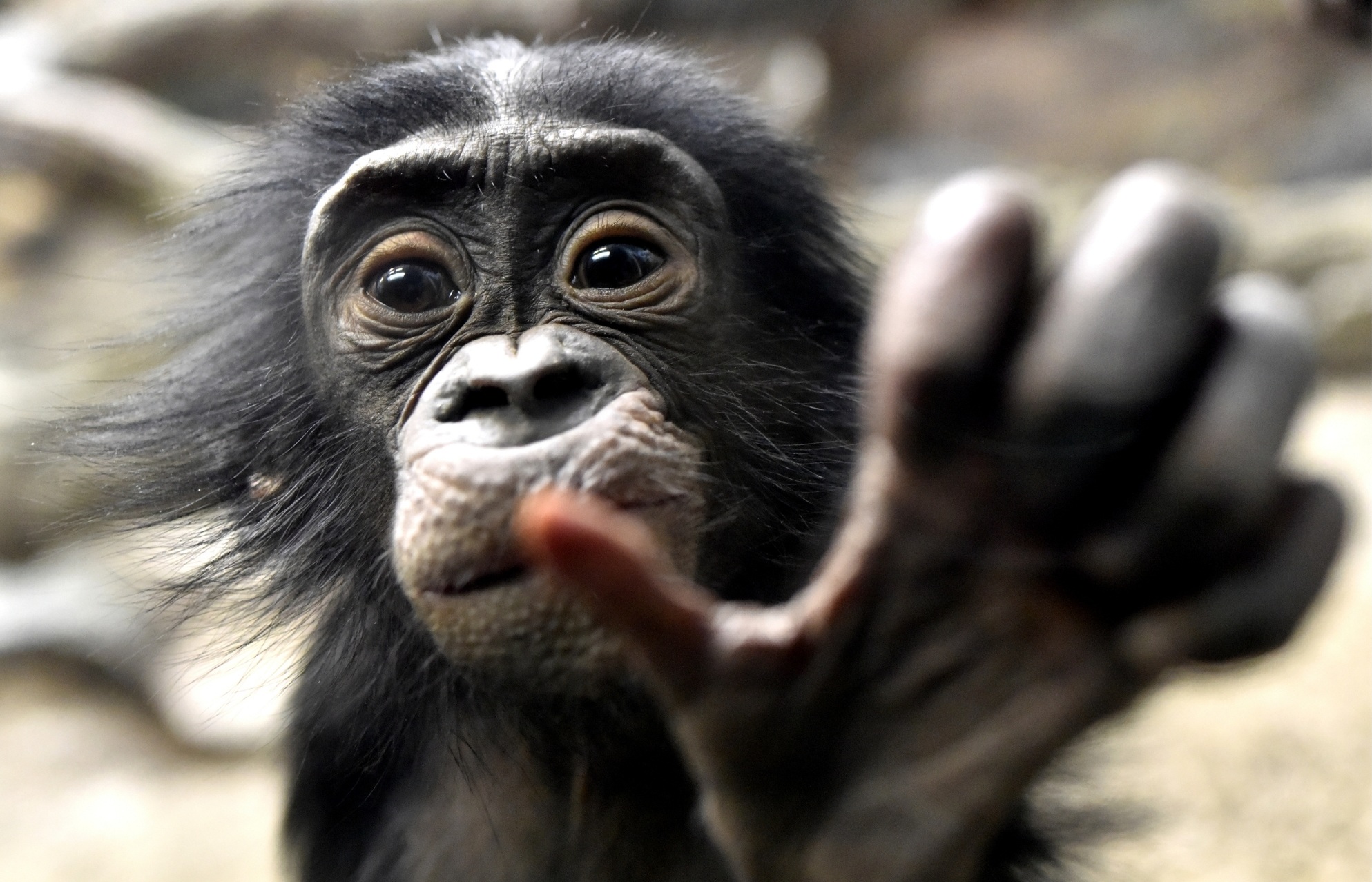
While it may not be a vital issue for our evolution, it's curious that the majority of humans (90%) are right-handed, while other primates don't show such a marked preference across species. But there's another characteristic of humans: their perpetual curiosity. That's why a team of scientists from the University of Oxford recently published a study in the journal PLOS Biology analyzing primates with the aim of solving this age-old enigma.
Aunque realmente no sea una cuestión vital para nuestra evolución es curioso que la mayoría de los seres humanos (un 90%) utilicemos preferentemente la mano derecha, mientras que otros primates no muestran una preferencia tan marcada a nivel de especie. Pero hay otra cosa que también caracteriza a los humanos y es su curiosidad perpetua, por eso un equipo de científicos de la Universidad de Oxford ha publicado recientemente un estudio en la revista PLOS Biology en el que analiza los primates con el objetivo de resolver este viejo enigma.
It's important to clarify that the research wasn't conducted on live monkeys in a laboratory. Rather, it's a meta-analysis in which scientists analyzed a vast existing database on primates. Apparently, the results suggest that the answer lies not in the hands themselves, but in two key milestones of our evolution: bipedalism (walking upright) and increased brain size. The methodology was crucial to reaching these results; to discover what makes the human species special, the researchers needed a map of what is "normal" in other primates.
Es importante aclarar que la investigación no se realizó con monos vivos en un laboratorio, sino que se trata de un meta-análisis con el que los científicos analizaron una enorme base de datos existentes sobre primates. Según parece, los resultados apuntan a que la respuesta no está en las manos en sí, sino en dos hitos clave de nuestra evolución: caminar erguidos (bipedismo) y el aumento del tamaño del cerebro. La metodología fue clave para llegar a estos resultados, para descubrir qué hace especial a la especie humana, los investigadores necesitaban un mapa de lo que es "normal" en otros primates.

Source
To do this, they gathered data from 2,025 individuals belonging to 41 different species of monkeys and apes. This massive sample allowed them to establish a robust pattern of hand preference in the rest of the primates. They used Bayesian models, a sophisticated statistical technique that takes into account the evolutionary relationships between different species. This allowed them to test multiple hypotheses at once, such as the influence of diet, tool use, habitat, body size, social organization, type of locomotion, and brain size.
Pare ello reunieron datos de 2.025 individuos pertenecientes a 41 especies diferentes de monos y simios. Esta muestra masiva les permitió establecer un patrón sólido de preferencia manual en el resto de primates. Utilizaron modelos bayesianos, una sofisticada técnica estadística que tiene en cuenta las relaciones evolutivas entre las distintas especies. Esto les permitió probar múltiples hipótesis de una sola vez, como la influencia de la dieta, el uso de herramientas, el hábitat, el tamaño corporal, la organización social, el tipo de locomoción y el tamaño del cerebro.
Applying their models, researchers observed that humans were a clear evolutionary exception. However, everything fell into place when they added two specific factors to the analysis: brain size (endocranial volume) and the "intermembral index," which is the ratio between arm and leg length. This index is a standard anatomical marker for identifying whether a species walks on two legs (bipedalism). By including these two factors, the "human exception" disappeared. This means that, from an evolutionary perspective, our extreme tendency to be right-handed is explained precisely by the fact that we walk on two legs and have a very large brain compared to other primates.
Al aplicar sus modelos, los investigadores observaron que los humanos eran una clara excepción evolutiva. Sin embargo, todo encajó cuando añadieron dos factores específicos al análisis: El tamaño del cerebro (volumen endocraneal) y el "índice intermembral" , que es la proporción entre la longitud de los brazos y las piernas. Este índice es un marcador anatómico estándar para identificar si una especie camina sobre dos piernas (bipedismo). Al incluir estos dos factores, la "excepción humana" desapareció. Esto significa que, desde una perspectiva evolutiva, nuestra extrema tendencia a ser diestros se explica precisamente porque caminamos sobre dos piernas y tenemos un cerebro muy grande en comparación con otros primates.
Source
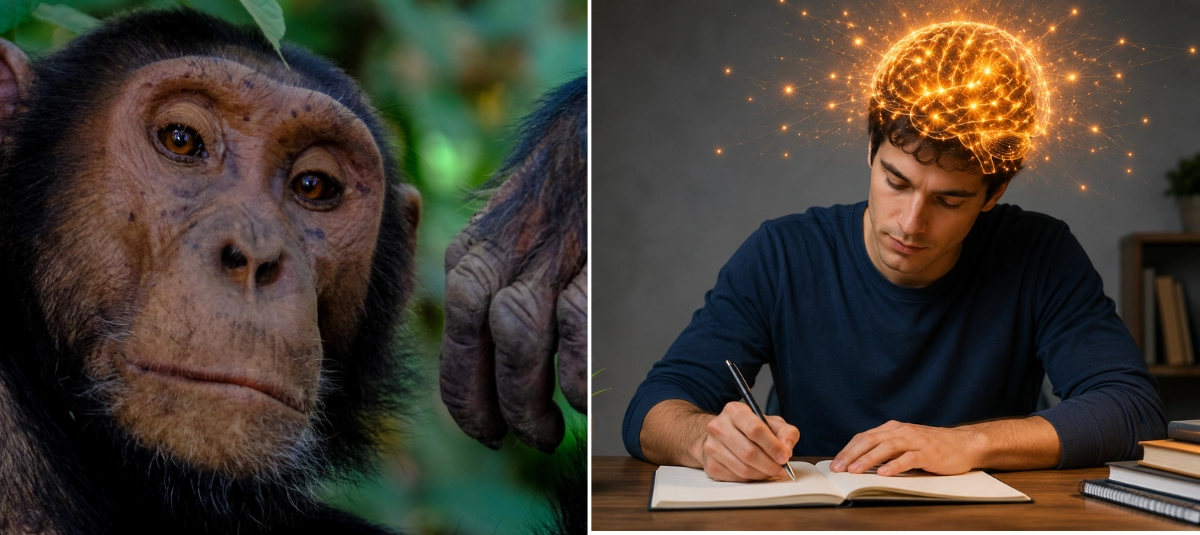
Bipedalism was the first major step. By freeing the hands from the functions of walking and climbing, evolution began to favor finer specialization in their use, likely for tasks such as toolmaking, carrying objects, or communicating through gestures. Walking upright created both the need and the opportunity for one hand (in our case, the right) to become more dexterous. Moreover, a larger brain reinforced this tendency. Once the balance had tipped in one direction, the explosion in brain size and reorganization (a process known as encephalization) did the rest.
El bipedismo fue el primer gran paso. Al liberar las manos de la función de caminar y trepar, la evolución comenzó a favorecer una especialización más fina en su uso, probablemente para tareas como fabricar herramientas, transportar objetos o comunicarse con gestos. Caminar erguido creó la necesidad y la oportunidad de que una mano (en nuestro caso, la derecha) se volviera más hábil. Por otra parte, un cerebro más grande refuerza la tendencia. Una vez que la balanza ya se inclinaba hacia un lado, la explosión en el tamaño y la reorganización del cerebro (un proceso conocido como encefalización) hizo el resto.
A more complex brain allowed for more refined motor control and solidified that slight initial preference into an overwhelming tendency, as we see it today in modern humans. In short, the Oxford study proposes that our global dominance as right-handed people is not just a coincidence or a simple genetic curiosity, but is intimately linked to two of the traits that define us as human beings: walking on two legs and having a large, complex brain.
Un cerebro más complejo permitió un control motor más refinado y consolidó esa ligera preferencia inicial en una tendencia abrumadora, tal como la vemos hoy en los humanos modernos. En resumen, el estudio de Oxford propone que nuestro dominio global como diestros no es tan solo una casualidad ni una simple curiosidad genética, sino que está íntimamente ligado a dos de los rasgos que nos definen como seres humanos que son, caminar sobre dos piernas y tener un cerebro grande y complejo.
More information/Más información
https://www.sciencedaily.com/releases/2026/05/260517211429.htm
Great job on synthesizing the Oxford meta-analysis! The connection created between bipedalism, brain size, and the predominance of right-handedness in humans is key to understanding lateralization of the human brain as an evolutionary milestone rather than a random trait based solely upon genetic disposition. You also provided an excellent explanation of both the Bayesian methodology and how to properly compute intermembral indexes!