New jacket that collects up to 900ml of water per day directly from the air/Nueva chaqueta que obtiene hasta 900 ml de agua al día directamente del aire
Source
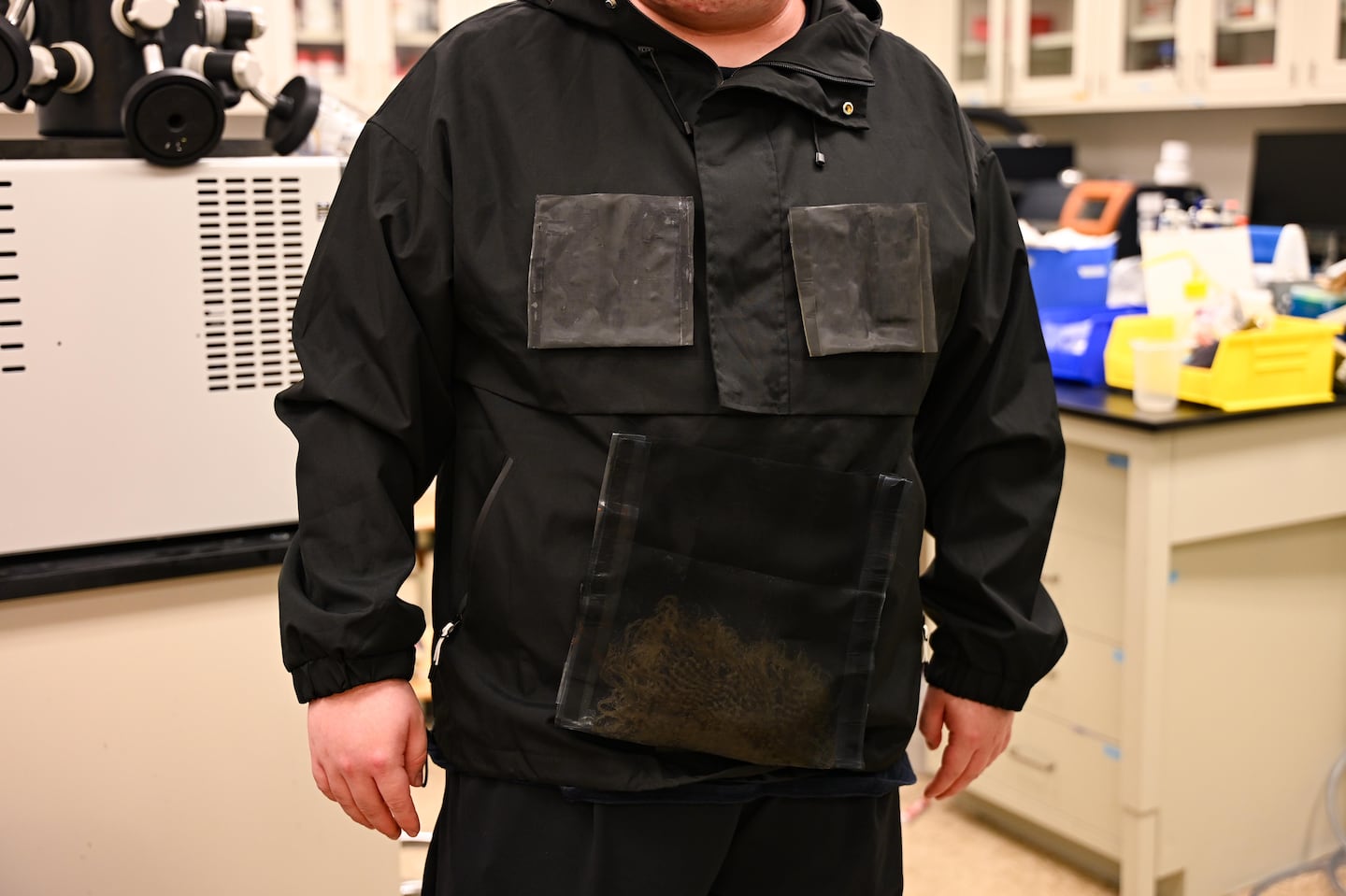
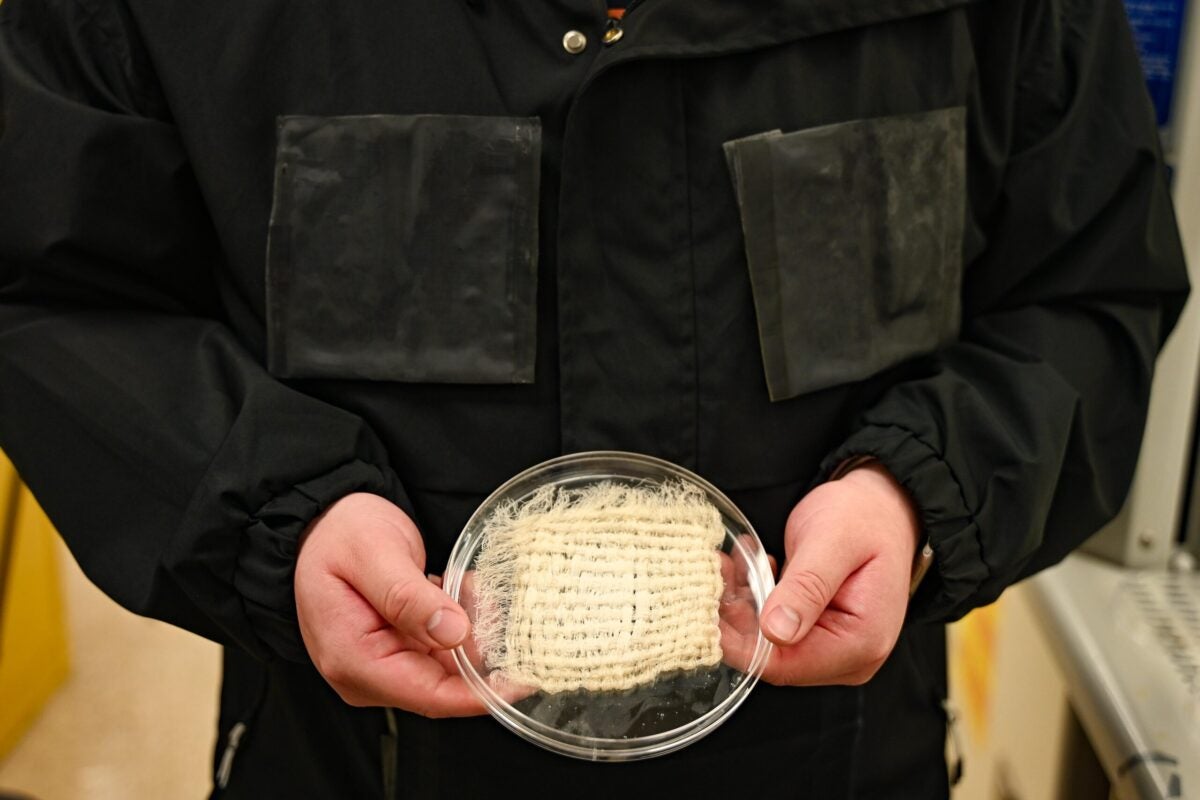
A group of researchers at the University of Texas at Austin has developed a textile material capable of capturing moisture from the air and transforming it into potable water, an advance that could have very interesting applications in the future. The "secret" lies in the fabric itself, which is not an ordinary cloth, but an advanced hydrogel textile. The fabric uses hierarchical porous fibers that combine a hygroscopic material (such as lithium chloride) with cellulose derived from biomass. This mixture is adept at absorbing water vapor from the atmosphere.
Un grupo de investigadores de la Universidad de Texas en Austin han desarrollado un material textil capaz de captar humedad del aire y transformarla en agua potable, un avance que podría tener aplicaciones muy interesantes en el futuro. El "secreto" está en la propia tela, que no es una tela común y corriente, sino un textil avanzado de hidrogel. El tejido utiliza fibras porosas jerárquicas que combinan un material higroscópico (como el cloruro de litio) con celulosa derivada de biomasa. Esta mezcla es experta en absorber el vapor de agua de la atmósfera.
The real breakthrough isn't just absorbing water, but doing so quickly and efficiently. The fiber is designed with an internal structure capable of channeling moisture from the air into the fabric, overcoming the limitations of other materials. This allows the system to operate on a larger scale within a garment. The captured moisture is concentrated in removable units (similar to canteens) integrated into the jacket. Once saturated, these units are removed and placed in a collapsible collector.
El verdadero avance no es solo absorber agua, sino hacerlo de forma rápida y eficiente. La fibra está diseñada con una estructura interna capaz de canalizar la humedad desde el aire hasta el interior del textil, superando las limitaciones de otros materiales. Esto permite que el sistema funcione a mayor escala dentro de una prenda de vestir. La humedad capturada se concentra en unidades extraíbles (una especia de cantimploras) integradas en la chaqueta. Una vez saturadas, se retiran y se colocan en un colector plegable.
Source
By applying heat (for example, with sunlight or a small heat source), the trapped water is released, condenses, and is collected as potable liquid water. In tests, this system was able to generate between 400 and 900 milliliters of water per day, depending on the ambient humidity. While the jacket is the most striking example, the true potential of this technology extends far beyond a garment. Researchers are envisioning a wide range of practical applications, especially for people working in remote or water-scarce environments.
Al aplicar calor (por ejemplo, con luz solar o una pequeña fuente térmica), el agua atrapada se libera, se condensa y se recoge como agua líquida potable. En las pruebas realizadas, este sistema fue capaz de generar entre 400 y 900 mililitros de agua al día dependiendo de la humedad del ambiente. Aunque la chaqueta es el ejemplo más llamativo, la utilidad real de esta tecnología va mucho más allá de una prenda de vestir. Los investigadores están pensando en una amplia gama de aplicaciones prácticas, especialmente para personas que operan en entornos remotos o con escasez de agua.
The main idea is to provide a portable, personal water source for hikers, campers, runners, agricultural workers in arid regions, military personnel, and disaster response teams. The same textile could be integrated into backpacks, tents, or emergency shelters, transforming everyday objects into small water generators. In water-stressed regions (such as parts of North Africa, the Middle East, South Asia, and sub-Saharan Africa), this technology could be an alternative to centralized water systems, which are difficult to build and maintain.
La idea principal es proporcionar una fuente de agua portátil y personal para excursionistas, campistas, corredores, trabajadores agrícolas en zonas secas, personal militar y equipos de respuesta a desastres. El mismo textil podría integrarse en mochilas, tiendas de campaña o refugios de emergencia, convirtiendo objetos cotidianos en pequeños generadores de agua. En regiones con estrés hídrico (como partes de Norte de África, Medio Oriente, Sur de Asia y África Subsahariana), esta tecnología podría ser una alternativa a los sistemas de agua centralizados que son difíciles de construir y mantener.

Source
But despite being a promising development, this prototype still has limitations that prevent its immediate commercial use. The process is not continuous. First, the jacket must be worn to absorb moisture, and then the units must be removed to extract the water in a separate process that requires an external heat source. For water extraction, the current prototype needs a power supply and a cooling system, making it more of a "field kit" than a self-contained garment.
Pero, a pesar de ser un avance prometedor, este prototipo aún tiene limitaciones que impiden su uso comercial inmediato. El proceso no es continuo. Primero se debe usar la chaqueta para absorber la humedad y luego retirar las unidades para extraer el agua en un proceso separado que requiere una fuente de calor externa. Para la extracción de agua, el prototipo actual necesita una fuente de alimentación y un sistema de refrigeración, lo que lo convierte más en un "kit de campo" que en una prenda autónoma.
The amount of water it produces (up to 900 ml) covers approximately one-third of an adult's daily hydration needs (2 to 3 liters). The technology has a patent pending, but there is no estimated date for its market launch. Currently, there is no planned release date for this jacket. Reports indicate that, although the team at the University of Texas at Austin has filed a patent application, the development is still in the conceptual prototype phase. So, we'll have to wait.
La cantidad de agua que produce (hasta 900 ml) cubre aproximadamente un tercio de las necesidades diarias de hidratación de un adulto que son de 2 a 3 litros). La tecnología cuenta con una patente en trámite, pero no hay una fecha estimada para su lanzamiento al mercado. Por el momento, no hay una fecha de comercialización prevista para esta chaqueta. Los informes indican que, aunque el equipo de la Universidad de Texas en Austin ha solicitado una patente, el desarrollo se encuentra aún en fase de prototipo conceptual. Así que toca esperar.
More information/Más información
https://interestingengineering.com/photo-story/wearable-jacket-extracts-water-from-air
https://revistajaraysedal.es/chaqueta-genera-agua-potable-del-aire-hasta-900-ml-dia/
This is an important advancement in the development of wearable water harvesting solutions. By combining moisture-trapping, high surface area and water-attracting materials to biomatter celluloid within a textile hydrogel, the authors/creators if rather have developed a fabric capable of harvesting water from the environment and creating 400 to 900mL of drinking water per day for various levels of relative humidity. While the tested prototype requires both a separate water extraction procedure and outside heat source, the potential applications of this to backpackers, disaster-recovery personnel, armies, and the 1.1billion who live without sufficient access to drinking water range widely and technologically WORTHY!