Learning photography with wildlife in south-eastern Pennsylvania: First encounters in the month of April - part 2
Welcome to part 2 of the animal species that I photographed for my first time during the month of April. Here's the full list of my April wildlife photography “first encounters.”
| Common Name | First Observed | Common Name | First Observed |
|---|---|---|---|
| Downy Woodpecker | 04/03/26 | Cooper's Hawk | 04/26/26 |
| Painted Turtle | 04/04/26 | House Finch | 04/26/26 |
| White-throated Sparrow | 04/04/26 | Carolina Wren | 04/27/26 |
| Red-winged Blackbird | 04/09/26 | American Crow | 04/28/26 |
| Osprey | 04/20/26 | Eastern Bluebird | 04/28/26 |
In part 1, I covered the Downy Woodpecker, Painted Turtle, White-throated Sparrow, Red-winged Blackbird, and Osprey. Today's post covers the right-hand columns, the Cooper's Hawk, House Finch, Carolina Wren, American Crow, and the Eastern Bluebird.
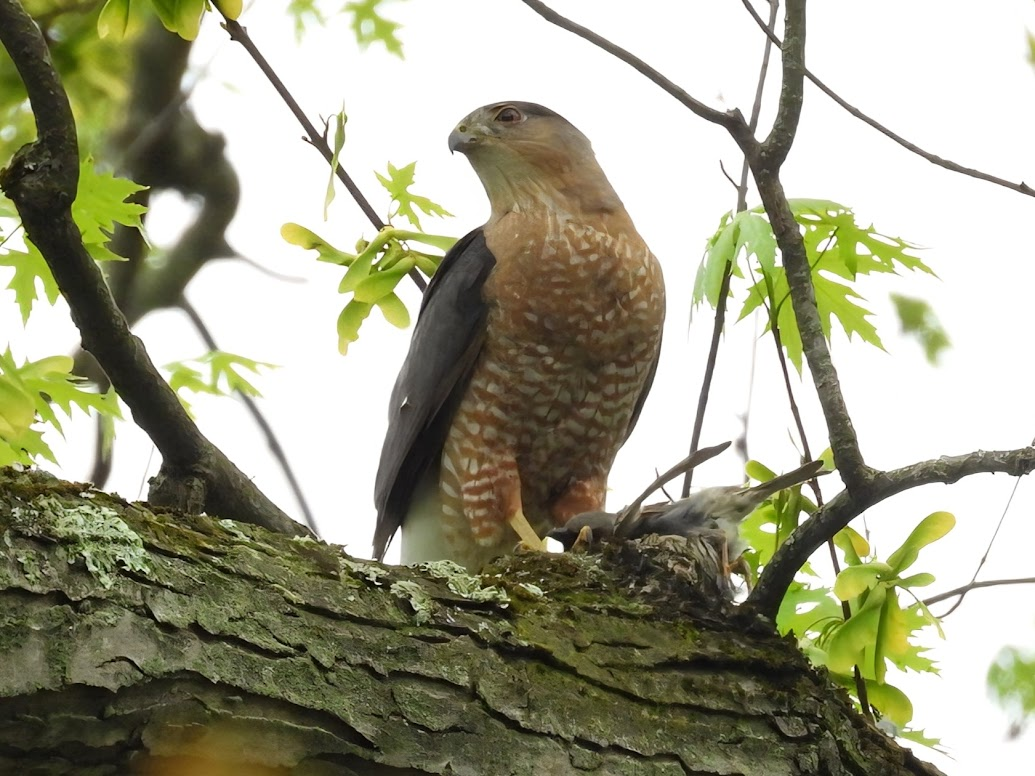
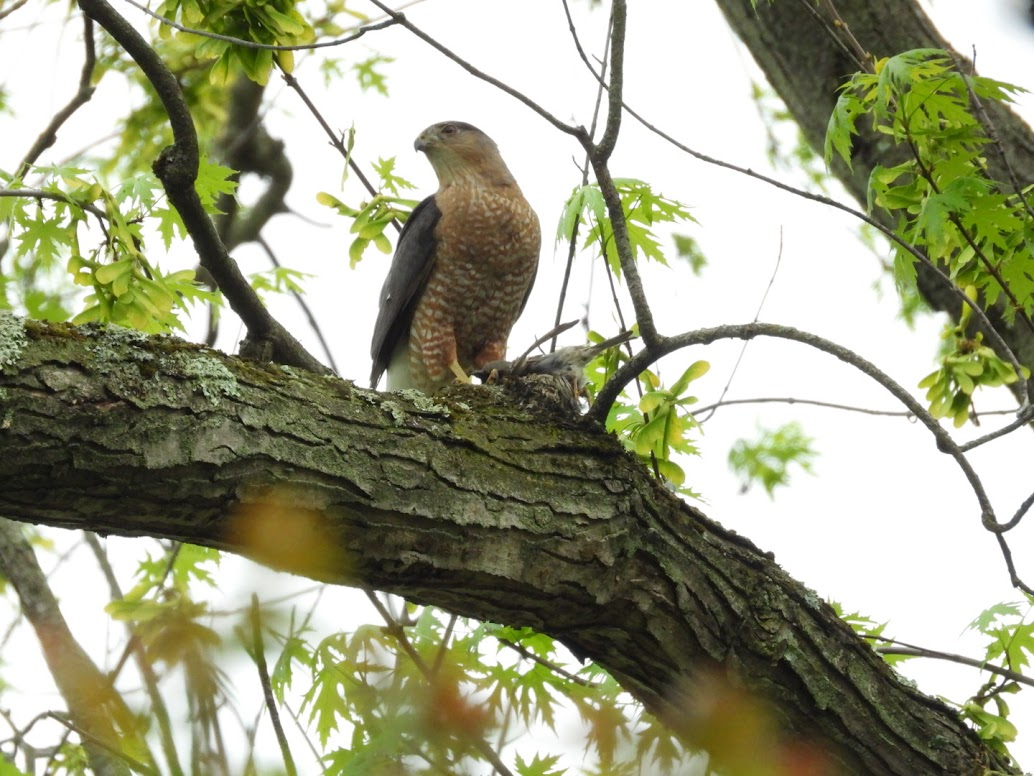
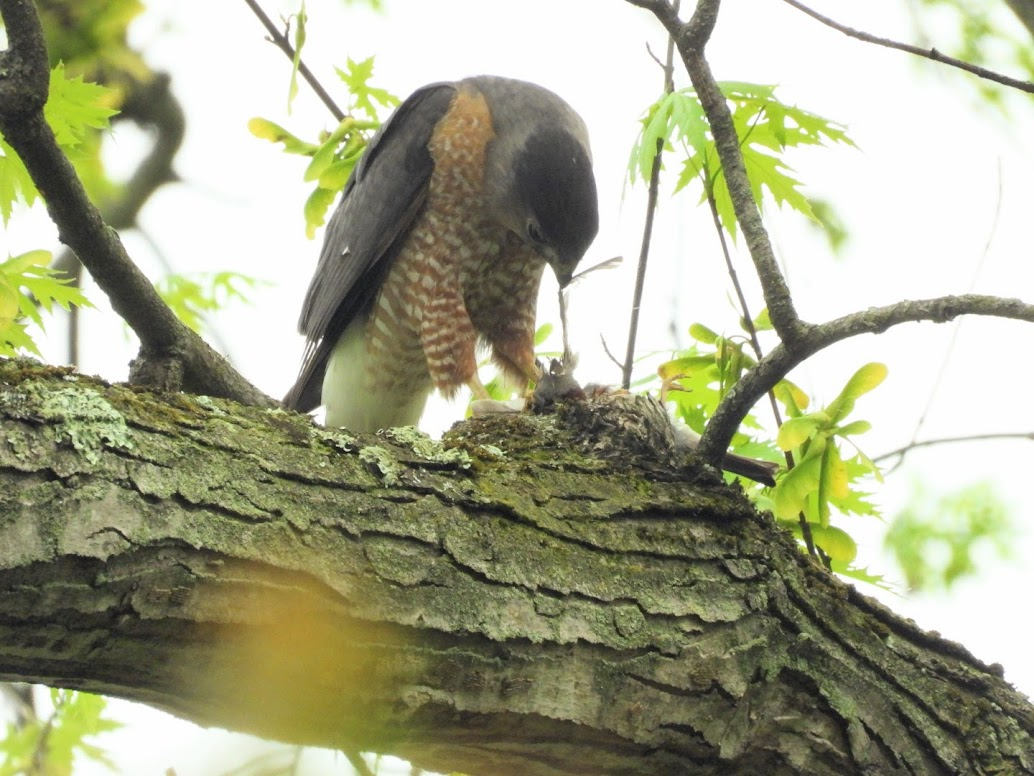
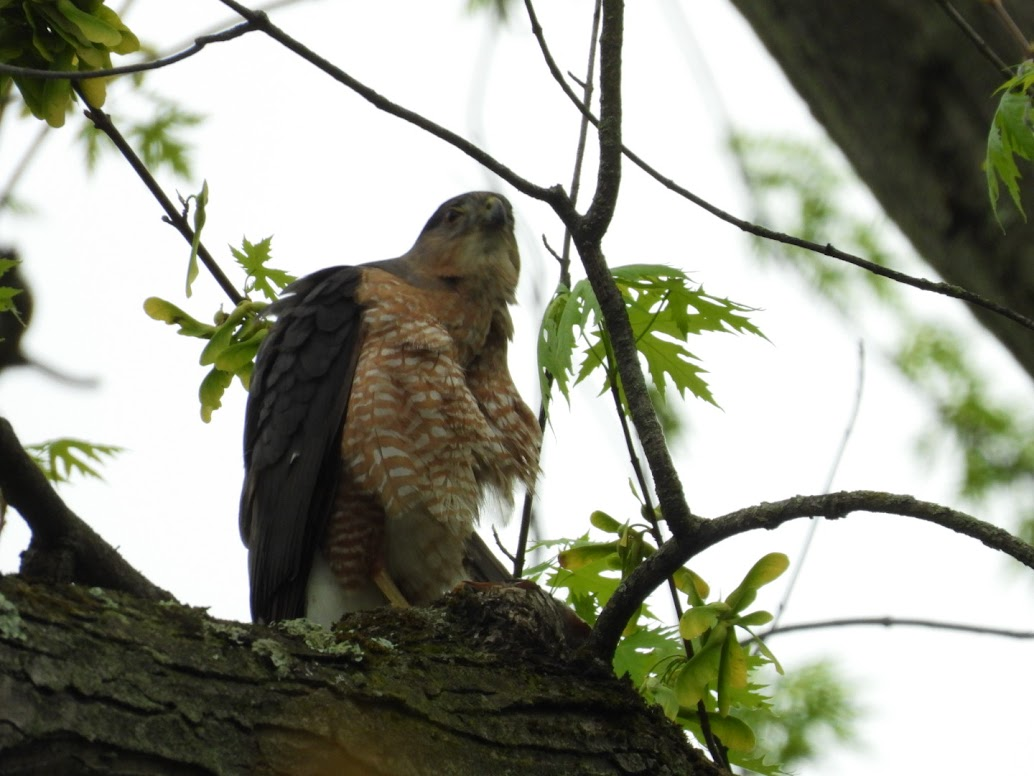
If the Osprey was the highlight of the first half of the month, the Cooper's Hawk is definitely the highlight of the second half. And this time I had lots of time to experiment with settings while the bird was perched in a tree. I probably took 100 photos of that bird alone. In the photos below, you can see how I was struggling to zero in on the right settings on a cloudy day with pre-dusk lighting (not shown in chronological order).
Cooper's Hawk
According to the AIs, Cooper's Hawks are commonly found in suburban areas because they like to stake out bird feeders as their hunting grounds. After my sole encounter with one, I can definitely believe it.
They range across most of the continental United States all year long, venturing into Canada during the summers and Mexico during winters. With a population above one million, they are listed as "least concern" for conservation status.
| Thumbnail edited in Samsung Galaxy Tools | From this original Photo |
|---|---|
| Cropped, Resolution Increased, Sharpened | Nikon P1000: ƒ/5.6; 1/400; ISO800; 252mm (58X, 1402mm equivalent for 35mm); |
 |  |
| Additional Photos | |
| Nikon P1000: ƒ/5.6; 1/500; ISO800 270mm (62X, 1502 equiv. for 35mm) | Nikon P1000: ƒ/6.3; 1/125; ISO720 324mm (75X, 1803 equiv. for 35mm) |
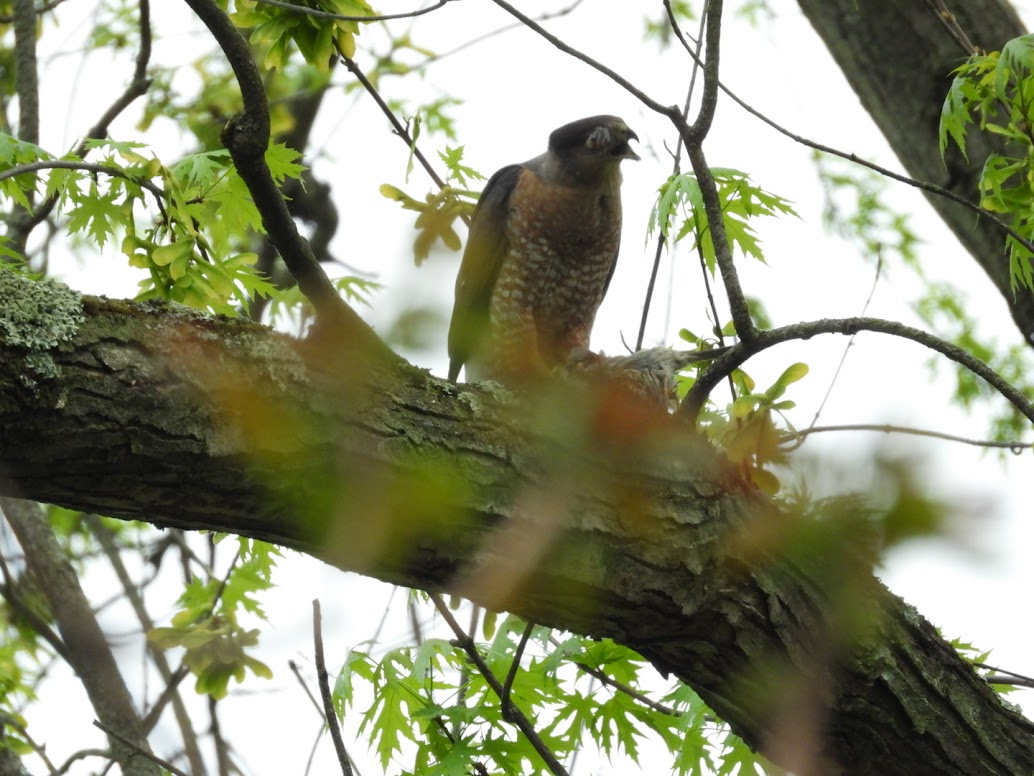 | 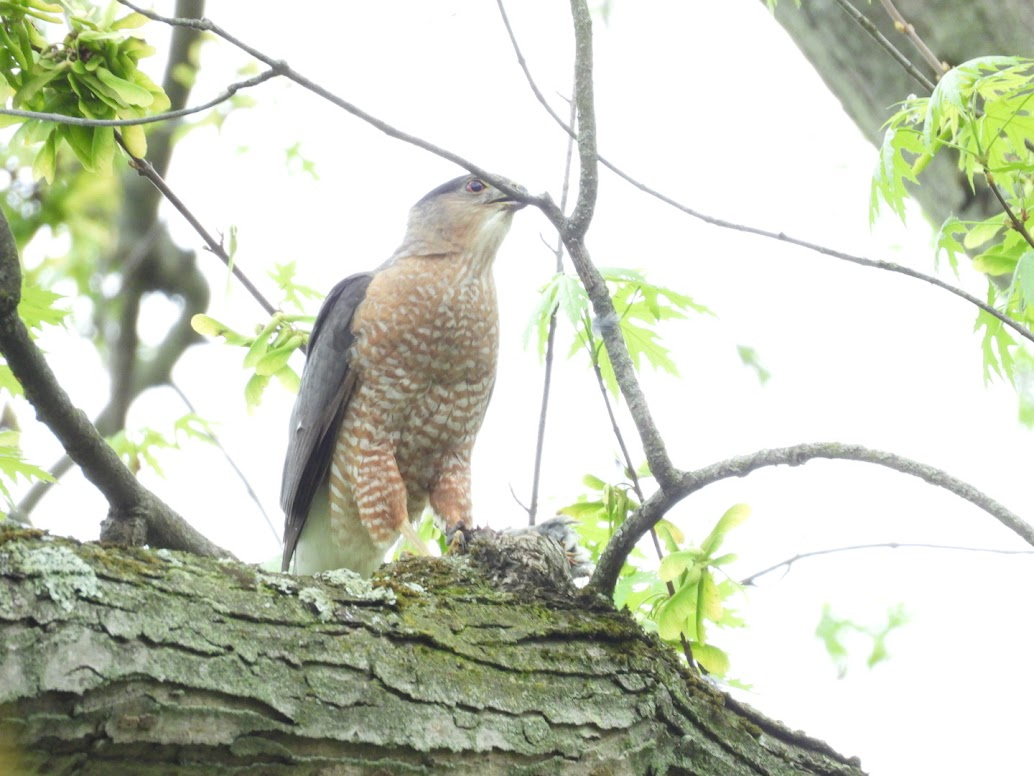 |
| Nikon P1000: ƒ/7.1; 1/400; ISO800 395mm (91X, 2198 equiv. for 35mm) Lighting adjustments applied. | Nikon P1000: ƒ/7.1; 1/400; ISO500 395mm (91X, 2198 equiv. for 35mm) |
 |  |
| iNaturalist Observation #: 354796528 Research Grade |
Now, let me ask, did you notice anything surprising in those photos? I didn't notice it until Claude pointed it out to me while we were identifying the species. So, let me back up to the beginning of the encounter/observation.
I mentioned, previously, that when the birds suddenly start chirping, it often means that a raptor is flying nearby. So, when you suddenly hear the birds start chirping, it's often a good idea to look at the sky. This time was the same, but maybe the chirping was more urgent - frantic, even. But when I checked the sky, I saw nothing, so I started walking down to where the birds were making such a racket. As I did, this hawk suddenly flew past my shoulder from ground level, swerved in front of me, and landed in a tree about 50 feet away. And there it stayed for maybe 10 or 15 minutes.
So, I took plenty of pictures, but looking through a tiny viewfinder I couldn't get much context. It was only when I went inside and asked the AI to identify the bird that Claude pointed out the surprise:
That's a Cooper's Hawk (Accipiter cooperii), adult — and it looks like it just made a kill! You can see prey under its feet.
So now, if you missed the surprise, you can go back and take a glance at the hawk's feet. Unfortunately, I was not able to determine what kind of bird the prey animal was. Let me know if you have any guesses.
House Finch
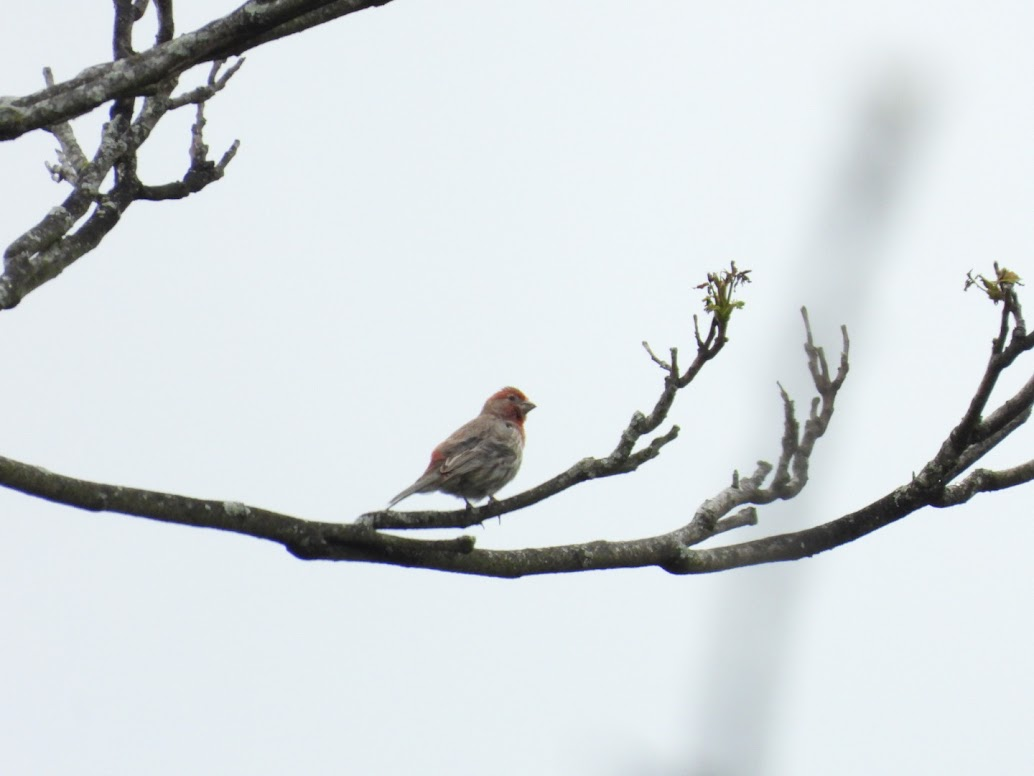
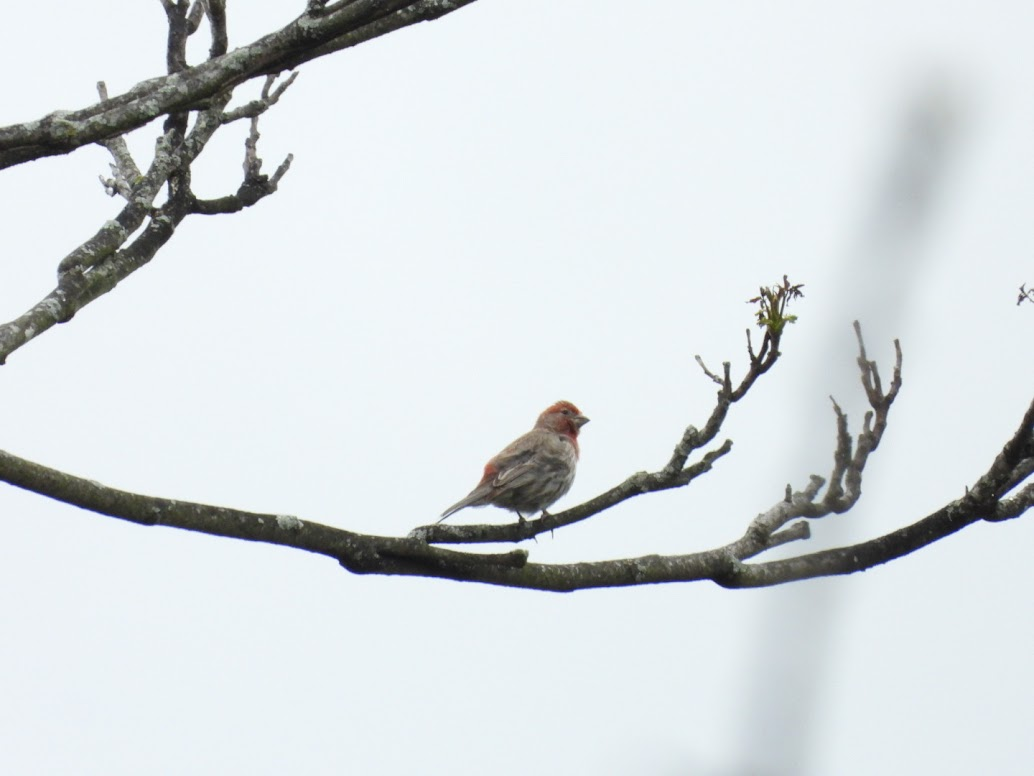
Surprisingly, the House Finch is not a native species in the eastern United States. They were isolated to the western and south-western United States until the 1940s because they couldn't pass the western mountain ranges.
In the 1940s, however, they were transported to New York City and sold as pets. Some escaped or were released, and the species has now spread throughout most of the continental United States and Mexico. There is still a corridor in the Central US where they don't appear to be present. These birds also have a conservation status of least concern.
| Nikon P1000: ƒ/8; 1/500; ISO800; 503mm ( 116X, 2800 equiv. for 35mm) | Nikon P1000: ƒ/8; 1/500; ISO800; 503mm ( 116X, 2800 equiv. for 35mm) |
 |  |
| Observation: 354804981 Research Grade |
Carolina Wren
The Carolina Wren ranges across the eastern United States and eastern Mexico. It's sensitive to cold temperatures, with observed drops in population after unusually cold winters. The oldest recorded lifespan in the wild is 7 years, 8 months. Again, the conservation status is low concern.
| Nikon P1000: ƒ/8; 1/500; ISO220 539mm (125X, 3000 equiv. for 35mm) | Nikon P1000: ƒ/8; 1/500; ISO220 539mm (125X, 3000 equiv. for 35mm) |
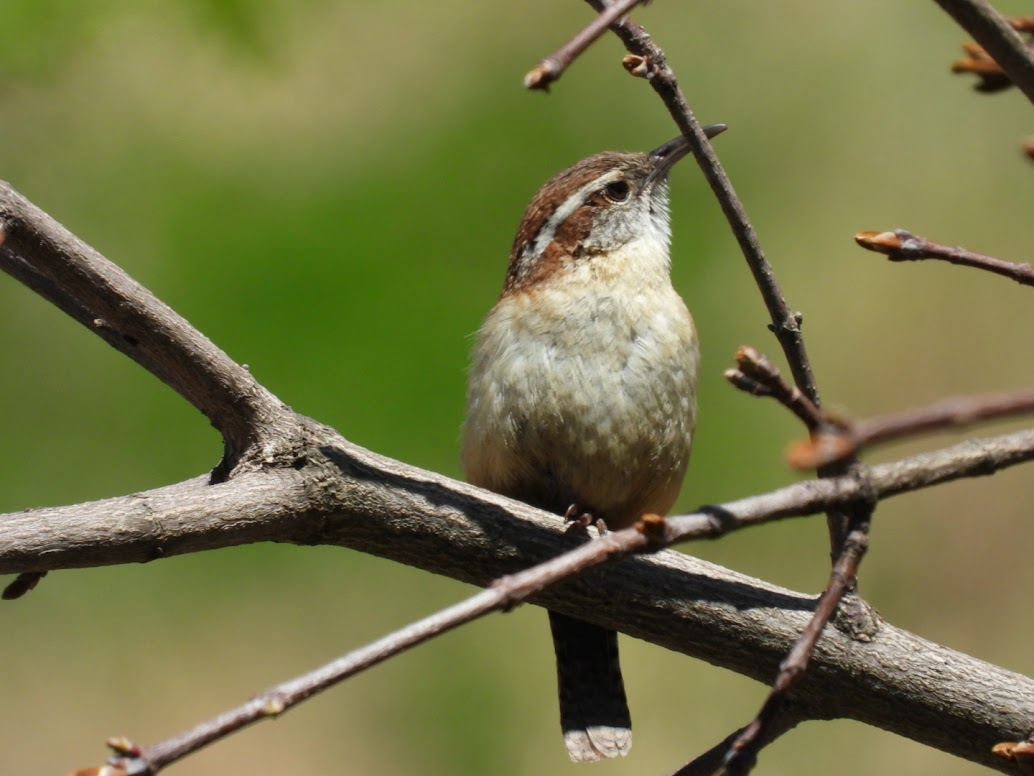 | 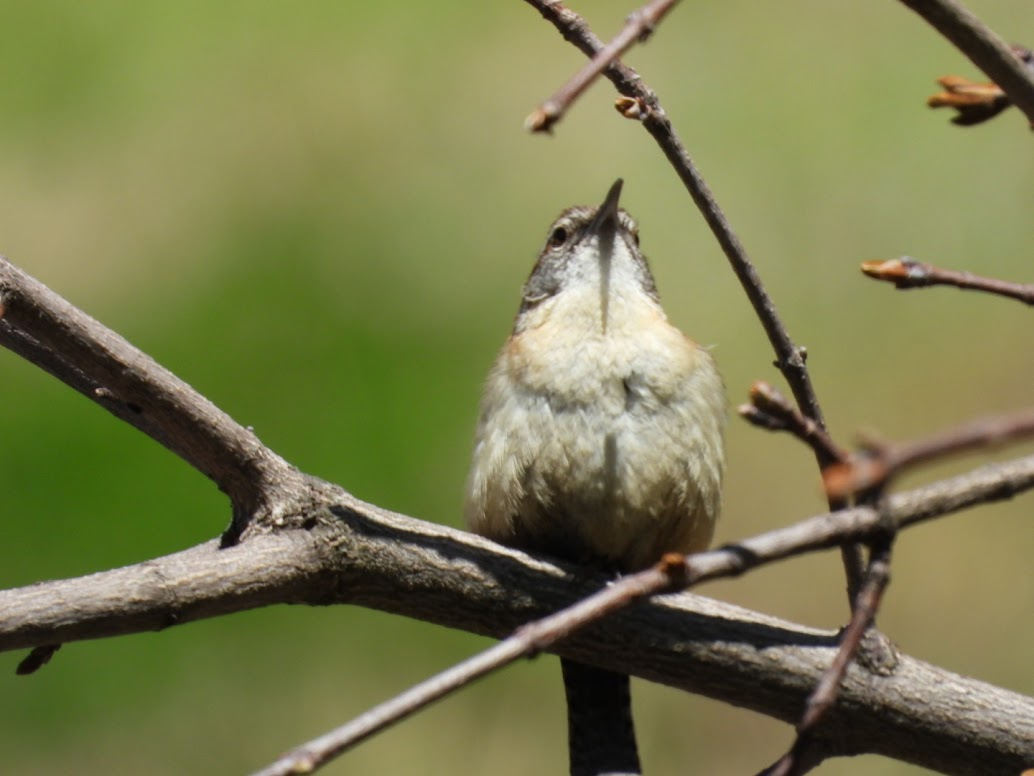 |
| Observation: 355759539 Research Grade |
American Crow
The American Crow is widely recognized for the "caw" sound that it makes when vocalizing. It ranges across the continental US and parts of Canada. I didn't have much time to adjust settings, and it was a solid black bird in poor lighting, so the pictures here are disappointing. However, this led to another surprise that was only revealed later when I was chatting with the AI to identify the bird. As with all of today's other birds, the conservation status is least concern.
| Nikon P1000: ƒ/6.3; 1/1600; ISO400 359mm (83X, 2000 equiv. for 35mm ) | Nikon P1000: ƒ/6.3; 1/1600; ISO400 359mm (83X, 2000 equiv. for 35mm ) |
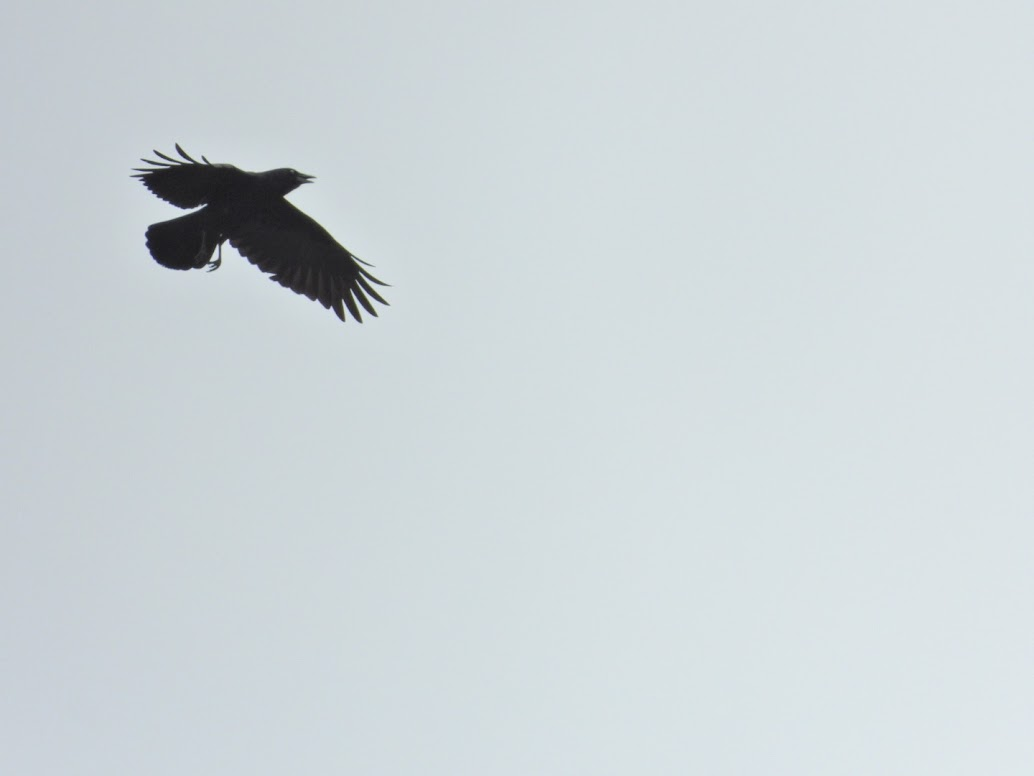 | 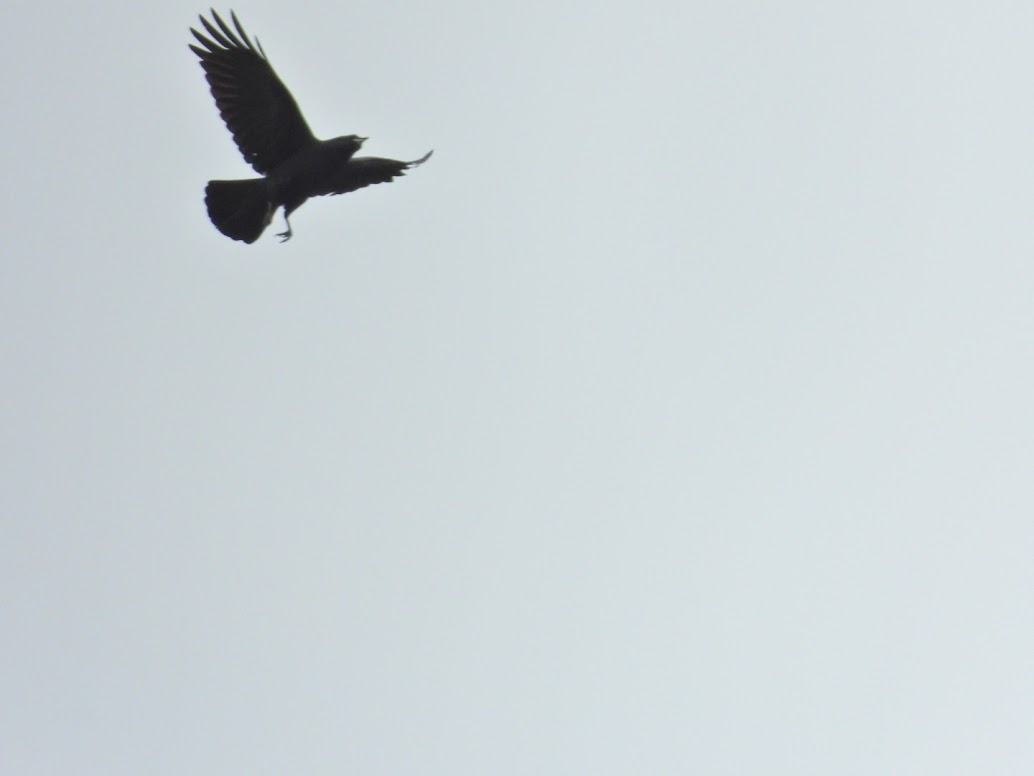 |
So, what was the surprise? When I was photographing the bird, it was making weird movements in flight. Diving and climbing, repeatedly. It almost looked like it was leashed to a post and frantically trying to get away but getting repeatedly snapped back in an arc by the leash.
I asked one of the AIs if that behavior is normal, and they said yes, it could be play, or it could be a mating demonstration, or it could be aggression. Apparently, crows like to nest in pine trees, so one of the AIs asked me if there was a tall pine tree nearby, where a nesting partner could be observing the display. I checked my photos, and here's what I saw:
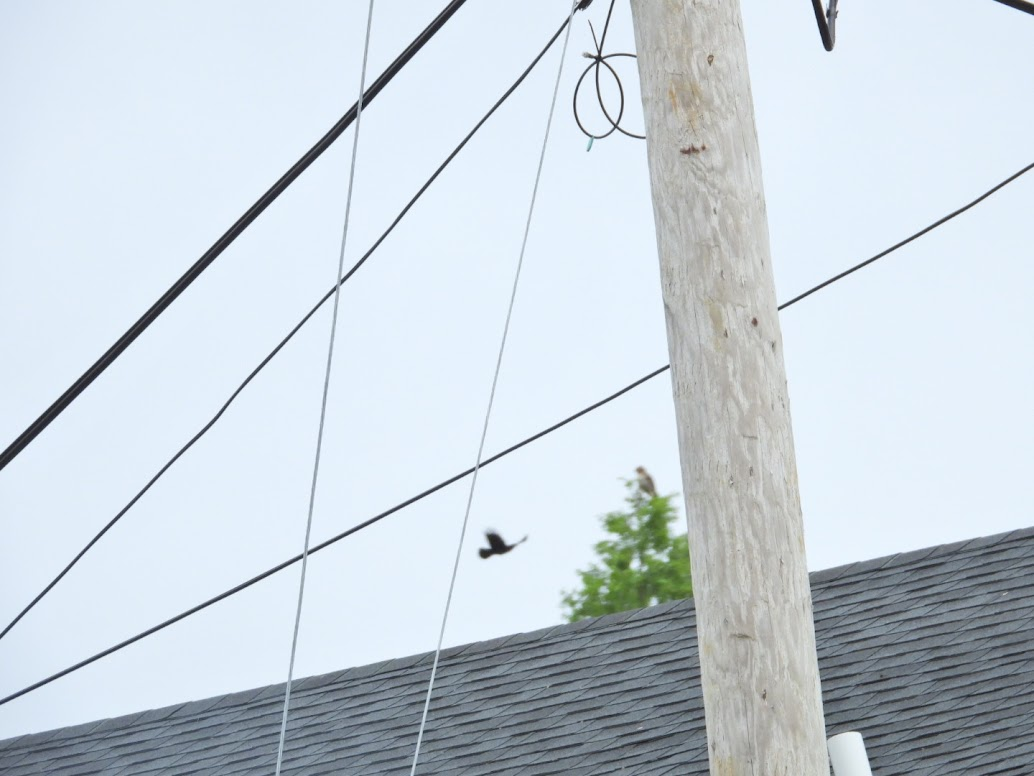 |
|---|
| Nikon P1000: ƒ/5; 1/1600; ISO400; 89.9mm (21X, 500 equiv. for 35mm) |
| Observation: 356314131 Research Grade |
It's blurry, and if you look carefully, you don't see a crow's nest. But instead, there's a Red-tailed Hawk sitting there at the top of the pine tree. So, it turns out that what the crow was doing is called mobbing. It was trying to intimidate the hawk and chase it away.
Eastern Bluebird
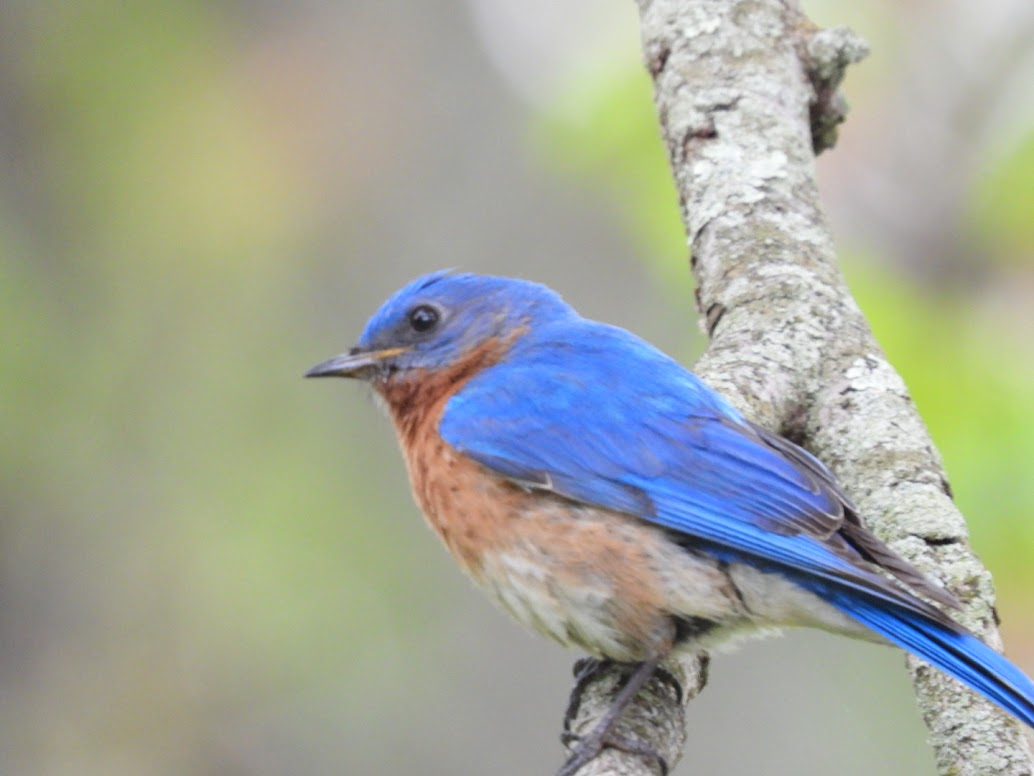
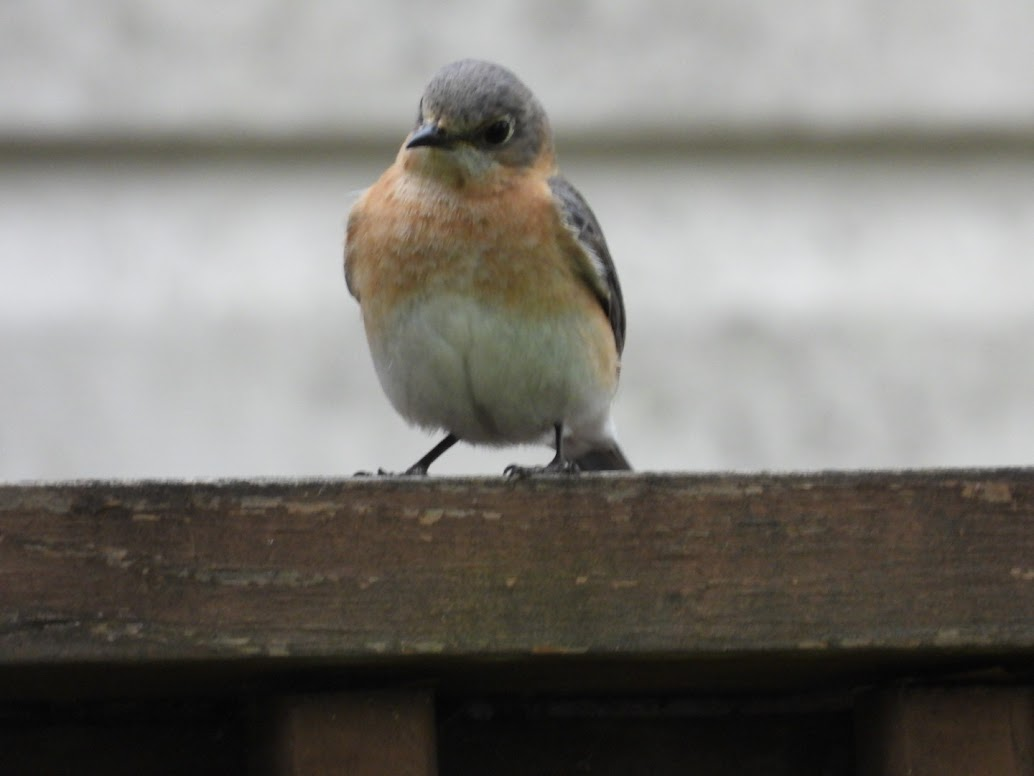
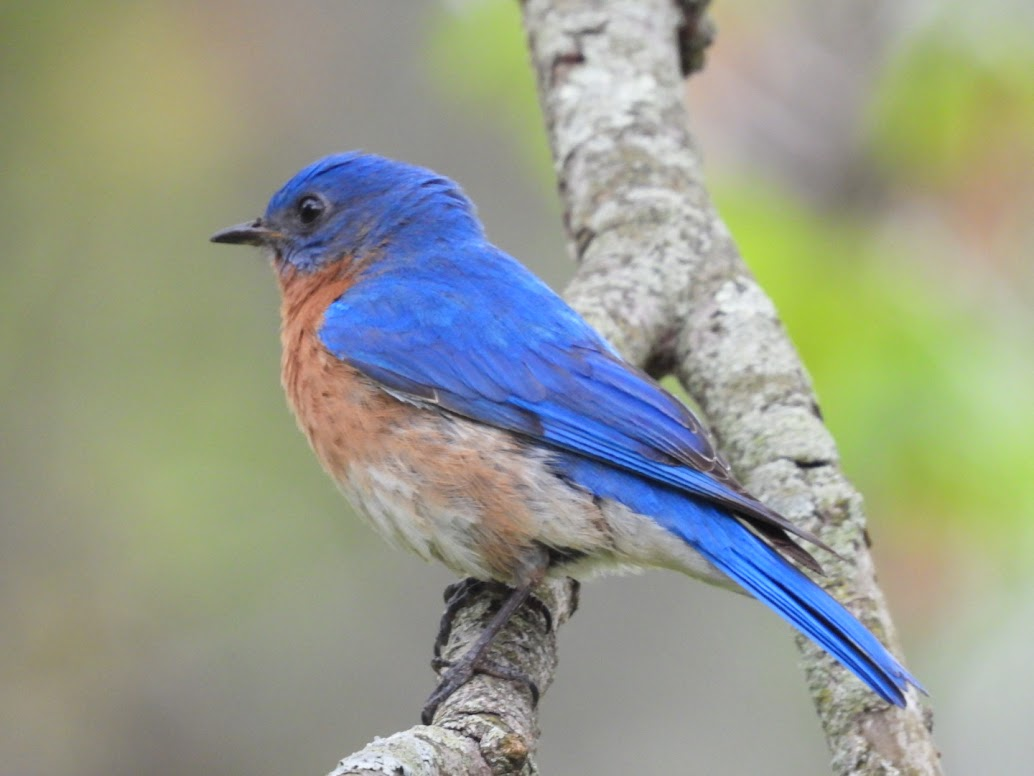
Year round, the Eastern Bluebird ranges across the south-eastern United States and parts of Mexico. In the summer, it extends north into Canada, and its southern range extends in the winter. According to the linked map, south-eastern Pennsylvania (where I live) is near the northern edge of the bird's year-round habitat. Further north, it will only be found during the breeding season (summer). The oldest recorded Eastern Bluebird was more than 10 years old.
The Eastern Bluebird now has a conservation status of least concern, but like the Osprey, they were previously listed as endangered in some states. In a familiar story, their population began recovering during the 2nd half of the 20th century.
@lisa.palmer was with me for this walk, and the bluebirds were nice enough to pause nearby so we could get photos of both of them, and they were close enough that we could see them clearly with unaided vision. Presumably, they're a mated pair. Not sure if they stayed in the area or if they were migrating through.
| Male | Female |
|---|---|
| Nikon P1000: ƒ/6.3; 1/50; ISO800 359mm (83X, 2000 equiv. for 35mm) | Nikon P1000: ƒ/7.1; 1/100; ISO800 395mm ( 92X, 2200 equiv. for 35mm) |
 |  |
| Nikon P1000: ƒ/6.3; 1/60; ISO800 359mm (83X, 2000 equiv. for 35mm) | Nikon P1000: ƒ/5.6; 1/100; ISO800 270mm (63X, 1502 equiv. for 35mm) |
 | 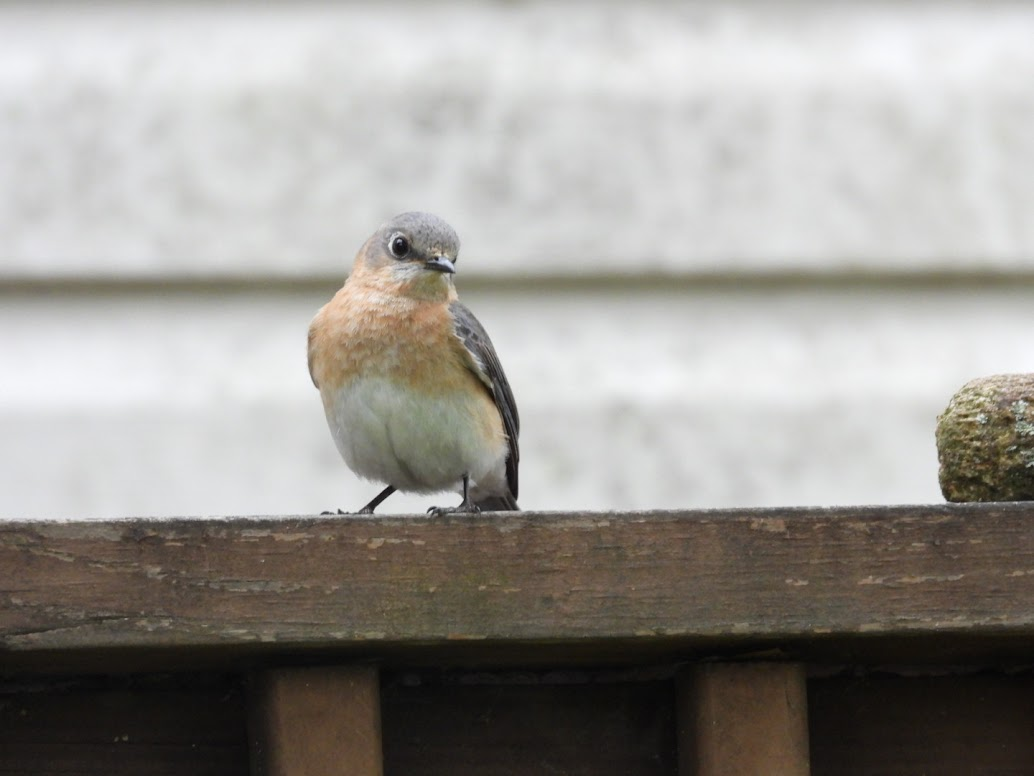 |
| Observation: 356465019 | Observation: 356465630 |
So that's a wrap on the species that I first encountered during the month of April. Between the Cooper's Hawk with its prey, and the American Crow mobbing the Red-tailed Hawk, there were a couple surprises here beyond just the encounters with species I hadn't seen before.
A few days later, I saw a crow in roughly the same spot "mobbing" again, and this time I knew to look at the tree. Now that I knew what to look for, this tipped me off to a whole bunch of "hawk in a tree" pictures.
Don't forget to let me know if you have any guesses about the species of the Cooper's Hawk's prey!
Thank you for your attention!
All photos above were taken by me with a Nikon P1000 camera. I'm sharing them under the CC BY 4.0 license (share & adapt freely with attribution to the original source).