Ketupat at the Edge of Tradition, From the Bustling Holidays to the Quiet Traditional Market
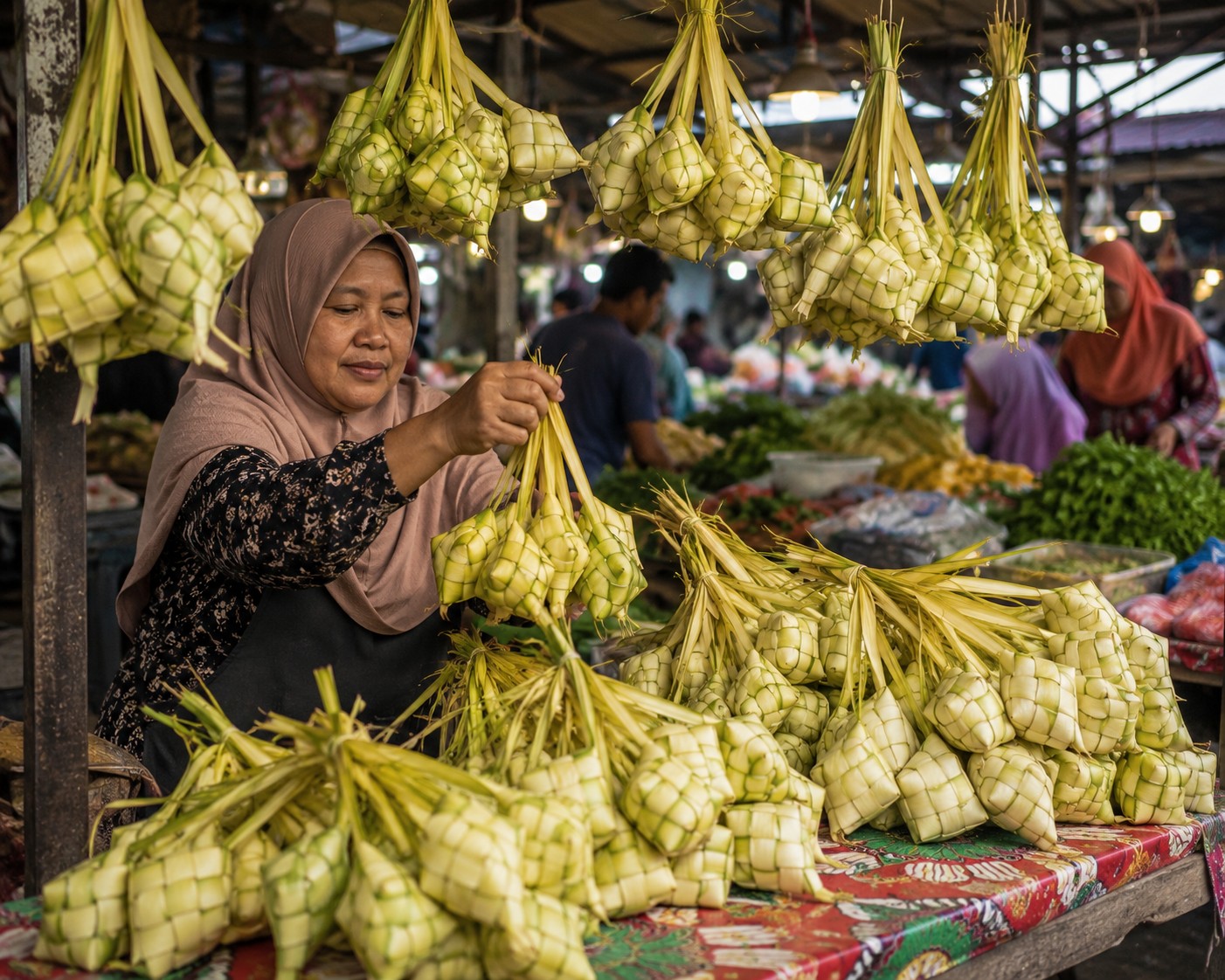
Morning had barely faded when activity began to stir at the Lambaro Main Market in Aceh Besar. Vegetable trucks came and went, and the sounds of bargaining could be heard from the narrow alleys, while the aromas of coconut milk, spices, and banana leaves mingled in the humid air. Amidst the bustle, Zainab sat on a small wooden stool, weaving coconut leaves into ketupat (rice cakes).
Her hands moved quickly and skillfully. Strand after strand of young coconut leaves intertwined, forming a pattern that had become familiar to her for decades. Every now and then, she paused to gaze at the rows of ketupat hanging in front of her stall. There were still plenty of them. Not many buyers had arrived yet.
"For Eid al-Fitr, they usually sell out early in the morning," she said with a faint smile.
This year, approaching Eid al-Adha, ketupat sales at the Lambaro Main Market were less busy than usual. There were no long lines of buyers as is common at the end of Ramadan. Traders admit that demand has decreased compared to Eid al-Fitr, although some people still maintain the tradition of serving ketupat during the Eid al-Adha.
During Eid al-Fitr and Eid al-Adha in some regions of Indonesia, ketupat is more than just a side dish. It is part of the collective memory of the holiday. When the ketupat begins to boil in kitchens, people know that Eid has truly arrived. The aroma of coconut leaves heated with rice is an inseparable sign of the Eid al-Fitr and Eid al-Adha atmosphere.
This tradition has been passed down through generations. In many Acehnese families, the night before Eid is usually filled with the activity of weaving ketupat together. Children help prepare coconut leaves, while parents sit in groups filling the rice and tying the weaves. This simple activity creates a family gathering space before the holiday arrives.
The ketupat is then served with beulangong sauce, rendang, beef curry, or chicken opor. For some, the holiday meal feels incomplete without ketupat on the dining table.
But time has slowly changed things.
Some families now prefer to buy ready-made ketupat rather than make their own. Others no longer cook it in large quantities because family members have decreased or gatherings are less frequent. During Eid al-Adha, people's attention is also more focused on the sacrificial meat, so ketupat is no longer the centerpiece of the meal as it was during Eid al-Fitr.
Zainab understands this change. Although her business is quieter, she still returns every year carrying her handmade ketupat. She sells a hanging basket of five for Rp 8,000, both small and large.
"The important thing is that the tradition doesn't disappear," she said quietly.
In a corner of Lambaro Market, the ketupat still hangs quietly, as if preserving memories of the once-boisterous holiday. For the Acehnese, ketupat is not just food; it is a symbol of togetherness, simplicity, and the warmth of family, which they long for every Eid.[]
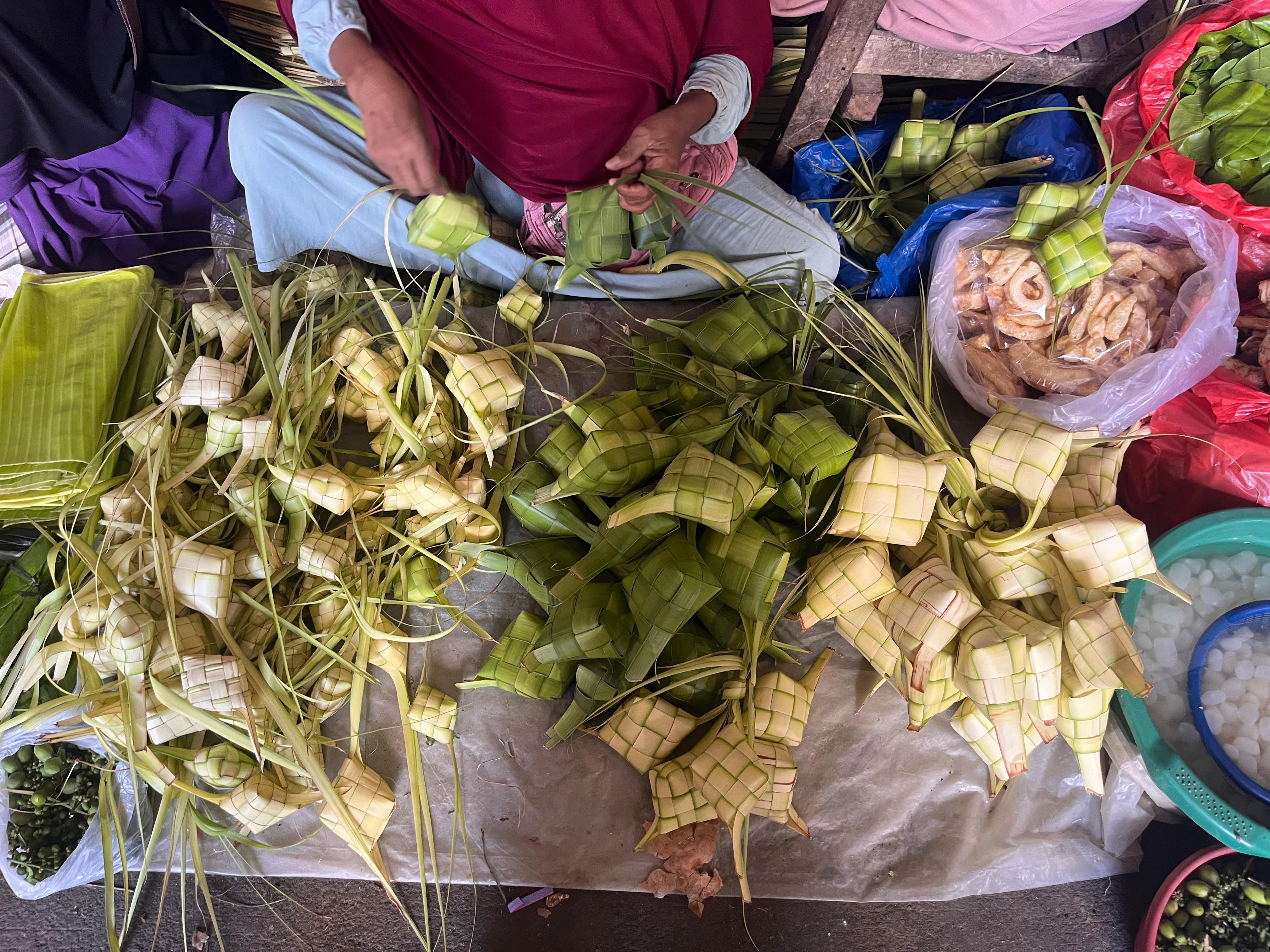
🎉 Congratulations!
Your post has been upvoted by the SteemX Team! 🚀
SteemX is a modern, user-friendly and powerful platform built for the Steem community.
🔗 Visit us: www.steemx.org
✅ Support our work — Vote for our witness: bountyking5