Sand
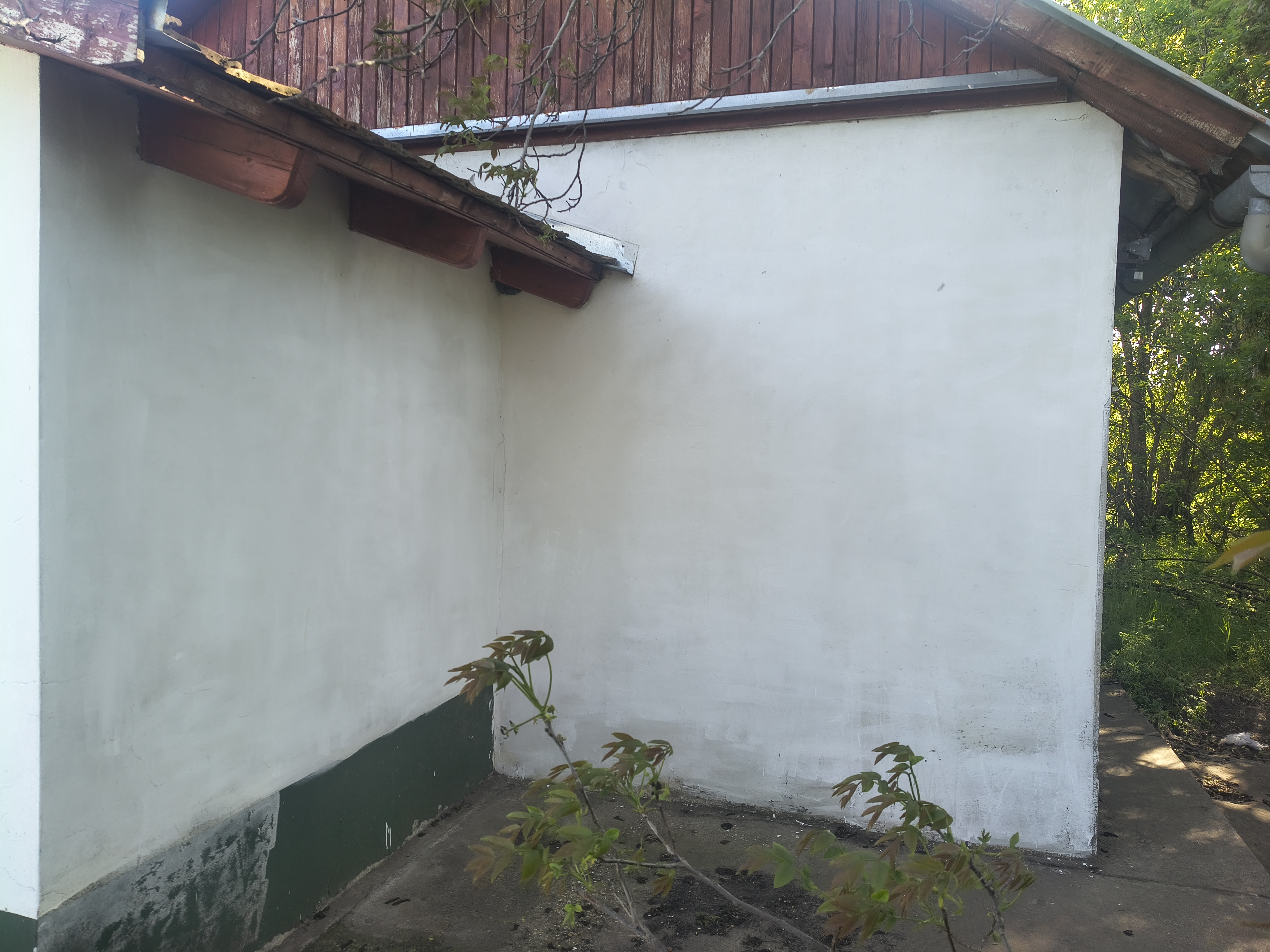
I’m still pottering about. I’ve nearly finished all the walls in the house (the ones that need doing, at least). The nice thing about whitewash is that when it’s wet, you can’t see any difference at all. The wall stays patchy and grubby. It’s only once the paint has dried that it turns white. These walls were particularly grubby, and no, I’m not going to scrub them hard to get the grime off.
As soon as I started, I realised I could make good use of this corner for painting. Because there are some bits missing and a few cracks in the old, sprayed-on layer, I’m wondering whether I should mix some sand into the paint and apply that to the wall. It would certainly look better, and I could work on a much larger scale (and do it twice).
After hours of mowing, I decided to carry on a bit with my first sand painting. Creating fine lines was a bit of a struggle, of course, and the brush lost some bristles too.
Anyway, I consider it finished and wanted to try something else, just getting on with it using the various palette knives. I’m not particularly good at that. It was a bit of a faff, but by carrying out this ‘project’ I could at least switch off my brain and just practise a bit. The question is how long it will take for the whole thing to dry properly. I had to give it a feel, of course (a few hours later), and the green part gave way (so it wasn’t dry).
The whole thing has turned out quite heavy and, as you can see, the colour has also changed and become a lot darker because of the sand.
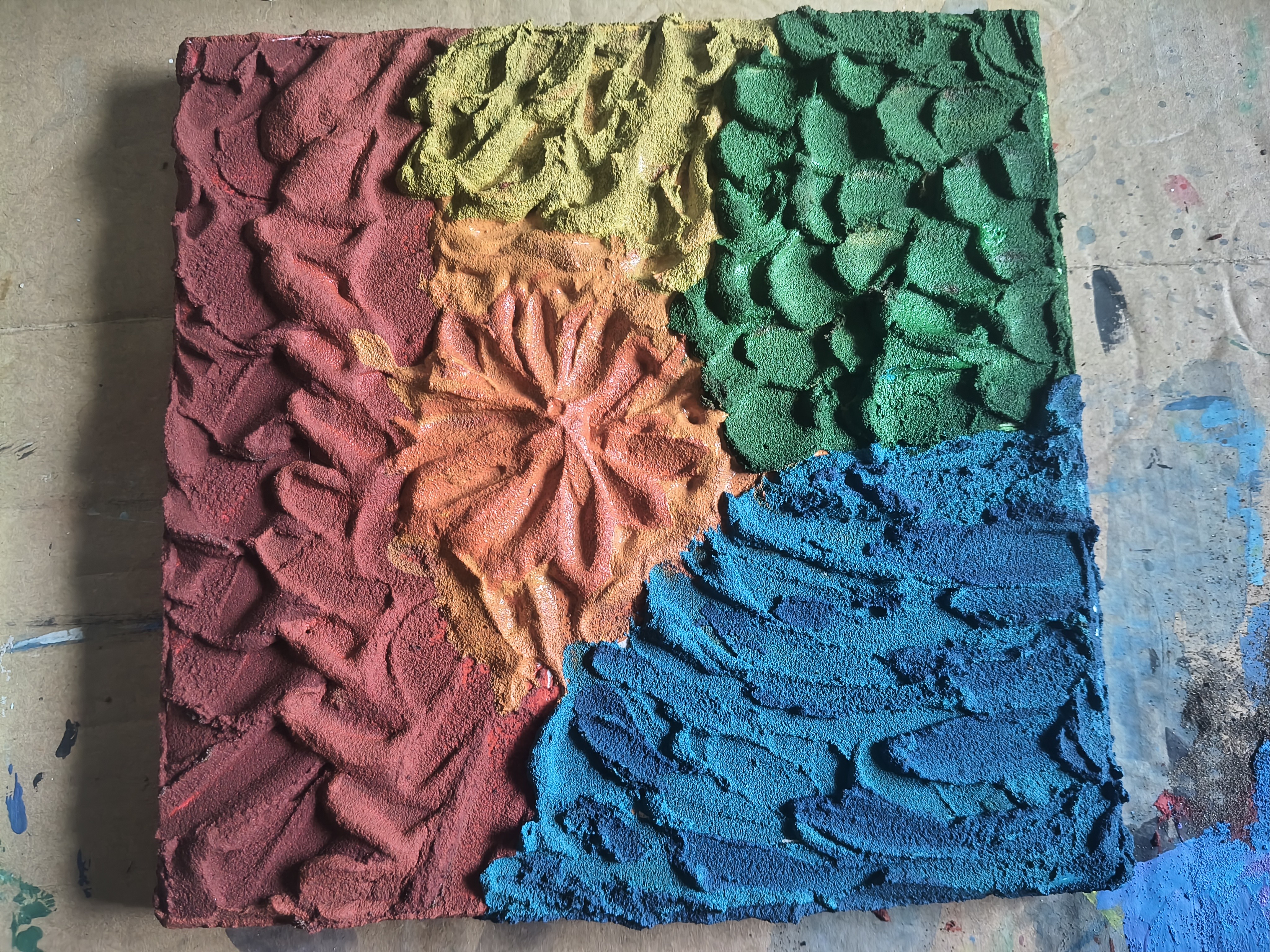
In any case, I’ve been practising a bit more with sand, and who knows – if I buy some more whitewash, I might try and see if it’s possible to treat the wall with sand (there’s plenty of that). It’ll take a while, though, as I’ve got loads of other plans I need to get on with.
In a few days’ time, I’m going to varnish the sand painting; I’ll be using a spray.
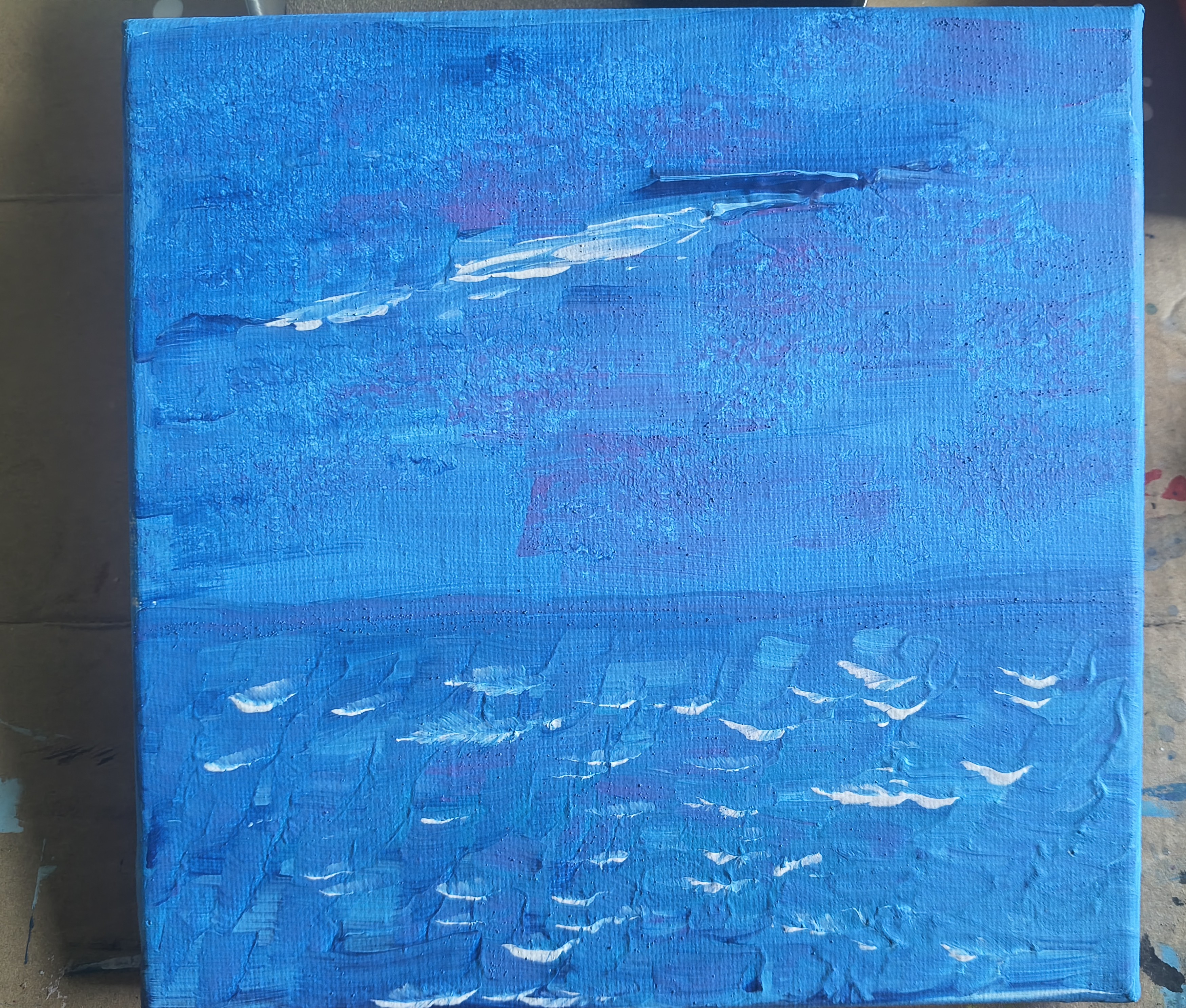
I did think about touching up the painting below with paint and sand, but for now I’ll leave it as it is. It was a nice, relaxing little job where I just put paint straight onto the canvas, smeared it around a bit and saw what came of it. Unlike the rest, this one actually has a name.
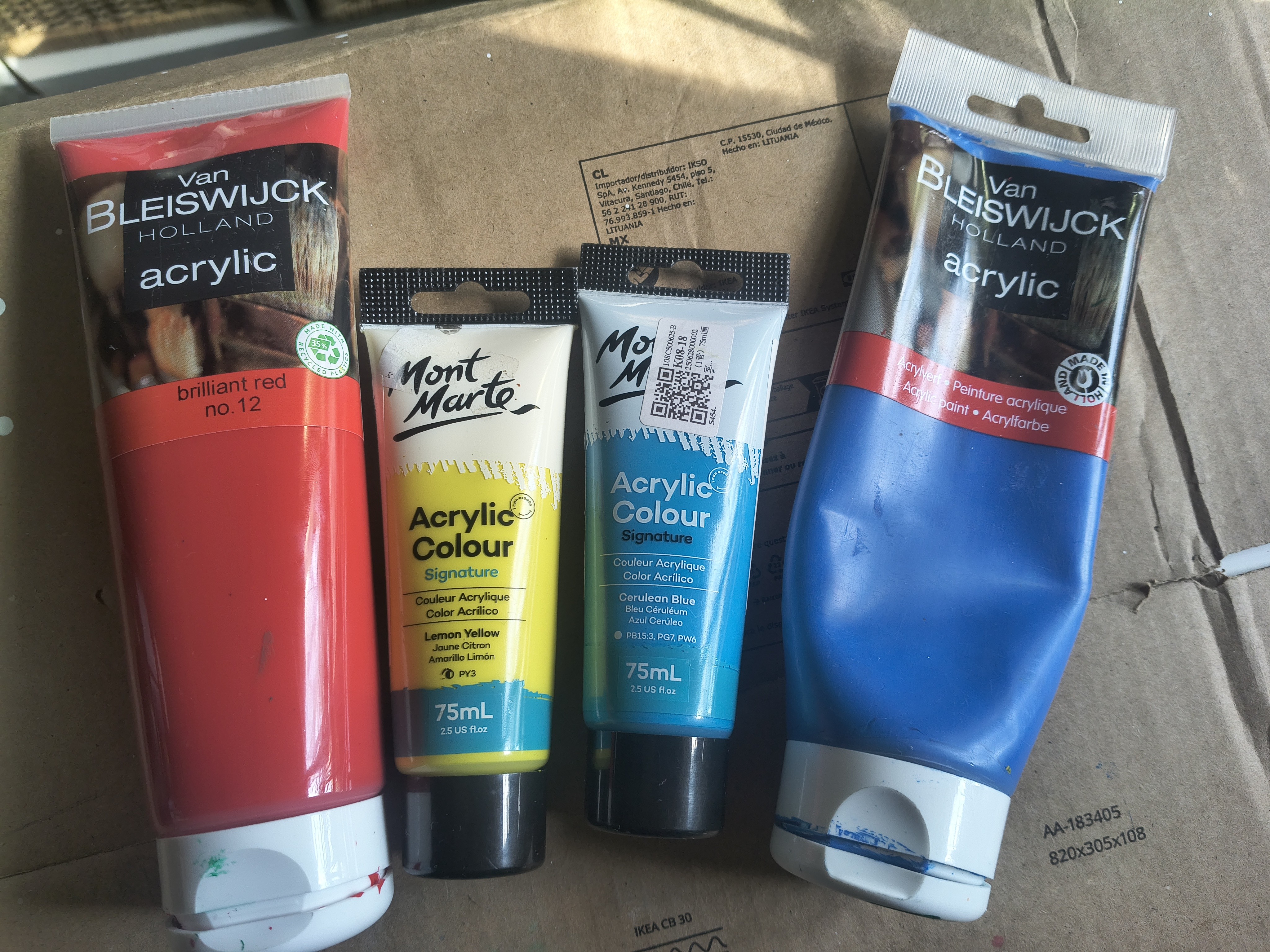
Materials used for the above: canvas, blue acrylic paint (Action; must be an old tube where numbers weren’t yet used to indicate the colour), acrylic paint cerulean blue + lemon yellow + light purple (Mont Marte), flat brush #18 (Van Eijck). And yes, I simply mix paint and sand on a piece of cardboard lying on the table. Let’s see what I can sculpt with paint and sand next time.
20-4-2026
Materials sand paintings: canvas, palette knives, acrylic paint (Action + Mont Marte), water-based green paint (Pepco) and sand.
I see blue—your blue is beautiful.
WOW. I never thought of mixing this type of paint with sand. The result looks great.
Would it bond to a wall like cement, or would it be purely decorative and fragile?
The Russians have sent over a small oil tanker, and I have a couple of extra hours to check it over.
The energy produced should last at least a week; let's hope it can stay alongside the art for even longer.
0.00 SBD,
0.70 STEEM,
0.70 SP
It’s good to hear that there’s at least someone who cares about your welfare. I think you’re better off left in peace than the rest of the world. Things look less rosy here.
The idea is that the sand should just stick to the wall; I could cover the whole wall evenly with sand, then you’d just see little specks, but of course I can also make figures or a picture. The real difference is painting with sand, and I also saw a Chinese painter who had made two peacocks using only sand, but I think she simply used brown sand and then painted it.
Another option is plaster; I’ve got some of that left, so I’m going to see if it can be mixed with paint – perhaps just the powder, or make it plaster-like first and then add paint – though I don’t think I’ll get really bright colours that way.
I like how it looks
