Exploring the Connection Between Childhood Loneliness and Technology-Driven Lifestyles
Children's life should be full of friendship, play, learning and pleasant memories. To development emotionally and mentally children require love, attention and social interaction. But today many kids are experiencing loneliness amidst all the technology. Children's lifestyle, communication, and time has been dramatically transformed by the rapid evolution of smartphones, tablets, video games, social media, and the internet. Technology has many advantages but also has created problems that can exacerbate loneliness in children.
Childhood loneliness is a sense of isolation, disconnection and lack of meaningful relationship with others. Family, friends, classmates, and Internet friends may be around the child, but he or she is lonely on the inside. Loneliness is not just isolation or being alone, it is the sense that one's emotional and social needs are not being fulfilled. This problem is becoming increasingly apparent and obvious in the wake of technology-laden lifestyles all around the world.
One big way that technology can be a source of loneliness is that kids don't spend as much time having interpersonal interactions. In the past, many children spent their afternoons playing outside, visiting friends, socializing with family members and attending community events. Today, quite a few children spend lots of hours awestricked on the screen. They view videos, play games, look at social media, or chat online. These activities may be fun, but they can also decrease the possibility for meaningful socialization. This can make it difficult for children to make and keep friends and communicate well.
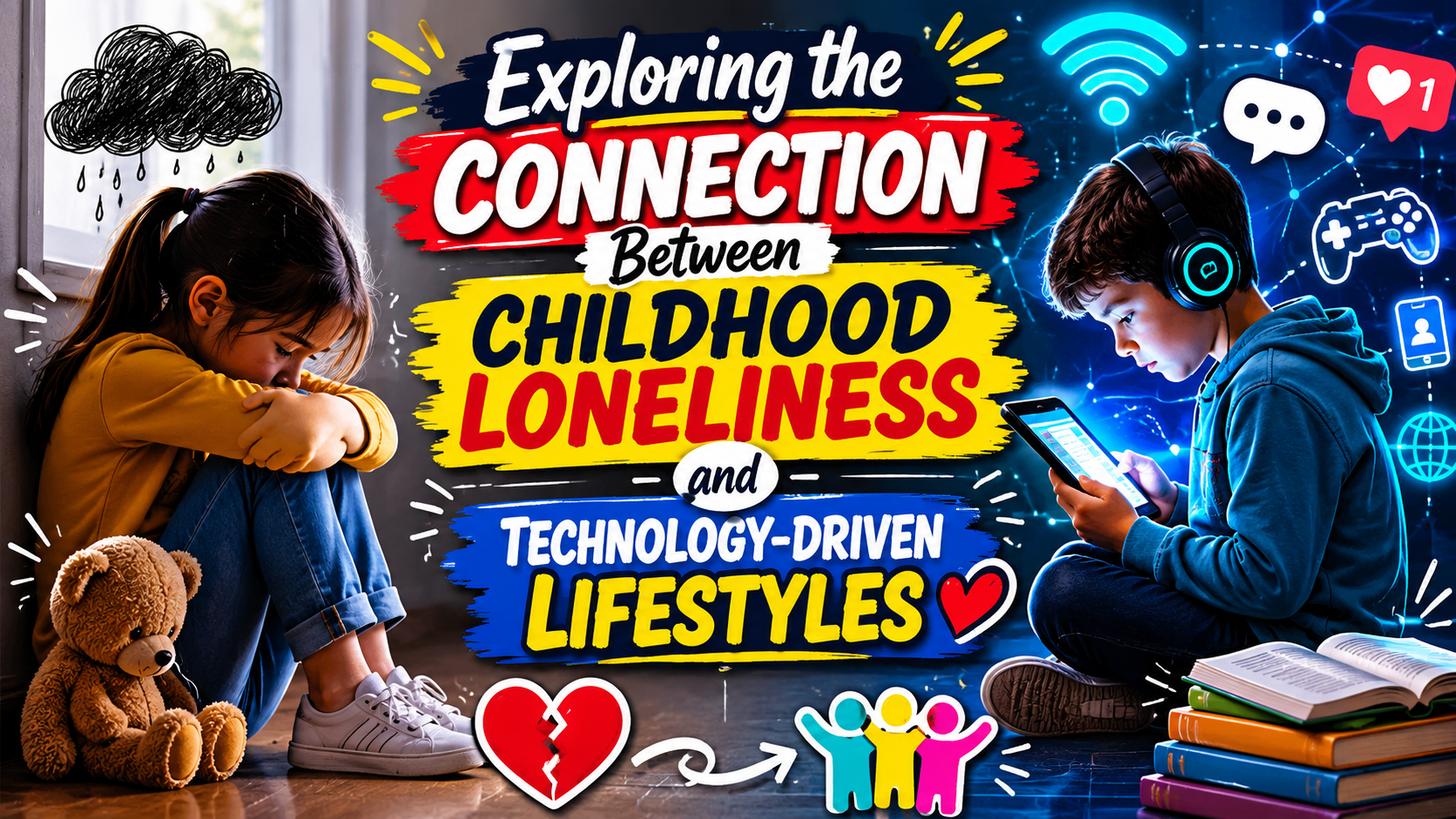
Another factor is the increasing dependence on digital communication. While technology enables children to connect with people at all times, online communication is sometimes different from face-to-face communication. While text messages, comments and emojis can help, they can't truly replace eye contact, facial expressions and being physically present. Despite having hundreds of online contacts, children may still feel lonely because of the lack of emotional connection and bonding. Digital communication can offer a false sense of connection for children in many instances, without actual human contact.
The use of social media also influences childhood loneliness. There are lots of kids who compare themselves to what they see on line. Sometimes they will look at photos of their classmates at parties and places they go, and feel excluded. Comparisons can lower self-esteem and foster feelings of loneliness. Children might feel that others are more successful, more popular, more happy, etc. than them. These thoughts can lead to emotional distress and make them feel lonely.
Modern lifestyles with technology can impact family relationships. In certain households, the family members spend more time looking at the screen than talking, and that is because of the screen.In certain homes, family members spend more time looking at screens than talking to one another, and that is because of the screen. Parents might be engrossed in their work on devices, and children in games or social media. Family communication becomes less frequent and relationships can become more strained. Children require guidance, encouragement and attention from their parents. If these interactions are restricted, children can feel lonely even in their own houses.
People who spend too much time on their cell phones are sometimes the ones who seem disconnected from others. When everyone comes together, they could just be glued to their screens rather than talking to each other. Children may feel unimportant or ignored under these circumstances. It helps me remember that technology should enhance relationships – not replace them!
Furthermore, increased screen time is also associated with less participation in physical activity and social interaction. If kids are spending a lot of their free time online, there's a chance they're not participating in sports or clubs, or playing outside games or community programs. These activities play a significant role since they enable children to develop friendliness, teamwork and self-confidence. These opportunities will help children not feel isolated or lonely.
The effects of childhood loneliness can be serious. Children who feel lonely can feel sad, anxious, lack self esteem and struggle to focus in school. Loneliness sometimes has a long-lasting impact on mental health and emotional development. When children are not connected with others, they may not be confident in others, or develop healthy relationships later in life. Thus, there is a need to tackle issues of childhood loneliness, requiring the efforts of both families and schools, as well as society as a whole.
Nevertheless, technology isn't all bad. When used wisely, it can be a useful tool to learn, create and communicate. For instance, technology can be used to enable children to see and speak with relatives who live far away, introduce them to educational activities, and help them learn how to use digital tools. Balance is the key issue. Children require experiences of meeting people face-to-face as well as having access to modern technology.
There are tools that parents and educators can use to encourage healthy technology habits. Limits on screen time, outdoor activities, family discussions, and attendance at social events will help alleviate feelings of loneliness. Schools should also provide a setting in which students feel included, supported and connected to their peers.
Finally, childhood loneliness and lifestyles dominated by technology are interconnected in today's society. Although technology has a lot of positive aspects, over-reliance on electronic devices may make it less likely for children to have meaningful social interactions and feel isolated. As children find a balance between technology and real-life interactions, they can reap the rewards of modern technology while fostering healthy emotional and social relationships as well. I think one of the greatest ways to help children with their well-being and in a happier future, is to help them build true relationships.
Thank you for publishing an article in the Steem Kids & Parent community today. We have assessed your entry and we present the result of our assessment below.
MODs Comment/Recommendation:
Thanks for sharing your post with us but you have 5% Ai in the post. Always check your posts before posting.
Remember to always share your post on Twitter. This POST LINK is a guide to that effect.
Please share your post on X and drop the link at the comment section of your posts