How Virtual Reality Learning Environments Could Revolutionize the Future of Childhood Education
The world is changing and so is education. In today's digital age, children are being born into a Technological world. From an early age they utilize their smart phone, tablet, computer and the internet. Consequently, children's learning styles are also shifting. Virtual Reality (VR), also known as VR technology, is one of the most captivating technologies that may revolutionize the way children learn in the future. Virtual Reality (VR) learning environments are online experiences that enable kids to step into a computer-generated world where they can interact with it as if it were real. I'm sure this technology can make learning more interesting, more practical, and more effective for kids the world over.
Virtual Reality has the potential to transform childhood education by bringing learning to life and to the real. Children learn by reading textbooks, listening to teachers and taking notes in many classrooms today. These methods can be helpful, but may not be engaging or meaningful to young learners in terms of depth of understanding. For instance, a child who reads about the solar system in a book is not the same child as the one who wears a VR headset and perceives the solar system as if he is standing in space, gazing at the planets surrounding him. At this instant learning is not information, it is an experience. This type of education can remain with a kid for a long, long time.
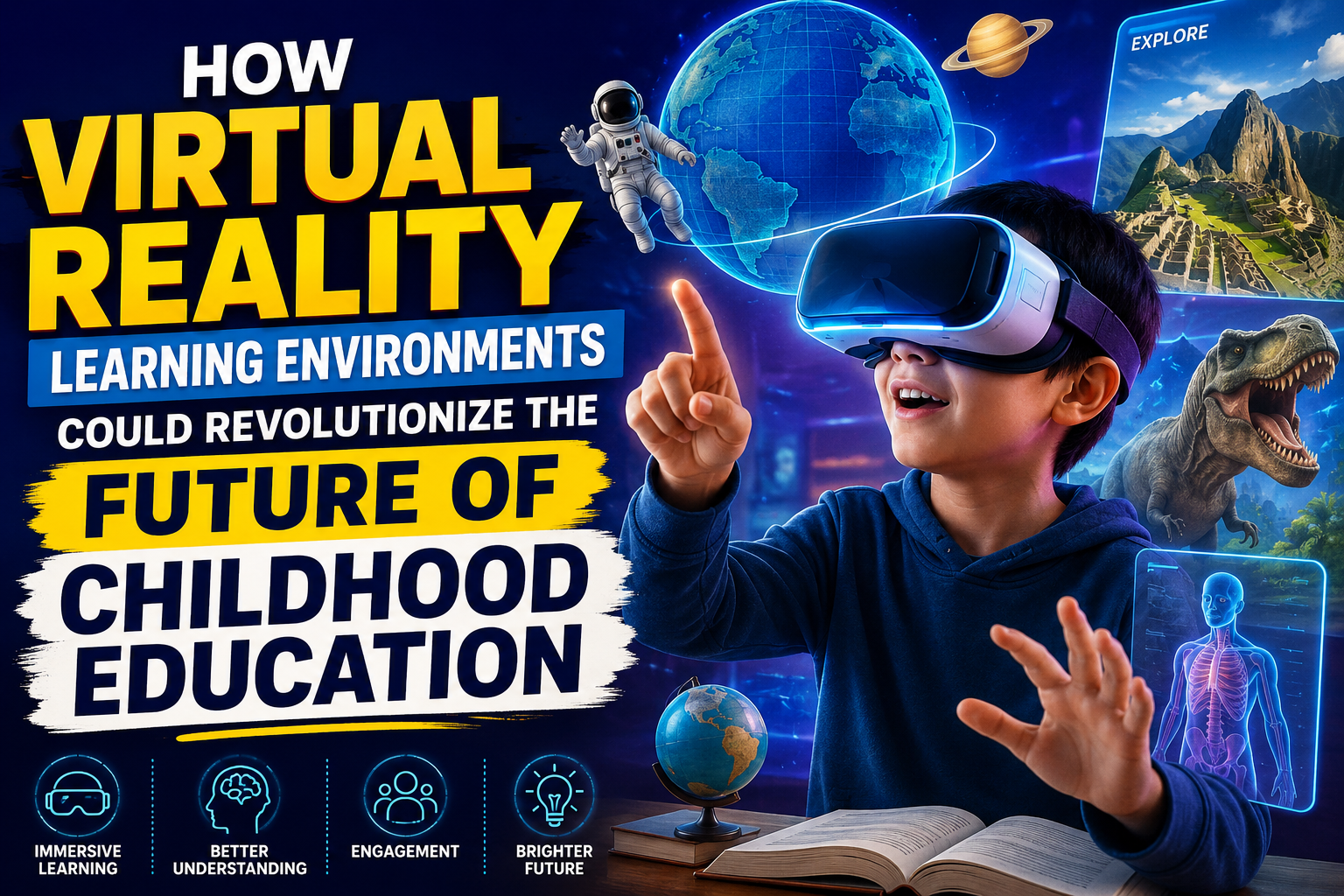
One of the other significant ways VR can influence education is to make subjects that are challenging easier to understand. Children find it difficult to grasp concepts in subjects such as science, geography, maths and history, as they are not a tangible concept. VR can bring abstract concepts to life and become real. Through this model a child can enter the human body and observe the function of the heart pumping blood. They can go back in time and through a secure and educational environment experience important historical events. They can explore volcanoes, oceans, deserts and even ancient civilizations without even leaving the classroom! I believe this can assist children to grasp lessons quicker as they are seeing and experiencing what they are learning.
Apart from the passive learning, Virtual Reality will help in active learning. Normal classroom routine involves students sitting quietly in rows, listening to information being provided by the teacher. However in the VR based learning environment, children can move, explore, touch, observe and make their own choices. This contributes to them being engaged in their own learning. Children are typically more curious and more engaged when they are active. They pose questions, listen more and love the lesson! This can not only enhance their knowledge, but also their appreciation of learning. A child that loves to learn will continue to learn with excitement in the future.
Another great advantage of using VR in kids education is that it can cater to various learners. All children do not learn the same. Some children learn by seeing; Some children learn by hearing; Some children learn by doing. Virtual Reality is a fusion of all these styles. It is visual, auditory, dynamic and interactive. Such can be very beneficial for children who do not do well in the regular classroom. For instance, a kid who struggles to grasp a lesson from a chalkboard-directed explanation might grasp it far better by experiencing it virtually. VR can create a more inclusive and more personal learning experience in this way.
VR can also be used to teach a child life skills other than academic. Education will no longer be confined to exams in the future. It will also be about being ready for life when you're a kid. Virtual Reality can provide children with safe spaces to practice the skills of communication, teamwork, problem-solving, creativity and decision making. For example, students can conduct a virtual science lab, solve a mystery in a historical time period, or be prepared for emergencies. These types of activities can help to develop confidence and skills that children will use as adults.
Furthermore, Virtual Reality technology can create a more engaging learning experience for kids that are prone to getting distracted. Many young students are only able to pay attention for a short period of time and teachers have difficulty holding their attention for extended periods of time. VR can be a solution to this issue as it is immersive. A child who enters a virtual learning environment has the impression he or she is in the lesson. Such strong sense of being immersed in surroundings can minimize distractions and enhance focus. The child doesn't just hear about a rainforest, they can be in one, listen to the birds, look at the trees and explore the surroundings. Such an experience is much more memorable than just reading a few pages from a textbook.
Virtual Reality may also provide opportunities for children that they might not encounter in their day-to-day reality. All schools do not have access to Science laboratories, museum visits, educational visits or special equipment. There are children living in places where learning resources are not adequate. VR may be a powerful tool to help close this divide by delivering rich learning experiences right into the classroom. A kid from a remote village can tour world-famous museums, dive into the world of sea life or visit a virtual engineering lab. This enables a more equalized education and more children to enjoy high quality learning regardless of their place of residence.
VR does have its pros, though, it also has its cons. VR technology can be costly and not all schools or families have enough funds to buy VR devices. Teachers will also require training to make effective use of the technology. The issue of balance also comes into play. Children need not to be all the time in virtual space. Face-to-face teaching, outdoor play and real human interaction are still very significant in a child's development. So, VR is not a substitute for teachers and traditional learning. Rather, it should be a facilitator to education, and enhance it in a smart and healthy manner.