🤖➕ AI and the Redefinition of Mathematics: When Algorithms Prove Theorems That Humans Don’t Understand 🧠❓ [ENG/GER/KOR]
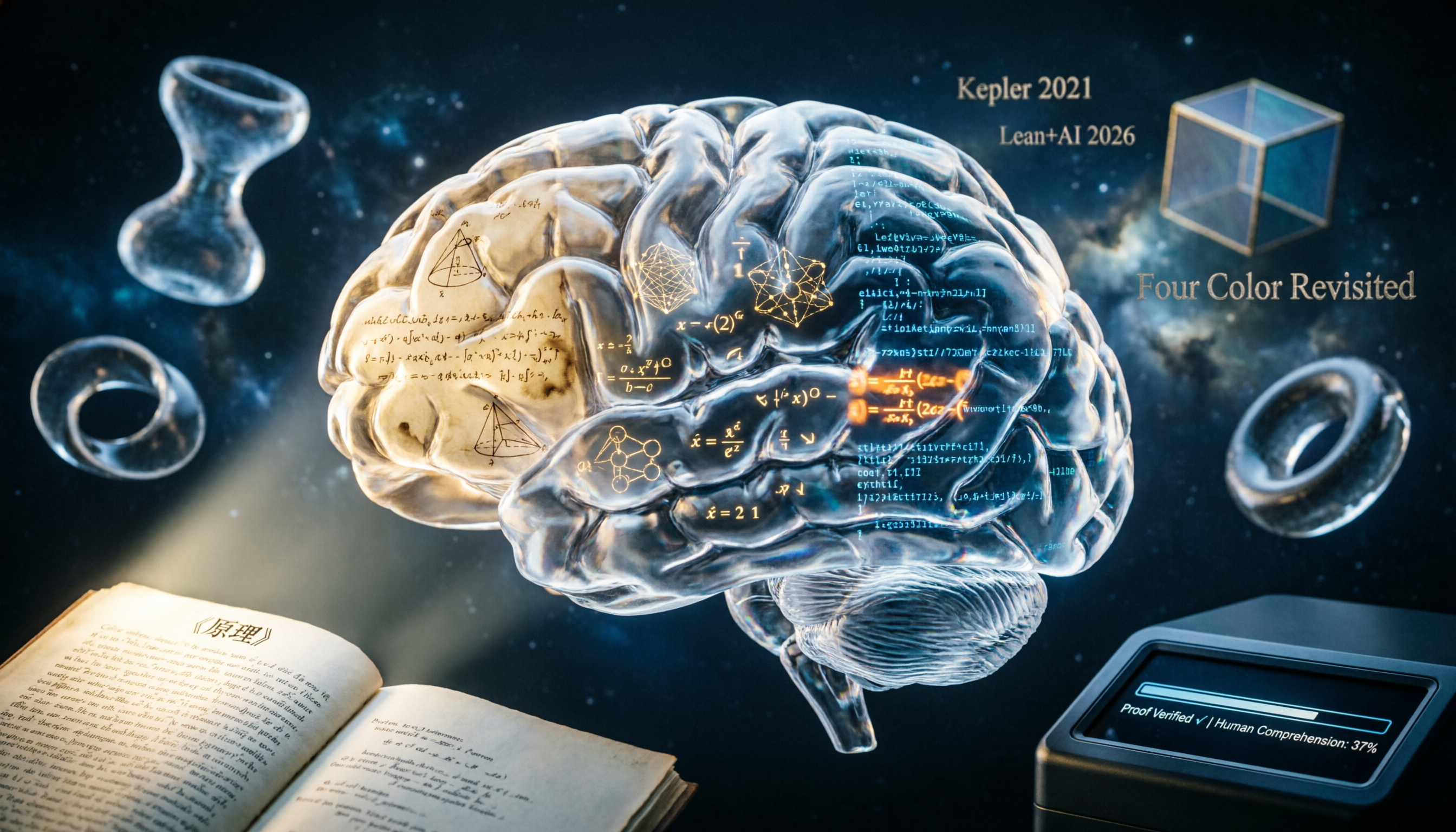
ENGLISH VERSION:
🤖➕ AI and the Redefinition of Mathematics: When Algorithms Prove Theorems That Humans Don’t Understand 🧠❓
The boundary between human understanding and computational power is being redrawn. But are we ready to accept mathematical truths that we cannot comprehend?
🎯 What Is Happening?
In 2026, we are living through a historic moment in mathematics. To understand the magnitude of this, we need to go back a few years...
📅 The 2021 Milestone: Kepler’s Theorem
When mathematician Thomas Hales proved the Kepler Conjecture in 1998, he used computers to verify thousands of cases. But that was just the beginning. In 2021, AI-assisted proof systems began demonstrating complex theorems using methods that no human mathematician could follow step-by-step.
🔥 The Turning Point
Today, deep learning algorithms combined with automated proof systems are solving problems that remained unsolved for centuries. The problem? The proofs are so complex, so full of intermediate calculations and non-intuitive paths, that no human being can fully validate them.
🤔 The Central Paradox
"If a proof is correct, but no one can understand it, is it still a proof?"
This philosophical question divides the global mathematical community:
✅ Arguments in Favor
- Verifiable results: Even without understanding the process, we can verify if the final result is correct
- Unmatched efficiency: Algorithms explore billions of possibilities in seconds
- New horizons: Problems previously considered impossible now have solutions
❌ Arguments Against
- Mathematics is understanding: Without comprehension, we lose the essence of what makes mathematics valuable
- Invisible errors: How do we detect flaws in processes we don’t understand?
- Technological dependence: Are we creating a mathematical "black box"?
🧬 Real Cases That Shook the Academic World
1️⃣ Proof of the Four Color Theorem (Revisited)
Originally proved with computer assistance in the 70s, modern versions use AI to generate even more complex and inexplicable proofs.
2️⃣ Conjectures in Number Theory
Systems like Lean and Coq, enhanced by AI, are proving results in number theory using strategies that seem random to human observers.
3️⃣ Combinatorial Optimization Problems
Algorithms find optimal solutions for NP-hard problems through paths that defy all traditional mathematical intuition.
🎓 The Impact on Mathematics Education
As an educator, I see this as an extraordinary opportunity:
🔄 Paradigm Shift in Teaching
Before: Focus on memorizing procedures and replicating proofs
Now: Focus on understanding concepts, asking the right questions, and interpreting results
💡 New Competencies Needed
- Algorithmic thinking ➡️ Understanding how machines "think"
- Critical validation ➡️ Knowing how to question results even without seeing all the steps
- Human-AI collaboration ➡️ Using tools as cognitive amplifiers
- Mathematical communication ➡️ Translating complex discoveries into accessible language
🛠️ Practical Tools for the Classroom
- Wolfram Alpha: For concept exploration
- GeoGebra with AI: Dynamically generated visualizations
- Interactive proof systems: Like Lean Web Editor for advanced students
⚖️ Emerging Ethical Questions
🔍 Transparency vs. Complexity
Should we demand that all proofs be comprehensible? Or do we accept that some truths lie beyond individual human capacity?
📜 Intellectual Authorship
Who gets credit for a theorem proved by AI?
- The algorithm programmer?
- The mathematician who formulated the problem?
- The AI itself?
🏛️ Academic Validation
Scientific journals are already facing dilemmas: should they publish proofs that reviewers cannot fully verify?
🚀 The Future of Mathematics
Predictions for the Next 5 Years:
- 📊 Hybrid proofs: Combination of human insights with massive algorithmic verification
- 🎓 New curricula: Courses on "interpretive computational mathematics"
- 🤝 Global collaboration: Platforms where humans and AIs work together in real-time
- 🔓 Democratization: AI tools make mathematical research accessible to non-specialists
💭 Final Reflection
Mathematics has always been about absolute truth. But now we face a new reality: truths that exist, are correct, but remain inaccessible to complete human comprehension.
This does not diminish the value of mathematics. On the contrary, it expands our horizon. Just as telescopes allowed us to see galaxies invisible to the naked eye, AIs are showing us mathematical landscapes that our minds alone could never reach.
The question is not about replacing mathematicians with algorithms. It is about redefining what it means to do mathematics in an era of collaborative artificial intelligence.
🗣️ And You?
How do you view this transformation?
- 🟢 Excited about new possibilities?
- 🟡 Cautious, but open?
- 🔴 Worried about losing the essence of mathematics?
Leave your comment below! Let’s debate the future of mathematics together. 👇
📚 Recommended Reading
- "The Computer Proof" - Article in Nature Mathematics (2025)
- "When Machines Prove Theorems" - Podcast: Math & AI Today
- Online Course: "Introduction to Automated Theorem Proving" - Coursera
🔗 Share This Post
If this content sparked your curiosity, share it with colleagues, students, or anyone interested in the intersection of mathematics, philosophy, and technology! 🚀
Tags: #AI #Mathematics #Theorems #Education #Technology #PhilosophyOfScience #Algorithms #FutureOfEducation #ArtificialIntelligence #ComputationalMathematics
About the Author: An educator passionate about integrating technology and teaching, exploring how AI can transform the way we learn, teach, and understand the world. I believe the future of education lies in human-machine collaboration, not replacement. 🎓🤖
GERMAN VERSION:
🤖➕ KI und die Neudefinition der Mathematik: Wenn Algorithmen Theoreme beweisen, die Menschen nicht verstehen 🧠❓
Die Grenze zwischen menschlichem Verständnis und Rechenleistung wird neu gezogen. Aber sind wir bereit, mathematische Wahrheiten zu akzeptieren, die wir nicht begreifen können?
🎯 Was passiert hier?
Im Jahr 2026 erleben wir einen historischen Moment in der Mathematik. Um das Ausmaß dies zu verstehen, müssen wir einige Jahre zurückblicken...
📅 Der Meilenstein 2021: Keplers Theorem
Als der Mathematiker Thomas Hales die Kepler-Vermutung im Jahr 1998 bewies, nutzte er Computer, um Tausende von Fällen zu überprüfen. Doch das war erst der Anfang. Im Jahr 2021 begannen KI-gestützte Beweissysteme, komplexe Theoreme mit Methoden zu demonstrieren, denen kein menschlicher Mathematiker Schritt für Schritt folgen konnte.
🔥 Der Wendepunkt
Heute lösen Deep-Learning-Algorithmen, kombiniert mit automatisierten Beweissystemen, Probleme, die jahrhundertelang ungelöst blieben. Das Problem? Die Beweise sind so komplex, so voller Zwischenberechnungen und nicht-intuitiver Pfade, dass kein Mensch sie vollständig validieren kann.
🤔 Das zentrale Paradoxon
"Wenn ein Beweis korrekt ist, aber niemand ihn verstehen kann, ist er dann noch ein Beweis?"
Diese philosophische Frage spaltet die globale mathematische Gemeinschaft:
✅ Argumente dafür
- Überprüfbare Ergebnisse: Auch ohne den Prozess zu verstehen, können wir verifizieren, ob das Endergebnis korrekt ist
- Unübertroffene Effizienz: Algorithmen erkunden Milliarden von Möglichkeiten in Sekunden
- Neue Horizonte: Probleme, die zuvor als unmöglich galten, haben nun Lösungen
❌ Argumente dagegen
- Mathematik ist Verständnis: Ohne Komprehension verlieren wir die Essenz dessen, was Mathematik wertvoll macht
- Unsichtbare Fehler: Wie erkennen wir Mängel in Prozessen, die wir nicht verstehen?
- Technologische Abhängigkeit: Erschaffen wir eine mathematische "Black Box"?
🧬 Reale Fälle, die die akademische Welt erschütterten
1️⃣ Beweis des Vier-Farben-Satzes (Revisited)
Ursprünglich in den 70er Jahren mit Computerhilfe bewiesen, nutzen moderne Versionen KI, um noch komplexere und unerklärlichere Beweise zu generieren.
2️⃣ Vermutungen in der Zahlentheorie
Systeme wie Lean und Coq, verstärkt durch KI, beweisen Ergebnisse in der Zahlentheorie mit Strategien, die für menschliche Beobachter zufällig erscheinen.
3️⃣ Kombinatorische Optimierungsprobleme
Algorithmen finden optimale Lösungen für NP-schwere Probleme auf Wegen, die jeder traditionellen mathematischen Intuition widersprechen.
🎓 Die Auswirkungen auf die mathematische Bildung
Als Pädagoge sehe ich dies als außergewöhnliche Chance:
🔄 Paradigmenwechsel im Unterricht
Früher: Fokus auf dem Auswendiglernen von Verfahren und dem Reproduzieren von Beweisen
Heute: Fokus auf dem Verstehen von Konzepten, dem Stellen der richtigen Fragen und der Interpretation von Ergebnissen
💡 Neue benötigte Kompetenzen
- Algorithmisches Denken ➡️ Verstehen, wie Maschinen "denken"
- Kritische Validierung ➡️ Wissen, wie man Ergebnisse hinterfragt, auch ohne alle Schritte zu sehen
- Mensch-KI-Kollaboration ➡️ Nutzung von Tools als kognitive Verstärker
- Mathematische Kommunikation ➡️ Übersetzung komplexer Entdeckungen in zugängliche Sprache
🛠️ Praktische Tools für den Klassenraum
- Wolfram Alpha: Zur Erkundung von Konzepten
- GeoGebra mit KI: Dynamisch generierte Visualisierungen
- Interaktive Beweissysteme: Wie der Lean Web Editor für fortgeschrittene Schüler
⚖️ Aufkommende ethische Fragen
🔍 Transparenz vs. Komplexität
Sollten wir verlangen, dass alle Beweise verständlich sind? Oder akzeptieren wir, dass einige Wahrheiten jenseits der individuellen menschlichen Kapazität liegen?
📜 Geistige Urheberschaft
Wer erhält Anerkennung für ein von KI bewiesenes Theorem?
- Der Programmierer des Algorithmus?
- Der Mathematiker, der das Problem formulierte?
- Die KI selbst?
🏛️ Akademische Validierung
Wissenschaftliche Zeitschriften stehen bereits vor Dilemmata: Sollen sie Beweise veröffentlichen, die Gutachter nicht vollständig überprüfen können?
🚀 Die Zukunft der Mathematik
Prognosen für die nächsten 5 Jahre:
- 📊 Hybride Beweise: Kombination aus menschlichen Einsichten und massiver algorithmischer Verifizierung
- 🎓 Neue Lehrpläne: Kurse über "interpretative computergestützte Mathematik"
- 🤝 Globale Zusammenarbeit: Plattformen, auf denen Menschen und KIs in Echtzeit zusammenarbeiten
- 🔓 Demokratisierung: KI-Tools machen mathematische Forschung für Nicht-Spezialisten zugänglich
💭 Abschließende Reflexion
Mathematik war schon immer über absolute Wahrheit. Doch jetzt stehen wir vor einer neuen Realität: Wahrheiten, die existieren, korrekt sind, aber dem vollständigen menschlichen Verständnis unzugänglich bleiben.
Dies schmälert nicht den Wert der Mathematik. Im Gegenteil, es erweitert unseren Horizont. So wie Teleskope uns ermöglichten, Galaxien zu sehen, die für das bloße Auge unsichtbar waren, zeigen uns KIs mathematische Landschaften, die unser Geist allein niemals erreichen würde.
Die Frage ist nicht, Mathematiker durch Algorithmen zu ersetzen. Es geht darum, neu zu definieren, was es bedeutet, Mathematik zu betreiben in einer Ära der kollaborativen künstlichen Intelligenz.
🗣️ Und Sie?
Wie sehen Sie diese Transformation?
- 🟢 Begeistert von neuen Möglichkeiten?
- 🟡 Vorsichtig, aber offen?
- 🔴 Besorgt über den Verlust der Essenz der Mathematik?
Hinterlassen Sie Ihren Kommentar unten! Lassen Sie uns gemeinsam über die Zukunft der Mathematik debattieren. 👇
📚 Empfohlene Lektüre
- "The Computer Proof" – Artikel in Nature Mathematics (2025)
- "When Machines Prove Theorems" – Podcast: Math & AI Today
- Online-Kurs: "Introduction to Automated Theorem Proving" – Coursera
🔗 Teilen Sie diesen Beitrag
Wenn dieser Inhalt Ihre Neugier geweckt hat, teilen Sie ihn mit Kollegen, Studenten oder allen, die sich für die Schnittstelle von Mathematik, Philosophie und Technologie interessieren! 🚀
Tags: #KI #Mathematik #Theoreme #Bildung #Technologie #Wissenschaftsphilosophie #Algorithmen #ZukunftDerBildung #KünstlicheIntelligenz #Computermathematik
Über den Autor: Ein Pädagoge, leidenschaftlich daran interessiert, Technologie und Lehre zu integrieren und zu erforschen, wie KI die Art und Weise transformieren kann, wie wir lernen, lehren und die Welt verstehen. Ich glaube, dass die Zukunft der Bildung in der Zusammenarbeit zwischen Mensch und Maschine liegt, nicht im Ersatz. 🎓🤖
KOREAN VERSION:
🤖➕ AI와 수학의 재정의: 인간이 이해하지 못하는 정리를 알고리즘이 증명할 때 🧠❓
인간의 이해와 계산 능력 사이의 경계가 다시 그려지고 있습니다. 하지만 우리는 우리가 완전히 이해할 수 없는 수학적 진리를 받아들일 준비가 되어 있을까요?
🎯 무슨 일이 일어나고 있는가?
2026년, 우리는 수학사에서 역사적인 순간을 살고 있습니다. 그 규모를 이해하기 위해서는 몇 년 전으로 돌아가야 합니다...
📅 2021년의 마일스톤: 케플러 정리
수학자 토마스 헤일스(Thomas Hales)가 1998년 케플러 추측을 증명했을 때, 그는 수천 가지 경우를 검증하기 위해 컴퓨터를 사용했습니다. 하지만 그것은 시작에 불과했습니다. 2021년, AI 지원 증명 시스템은 어떤 인간 수학자도 단계별로 따라갈 수 없는 방법을 사용하여 복잡한 정리들을 증명하기 시작했습니다.
🔥 전환점
오늘날, 딥 러닝 알고리즘과 자동화된 증명 시스템의 결합은 수세기 동안 해결되지 않았던 문제들을 해결하고 있습니다. 문제는 무엇일까요? 증명이 너무 복잡하고, 중간 계산과 비직관적인 경로로 가득 차 있어 어떤 인간도 이를 완전히 검증할 수 없다는 점입니다.
🤔 중심 역설
"증명이 올바르지만 아무도 이해할 수 없다면, 그것은 여전히 증명인가?"
이 철학적 질문은 전 세계 수학계를 양분하고 있습니다:
✅ 찬성 논거
- 검증 가능한 결과: 과정을 이해하지 못하더라도 최종 결과가 올바른지 확인할 수 있음
- 비교할 수 없는 효율성: 알고리즘이 수초 내에 수십억 가지 가능성을 탐색함
- 새로운 지평선: 이전에는 불가능하다고 여겨졌던 문제들이 이제 해답을 찾음
❌ 반대 논거
- 수학은 이해다: 이해 없이 우리는 수학이 가치 있는 본질을 잃게 됨
- 보이지 않는 오류: 우리가 이해하지 못하는 과정에서 결함을 어떻게 발견할 것인가?
- 기술 의존성: 우리는 수학적 '블랙박스'를 만들고 있는 것인가?
🧬 학계를 뒤흔든 실제 사례들
1️⃣ 4색 정리의 증명 (재조명)
70년대 컴퓨터의 도움으로 처음 증명되었으나, 현대 버전은 AI를 사용하여 더욱 복잡하고 설명 불가능한 증명을 생성합니다.
2️⃣ 정수론의 추측들
AI로 강화된 Lean 및 Coq와 같은 시스템은 인간 관찰자에게 무작위로 보이는 전략을 사용하여 정수론의 결과를 증명하고 있습니다.
3️⃣ 조합 최적화 문제
알고리즘은 모든 전통적인 수학적 직관에 도전하는 경로를 통해 NP-난해(NP-hard) 문제에 대한 최적의 해를 찾습니다.
🎓 수학 교육에 미치는 영향
교육자로서 저는 이를 extraordinary한 기회로 봅니다:
🔄 교육의 패러다임 전환
이전: 절차 암기 및 증명 복제에 중점
현재: 개념 이해, 올바른 질문 제기 및 결과 해석에 중점
💡 필요한 새로운 역량
- 알고리즘적 사고 ➡️ 기계가 어떻게 "생각하는지" 이해하기
- 비판적 검증 ➡️ 모든 단계를 보지 못하더라도 결과를 질문하는 방법 알기
- 인간-AI 협업 ➡️ 도구를 인지적 증폭기로 사용하기
- 수학적 소통 ➡️ 복잡한 발견을 접근 가능한 언어로 번역하기
🛠️ 교실을 위한 실용적인 도구
- Wolfram Alpha: 개념 탐색용
- GeoGebra with AI: 동적으로 생성된 시각화
- 상호작용적 증명 시스템: 고급 학생들을 위한 Lean Web Editor 등
⚖️ 부상하는 윤리적 질문들
🔍 투명성 vs 복잡성
모든 증명이 이해 가능해야 한다고 요구해야 할까요? 아니면 일부 진리가 개인의 인간적 능력을 넘어선다는 것을 받아들여야 할까요?
📜 지적 저자권
AI가 증명한 정리에 대한 공로는 누가 받아야 할까요?
- 알고리즘 프로그래머?
- 문제를 공식화한 수학자?
- AI 자체?
🏛️ 학술적 검증
과학 저널들은 이미 딜레마에 직면해 있습니다: 검토자가 완전히 검증할 수 없는 증명을 출판해야 할까요?
🚀 수학의 미래
향후 5년간의 예측:
- 📊 하이브리드 증명: 인간의 통찰력과 대규모 알고리즘 검증의 결합
- 🎓 새로운 커리큘럼: "해석적 계산 수학" 강좌 도입
- 🤝 글로벌 협업: 인간과 AI가 실시간으로 함께 작업하는 플랫폼
- 🔓 민주화: AI 도구가 비전문가에게도 수학 연구를 접근 가능하게 만듦
💭 최종 성찰
수학은 항상 절대적 진리에 관한 것이었습니다. 하지만 이제 우리는 새로운 현실에 직면해 있습니다: 존재하며 올바르지만, 완전한 인간의 이해에는 접근할 수 없는 진리들입니다.
이는 수학의 가치를 훼손하지 않습니다. 오히려 우리의 지평을 확장합니다. 망원경이 맨눈으로는 볼 수 없는 은하들을 보여준 것처럼, AI는 우리 마음 단독으로는 결코 도달할 수 없는 수학적 풍경을 보여주고 있습니다.
질문은 알고리즘으로 수학자를 대체하는 것이 아닙니다. 협업적 인공지능 시대에 수학을 한다는 것이 무엇을 의미하는지 재정의하는 것입니다.
🗣️ 그리고 당신은?
이 변화를 어떻게 보십니까?
- 🟢 새로운 가능성에 설렘을 느끼나요?
- 🟡 조심스럽지만 개방적인가요?
- 🔴 수학의 본질이 사라지는 것이 걱정되나요?
아래에 댓글을 남겨주세요! 함께 수학의 미래에 대해 토론해 봅시다. 👇
📚 추천 독서 자료
- "The Computer Proof" - Nature Mathematics 기사 (2025)
- "When Machines Prove Theorems" - 팟캐스트: Math & AI Today
- 온라인 강의: "Introduction to Automated Theorem Proving" - Coursera
🔗 이 게시물 공유하기
이 콘텐츠가 당신의 호기심을 자극했다면, 동료, 학생 또는 수학, 철학, 기술의 교차점에 관심 있는 anyone과 공유하세요! 🚀
태그: #AI #수학 #정리 #교육 #기술 #과학철학 #알고리즘 #교육의미래 #인공지능 #계산수학
저자 소개: 기술과 교육의 통합에 열정을 가진 교육자로, AI가 우리가 학습하고 가르치며 세상을 이해하는 방식을 어떻게 변화시킬 수 있는지 탐구합니다. 저는 교육의 미래가 대체가 아닌 인간과 기계의 협업에 있다고 믿습니다. 🎓🤖
Upvoted! Thank you for supporting witness @jswit.