Decentralized Finance Protocols and the Emergence of Permissionless Banking
Modern technology has had a big impact on the financial industry. People used to take their money to the banks, or other financial institutions, to save or borrow money or to pay bills. Now, a new financial system known as Decentralized Finance (DeFi) is transforming the way people use financial services. The DeFi concept is based on blockchain technology and enables individuals to access financial services without relying on banks or intermediaries. The new system has also ushered in the concept of permissionless banking, allowing all those with an internet connection to access financial services without permission. I think that's a really innovative idea that may be the way the future of banking is going to be.
DeFi or decentralized finance is a financial system that runs on blockchain networks. It handles financial transactions with smart contracts, which are different from the banks. A smart contract is a computer program that can execute contracts automatically based on specific conditions. This implies that users can transmit funds, take out loans, lend assets, or trade cryptocurrencies without necessarily using a bank or other monetary organization.
All transactions are public, secure and verifiable, since the entire process is carried out on the blockchain.
Decentralized finance protocols are one of the most important elements of DeFi. Financial services on blockchain networks are offered through these protocols or applications. There are various protocols for various functions. Some offer borrowing and lending of digital assets, others offer users the ability to trade cryptocurrencies and earn rewards by providing liquidity.
The protocols solve themselves automatically by smart contracts, without the need for humans. This makes it quicker, more efficient and available 24 hours a day to make financial transactions.
Permissionless banking is one of the greatest DeFi milestones. Typically, in a traditional banking system, the customer has to seek permission before opening a banking account or applying for financial services. A bank may require identification, a proof of income, or the credit history before providing loans or other banking services. Many developing nations, however, have millions of people who cannot afford these requirements and therefore are unable to get bank accounts.
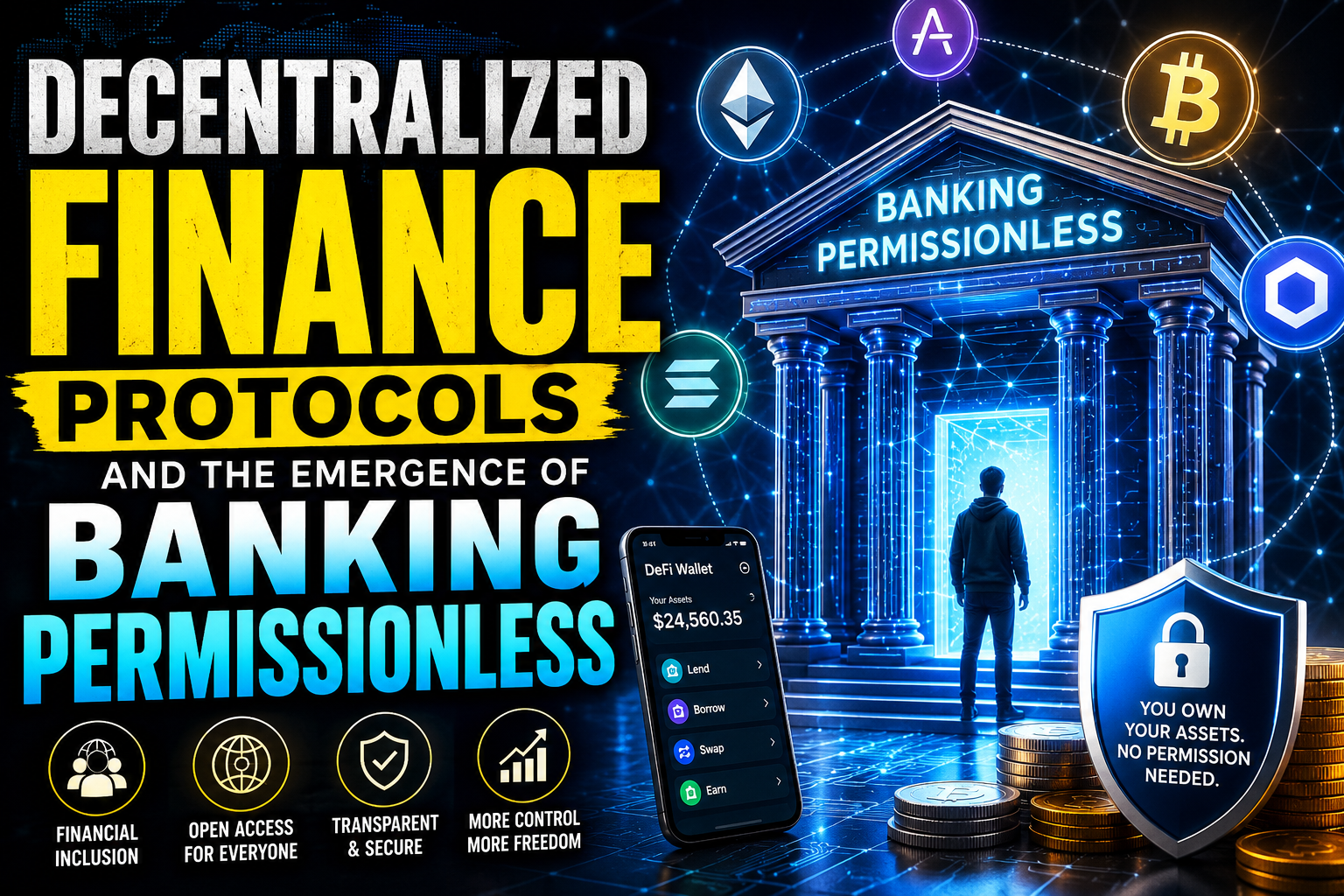
Permissionless banking takes these barriers away, enabling anyone with internet access and a digital wallet to employ financial services without needing approval from a central authority.
In the opinion of mine, permissionless banking opens more doors for those who have been excluded from the traditional banking sector. Now, financial activities can be done via a smartphone and internet connection, reaching everybody from the students to small business owners, freelancers and those living in remote areas. This will increase financial inclusion and enable more individuals to save, invest and build their wealth without relying on physical banks.
Another crucial advantage of DeFi protocols is transparency. Each transaction is tracked on the blockchain so that users can easily verify financial transactions. Unlike the conventional banks, in which numerous operations are performed in secret, blockchain technology enable users to view the transaction records without exposing personal identities. This transparency will help minimize fraud and boost trust in the financial system. It also gives developers and security researchers the opportunity to analyze the protocols and enhance their security as they go.
Another advantage of DeFi is that users have more control over their assets. Traditional banking, where banks keep customers money and determine the provision of financial services. DeFi is a system where the users have control of their digital wallets and private keys. This translates to people being in direct control of their money, rather than relying on a third party. I think that this translates to more financial freedom and responsibility for people as they are solely responsible for managing and protecting their own assets.
While there are numerous benefits to DeFi and permissionless banking, it also comes with some drawbacks. Security is a major obstacle. While blockchain technology is secure, there are certain DeFi protocols that have had their smart contracts exploited by hackers. If these attacks occur, then user's funds can be lost. High price volatility of cryptocurrencies is another hurdle. With so much of the DeFi services relying on digital assets, the rapid price variations may cause financial loss to the users.
One of the other issues is regulation. Governments and financial regulators continue to grapple with how to regulate DeFi. Without central oversight, it can be hard to implement financial regulations and stay on top of money laundering, as well as consumer protection. Various countries have various policies on cryptocurrencies and DeFi, complicating the global financial landscape.
Furthermore, even many traders do not have the requisite skills to use DeFi without compromising. For anyone who is new to the cryptocurrency world, there are many things to learn about digital wallets, private keys, blockchain networks, and smart contracts. If not properly educated, the users could make errors, fall for scams or lose access to their digital assets. Thus, it is essential to create awareness and education among the public for the effective implementation of decentralized finance.
To finish, decentralized finance protocols have offered a novel means of providing financial services via blockchain technology. They have enabled the availability of financial products to people without relying on conventional financial institutions. Permissionless banking has helped to make banking more inclusive by enabling anyone with an internet connection to access the global financial system. Despite these challenges, including threat to security, volatility of cryptocurrencies, regulation, and low public knowledge, DeFi has proven its advantages and remains appealing to users around the world. As technology continues to advance and improved regulations are created, I think decentralised finance and permissionless banking will become a more integral part of global finance in the future.
https://x.com/i/status/2081299227125121108
https://coinmarketcap.com/currencies/pussfi/
https://x.com/i/status/2079866677102051664
Note:-
Regards, @adeljose