The River I Grew Up Playing In Doesn't Look The Same Anymore, And That Scares Me More Than Anything
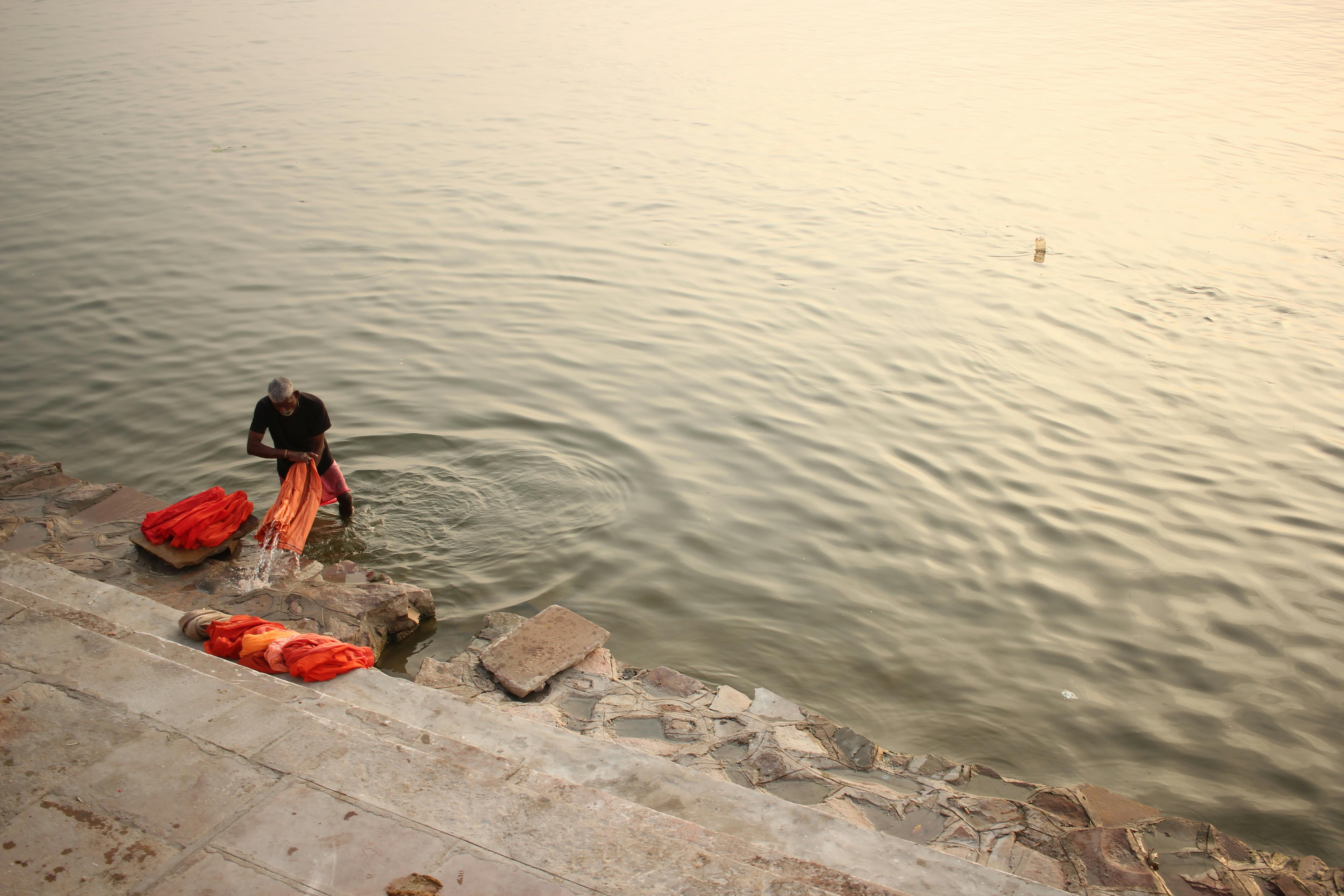
When I was a child, there was a small river near my grandmother's village in Uttar Pradesh. We called it the Nadi. Every summer vacation, my cousins and I would spend entire afternoons there, jumping from the low banks, catching small fish with our bare hands, sitting in the shallows while the elders washed clothes on the flat rocks upstream. The water was cold and clear enough that you could see the sandy bottom even where it was waist deep.
I went back this May after almost eight years. I almost did not recognise it. The water level was a fraction of what I remembered. The banks had narrowed. The colour was wrong, a dull, greenish grey where it used to be moving clear. There were plastic bags tangled in the dry grass at the edge where the waterline used to be. And the smell. There was a smell that was not there before.
What is happening to India's rivers
What I saw at that small village river is not unique. It is playing out across hundreds of rivers and streams all over India right now. Some of the most sacred and historically significant rivers in the country are carrying dangerously high levels of industrial effluent, untreated sewage, and agricultural runoff. The Central Pollution Control Board has identified over 350 polluted river stretches across India. Many smaller seasonal rivers and streams, the ones that villages and farming communities have depended on for generations, are simply disappearing as groundwater is extracted faster than it can be replenished and upstream flows are diverted.
India is home to roughly 18 percent of the world's population but holds only about 4 percent of its freshwater resources. By 2030, demand for water in India is projected to be nearly double the available supply. These are not distant, abstract statistics. They are the reason that river I played in as a child no longer looks or smells the way it did.
The human cost nobody talks about enough
When a river degrades, it is not just a natural tragedy. It is a social and economic one. The farmers whose irrigation depends on it. The women who walk further and further each year to find clean water for their families. The fishing communities whose livelihoods have quietly vanished. The children in villages downstream who drink water that is making them sick. The river connects all of these lives, and when it suffers, they all suffer, usually quietly, usually without making national headlines.
I think about the elders I saw washing clothes in that river when I was eight years old. They had grown up with it, their parents had grown up with it, and they probably assumed their grandchildren would too. That assumption is no longer safe to make.
Small things matter here too. Do not dump waste, solid or liquid, near any water body. Support local organisations working on river conservation in your area. If you live near a river, take a walk along it once a month and notice how it changes. Paying attention is the first form of care.
Why I am writing this in May 2026
Because May is when water becomes most visible as a problem in India, the heat peaks, the reservoirs drop, the rivers run thin, and the headlines about water shortages appear briefly before being replaced by something else. And then we forget, until next May. I do not want to forget anymore. That river in my grandmother's village deserves better than to be forgotten between summers.
Is there a river, lake, or water body near where you grew up that has changed over the years? I would genuinely love to hear about it in the comments.
#nature #environment #rivers #watercrisis #india #steemexclusive