DAIRY GAME: Recap of my journey to Osun Oshogbo sacred groove
Good day everyone am Omodara and here is how my day went when I went to osun Oshogbo groove.The morning began early in Oye-Ekiti as we gathered to board our bus for the departmental excursion to Osogbo. There was a buzz of anticipation among everyone,moving beyond lecture notes to observe firsthand one of Nigeria’s most significant cultural and historic landmarks. As the bus made its way out of Ekiti State and into Osun, the landscape gradually shifted from quiet, winding roads to the lively surroundings of Osogbo, bringing us to the gates of the sacred grove.

Me chilling in the bus
Stepping off the bus and walking into the dense canopy of the Osun-Osogbo Sacred Grove immediately felt like stepping into another era. The towering, ancient trees created a cool, shadowed environment that isolated the area from the bustle of the city outside. Our group gathered near the main archway structures and pavilion-like entrances, where our guides introduced us to the history of the site. Standing together in our matching shirts, listening to the history of Susanne Wenger’s artistic contributions and the spiritual traditions surrounding the grove, made the academic context of the trip clear and engaging.
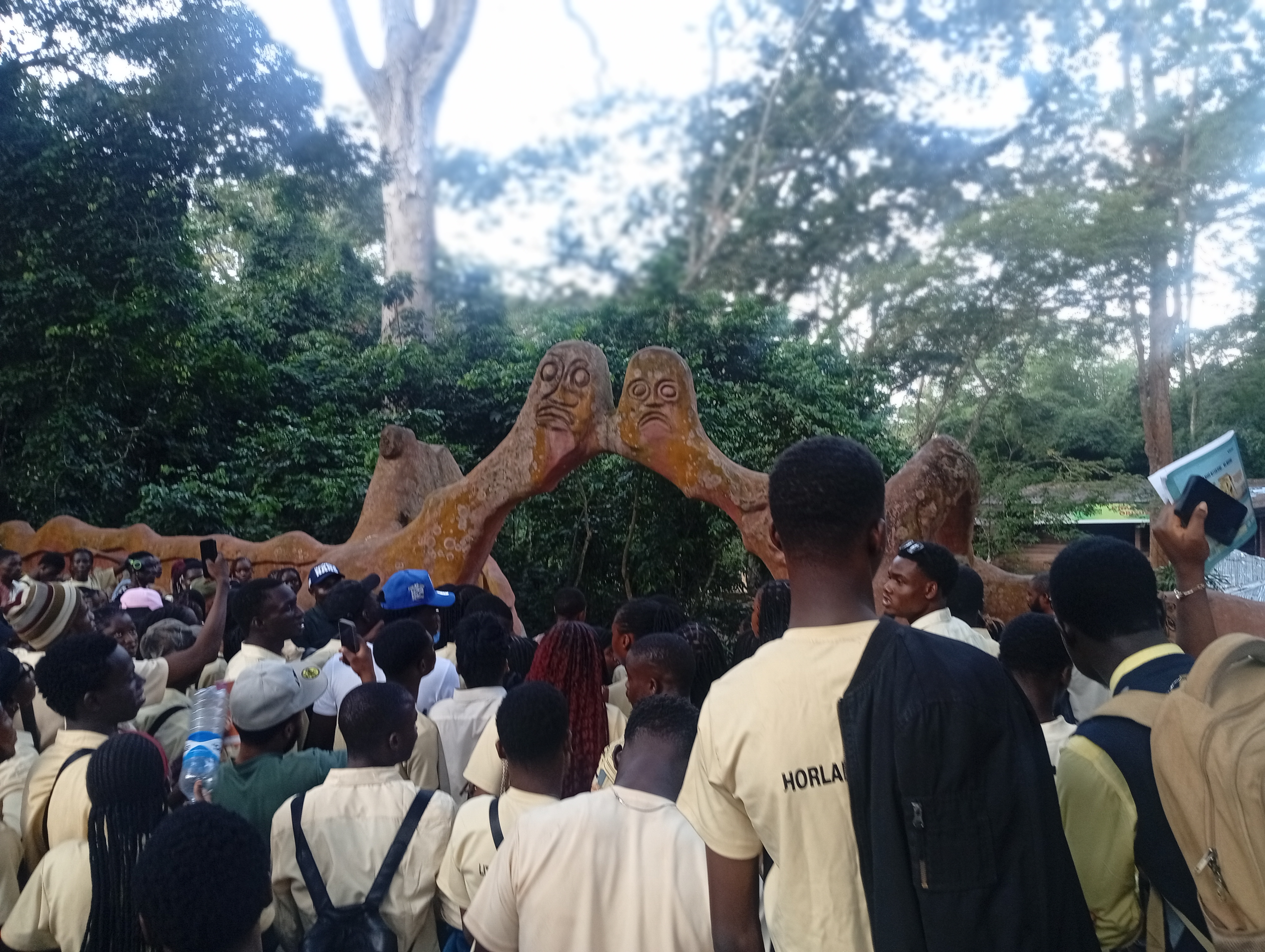
Outside the main groove with my course mates by the archeed entrance.
As we followed the forest trails, the spiritual and artistic monuments appeared along the path, We stopped before monumental, earth-toned sculptures reaching high into the trees. Figures carved with multiple faces, exaggerated limbs, and protective stances stood along carved mud walls. Seeing these unique modernist-traditionalist fusion artworks up close offered a powerful visual representation of Yoruba cosmology.
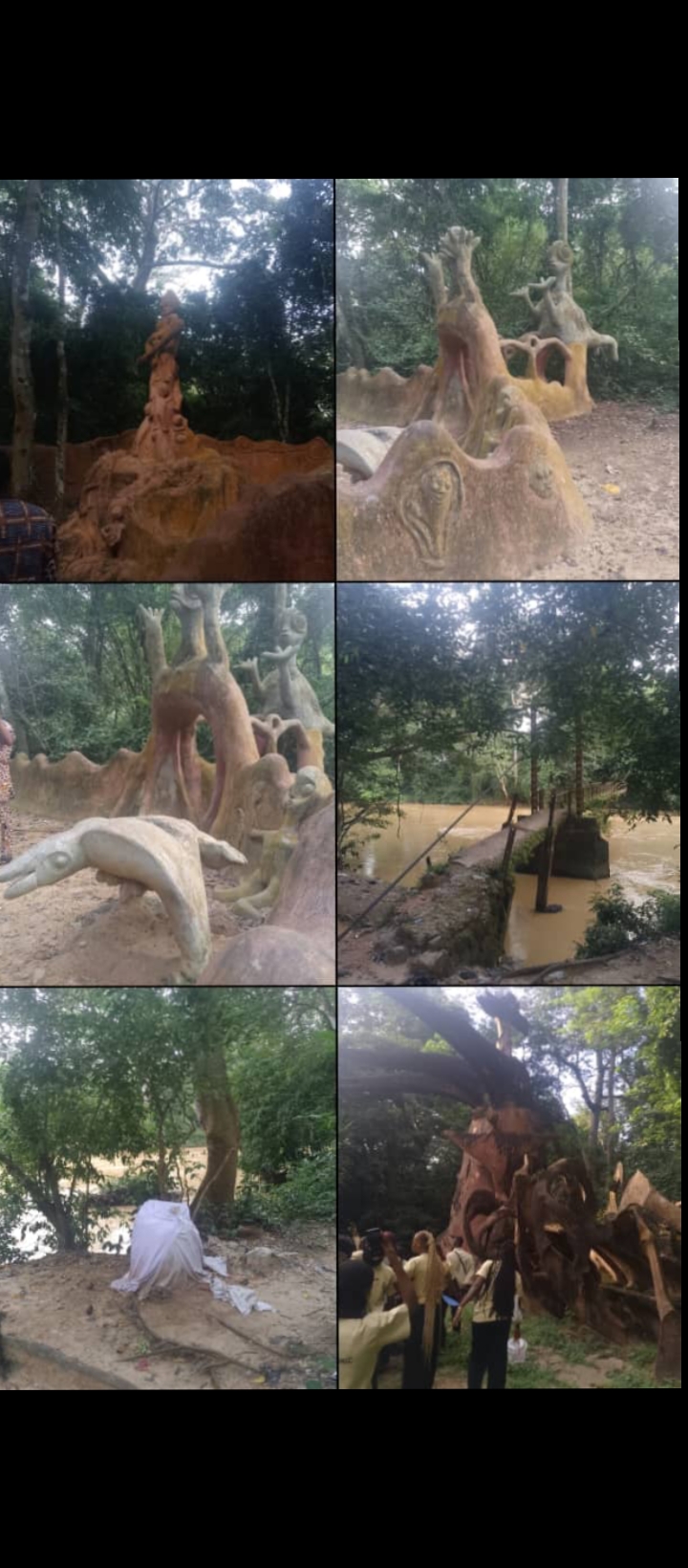
Pictures of sculptures in the Igbo ifa.
Moving deeper, we encountered the intricate clay and stone installations marked as sacred sites, including sections dedicated to Ifa divination traditions. The abstract, fluid contours of the arches and carved human-like forms gave the impression that the artwork was naturally growing out of the forest floor itself.
Reaching the banks of the Osun River, the atmospheric shift was distinct. The brownish, flowing waters of the river were flanked by old trees and shrines draped in white ritual cloths (aso efun). Crossing the suspension bridge gave us a clear view of the sacred riverbed where devotees gather during the annual festival to offer prayers and pay homage to the deity Osun.
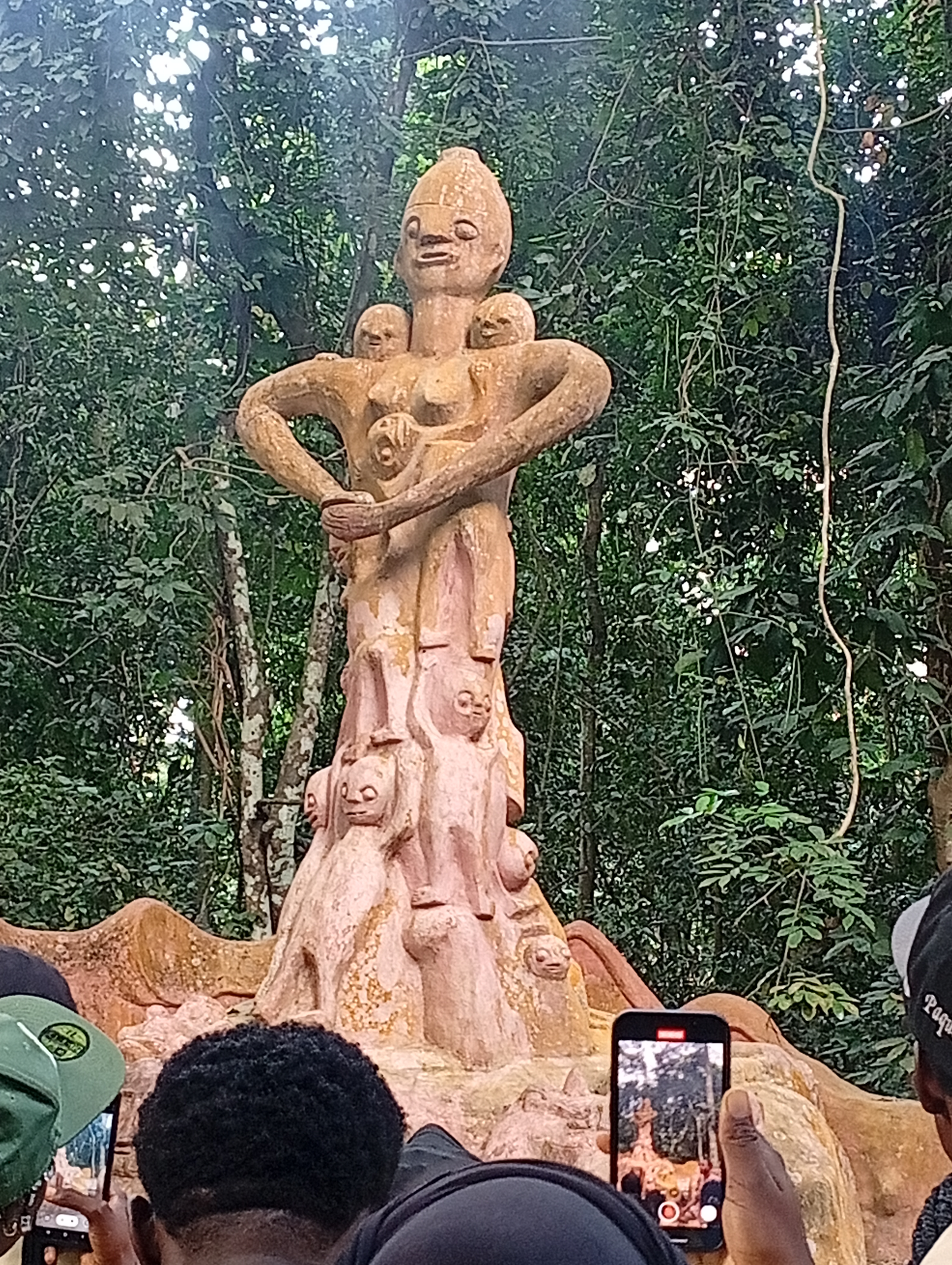 The statue by the entrance representing osun.
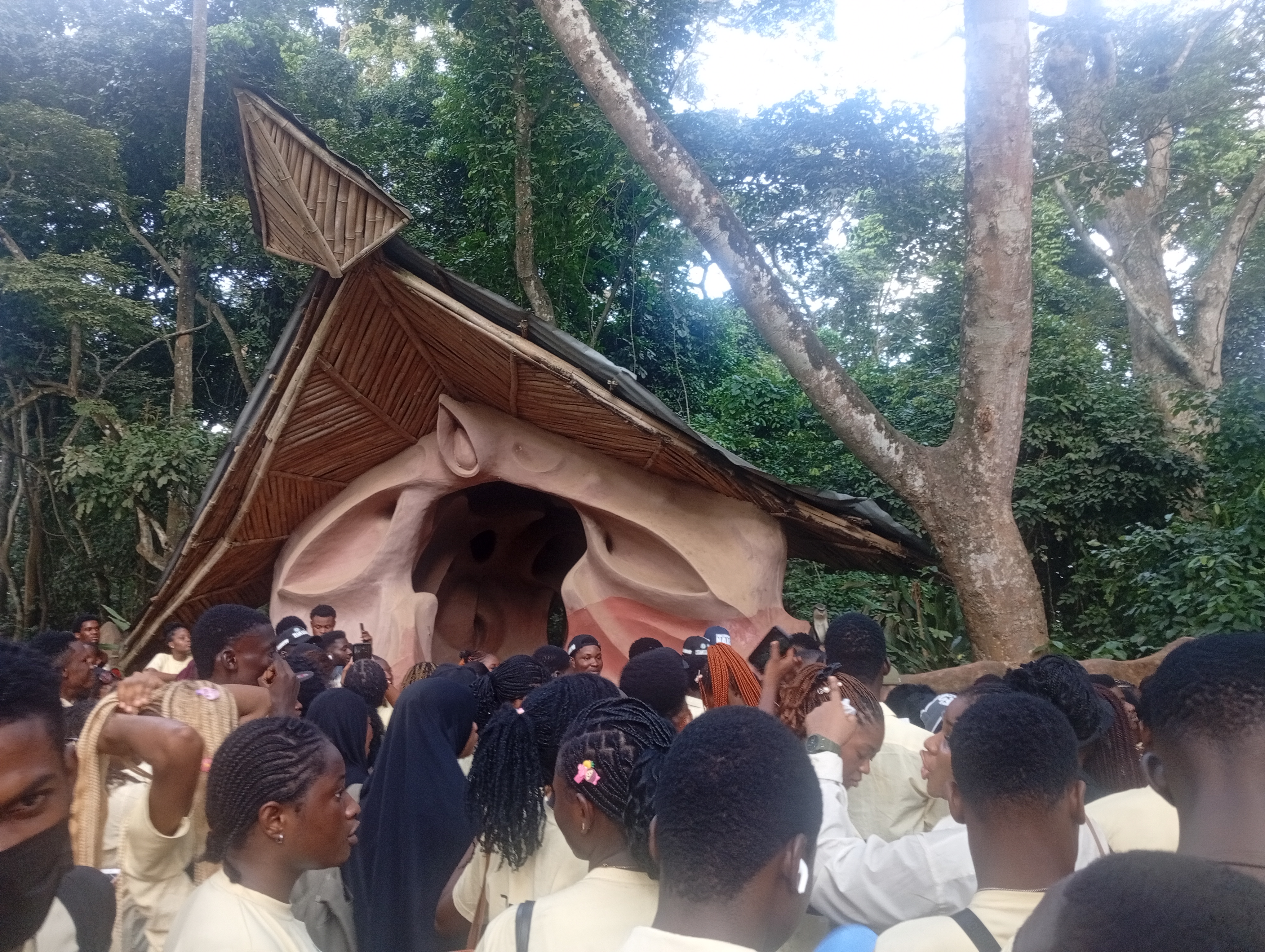
A lotus like statue by the entrance .
After taking extensive notes, capturing photos of the monuments, and discussing the historical preservation of UNESCO World Heritage sites with our course mates, we gathered for a final group debrief near the shrine entrances. By late afternoon, we boarded the bus for the return trip to Ijero-Ekiti. The journey back was quieter than the morning ride, with everyone reflecting on the day's observations, reviewing photos, and organizing notes for our upcoming departmental reports. It was a fulfilling academic trip that brought our studies in history, culture, and heritage to life.
Iya osun herself in the River