Blockchain Technology and the Evolution of Digital Ownership Rights
Blockchain is altering the perception of ownership of digital goods. Blockchain is replacing the inability to prove which entity actually owns a digital file before the invention of blockchain, which could be many times copied. Nowadays, blockchain offers a superior method for documenting ownership. It stores data in a secure digital environment that is not easily modified or deleted. I think this is one of the best advances in the digital world as this allows people to have faith in online transactions.
Digital ownership rights are the legal and personal rights of one person to own another person's digital works, such as music, videos, artworks, documents, games and other online works. People could copy and share such a digital item without permission of the owner in the past. This frequently led to copyright issues and loss of revenue to creators. One solution to this problem is provided by a forever record that makes it clear who owns a digital asset and when it was created or transferred, using blockchain.
Decentralization is one of the key characteristics of blockchain. This implies that no company or government owns the system. Rather, several computers work in collaboration to confirm each transaction. For this reason, it is extremely hard to be able to do anything illegal regarding ownership changes. I believe this instills more confidence among the people while purchasing and selling digital assets.
Blockchain has also given rise to digital collectibles or NFTs (Non-Fungible Tokens). NFTs are a way for artists, musicians, writers, and photographers to sell their original digital artworks and establish their ownership. Unlike regular digital files that can be copied, each NFT has a unique identity that is recorded on the blockchain. If there is a copy of the image, the record of ownership stays with the original owner even if the image is copied.
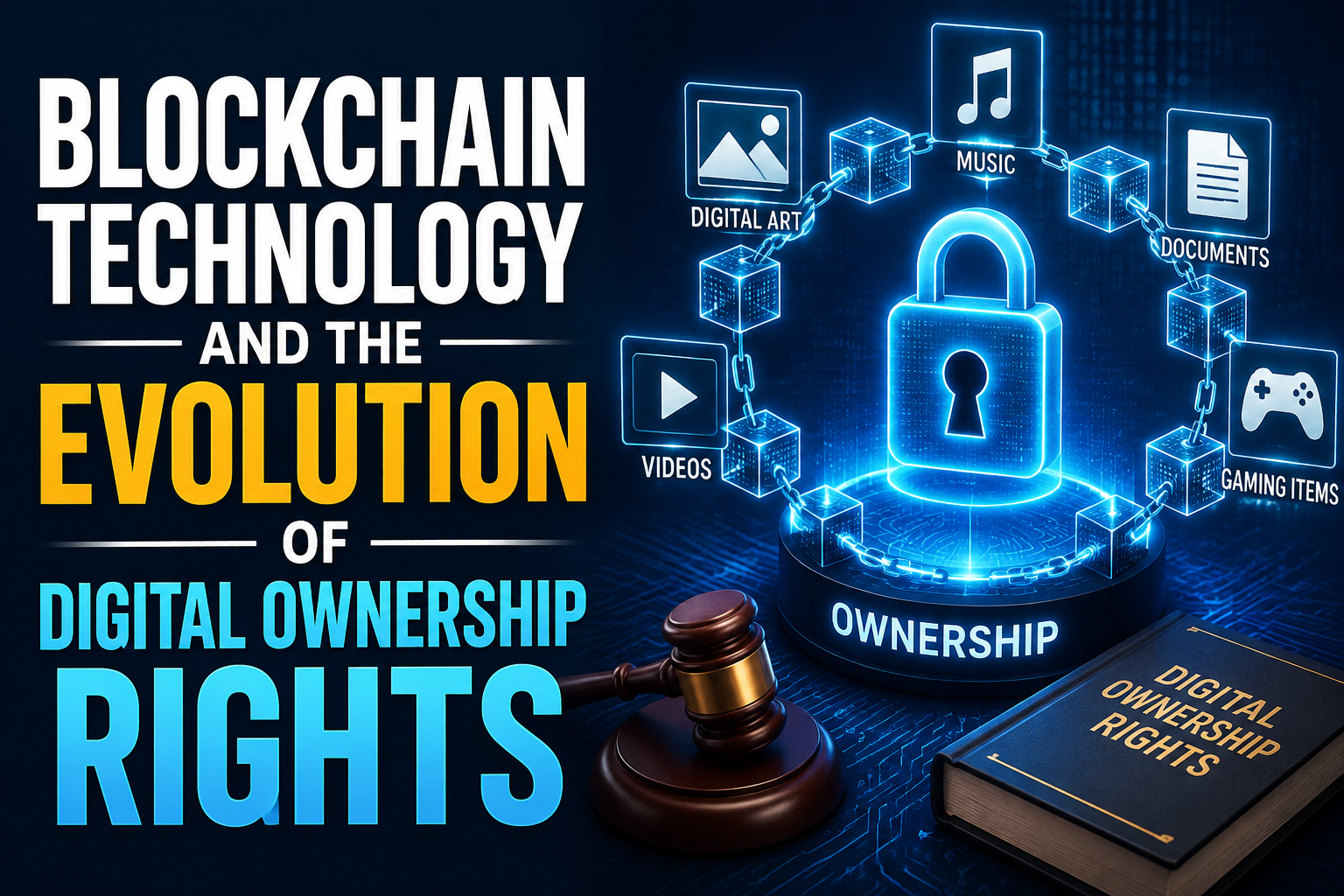
Businesses are also leveraging the power of blockchain to safeguard intellectual property rights. Businesses can register patents, trademarks and copyrights on blockchain systems. This can help minimize fraud and ease ownership disputes. It also enables creators to automatically receive payment for their digital work when it is sold or used via smart contracts.
Although blockchain offers numerous advantages, it has also encountered certain hurdles. There are some networks, that require a lot of energy, and others that have high transaction fees. There are also legal questions as many countries are still in the process of creating legislation for digital ownership. These problems can diminish with advances in technology.
To sum up, blockchain technology is revolutionizing the ownership rights of the digital world. It provides security, transparency, and trust for people who create, buy, and sell digital assets. I think blockchain will go on to grow and play an increasingly important role in the digital economy because it provides a greater sense of control over what people actually own online.