Holi Festival Guide: India's 2026 Holi Celebrations, History, and Significance
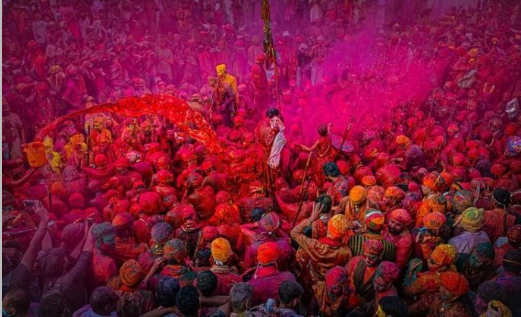
In India, Holi is more than simply a celebration; it's a feeling that brightens the sky, the streets, and people's hearts. Holi, also called the festival of colours, celebrates the triumph of good over evil and the onset of spring. Holi, which combines traditional customs with contemporary festivities, still has great cultural, spiritual, and social significance in India in 2026.
Holi in 2026 embraces both tradition and modern energy, from bonfires and religious rites to eco-friendly hues and music events. This comprehensive introduction to the Holi festival examines its background, meaning, customs, and contemporary Indian celebrations.
The Holi Festival's History
Holi's origins can be traced back thousands of years to ancient Indian texts and mythology. The story of Prahlad and Holika, which represents the victory of faith and righteousness over conceit and evil, is the most well-known legend connected to Holi.
Mythology claims that Hiranyakashipu, the demon king, desired to be worshipped by all. But his son Prahlad continued to be loyal to Lord Vishnu, and the monarch became enraged and attempted to murder Prahlad in a number of ways. At last, he turned to his sister Holika, who was immune to fire due to a boon. With Prahlad on her lap, she sat in a roaring fire with the intention of burning him alive. But while Holika was destroyed by the fire, Prahlad was spared thanks to supernatural intervention.
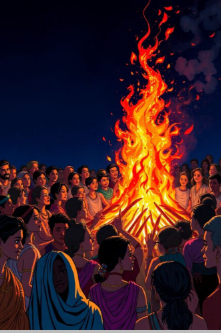
Holika Dahan, the customary bonfire lighted the night before Holi, serves as a reminder of this occasion.
The relationship between Holi and Lord Krishna and Radha is also very important. Holi honours the playful love of Krishna and Radha in the Braj region, particularly in the vicinity of Vrindavan and Mathura. It is thought that Krishna, who was dark-skinned, added colour to Radha's face in jest. Today's colour celebrations are based on this light-hearted gesture.
Holi's Importance in Indian Culture
Holi is more than just festivities and hues. In Indian society, it has profound symbolic importance.
First of all, it represents the triumph of virtue over evil. Prahlad's tale imparts lessons on perseverance, faith, and commitment. Holika Dahan represents eradicating negativity and beginning anew.
Second, Holi signifies the start of spring and the end of winter. It is often associated with harvest festivities in rural communities. Holi is a seasonal and spiritual celebration, with farmers celebrating the arrival of new crops.
Holi dismantles social barriers. When individuals smear colours on each other and say "Bura na mano, Holi hai," caste, class, age, and background differences temporarily vanish. It is a day of reconciliation, forgiveness, and relationship rejuvenation.
This significance is still significant in 2026, particularly in a fast-paced digital society where holidays like Holi help people reconnect with one another.
The Night Before Colours by Holika Dahan
On the full moon night of the Hindu month of Phalguna, people celebrate Holika Dahan, also called Chhoti Holi. In order to build massive bonfires in 2026, communities all over India stockpile wood and combustible materials.
Offerings and prayers open the ceremony. Families pray for prosperity and seek protection from evil by circling the fire. To symbolise letting go of negativity and past issues, many individuals toss symbolic or old artefacts into the fire.
For more information, visit the website: https://inkontrend.com/