Before You Buy Property in Colorado, Learn How to Research It Like a Professional
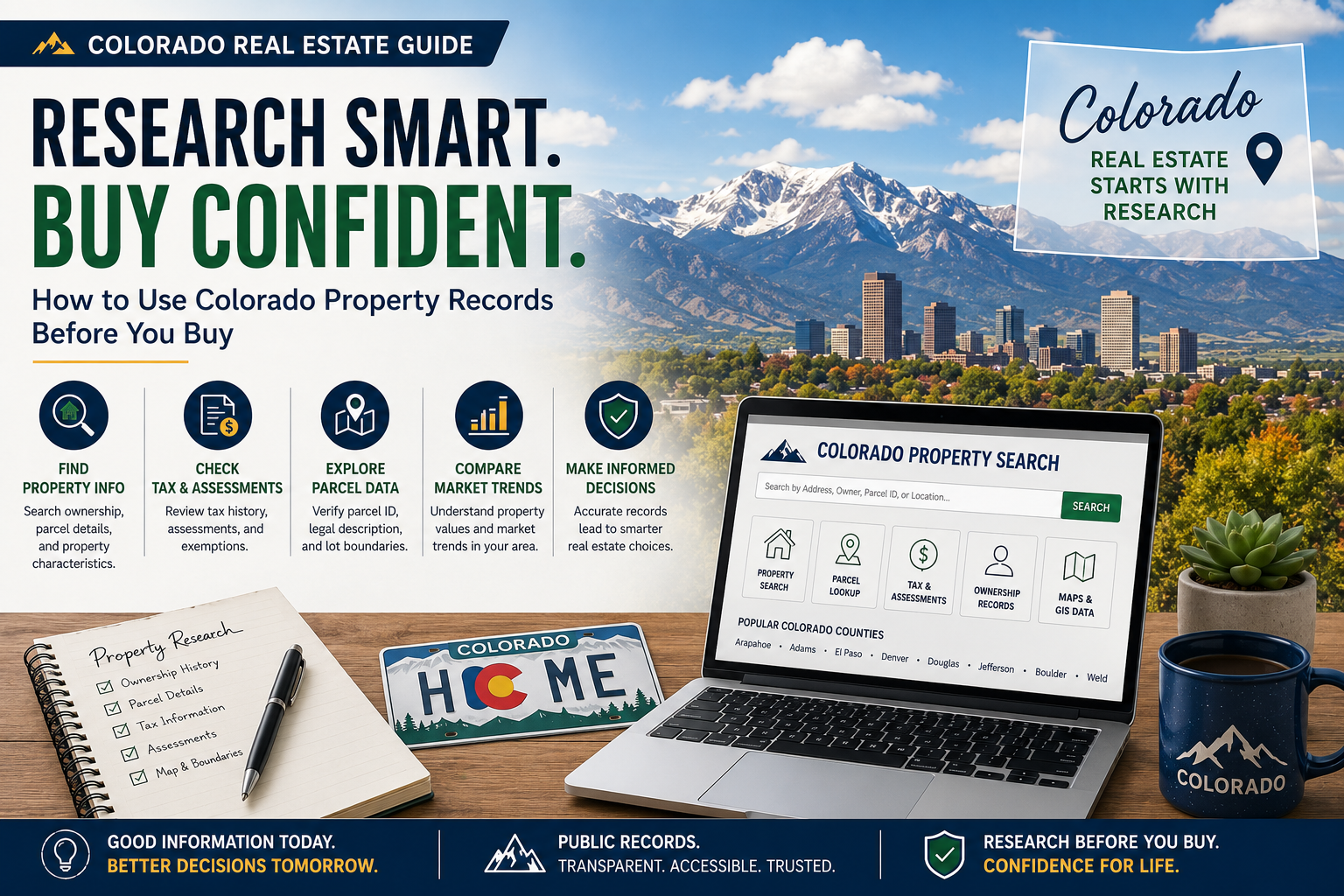
Colorado has become one of the fastest-changing real estate markets in the United States. Growing cities, expanding suburbs, mountain communities, and rural counties all offer unique opportunities, but they also create one important challenge for buyers: finding reliable property information before making a decision.
Many people focus almost entirely on listing photos, neighborhood ratings, or asking prices. While these are important, experienced buyers usually begin somewhere else—with public property information. Understanding what official records reveal about a property often provides context that a listing alone cannot.
Property records help answer practical questions. Who currently owns the property? What is the parcel identification number? Has the assessed value changed over time? What are the property's legal boundaries? Which county maintains the records? These details become especially valuable when comparing multiple homes or researching investment opportunities.
Colorado's real estate landscape is diverse. A downtown condominium in Denver, a family home in Colorado Springs, a mountain cabin near Breckenridge, or agricultural land on the Eastern Plains are all documented differently depending on the county responsible for maintaining property records. Knowing where to begin can save hours of unnecessary searching.
One common misconception is that public records exist only for legal professionals or government agencies. In reality, homeowners, first-time buyers, investors, surveyors, appraisers, insurance professionals, and even historians regularly use these records. They provide a factual starting point for understanding a property's history rather than relying solely on marketing descriptions.
Researching public records is also one of the easiest ways to verify important information before committing to a purchase. Parcel numbers, ownership history, assessment data, property characteristics, and tax-related information can help buyers confirm that a property's official details align with what has been advertised.
Because Colorado has more than sixty counties, each with its own local resources, navigating multiple government websites can quickly become overwhelming. Many buyers therefore prefer starting with a single resource that organizes county-specific property information in one place.
A comprehensive Colorado property search directory can simplify the process by helping users locate county assessor resources, parcel lookup tools, ownership information, assessment records, tax references, GIS mapping resources, and additional property research links through a single starting point.
Good research is not only useful before purchasing a property. Existing homeowners often review public records when refinancing, preparing for renovations, resolving boundary questions, estimating property taxes, or planning future sales. Investors compare assessment data across multiple counties, while researchers frequently use ownership records to study historical development and land use patterns.
Public records should always be viewed as informational resources rather than substitutes for legal or financial advice. If a transaction involves significant financial decisions, verifying important information with the appropriate county office or qualified professionals remains the safest approach. However, beginning with reliable public information allows buyers to ask better questions and make more informed decisions throughout the purchasing process.
In today's digital real estate environment, access to accurate property information is no longer limited to industry professionals. Anyone willing to spend a little time researching public records can gain a clearer understanding of a property's background, reduce unnecessary surprises, and approach buying decisions with greater confidence. Whether you're purchasing your first Colorado home, exploring investment opportunities, or simply researching a neighborhood, learning how to use public property records is one of the smartest steps you can take before signing any paperwork.