Varanasi Did Not Just Change My Perspective On Travel, It Changed My Perspective On Life
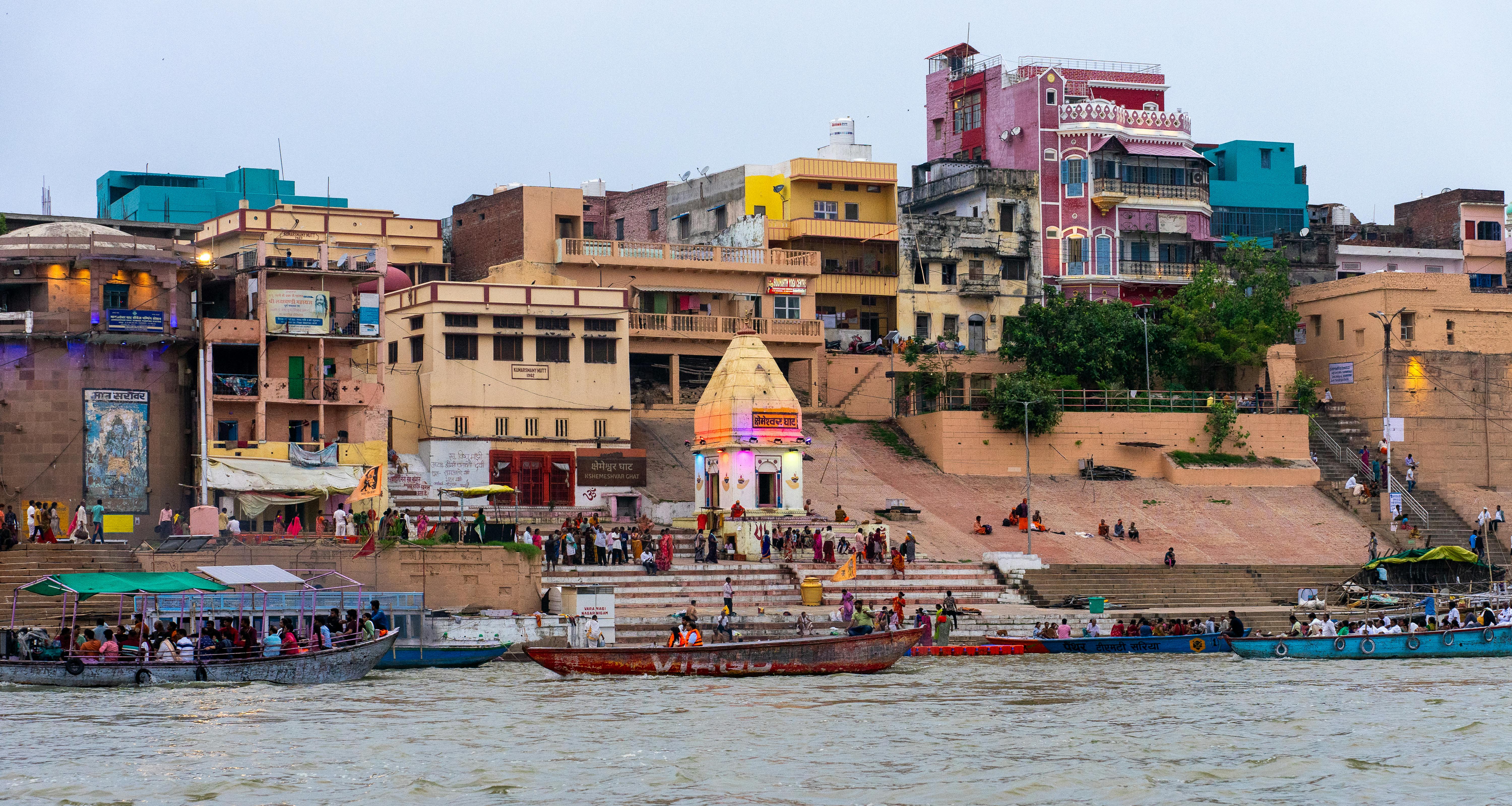
I have been to cities that are beautiful, cities that are efficient, cities that are exciting. But I have never been anywhere quite like Varanasi. It is not a city you visit and then move on from easily. It gets into you. It asks questions of you that most places never bother to raise.
I arrived early morning, before sunrise, and made my way down to the ghats — the ancient stone steps that descend into the Ganges. What I found there was unlike anything I had expected. Pilgrims bathing in the river, chanting rising through the mist, boats moving slowly across the water, the smell of incense and marigolds and something older than any of it. And in the middle of all of this — utterly ordinary life, going on as it always has, completely unbothered by the fact that it is extraordinary.
A city that holds life and death in the same breath
What makes Varanasi unlike anywhere else is that it does not separate the living from the dying. The cremation ghats at Manikarnika burn day and night, around the clock, every day of the year. Families carry their loved ones through the narrow alleys of the old city on bamboo stretchers, down to the river, in full view of everyone. Death here is not hidden away in institutions or spoken about in hushed tones. It is woven into the fabric of daily life — acknowledged, honoured, and accepted with a matter-of-factness that I found both unsettling and deeply comforting.
I sat near the ghats for a long time that first evening. Watched the Ganga Aarti — the fire ceremony — as priests moved enormous flame lamps in slow, sweeping circles over the river. Thousands of people watching, some in prayer, some just present. It was one of those rare moments where you feel both very small and somehow connected to something much larger than yourself.
The lanes, the chai, the conversations
The old city of Varanasi is a maze — narrow lanes barely wide enough for two people to pass, opening unexpectedly into tiny courtyards, temples, silk shops, and chai stalls that look like they have been there for centuries. Because many of them have. I got genuinely lost on three separate occasions. Each time, someone pointed me in the right direction without being asked — a shopkeeper, a schoolboy, an elderly woman carrying a brass vessel of water. Small acts of ordinary kindness that stuck with me long after I left.
The chai in Varanasi deserves its own paragraph. Served in small clay cups that you smash on the ground after drinking — a tradition that returns the cup to the earth it came from — it is the best I have had anywhere in the world. Strong, spiced, and always served with the kind of unhurried warmth that reminds you what hospitality actually means.
Best time to visit: October to March. Arrive before dawn on your first morning and go straight to the ghats. The light, the sounds, and the atmosphere at that hour are something that photographs cannot capture — you have to be there.
Why Varanasi stays with you
Most places I have travelled to have given me experiences. Varanasi gave me a shift in perspective. Something about watching life and death coexist so openly, so unapologetically, made the ordinary anxieties of my daily life feel genuinely lighter. Not trivial — just smaller. More manageable. More temporary in the best possible sense.
If you ever get the chance to go — go. Not with a packed itinerary and an exit time. Go with space to wander, to sit, to be confused, and to be moved. That is the only way to meet a city like this on its own terms.
Have you been to Varanasi? Or is there a place that has shifted something in you the way it did for me? Tell me in the comments — I would genuinely love to know.
#travel #india #varanasi #culture #wanderlust #steemexclusive