Free vs Paid IP Geolocation APIs: What's the Real Difference?
Type "free ip geolocation api" into Google and you'll get dozens of results promising accurate location data at no cost. Some of that is true. Some of it quietly falls apart the moment you send more than a handful of requests. If you're deciding whether a free tier is enough for your project, or whether you actually need a paid ip address geolocation api, here's what actually separates the two.
What a Free Tier Usually Gets You
Most free ip geolocation api plans are genuinely useful for prototyping. You typically get:
- A capped number of monthly requests (often in the low thousands)
- Basic fields: country, region, city, and coordinates
- HTTPS access, though sometimes throttled on lower-tier plans
- No SLA or uptime guarantee
That's plenty for a weekend project, a portfolio piece, or validating whether IP geolocation fits your product before you commit a budget.
Where Free Tiers Start to Break Down
The gap shows up once a project moves from "prototype" to "production." Common friction points include:
- Rate limits hit fast. A few thousand requests a month sounds like a lot until your app has real users.
- Missing fields. Free plans often exclude currency, timezone, ISP, and connection-type data that matter for fraud detection and personalization.
- No bulk lookups. Processing a list of IPs from logs or a database usually requires a paid plan.
- Accuracy trade-offs. Some free services rely on older or less frequently updated IP databases, so city-level accuracy can lag behind paid alternatives.
- No support or SLA. If the service goes down, you have no guaranteed timeline for a fix.
So Which One Do You Actually Need?
A simple way to decide: if your product depends on location data being available and reasonably accurate every time a real user interacts with it, you need a plan with an SLA, not a free tier. If you're still validating an idea or building an internal tool with light usage, a free ip address geolocation api plan is the right starting point.
How ipstack Handles the Transition
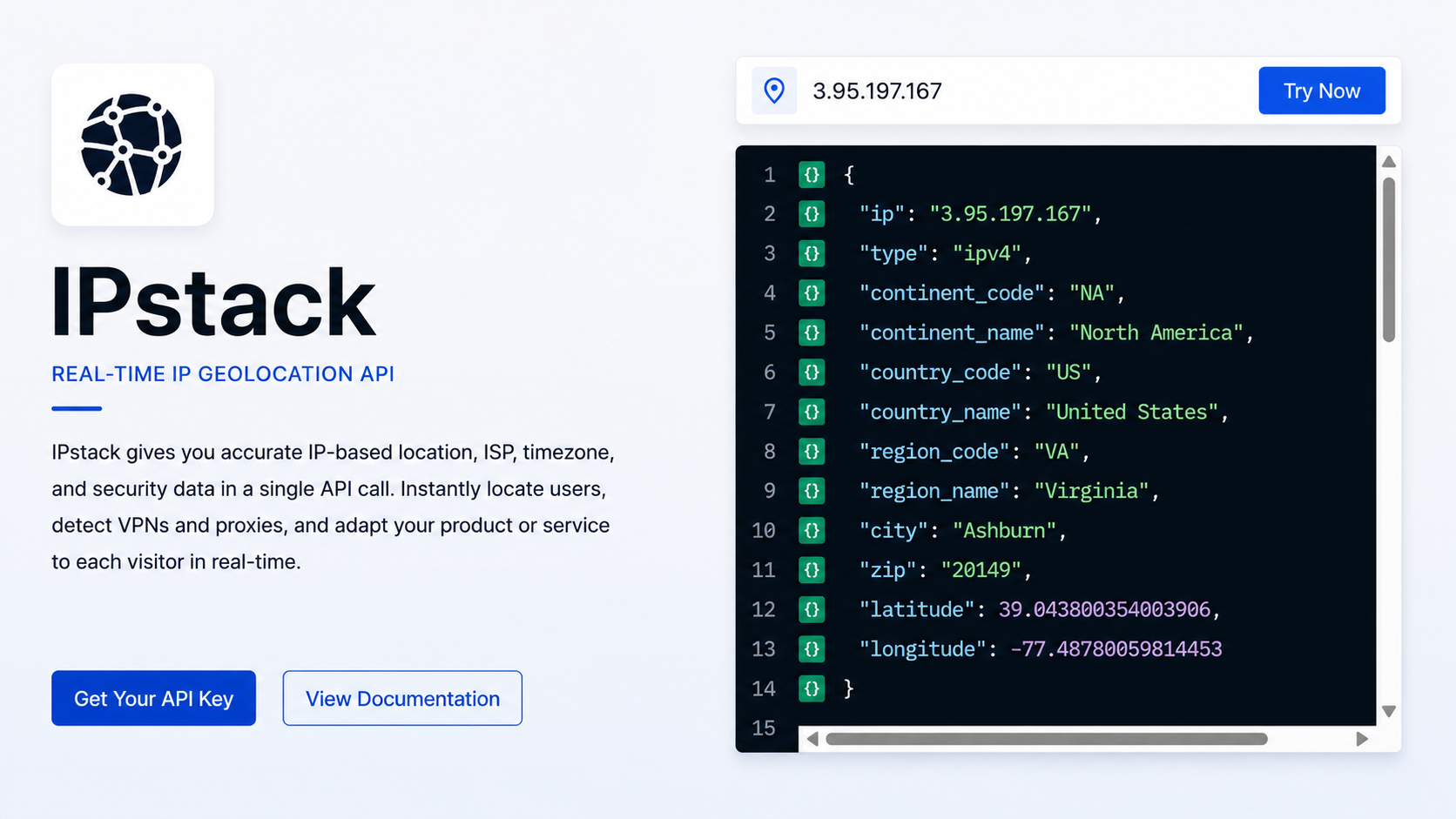
ipstack offers a free tier for exactly this kind of evaluation, letting you test accuracy and response format before committing to anything. When a project outgrows that tier, paid plans unlock the full data set, including currency, timezone, connection type, security flags, higher rate limits, bulk lookups, and HTTPS across supported plans. That means scaling up doesn't require re-architecting your integration.
A Practical Way to Test Before You Commit
- Start on the free tier and run your expected query volume against it for a week.
- Check which fields your product needs (currency, ISP data, proxy detection) and confirm the free tier includes them.
- Estimate your real monthly request volume at expected user scale, not just launch-day traffic.
- Compare that number against paid tier limits before making the API a core dependency.
Frequently Asked Questions
Will a free geolocation API suddenly cut me off?
Most providers throttle requests or return errors once you exceed the free quota rather than silently failing. Without monitoring, that can still result in broken functionality for your users.
Is paid geolocation data actually more accurate?
Not always dramatically more accurate at the country level, but city-level precision and the freshness of the underlying IP database are generally better on paid tiers.
Can I start free and upgrade later without changing code?
If the provider uses the same API structure across every pricing tier, upgrading is usually just a plan change rather than a complete re-integration.
Test It Yourself Before You Decide
The only real way to know whether a free tier is enough is to run your actual use case against it.
Try it here: https://apilayer.com/products/ipstack/